Ringve Music Museum, NTNU Gløshaugen and Bymarka Trails
Visit Ringve Music Museum and its 130-decare botanical garden on Lade, Bredo Greve's 1910 Hovedbygningen at NTNU, and Bymarka via the Gråkallbanen tram.
Beyond the river loop of Midtbyen, three green plateaus showcase Trondheim's academic, musical, and outdoor life: the Lade peninsula to the northeast with Ringve Music Museum and its botanical garden, the Gløshaugen ridge 2 kilometres southeast with the historic main building of NTNU, and the 80-square-kilometre Bymarka forest reserve to the west reached by the world's northernmost tramway.
Ringve Manor House and Victoria Bachke's Collection
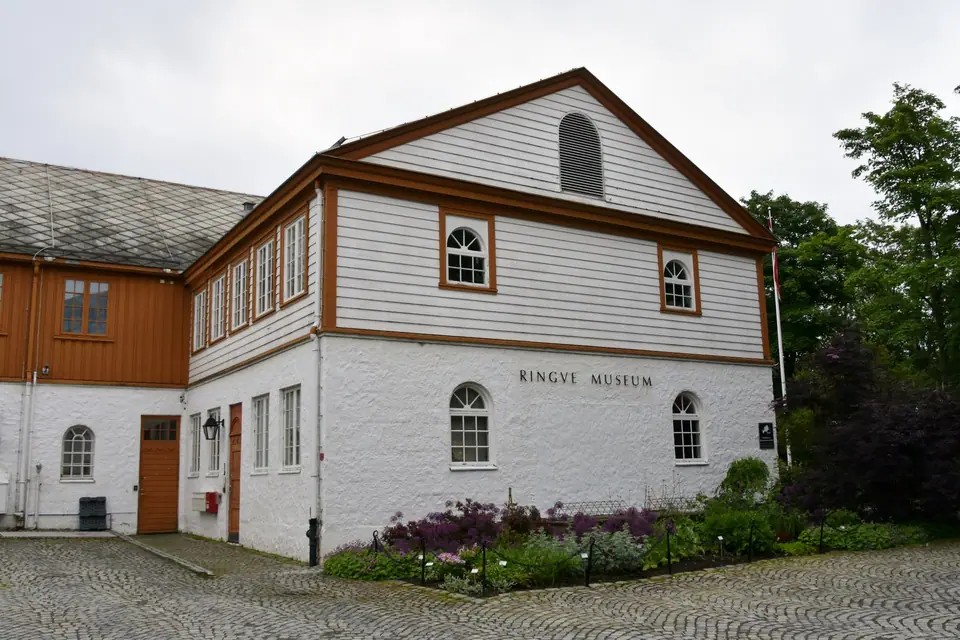
Set on the Lade peninsula overlooking the Trondheimsfjord, Ringve Museum (Ringve Musikkmuseum) is Norway's national museum for music and musical instruments, housed on the historic Ringve estate where naval hero Peter Wessel Tordenskiold spent part of his childhood; the first building on the farm dates to 1521 and the standing manor complex dates from the 1740s onward. Purchased at auction by Anton Sophus Bachke in 1878 and acquired in 1919 by Christian Anker Bachke and his wife Victoria Rostin Bachke, the estate opened on 11 October 1952 around a collection that now numbers roughly 2,000 instruments (including about 700 classical European instruments).
The Barn Galleries and 130-Decare Botanical Garden
In the 1880s rooms of the Manor House, dedicated to Mozart, Beethoven, Chopin (with items inherited by his Norwegian pupil Thomas Tellefsen), and Grieg, music-student guides play historic keyboard instruments on summer tours, while the Barn (Museet på Låven) displays a 1767 Kirkman harpsichord, a 1755 Eberle viola d'amore, a 1783 Stein piano, a 1907 Adolphe Sax Jr. soprano saxophone, Hardanger fiddles, and a Sámi drum (runebomme). Surrounding the manor is the 130-decare Ringve Botanical Garden established in 1973 and run by the NTNU University Museum.
NTNU Gløshaugen and Bredo Greve's 1910 Hovedbygningen
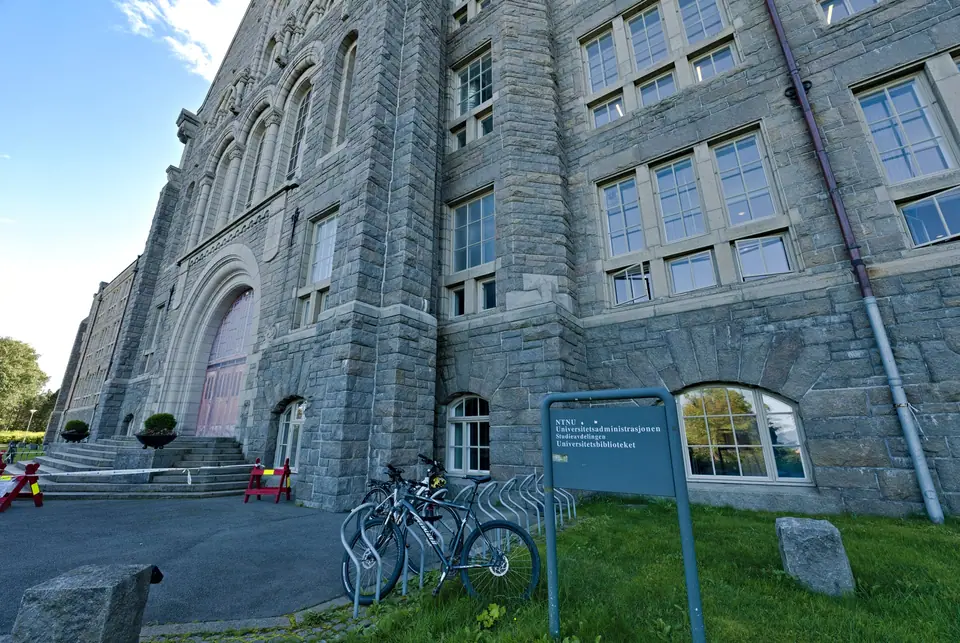
Founded in its current form in 1996 (with roots in the 1760 Royal Norwegian Society of Sciences and Letters, its 1768 Gunnerus Library, and the 1910 Norwegian Institute of Technology, NTH), the Norwegian University of Science and Technology (NTNU) is Norway's largest university, with roughly 42,000 students, 9,000 staff, and Nobel laureates Edvard Moser, May-Britt Moser, and John O'Keefe. Crowning the Gløshaugen plateau 45 metres above sea level is Hovedbygningen, designed by Bredo Greve under the motto Vis à vis Domkirken in Norwegian stone inspired by Nidaros Cathedral; its 105-metre north facade opened in 1910, its southern wings finished in 1915, and the building was protected in 1994.
The 8.8-Kilometre Gråkallbanen Tramway to Lian
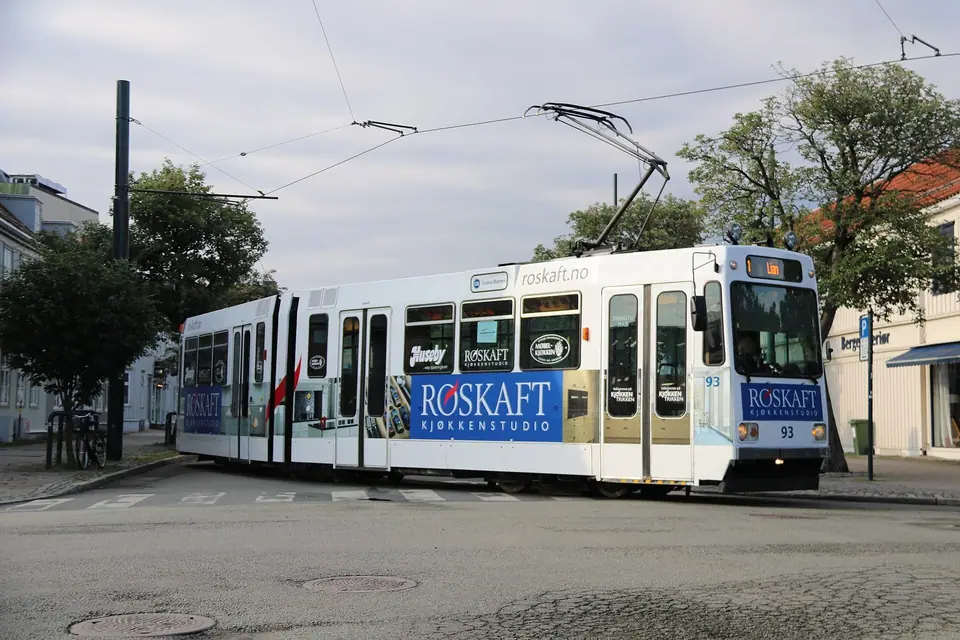
From St. Olavs gate in Midtbyen, the metre-gauge (1,000 mm) Gråkallbanen tram (Line 9), the world's northernmost tramway system since 2004, runs 8.8 kilometres via Ila and Munkvoll (site of the tramway museum) to Lian; opened to Munkvoll on 17 July 1924, Ugla in 1925, and Lian on 28 October 1933, it operates with Class 8 trams delivered in 1984 to 1985.
80 Square Kilometres of Bymarka Trails and Lakes
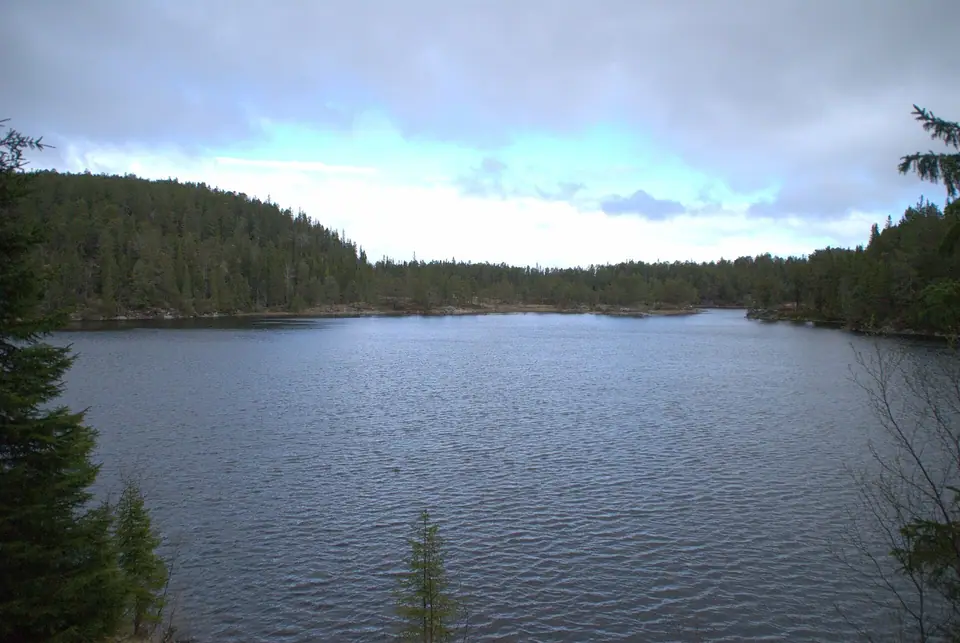
Lian sits at the gateway to Bymarka, an 80-square-kilometre forest reserve (including an 11-square-kilometre nature reserve protected in 2005) containing more than 10 lakes such as Kobberdammen and over 200 kilometres of walking and cross-country ski trails rising to Storheia (565 m) and Gråkallen above the 450 to 500-metre treeline, served by timber lodges such as Skistua, Elgsethytta, Grønlia, and Lavollen.
What Makes Ringve's Musical Demonstrations Distinct
Unlike conventional museums where historical instruments sit silent behind glass, Ringve Manor House was conceived by founder Victoria Bachke so visitors could hear how eighteenth- and nineteenth-century instruments actually sound in domestic rooms of the period. On guided tours through the 1880s interiors, university musicology and performance students demonstrate spinets, harpsichords, clavichords, and early square and grand pianos in the Mozart, Beethoven, Chopin, and Grieg rooms, explaining how mechanical changes in keyboard action shaped classical and Romantic composition.
Across the courtyard in the converted farm barn (Museet på Låven), self-guided sound stations and acoustic galleries let visitors compare non-European folk instruments, Norwegian Hardanger fiddles (hardingfele) with their sympathetic under-strings, a traditional Sámi shamanic drum (runebomme), and wind and brass instruments leading up to the twentieth century, complementing the popular-music exhibits at Rockheim on Brattøra. Outside, the 130-decare Ringve Botanical Garden wraps around the manor buildings with an arboretum of northern hemisphere trees, a historical perennial garden preserving traditional Trøndelag farmhouse plants, a systematic botanical garden, and a Renaissance-style herb maze.
Walking the Gløshaugen Campus and Choosing Bymarka Trails
Two other green heights frame the city on the south and west, each accessible from Midtbyen by public transit or on foot:
- The Gløshaugen Plateau and Hovedbygningen: Rising 45 metres above sea level just south of Nidaros Cathedral and Elgeseter Bridge, where architect Bredo Greve's 1910 granite-and-soapstone main building commands a direct sightline toward the cathedral spire and anchors the laboratories and lecture halls of NTNU.
- The St. Olavs gate Tram Terminus to Munkvoll: Boarding the pale-yellow Class 8 tramcar in central Midtbyen takes you west through Ila and past terraced wooden neighbourhoods onto a dedicated hillside right-of-way; at Munkvoll depot, the volunteer-run tramway museum exhibits historic twentieth-century rolling stock from the city's tram network.
- Lian Terminal and Lake (232 metres elevation): The scenic loop at the top of the 8.8-kilometre Gråkallbanen line, sitting beside Lianvatnet lake where bathing spots in summer and ski tracks in winter begin right off the platform.
From Lian or from bus stops higher up at Skistua, waymarked paths lead deep into the 80-square-kilometre Bymarka reserve. Gentle gravel forest roads circle lakes such as Kobberdammen and Baklidammen, while steeper ridge trails climb above the spruce treeline (around 450 to 500 metres) onto the open heather summit of Storheia (565 metres) for views across the Trondheimsfjord. Along the way, traditional timber trail lodges such as Skistua, Elgsethytta, Grønlia, and Lavollen serve walkers and cross-country skiers warm cinnamon rolls, waffles with brunost cheese, and hot coffee. See our three-day Trondheim itinerary for how to pair Ringve and Bymarka on your third day.
If you have extra time on the Lade peninsula after touring Ringve Museum and the botanical garden, the marked coastal path known as Ladestien winds along the rocky shoreline and wooded headlands overlooking the fjord. Walkers can follow the shoreline trail east toward industrial and craft-brewing stops at Lade or west toward Korsvika and Nyhavna before catching a local AtB bus back into Midtbyen.
Traveller tips
Real advice from people who have been to Ringve Music Museum, NTNU Gløshaugen and Bymarka Trails. Every tip is read by our team before it goes live.
No tips yet. Been here? Yours could be the first.
Thank you! Your tip will appear here after a quick review.
More in Trondheim
Continue exploring Trondheim with related neighbourhood, food, and planning guides