


























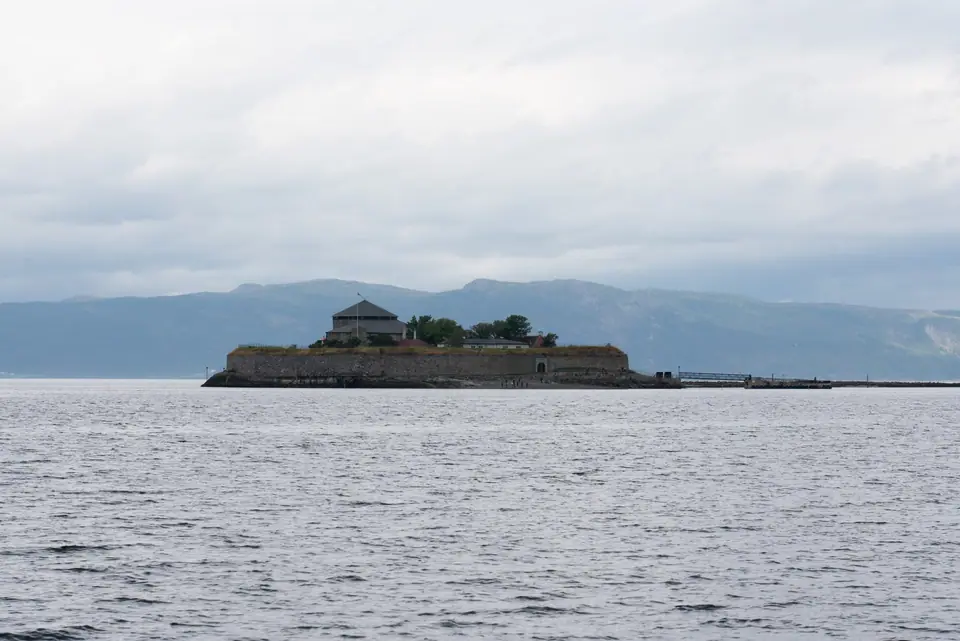
Munkholmen Island Fortress and the Trondheimsfjord
Ride the summer ferry from Ravnkloa to Munkholmen, site of Norway's oldest Benedictine abbey (1028) and a 1658 circular fortress in the 130-km fjord.
Rising from the open waters of the Trondheimsfjord just 1.3 kilometres (about 2 kilometres from the central square) northwest of Brattøra and the mouth of the Nidelva, Munkholmen (Old Norse Hólmr or Niðarhólmr, meaning Monk's islet) is a protected 13,000-square-metre (13-decare or 3.2-acre) island whose layered stone walls span more than a millennium of Norwegian history.
Viking Execution Site and Nidarholm Benedictine Abbey
Before King Olav Tryggvason founded Trondheim in 997, the Jarls of Lade used the rocky islet as an execution ground. According to Snorri Sturluson's sagas, when Olav Tryggvason arrived in 995 during the revolt against Jarl Haakon Sigurdsson, the severed heads of Haakon and his thrall Tormod Kark were mounted on stakes (nidstang) on the island facing the fjord as a warning to approaching ships. In 1028, King Cnut the Great (king of England, Denmark, and Norway) founded Nidarholm Abbey (Monasterij sancte Marie de Holm) here, dedicated to St. Mary and consecrated around 1031, making it Norway's oldest known Benedictine monastery. An early 11th-century Romanesque round church stood at the island's highest point alongside a rectangular stone church built around 1100 and a four-winged cloister uncovered during archaeological excavations between 1967 and 1970. The abbey suffered major fires in 1210, 1317, and 1531 before being abandoned at the Lutheran Reformation in 1537.
The 1658 Fortress, Count Griffenfeld, and Wooden Nails
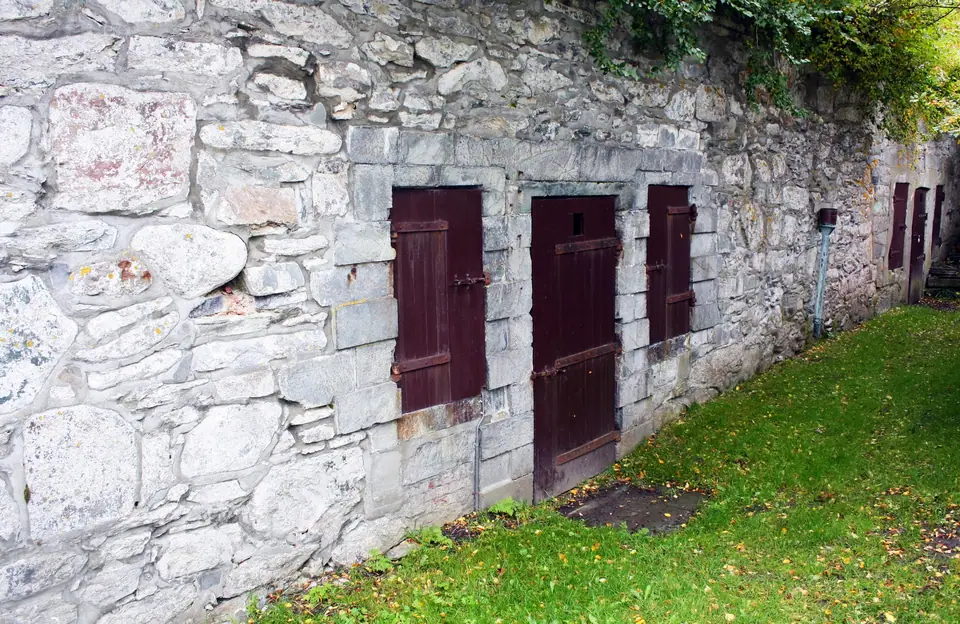
Following the Swedish siege of Trondheim during the Dano-Swedish War of 1658 to 1660, construction of a coastal fortress on the island began in 1658 and finished in 1661, enclosing the medieval round church foundations inside a central circular stone rotunda and outer star-shaped ramparts. Until the fortress ceased military operations in 1893, the rotunda also served as a state prison. Its most famous inmate was Danish statesman Count Peder Schumacher Griffenfeld, transferred here from Copenhagen in 1671 and held for 18 years; Swedish naval officer Lars Benzelstierna was later imprisoned here in 1790. During the 1940 to 1945 German occupation of Norway, the Wehrmacht installed anti-aircraft batteries on Munkholmen to protect the Trondheim submarine base and retrofitted the rotunda vaults as ammunition magazines, fastening the wooden floorboards with wooden nails so soldiers' hobnailed boots could not strike sparks. From May to September, passenger boats depart regularly from Ravnkloa to the island for guided tours, swimming, and a summer café; check the official site for sailing times.
The 130-Kilometre Trondheimsfjord Ecosystem
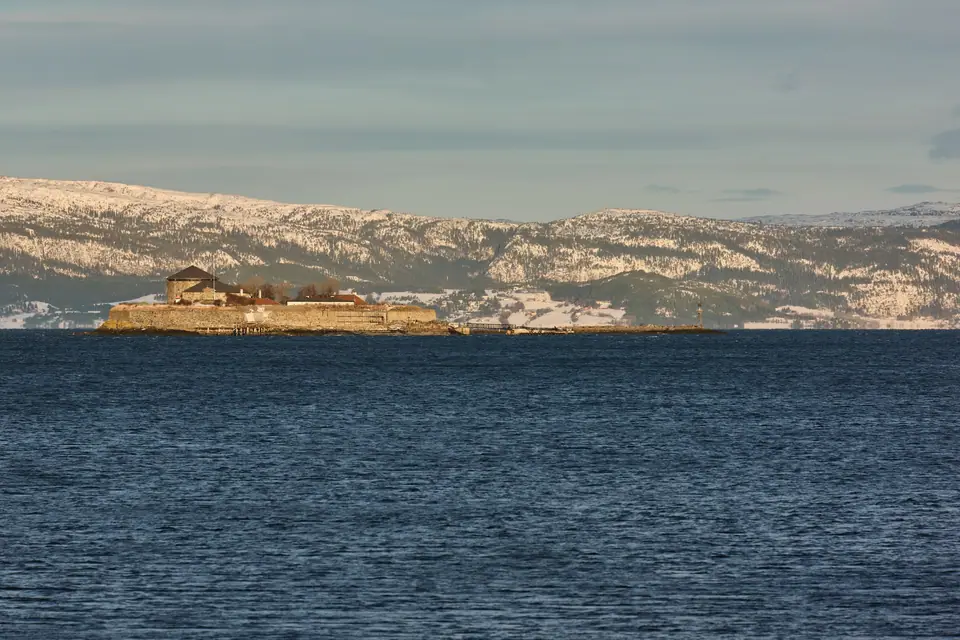
Munkholmen sits inside the Trondheimsfjord, Norway's third longest fjord, stretching 126 to 130 kilometres from Ørland and Agdenes on the Norwegian Sea to Hjellbotn in Steinkjer Municipality. Covering 1,420 square kilometres of water surface with a volume of 235 cubic kilometres and an average depth of 165 metres, the fjord reaches its maximum depth of 617 metres at Agdenes. Divided by underwater sills at Agdenes, Tautra, and Skarnsundet into three deep basins (Ytterfjorden, Midtfjorden, and Innerfjorden) around its largest islands Ytterøya and Tautra, the main fjord remains ice-free all year and supports at least 90 fish species, deep-water cold coral reefs (Lophelia pertusa), and four famous salmon rivers: the Gaula, Orkla, Stjørdalselva, and Verdalselva.
What to See on Foot Around Munkholmen Island
Once the passenger boat from Ravnkloa docks at the sheltered landing jetty on Munkholmen, visitors step onto a grassy outer ring of seventeenth-century star-shaped ramparts surrounding the central circular stone rotunda. Because the entire island covers just 13,000 square metres, you can walk its perimeter path in a quarter of an hour while looking back toward the Midtbyen skyline, where the green spire of Nidaros Cathedral aligns directly with Munkegata, Stiftsgården, and the hills of Kristiansten Fortress and Bymarka.
Inside the thick masonry walls of the 1658 to 1661 central tower, guided tours descend into the dim vaulted casemates and climb to the timber-roofed gun platform. Guides point out the low stone alignments of the medieval Benedictine round church, the cell chamber associated with Count Peder Schumacher Griffenfeld's eighteen-year imprisonment, and the Second World War wooden pegs driven into the planking when German anti-aircraft crews stored shells inside the rotunda. Outside the fortress walls on the southern and western shore, flat coastal rocks and a small shallow cove draw swimmers and picnickers on warm July and August afternoons, served by a seasonal café inside the historic commandant's building.
Geography and Marine Life of the Trondheimsfjord
Looking northwest and northeast from the outer ramparts of Munkholmen gives a clear sense of how the 130-kilometre Trondheimsfjord operates as an inland sea across central Norway:
- Three Deep Basins and Underwater Sills: Shallow glacial thresholds at Agdenes near the outer coast, at Tautra island in the middle reach, and at the narrow Skarnsundet strait divide the fjord into three deep basins while accelerating tidal currents across the sills.
- Cold-Water Coral Reefs: Those nutrient-rich currents over the Tautra and Agdenes sills sustain deep-water reefs of white stony coral (Lophelia pertusa) along with diverse sponges, crustaceans, and ninety recorded species of fish.
- Four Major Salmon Rivers: Snowmelt and rainfall from the surrounding mountains feed the Gaula, Orkla, Stjørdalselva, and Verdalselva, along with the Nidelva, making the fjord a vital migration corridor for wild Atlantic salmon.
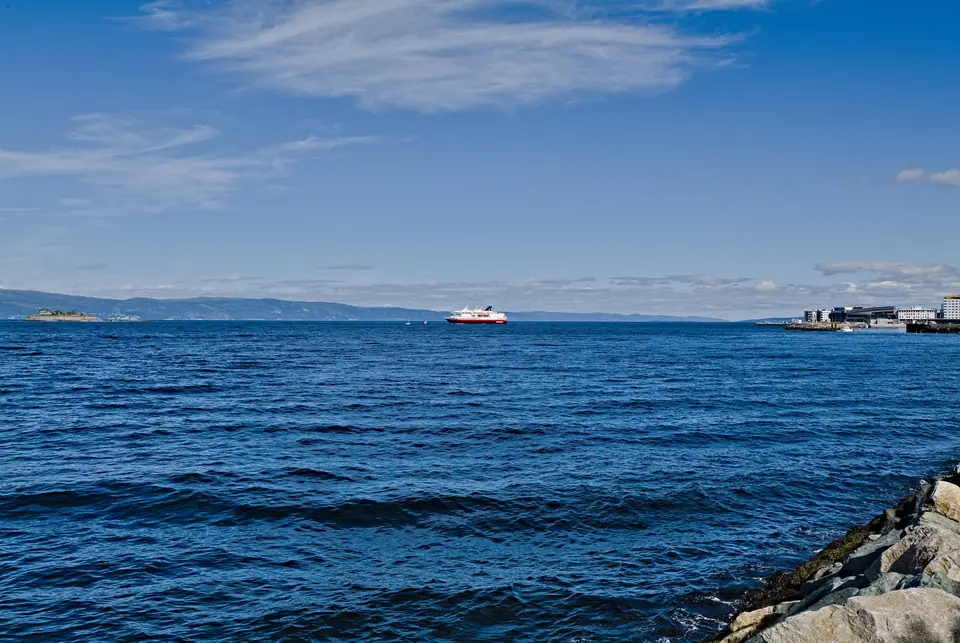
- Ice-Free Maritime Corridor: Tempered by North Atlantic water, the main fjord channel remains free of sea ice through the winter months, allowing daily Hurtigruten and Havila coastal ships and high-speed passenger catamarans from Brattøra to sail year-round.
Because the Ravnkloa passenger boat to Munkholmen runs seasonally from May through September (check our seasonal guide), spring and summer visitors should build the crossing into a clear morning or afternoon alongside a seafood stop at Ravnkloa Fish Hall (see our food guide). Outside the ferry months, the finest vantage points over Munkholmen are the waterfront boardwalk behind Pirbadet on Brattøra and the western ramparts of Kristiansten Fortress.
Even on a calm summer afternoon, breezes out on the open water between Ravnkloa and the island feel noticeably cooler than the sheltered avenues of Midtbyen. Bringing a windproof layer and comfortable walking shoes for the uneven grass ramparts and stone steps inside the rotunda makes the excursion comfortable, and the return boat ride offers a front-row view of the Fjordgata timber wharves and the glass top box of Rockheim.
Traveller tips
Real advice from people who have been to Munkholmen Island Fortress and the Trondheimsfjord. Every tip is read by our team before it goes live.
No tips yet. Been here? Yours could be the first.
Thank you! Your tip will appear here after a quick review.
More in Trondheim
Continue exploring Trondheim with related neighbourhood, food, and planning guides

How to Get to Trondheim: Værnes Airport, Rail Lines and Port
Trondheim, Norway
Where to Stay: Midtbyen, Bakklandet, Solsiden and Brattøra
Trondheim, Norway
Best Time to Visit: Monthly Weather, Daylight and Seasons
Trondheim, Norway
Three-Day Trondheim Itinerary: Cathedral, Fjord and Bymarka
Trondheim, Norway
