


























Best Time to Visit Uppsala: Seasons, SMHI Weather & Valborg Calendar
Month-by-month weather patterns from SMHI data, daylight changes, and seasonal highlights in Uppland.
Located immediately south of the 60th parallel north on the inland plains of Uppland, Uppsala experiences a humid continental climate (Köppen Dfb) moderated slightly by the Gulf Stream, the Baltic Sea, and the northern bays of Lake Mälaren. According to official 1981 to 2010 climate normals from the Swedish Meteorological and Hydrological Institute (SMHI), the city enjoys four distinct seasons, around 1,775 hours (1,774.9 hours) of visible sunshine per year, and 575.6 millimetres of annual precipitation.
Because of its northerly latitude, daylight shifts dramatically across the calendar, from over 18 to 19 hours of visible sunshine around the late-June summer solstice to under 6 hours around the December winter solstice. Choosing when to visit depends on whether you want to witness Sweden's liveliest student spring festival, tour Carl Linnaeus's gardens in peak summer bloom, or explore the Gothic cathedral and museums under a blanket of winter snow.

Spring (April to May): Valborg Festivities and Blooming Gardens
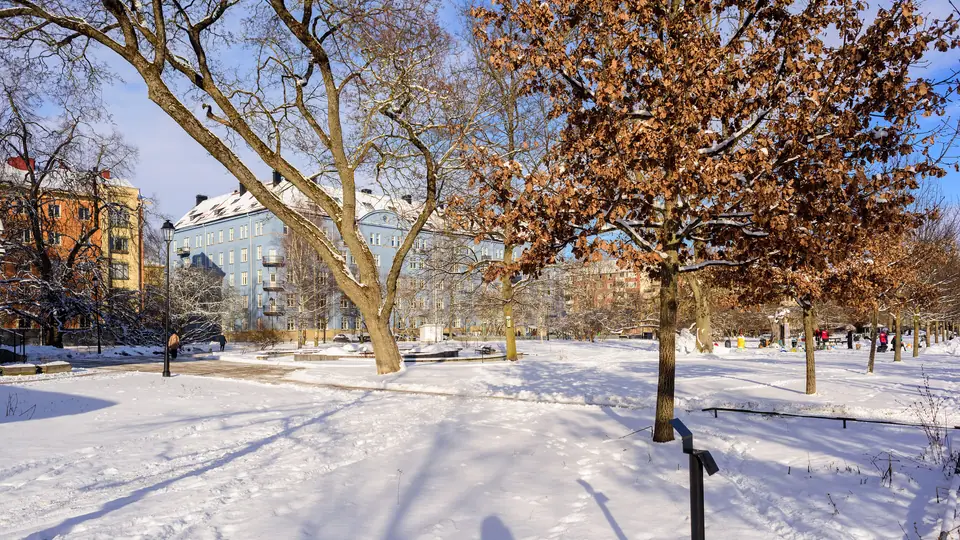
After winter snow cover, which averages around 100 days a year, melts away in mid- to late March, spring arrives rapidly across the Fyris plain. Average daily highs climb from 3.8°C in March (overnight low -3.3°C) to 10.1°C in April (low 0.4°C) and a comfortable 16.4°C in May (low 5.1°C). Ongoing climate measurements show that late winter and early spring have warmed noticeably since the late 19th century, with March recording an increase of more than 3°C compared to the 1861 to 1890 period, while January, February, and March have each risen by 1.5°C or more between the 1951 to 1980 and 1981 to 2010 series (an annual warming of around 0.9°C). Spring is also the driest part of the year in Uppsala, with monthly precipitation averaging just 29.7 mm in February, 32.6 mm in March, 31.7 mm in April, and 38.7 mm in May, though brief late-April snow flurries can occasionally occur, most notably on the night between 30 April and 1 May 2014, when approximately 15 centimetres of snow fell across the city.
On 30 April, the entire city celebrates Valborgsmässoafton (Sista april) with the morning Forsränningen raft race down the Fyrisån, midday herring lunches, and the afternoon cap-donning ceremony on Carolinabacken outside Carolina Rediviva. By mid-May, the formal beds of the Botanical Garden and Linnaean Garden burst into leaf and flower, and outdoor café tables line Östra Ågatan.
Summer (June to August): Long White Nights and Lake Mälaren Excursions
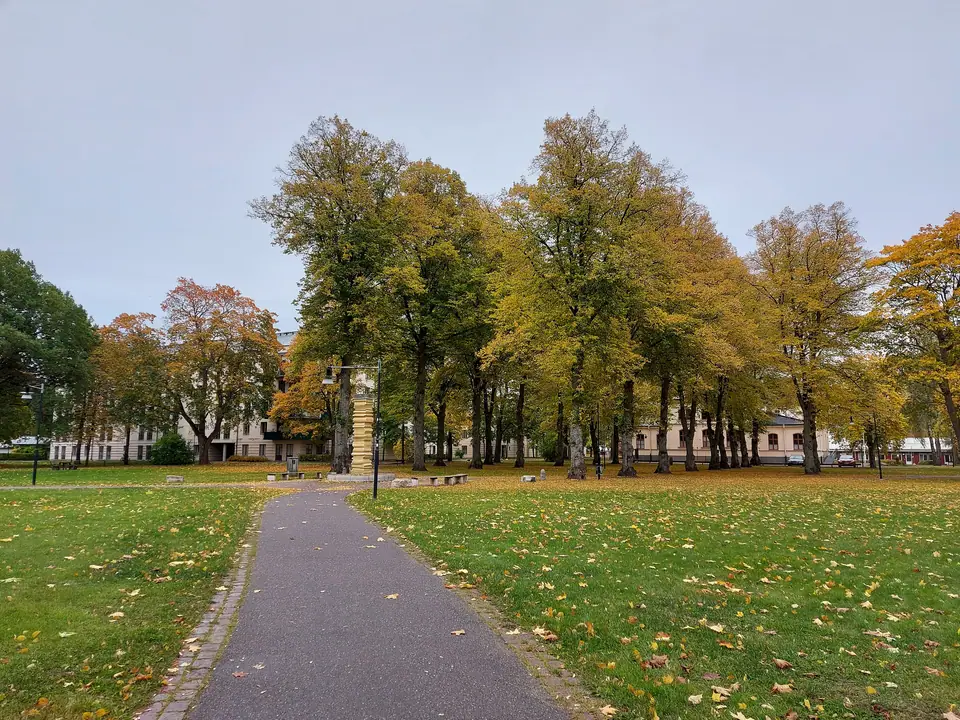
Summer normally arrives in the middle of May and lasts until late September, bringing Uppland's warmest temperatures and bright northern nights. Average daily highs reach 19.8°C in June (overnight low 9.4°C), peak in July, the warmest month of the year, at 22.7°C (low 12.5°C, with a historic warm daily mean of 22.0°C recorded in July 2018 and 20.7°C in July 2021, alongside an all-time record high of 37.4°C set on 9 July 1933, when nearby Ultuna reached 38°C), and average 21.2°C in August (low 11.5°C).
June, July, and August are the prime months for open-air sightseeing: the 1693 Linnaeus Museum and the country estate of Linnés Hammarby open for daily guided tours, vintage steam trains and 1950s railbuses run along the 33-kilometre Lennakatten heritage railway, student nations open their courtyard summer restaurants, and excursion boats and buses connect Uppsala with Sigtuna and Skokloster Castle. Because summer convective showers make June (61.0 mm), July (65.1 mm), and August (73.6 mm, the wettest month of the year) the rainiest period on the calendar, pack a light waterproof jacket alongside sunglasses and walking shoes.
Autumn (September to November): Kulturnatten, Golden Parks and All Light
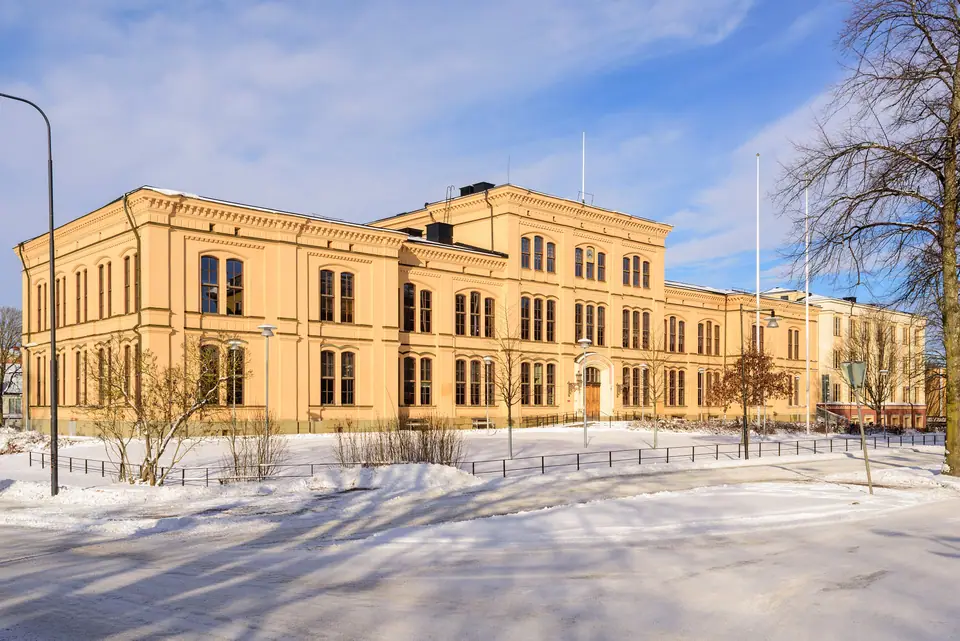
In September (average high 15.9°C, low 7.3°C, rain 52.4 mm) and October (high 9.7°C, low 3.3°C, rain 53.1 mm), university students return in full force to Uppsala University as the maples, limes, and weeping willows along the Fyrisån and Stadsträdgården turn amber and gold. Mid-September brings Kulturnatten (Culture Night), a major city-wide arts festival when museums, galleries, student nations, and churches stay open into the evening with concerts, lectures, and performances. As November days shorten (average high 4.0°C, low -0.8°C, precipitation 52.9 mm), the annual Allt ljus på Uppsala (All Light on Uppsala) festival illuminates historic facades, parks, and bridges across the city centre, turning evening walks along the river embankments into an outdoor light exhibition.
Winter (December to March): Cathedral Concerts, Snow Walks and Semlor
Winter settles in from late November to mid-March, with average daytime highs of 0.7°C in December (low -4.4°C, precipitation 45.6 mm), -0.3°C in January (low -5.6°C, daily mean -2.7°C, precipitation 39.3 mm), and 0.1°C in February (low -6.2°C), and an average annual snowfall of 108 centimetres across the frost-bound Uppland plain (though extreme lows like the -39.5°C record of 24 January 1875, the second-lowest temperature of -33.1°C, or the January 1814 monthly mean of -14.9°C are now history, with temperatures rarely dropping below -30°C today). While outdoor botanical beds rest under snow, Uppsala Cathedral, Gustavianum, Carolina Rediviva, Uppsala Konstmuseum, and the Tropical Greenhouse remain open year-round, and from January until Easter historic bakeries along Östra Ågatan serve warm cardamom semlor and hetvägg. Pack warm thermal layers, a windproof winter coat, gloves, a woollen hat, and non-slip boots for winter walks up the cobbled slopes of Domberget and Kasåsen or out across the snow-covered meadows of Gamla Uppsala. Because seasonal schedules vary between the bright summer tourism months and the quieter winter academic term, always check the official site of individual museums, gardens, heritage railways, and castles for current opening hours before travelling to Uppsala.
Long-term meteorological records at Uppsala highlight both the moderating influence of the Gulf Stream and the wide range between historical temperature extremes immediately south of the 60th parallel north. While the January daily mean stands at -2.7 °C, the highest temperature ever recorded in the city reached 37.4 °C on 9 July 1933 (with 38 °C recorded the same day at Ultuna just south of the centre), and the lowest dropped to -39.5 °C on 24 January 1875. Across the year, winter typically arrives in late November and lasts until mid-March, with snow cover averaging around 100 days annually, whereas summer stretches from mid-May until late September and brings over 18 hours of visible sunshine around the solstice compared with under 6 hours at the December solstice.
Traveller tips
Real advice from people who have been to Best Time to Visit Uppsala: Seasons, SMHI Weather & Valborg Calendar. Every tip is read by our team before it goes live.
No tips yet. Been here? Yours could be the first.
Thank you! Your tip will appear here after a quick review.
More in Uppsala
Continue exploring Uppsala with related neighbourhood, food, and planning guides
Uppsala Castle (Uppsala Slott): Vasa Fortress, Queen Christina & Art Museum
Uppsala, Sweden
Uppsala's Botanical Gardens: Botaniska Trädgården, Linnéträdgården & Hammarby
Uppsala, Sweden
Gamla Uppsala: The Royal Mounds, Vendel History & Medieval Church
Uppsala, Sweden
Carolina Rediviva & the Silver Bible: Uppsala University Library Guide
Uppsala, Sweden
