


























Best Things to Do in Uppsala: Landmarks, Museums & Gardens
The essential Gothic cathedral, academic museums, botanical gardens, and Iron Age royal monuments in and around Uppsala.
Uppsala's sights span more than 1,400 years of Swedish and Nordic history, reaching from Vendel Period royal cremation mounds on the northern plains to French Gothic brickwork, Renaissance royal bastions, and 18th-century scientific gardens. Because the historical core is remarkably compact and divided neatly by the Fyrisån, you can link almost all central landmarks on foot while using green local buses for the archaeological landscape north of town.
To make the most of the city's layout, group your sightseeing by riverbank and ridge elevation. The western quarter of Fjärdingen concentrates ecclesiastical, royal, and university monuments along a shaded north-to-south axis from Domberget to Kasåsen, whereas the flatter eastern bank and southern parks reward slower walks through botanical beds, market halls, and riverside paths.
1. Uppsala Cathedral and Gustavianum on Domberget
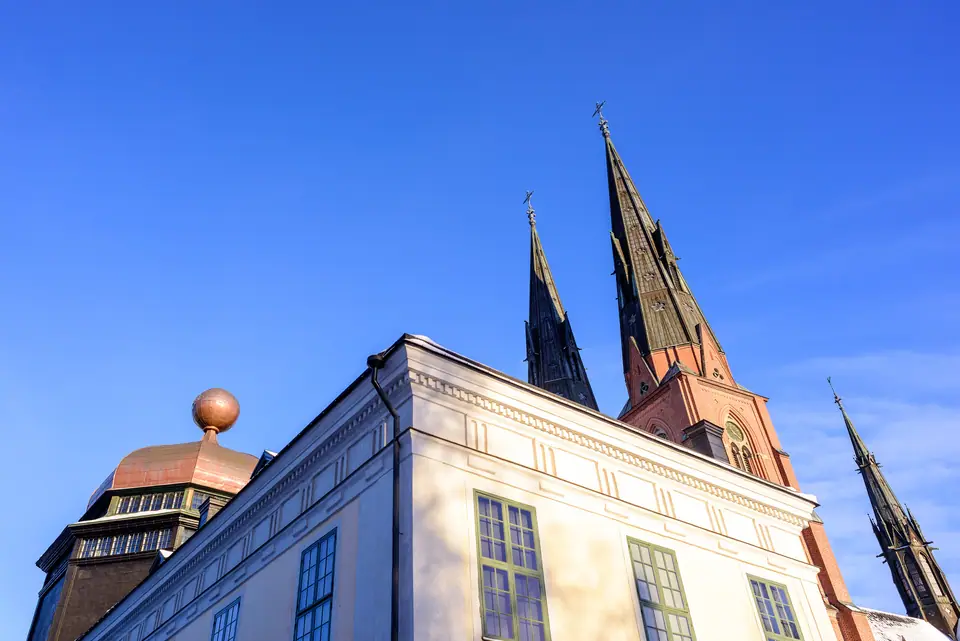
Begin on the cobbled rise of Domberget at Uppsala Cathedral, begun in the 1270s in French brick Gothic style and consecrated in 1435. Rising 118.7 metres above the river, its twin copper-clad spires match the exact 118.7-metre length of the three-aisled nave, making it Scandinavia's largest cathedral. Inside, high brick vaults shelter the gilded silver reliquary shrine of Sweden's patron saint King Eric IX, the frescoed Vasa burial chapel of King Gustav Vasa and his three queens, the funerary monument of King John III, and the grave ledger of botanist Carl Linnaeus and Emanuel Swedenborg, alongside medieval textiles in the northern tower Treasury Museum.
Directly across the square stands the ochre facade of Gustavianum, built between 1622 and 1625 as the historic main building of Uppsala University and reopened in June 2024 following a five-year restoration. Beneath its distinctive rooftop sundial and cupola sits Olaus Rudbeck's 1662 anatomical theatre, built for public dissections before standing medical students. The museum's galleries also display the 1633 Augsburg Art Cabinet, Viking boat-grave helmets and weapons excavated at Valsgärde, and scientific instruments from the university's foundation in 1477, while the 1887 Renaissance Revival University Hall rises just across Universitetsparken.
2. Carolina Rediviva and Uppsala Castle on the Ridge
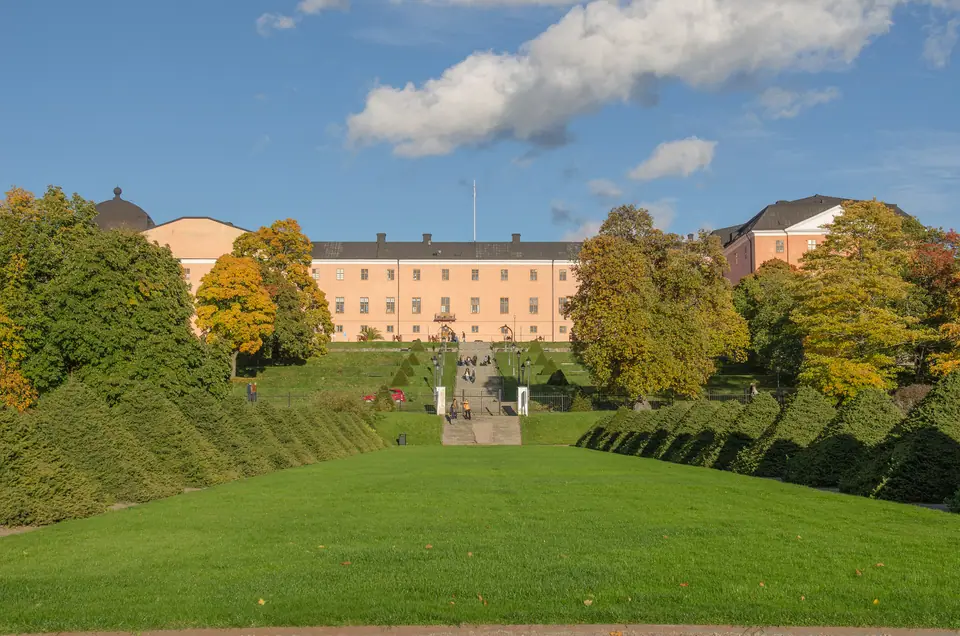
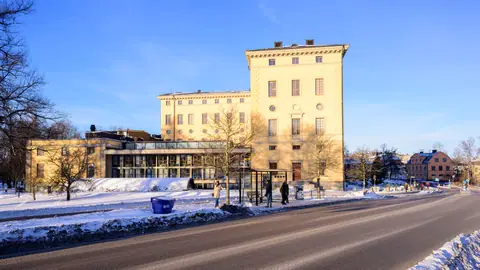
A short walk south up the tree-lined slope of Carolinabacken brings you to Carolina Rediviva, the flagship building of Uppsala University Library completed in 1841. Its ground-floor exhibition gallery displays the 6th-century Codex Argenteus (Silver Bible), written in silver and gold ink on purple-stained vellum in Ravenna, alongside Olaus Magnus's 1539 woodcut map Carta marina and rare musical manuscripts.
From the library forecourt, follow Drottninggatan and the gravel path up the Kasåsen esker to Uppsala Castle, initiated by King Gustav Vasa in 1549. From the cannon ramparts of the Styrbiskop bastion, sweeping views open across the cathedral spires and the plains of Uppland. Inside the castle grounds, you can explore the subterranean brick casemates of Vasaborgen, where the original 16th-century fortress walls survive, and view Swedish modernist paintings and Upsala-Ekeby studio ceramics inside Uppsala Konstmuseum in the southern wing.
3. Carl Linnaeus's Three Gardens and Campus Museums
Uppsala preserves three historic sites linked to physician and botanist Carl Linnaeus (1707 to 1778), covered in detail in our Botanical Garden and Linnaean Garden guide. On Svartbäcksgatan in the northern centre sits the 1655 Linnéträdgården, arranged according to Linnaeus's 1748 sexual classification system, beside the 1693 professor's house that now operates as the Linnaeus Museum. West of the castle lies the expansive Botaniska trädgården, featuring a formal Baroque parterre, the 1802 neoclassical Linneanum orangery, and a Tropical Greenhouse, while the preserved summer estate of Linnés Hammarby sits in the countryside southeast of the city.
In the neighbouring Kåbo district just southwest of the Botanical Garden, two specialist museums add further depth to an academic walk. The Museum of Evolution (Evolutionsmuseet) on Norbyvägen 22 houses university zoological, botanical, and mineralogical collections alongside a palaeontology hall displaying one of the largest permanent exhibitions of Chinese dinosaur skeletons outside China. A few doors away on Norbyvägen 26 stands Bror Hjorths Hus, the red wooden 1943 home and studio of sculptor and painter Bror Hjorth (1894 to 1968), filled with carved wooden reliefs, expressive bronzes, and folk-inspired paintings. Families also walk northwest to Vasaparken to visit Biotopia, a 1910 Art Nouveau biological museum showcasing Scandinavian wildlife dioramas created by naturalist Gustaf Kolthoff.
4. Fyris River Promenades, Saluhallen and UKK
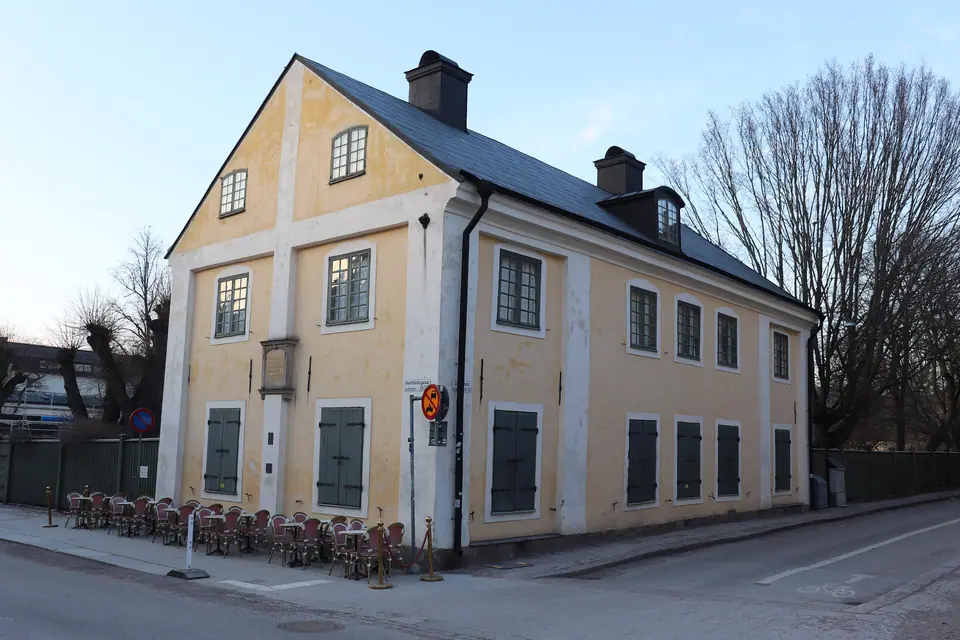
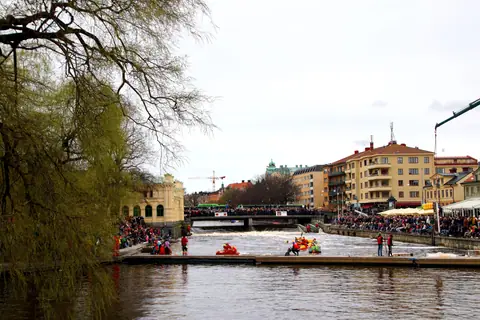
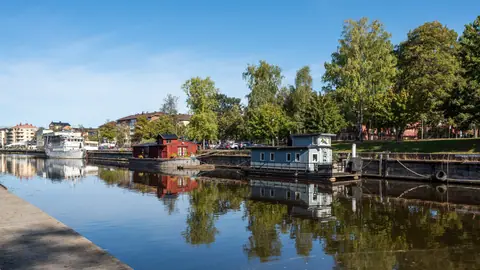
Descending from the western ridge to the Fyris River and Stadsträdgården reveals the everyday rhythm of the city. Footpaths trace the water past the medieval stone arches of Dombron, the rushing Kvarnfallet weir beside the old watermill of Upplandsmuseet, and the fish ladder at Islandsfallet down to the swan pond of Svandammen and the shaded lawns of Stadsträdgården. Along the way, stop at the historic Uppsala Saluhall food hall for an indoor market lunch or pause at a traditional café terrace on Östra Ågatan, and look for the bronze statue and tiny painted kerbstones honouring children's book cat Pelle Svanslös along the quiet lanes of Fjärdingen.
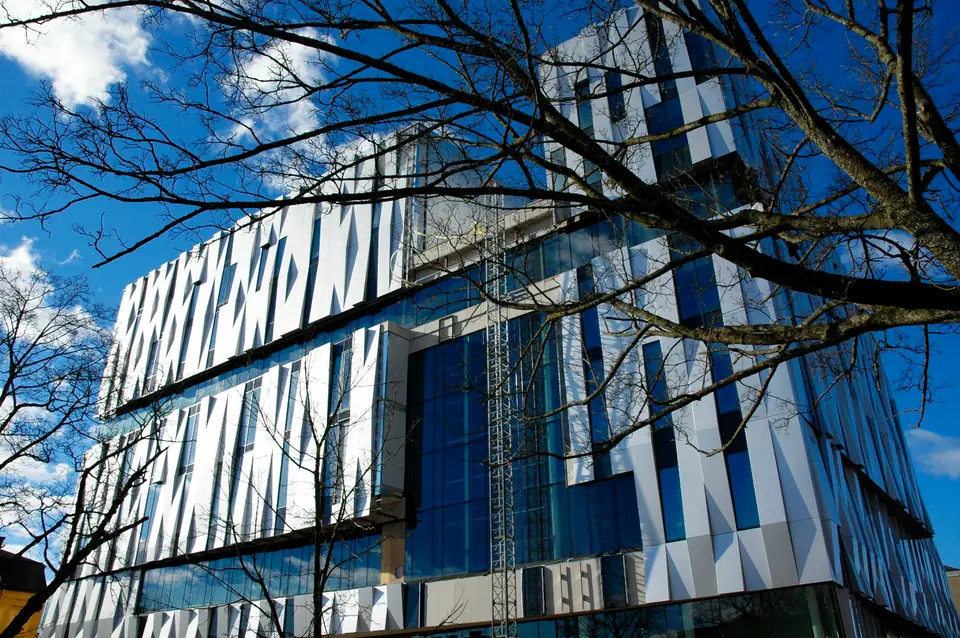
On the eastern side of the railway tracks at Vaksala torg rises Uppsala Konsert & Kongress (UKK), a 14,600-square-metre concert and congress hall designed by Danish architect Henning Larsen and inaugurated on 1 September 2007, whose vertical split-crystal facade reflects the surrounding square and hosts symphonic concerts, touring ensembles, and public exhibitions throughout the year.
5. Gamla Uppsala Royal Mounds and Heritage Excursions
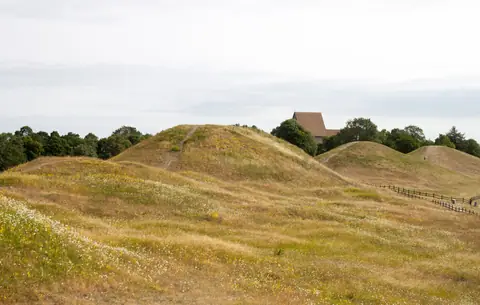
No visit to Uppsala is complete without riding a green UL bus 5 kilometres north from Stora Torget or Uppsala Central Station to the Gamla Uppsala Royal Mounds. Here three monumental burial mounds dating from around AD 550 to 625 rise across the open Fyris plain beside the flat-topped assembly mound of Tingshögen, the posthole terrace of an Iron Age royal banqueting hall, the 12th-century stone church that served as Sweden's former cathedral, and the archaeological displays of Gamla Uppsala Museum. In summer, you can also board a vintage steam train or 1950s railbus on the narrow-gauge Lennakatten heritage railway from Uppsala Östra; check the official site of each attraction for seasonal timetables and admission details before planning your route across the city and surrounding Uppland countryside for your trip, and allow unhurried time along the riverbanks, botanical paths, cobbled academic squares, and university parks.
Traveller tips
Real advice from people who have been to Best Things to Do in Uppsala: Landmarks, Museums & Gardens. Every tip is read by our team before it goes live.
No tips yet. Been here? Yours could be the first.
Thank you! Your tip will appear here after a quick review.
More in Uppsala
Continue exploring Uppsala with related neighbourhood, food, and planning guides
Gamla Uppsala: The Royal Mounds, Vendel History & Medieval Church
Uppsala, Sweden
Carolina Rediviva & the Silver Bible: Uppsala University Library Guide
Uppsala, Sweden
Uppsala Student Nations & Valborg: Academic Traditions & Walpurgis Night
Uppsala, Sweden
Fyris River (Fyrisån) & Stadsträdgården: Bridges, Parks & Pelle Svanslös
Uppsala, Sweden
