


























Uppsala Castle (Uppsala Slott): Vasa Fortress, Queen Christina & Art Museum
History of the 16th-century royal fortress on the Kasåsen esker, its Renaissance bastions, and Uppsala Art Museum.
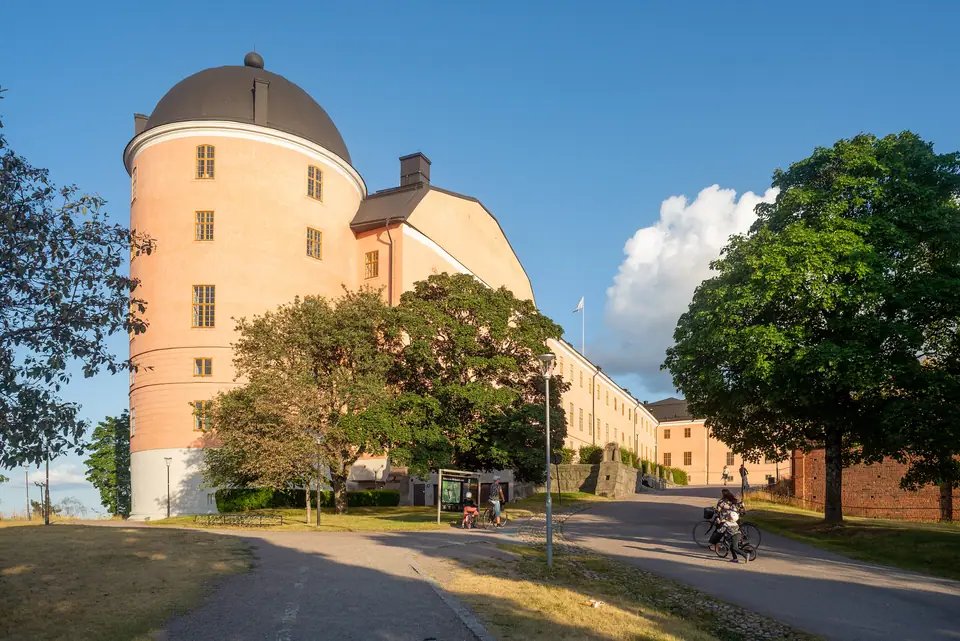
Commanding the crest of the Kasåsen gravel ridge south of the cathedral, Uppsala Castle (Uppsala slott) dominates the city skyline with its salmon-pink walls and cylindrical corner towers. Following the Dacke War peasant uprising against royal taxation and religious reform, King Gustav Vasa began constructing a fortified royal stronghold here in 1549 to replace the medieval archbishop's castle near Uppsala Cathedral and the earlier royal estate at Föresäng in Islandet, which had burned down in 1543.
Built atop the steep esker overlooking the Fyrisån plain, the original complex included royal apartments in the southwest corner and two massive western earth-and-brick bastions named Gräsgården and Styrbiskop ('Bishop-Controller'). Because relations between the monarchy and the church authorities remained tense after the Protestant Reformation, the cannon battery on the Styrbiskop bastion was trained directly upon the cathedral below as an unmistakable statement of royal supremacy over ecclesiastical power.
Renaissance Expansion Under Eric XIV, John III and Charles IX
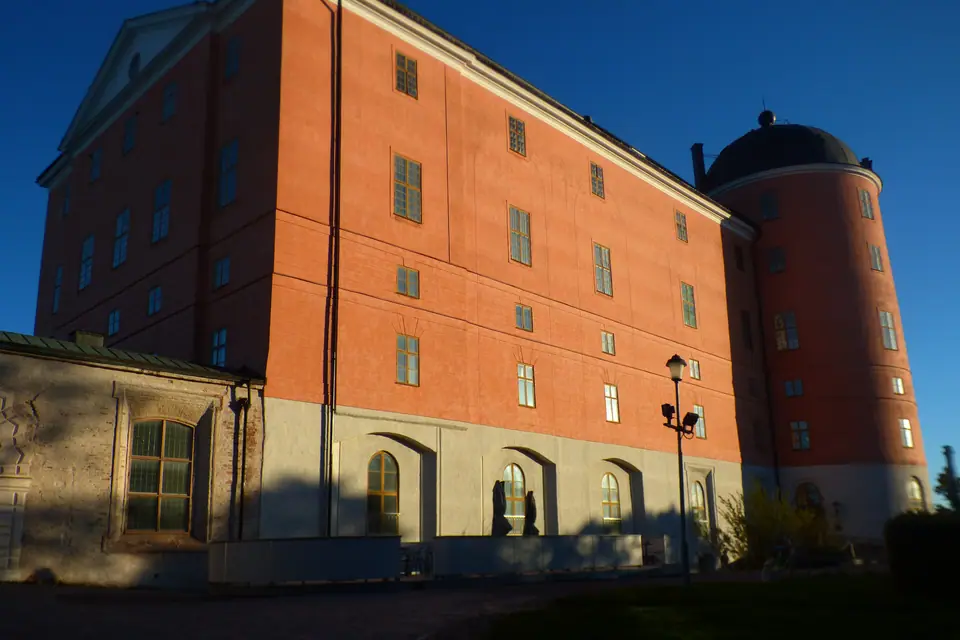
Completed for royal residence by 1567 during the reign of Gustav Vasa's eldest son Eric XIV, the fortress was soon enlarged with ceremonial representation rooms to the east of the royal apartments, including a Hall of State and a castle chapel. After a major fire in April 1572 damaged both the original apartments and the ceremonial wing during the reign of King John III, architect Franciscus Pahr was commissioned to transform the fortress into a magnificent Italianate Renaissance palace bounded by colonnaded courtyards.
Before his death in 1580, Pahr completed the western half of the new south wing, and his successor Willem Boy finished the eastern half along with the southwest and southeast round towers and a monumental multi-storey stucco altar reredos in the castle church, parts of which remain visible inside the structure today. Boy and King John III also initiated an ambitious U-shaped palace plan featuring a long, narrow eastern wing known as Långslottet ('The Long Castle'), two-thirds of which was standing by John III's death in 1592 before King Charles IX completed the eastern facade and its northeastern corner tower overlooking a large terrace garden at the base of the hill.
The Sture Murders, Imperial Decisions and Queen Christina
Throughout the 16th and 17th centuries, when Uppsala functioned as Sweden's ceremonial secondary capital, the Castle Hall of State (Rikssalen) and dungeons witnessed pivotal moments in European history:
- The Sture Murders (May 1567): During a period of acute mental instability while holding leading nobles prisoner at the castle for alleged treason, King Eric XIV personally stabbed diplomat Nils Svantesson Sture in his cell and ordered guards to execute several other imprisoned aristocrats, including Nils's father Svante Stensson Sture, before wandering into the countryside in remorse.
- Coronation Banquets and War Councils: Both King Charles IX (1607) and King Gustav II Adolf (1617) celebrated their lavish coronation banquets inside the Rikssalen after being crowned in the cathedral, and in 1630 Gustav II Adolf took the formal state decision here for Sweden to enter the Thirty Years' War in Germany.
- Abdication of Queen Christina (6 June 1654): Inside the Rikssalen on 6 June 1654, Gustav II Adolf's daughter Queen Christina formally relinquished the crown and regalia of Sweden in favour of her cousin Charles X Gustav before converting to Catholicism and departing for Rome.
On 16 May 1702, the catastrophic Uppsala city fire gutted the Renaissance palace. Deemed too costly to restore in full during the Great Northern War, large quantities of bricks and dressed stone were quarried from the ruins and shipped by barge to build the new Royal Palace in Stockholm. In 1744, royal architect Carl Hårleman began rebuilding the eastern cross-wing in a restrained French Classical style, though work halted in 1762 for lack of funds, leaving the planned northern wing unbuilt. A facade renovation in 2002 to 2003 restored Hårleman's 1740s salmon-pink plaster and ochre detailing, and the northern section continues to serve as the official residence of the Governor of Uppsala County, where future United Nations Secretary-General Dag Hammarskjöld spent his youth while his father Hjalmar Hammarskjöld served as governor.
Uppsala Konstmuseum and Upsala-Ekeby Ceramics
Since 1995, the southern wing of Uppsala Castle has housed Uppsala Art Museum (Uppsala konstmuseum). The municipal collection encompasses around 14,000 artworks and craft objects assembled over 80 years, tracing Swedish art from the late 1800s to contemporary installations, alongside a welcoming museum café and art shop. Highlights include wildlife and landscape paintings by Uppland artist Bruno Liljefors, expressive sculptures and paintings by Bror Hjorth, works from the Uppsala University art collection, and rotating exhibitions of Nordic and international contemporary art.
A dedicated gallery celebrates a 1981 donation of 1,300 ceramics from the historic Upsala-Ekeby porcelain, brick, and tile factory, showcasing mid-century modernist vases, bowls, wall plaques, and figurines created by pioneering female and male ceramic designers Anna-Lisa Thomson, Mari Simmulson, Ingrid Atterberg, Hjördis Oldfors, and Vicke Lindstrand.
Vasaborgen Ruins, Gunilla Bell and Castle Terrace Views
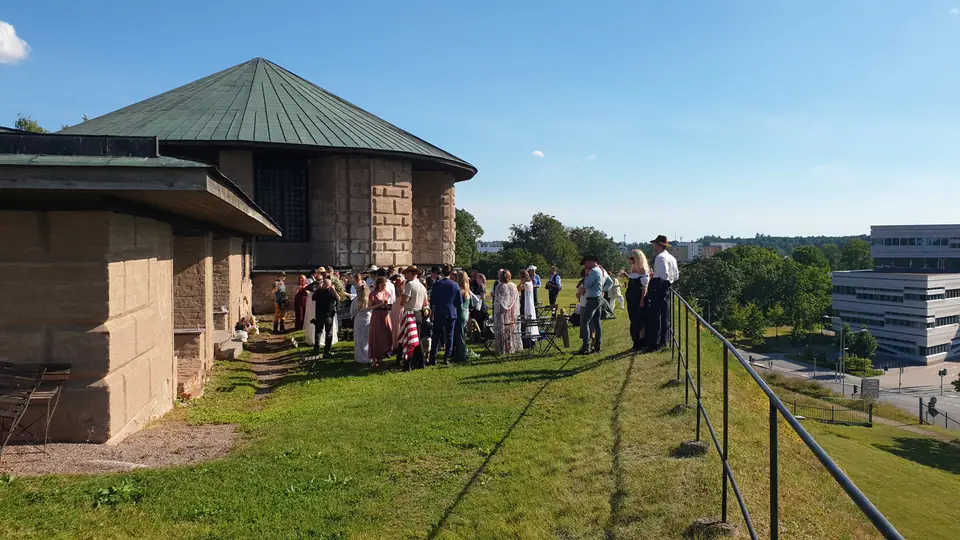
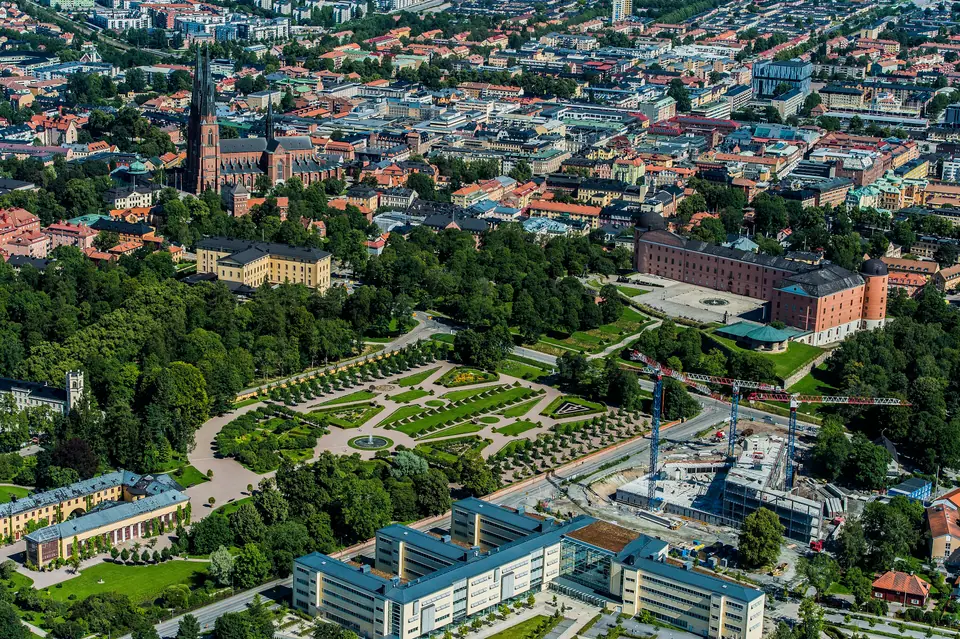
Outside on the western ramparts, the seasonal historical museum Vasaborgen leads visitors underground into the vaulted brick casemates, cannon embrasures, and foundations of Gustav Vasa's original 1549 royal apartments preserved inside the Gräsgården and Styrbiskop bastions, where guided tours and audiovisual displays recount the Sture Murders, Reformation conflicts, and 16th-century court life. Outside the northern entrance stands a bronze bust of Dag Hammarskjöld looking out over the city skyline and cathedral towers. From the panoramic gun terrace beside the historic Gunilla Bell (Gunillaklockan), where thousands of students and residents gather on the evening of 30 April during Valborg celebrations to hear the curator of Uplands nation deliver the traditional speech to spring, a steep gravel footpath descends directly to the Botanical Garden and Carolina Rediviva. Allow time to walk the perimeter of both western bastions to appreciate the sheer scale of the 1549 earthworks and the wide view toward the Fyrisån valley, the twin cathedral spires, and the eastern Uppland plain, and check the official site for museum, Hall of State, and bastion opening hours before climbing the hill during your visit to Uppsala.
Traveller tips
Real advice from people who have been to Uppsala Castle (Uppsala Slott): Vasa Fortress, Queen Christina & Art Museum. Every tip is read by our team before it goes live.
No tips yet. Been here? Yours could be the first.
Thank you! Your tip will appear here after a quick review.
More in Uppsala
Continue exploring Uppsala with related neighbourhood, food, and planning guides
Carolina Rediviva & the Silver Bible: Uppsala University Library Guide
Uppsala, Sweden
Uppsala Student Nations & Valborg: Academic Traditions & Walpurgis Night
Uppsala, Sweden
Fyris River (Fyrisån) & Stadsträdgården: Bridges, Parks & Pelle Svanslös
Uppsala, Sweden
What to Eat in Uppsala: Saluhallen, Historic Konditorier & Swedish Fika
Uppsala, Sweden
