


























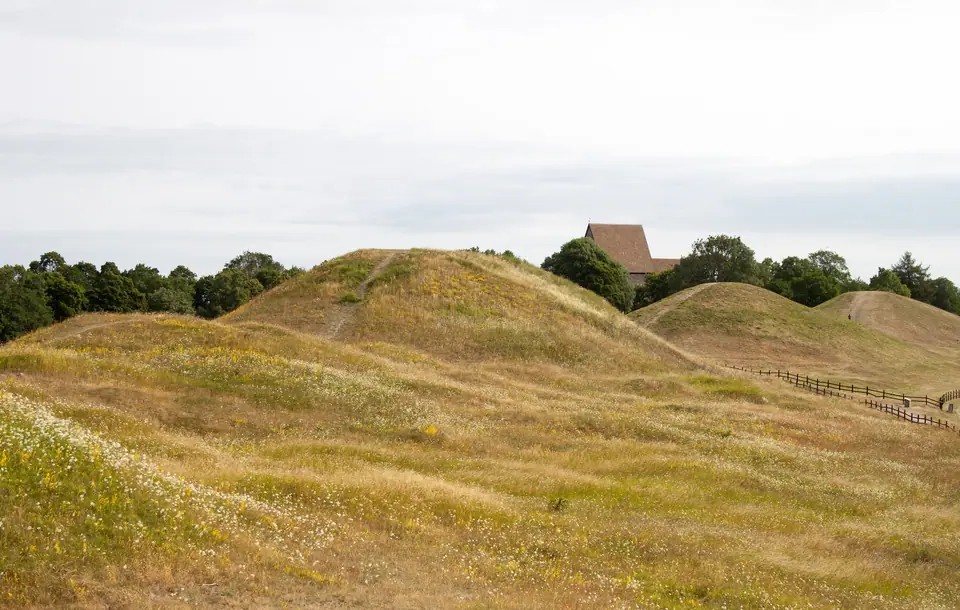
Gamla Uppsala: The Royal Mounds, Vendel History & Medieval Church
Exploring Scandinavia's Iron Age royal seat, 6th-century Vendel cremation mounds, and Sweden's first archbishopric.
Five kilometres north of modern Uppsala across the cultivated Fyris plain lies Gamla Uppsala ('Old Uppsala', recording 17,973 parish inhabitants in 2016), the prehistoric political, economic, and religious heart of Svealand and the original bearer of the name Uppsala. From the 3rd and 4th centuries AD through the Vendel Period and Viking Age, early Scandinavian sources including the skaldic poem Ynglingatal, the Westrogothic Law, the Gutasaga, and Snorri Sturluson's sagas referred to the rulers of the Swedes (Suiones) of the legendary Yngling dynasty simply as the 'Kings at Uppsala'.
Throughout the Iron Age and early Middle Ages, when Gamla Uppsala was the largest village of Uppland, the settlement formed the core of the royal crown domains known as Uppsala öd, anchored by the royal manor (kungsgården). Every year in late February or early March, Gamla Uppsala hosted the Thing of all Swedes, where the king proclaimed the summer naval fleet levy and rowers and commanders were decided under the Law of Uppland, alongside the pre-Christian Dísablót sacrifice and the great Disting winter market fair.
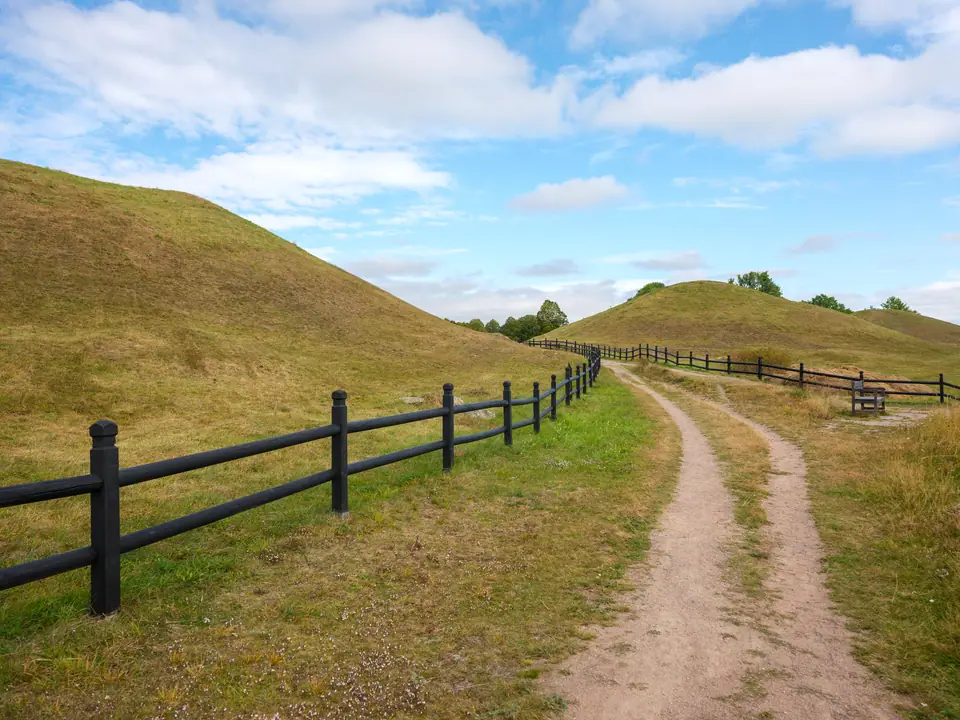
Kungshögarna: The Three Royal Burial Mounds
Rising in a dramatic southwest-to-northeast line along the natural glacifluvial gravel ridge of Uppsalaåsen, the three monumental Kungshögarna (Royal Mounds), known today as the East Mound (Östhögen), Middle Mound (Mitthögen), and West Mound (Västhögen), measure 55 to 70 metres in diameter and stand 7 to 11 metres high. In early antiquarian folklore, the barrows were called the mounds of Odin, Freyr, and Thor, whereas 20th-century archaeologist Birger Nerman associated them with the semi-legendary 6th-century Yngling kings Egil, Aun, and Adils mentioned in Beowulf and Ynglingasaga.
To test whether the mounds were natural hills or royal tombs, Crown Prince Carl (later King Charles XV) initiated scientific excavations led by National Antiquarian Bror Emil Hildebrand, who tunnelled into the East Mound in 1846 and excavated the West Mound in 1874. Both digs uncovered central stone cairns covering early Vendel Period cremation layers dating between AD 550 and 625. Finds from the pyres included fragments of a decorated bronze-plated helmet closely related to the Sutton Hoo helmet in England, gold filigree ornaments, glass gaming pieces, Frankish glass vessels, and the cremated remains of horses, dogs, and birds of prey. Immediately south and east of the three great mounds spreads a vast Iron Age grave field that originally held 2,000 to 3,000 burials, of which roughly 300 smaller barrows remain visible across the meadow today.
Tingshögen and the 50-Metre Iron Age Royal Hall
Directly east of the East Mound stands Tingshögen (the Thing Mound), a broad flat-topped earthen platform used during the Middle Ages as the open-air assembly stage for the Thing of all Swedes, where laws were recited and kings elected; in the 16th century, King Gustav Vasa stood atop Tingshögen to address and negotiate with the assembled peasantry of Uppland.
A short walk north across the road rises Kungsgårdsplatån, an artificially levelled clay terrace where modern geophysical surveys and archaeological excavations revealed the massive timber postholes and stone hearth foundations of a 50-metre-long Vendel Period royal banqueting hall that burned down around the start of the Viking Age, alongside craft workshops and rows of monumental wooden posts that demarcated the sacred royal precinct.
The Pagan Temple Tradition of Adam of Bremen and Snorri
In the 11th century, the German chronicler Adam of Bremen wrote a famous description of the Temple at Uppsala, portraying a sanctuary built of gold where the Swedes worshipped statues of three gods, Thor in the centre flanked by Odin and Freyr, and gathered every nine years for a common provincial festival in which nine male creatures of every kind were offered and hung in the adjacent sacred grove. Danish chronicler Saxo Grammaticus and Icelandic historian Snorri Sturluson likewise linked Odin and Freyr to Gamla Uppsala, recording that Freyr established his chief seat here and endowed the temple with land and taxes that became the Uppsala öd.
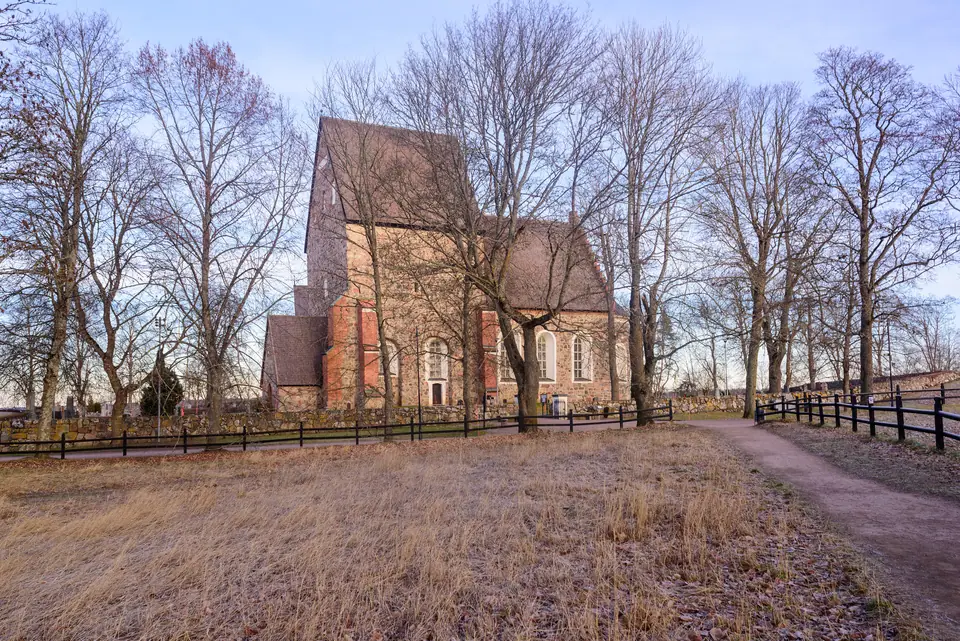
Gamla Uppsala Church: Sweden's 1164 Cathedral
Beside the royal hall terrace stands Gamla Uppsala Church (Gamla Uppsala kyrka), erected in the 12th century over timber postholes that archaeologists associate with an earlier wooden church or hall. When Pope Alexander III established Sweden's independent church province in 1164 under the Cistercian monk Stefan of Alvastra as Archbishop of Uppsala, this large three-aisled Romanesque stone basilica with a central tower and apse transepts served as the cathedral of the realm. After a severe fire around 1240, the ruined western nave and transepts were demolished and the archiepiscopal seat moved in 1273 to Uppsala Cathedral in Östra Aros. The surviving eastern choir, apse, and central tower were vaulted in brick during the Middle Ages to form the current parish church, where Uppsala astronomer Anders Celsius (1701 to 1744) is buried beneath the chancel.
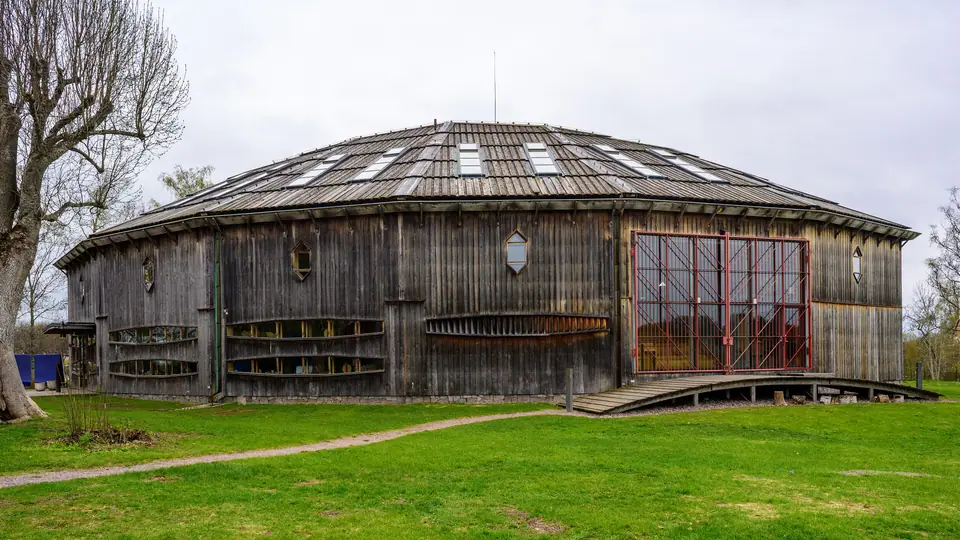
Gamla Uppsala Museum, Disagården and UL Bus Links
On the western edge of the site, Gamla Uppsala Museum displays the original gold filigree mask, helmet plates, sword pommels, and cremation urns recovered from the East and West Mounds, accompanied by scale models of the 50-metre Iron Age royal hall, Viking Age boat graves, and the 12th-century cathedral. Opposite the mounds sits the historical inn Odinsborg, known for serving traditional horn mead and waffles, while a short walk north leads to the Disagården open-air museum of historic Uppland timber farmhouses and rural buildings. Because the entire ridge is an open archaeological park with well-maintained gravel paths and clear information boards, visitors can walk freely around the barrows and church grounds in every season of the year and enjoy wide views across the Fyris Wolds agricultural landscape toward the cathedral spires of modern Uppsala on the southern horizon. Green UL city buses from Stora Torget and Uppsala Central Station reach Gamla Uppsala in 15 minutes, or you can cycle north along the Fyrisån and pair your visit with the Valsgärde boat-grave exhibition at Gustavianum; check the official site for seasonal museum opening hours and guided walks across the archaeological park before setting out across the plain.
Traveller tips
Real advice from people who have been to Gamla Uppsala: The Royal Mounds, Vendel History & Medieval Church. Every tip is read by our team before it goes live.
No tips yet. Been here? Yours could be the first.
Thank you! Your tip will appear here after a quick review.
More in Uppsala
Continue exploring Uppsala with related neighbourhood, food, and planning guides
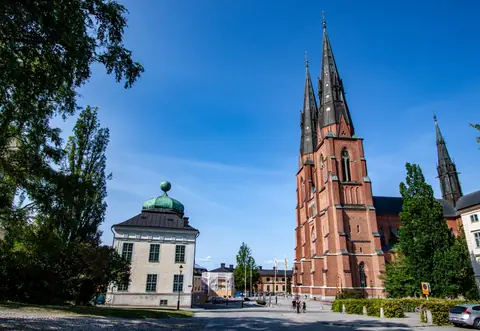
Uppsala Cathedral (Domkyrka): Gothic Architecture, Royal Tombs & Treasury
Uppsala, Sweden
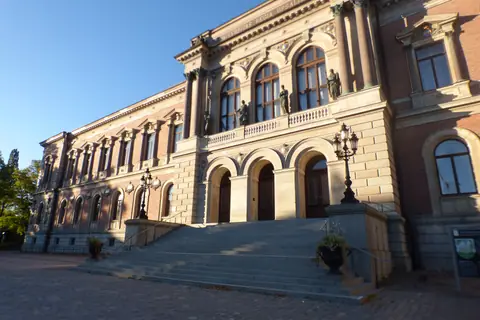
Gustavianum & University Hall: Rudbeck's Anatomical Theatre & Academic Uppsala
Uppsala, Sweden
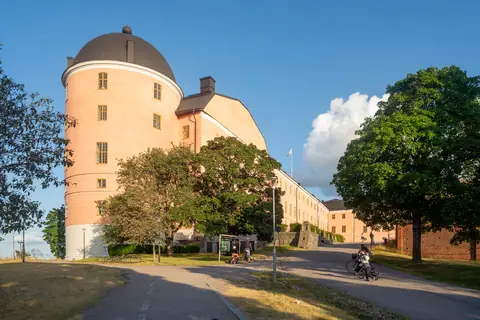
Uppsala Castle (Uppsala Slott): Vasa Fortress, Queen Christina & Art Museum
Uppsala, Sweden
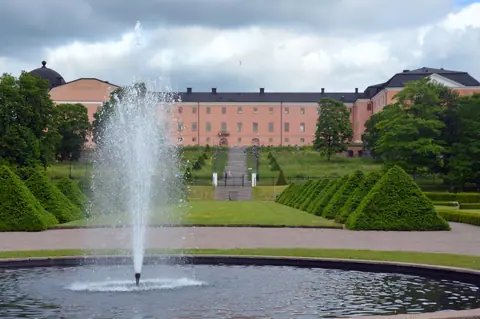
Uppsala's Botanical Gardens: Botaniska Trädgården, Linnéträdgården & Hammarby
Uppsala, Sweden
