


























Uppsala Student Nations & Valborg: Academic Traditions & Walpurgis Night
How Uppsala's 17th-century student societies and the 30 April spring festival shape the life and architecture of the city.
With roughly 52,000 registered undergraduate and postgraduate students and 2,400 doctoral researchers across nine faculties, Uppsala University is not confined to a single enclosed campus; instead, academic life is woven directly into the historic streets around Uppsala Cathedral and the banks of the Fyrisån. At the heart of this university culture stand the 13 student nations (studentnationer), the oldest student societies in Sweden, which originated between 1630 and 1640 when undergraduates arriving from the same home province banded together for mutual support, fellowship, and social welfare.
Modelled on the medieval scholarly nations of continental European universities, the nations in Uppsala and Lund (and historically at the University of Tartu and Royal Academy of Turku in the Swedish Empire, the second and third oldest universities in the realm) evolved over centuries from strictly supervised provincial guilds into self-governing student clubs that own historic properties, libraries, scholarship foundations, and student housing across the city.
The Thirteen Provincial Student Nations
Named after the traditional provinces and diocese regions of Sweden, excluding the southern Scanian lands that formed the catchment area of Lund University upon its foundation in 1666, the 13 nations at Uppsala University are Stockholms, Uplands, Gästrike-Hälsinge, Östgöta, Västgöta, Södermanlands-Nerikes, Västmanlands-Dala, Smålands, Göteborgs, Kalmar, Värmlands, Norrlands, and Gotlands nation. Historically, every matriculating student was required to join the nation corresponding to their home region, each overseen by a senior university professor holding the title of Inspektor.
Today compulsory regional membership has ended (with one exception at Södermanlands-Nerikes nation), and both Swedish and international students are free to join the nation of their choice, or even more than one nation. Together, the 13 nations run the social venues and cultural activities that at other universities are managed by central student unions or fraternities: daytime cafés, evening pubs, clubs, symphony orchestras, choirs, theatre companies, sports societies, and student apartments.
Landmark Nation Houses Across Central Uppsala
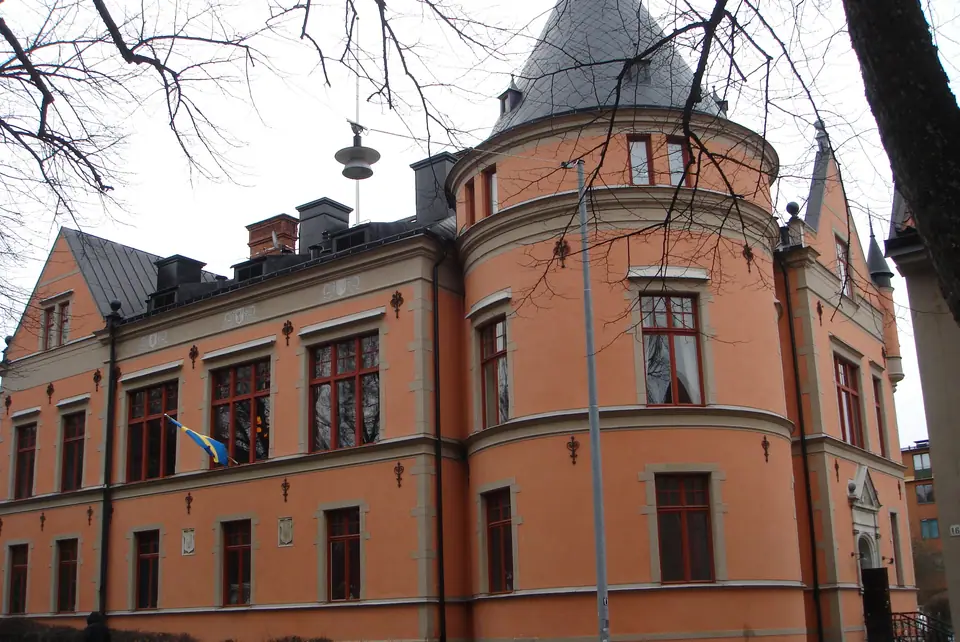
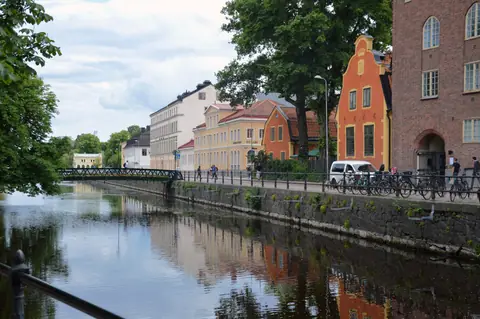
Because each nation constructed or acquired its own headquarters in the 19th and 20th centuries, walking through Fjärdingen and along the Fyrisån is an architectural tour of student life. Directly on Västra Ågatan beside the river rises the neo-Renaissance red-brick palace of Norrlands nation, a major student society in the city, while Södermanlands-Nerikes nation anchors the busy corner of Sankt Olofsgatan and Sysslomansgatan in a pink late-19th-century building.
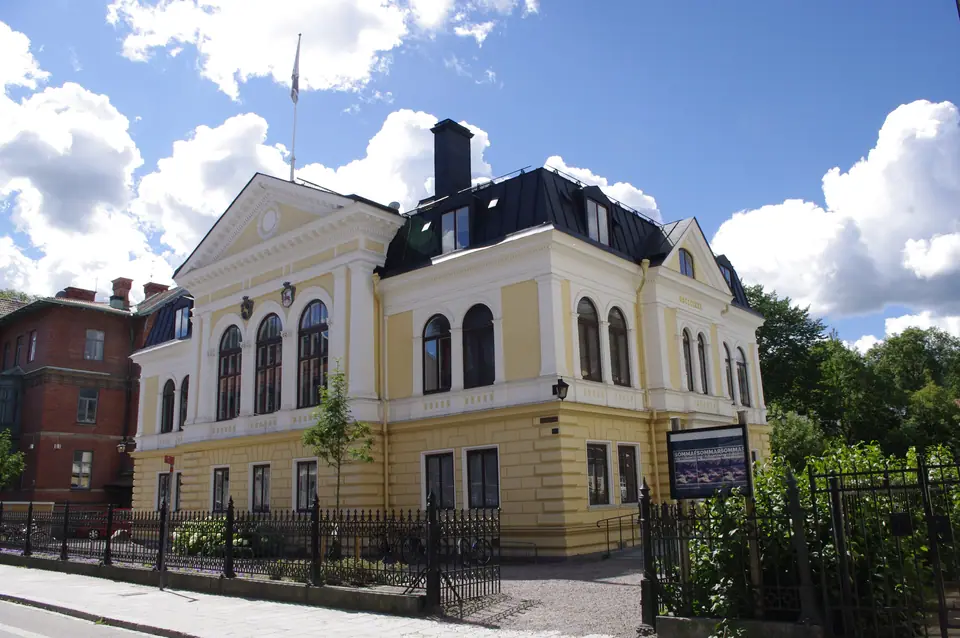
Further west on Sysslomansgatan stands the modernist 1965 building of Västmanlands-Dala nation, designed by Finnish architect Alvar Aalto, whereas Östgöta, Västgöta, Smålands, Göteborgs, Kalmar, Värmlands, Gästrike-Hälsinge, Stockholms, Gotlands, and Uplands nations occupy grand houses and courtyards framed by leafy gardens. During the autumn and spring academic semesters, entering a nation pub or attending a formal gasque dinner party requires an active student nation card or temporary guest card, though several nations open their lunch rooms and summer garden restaurants to the general public from June to August, making summer an ideal season to dine inside a historic student courtyard.
Academic Traditions: Gasques, Choirs and the White Cap
Many hallmarks of Swedish national academic culture originated in Uppsala during the 19th century. Foremost among them is the white velvet student cap (studentmössa) with its black band and blue-and-yellow cockade, introduced by Uppsala student choir singers in the 1840s during Scandinavian student meetings before spreading to secondary school graduates across Sweden. Choral singing remains central to nation life, led by celebrated ensembles such as Allmänna Sången and the male voice choir Orphei Drängar, alongside formal three-course gasque dinner parties governed by strict toastmaster etiquette, speeches, and traditional snapsvisor songs.
Beyond the nations, students also belong to faculty student unions and political or cultural societies, maintaining traditions of academic debate, orchestral concerts inside University Hall, and formal doctoral conferment processions across Domberget that have continued since the 17th century. Even visitors who are not enrolled at the university can experience this atmosphere by attending public choral concerts, browsing student bookshops along Drottninggatan and Sysslomansgatan, or visiting the open summer cafés along the river and university parks.
Valborgsmässoafton (Sista April): The 30 April Festival
Uppsala's signature cultural event takes place every 30 April on Walpurgis Night, known across Sweden as Valborgsmässoafton and in Uppsala simply as Sista april ('Last of April'). Celebrating the end of winter and the arrival of spring light, the day unfolds as a city-wide carnival that draws tens of thousands of students, alumni, and visitors to the riverbanks and hills:
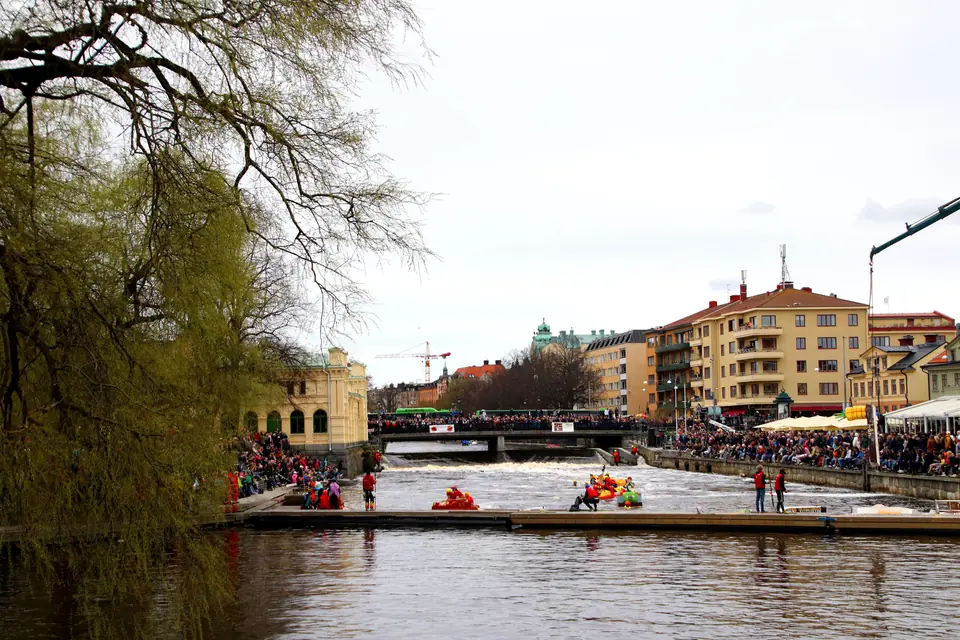
- Morning Forsränningen on the Fyrisån: Organised every 30 April since 1975 by the Uppsala Union of Engineering and Science Students (UTN), student teams spend weeks building elaborate, satirical rafts from polystyrene and timber before paddling them down the cold waters of the Fyrisån through central Uppsala and over the rushing rapids at Kvarnfallet and Islandsfallet before cheering crowds lining the bridges and stone embankments.
- Midday Sillunch and Champagne Galopps: Around midday, restaurants, parks, and student nations serve a traditional spring lunch of pickled Baltic herring, new potatoes, and sour cream (sillunch), followed in the early afternoon by lively champagnegalopp gatherings in the nation courtyards.
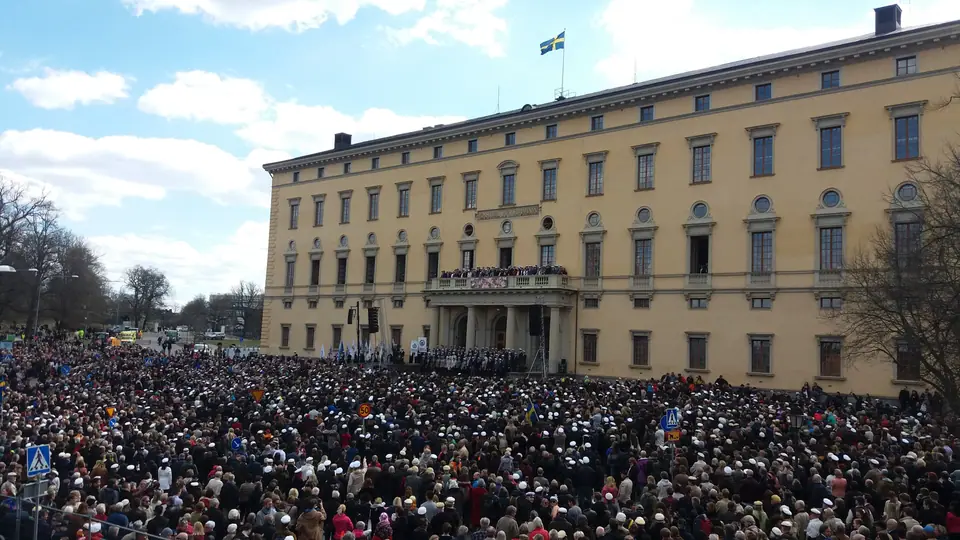
- Afternoon Mösspåtagning on Carolinabacken: In the afternoon, tens of thousands of students and alumni pack the steep slope of Carolinabacken outside Carolina Rediviva. When the Rector of Uppsala University steps onto the portico balcony and waves the white student cap, the entire crowd dons their white summer caps in unison and streams down the hill toward the nation houses.
Spring Serenades, Gunilla Bell and Evening Bonfires
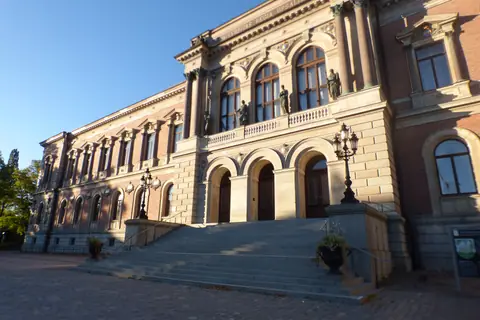
Following the cap-donning at Carolina Rediviva, the Orphei Drängar choir gathers on the steps of University Hall to sing classic Swedish spring songs such as Vintern rasat ut. As dusk falls on 30 April, students and residents assemble below the Gunilla Bell at Uppsala Castle to hear the speech to spring and choral singing, while traditional Walpurgis bonfires (majbrasor) are lit at Gamla Uppsala and across the region. Because hotels and trains fill months ahead for 30 April, check the official site of Uppsala University and destination authorities early if you plan to experience Valborg in person during your spring journey to Sweden, and reserve accommodation well in advance.
Traveller tips
Real advice from people who have been to Uppsala Student Nations & Valborg: Academic Traditions & Walpurgis Night. Every tip is read by our team before it goes live.
No tips yet. Been here? Yours could be the first.
Thank you! Your tip will appear here after a quick review.
More in Uppsala
Continue exploring Uppsala with related neighbourhood, food, and planning guides
Uppsala: Essential Planning for Sweden's University City
Uppsala, Sweden
Best Things to Do in Uppsala: Landmarks, Museums & Gardens
Uppsala, Sweden
Uppsala Cathedral (Domkyrka): Gothic Architecture, Royal Tombs & Treasury
Uppsala, Sweden
Gustavianum & University Hall: Rudbeck's Anatomical Theatre & Academic Uppsala
Uppsala, Sweden
