


























Fyris River (Fyrisån) & Stadsträdgården: Bridges, Parks & Pelle Svanslös
Exploring Uppsala's riverside promenades, historic iron bridges, Victorian city park, and Gösta Knutsson's famous tail-less cat.
Measuring 80 kilometres in length, or 95 kilometres when measured from the headwaters of its Vendelån tributary, and draining a 1,990-square-kilometre catchment area that covers nearly one-third of Uppsala County, the Fyris River (Fyrisån) forms the green and historic spine of Uppsala. Rising near Dannemora in northern Uppland and joined by tributaries including the Sävjaån, Jumkilsån, Björklingeån, and Vattholmaån, the river flows south through the city before emptying into the Ekoln bay of Lake Mälaren.
Known throughout the Middle Ages simply as the Salaån, the waterway was given the poetic name Fyrisån in the late 17th century by Uppsala University polymath Olaus Rudbeck the Elder, who linked the flat Kungsängen meadows south of the town to the Fyrisvellir (Fyris Wolds) of Norse sagas, where King Eric the Victorious defeated invading forces in the 980s.
Water Power, Uppsalaåsen Filtration and Ecology
For more than seven centuries, the river's rapids powered grain and industrial watermills along its course, including Ulva kvarn north of the city, where a four-metre waterfall drove watermills in various forms from the late 1200s until 1963. Today the Fyrisån also plays a vital role in municipal engineering: water is pumped from Lake Tämnaren into the river and lifted onto the porous gravel esker of Uppsalaåsen near the city, where it percolates naturally through the sand and gravel layers to supply purified drinking water for Uppsala.
The river corridor supports rich aquatic wildlife, including the otter, eel, depressed river mussel, thick-shelled river mussel, and the red-listed asp fish (Aspius aspius), which migrates upstream from Lake Mälaren every spring to spawn in the rapids of the Fyrisån and the unobstructed Sävjaån tributary up to Funbosjön.
Central Bridges: From Jernbron to Dombron and Kvarnfallet
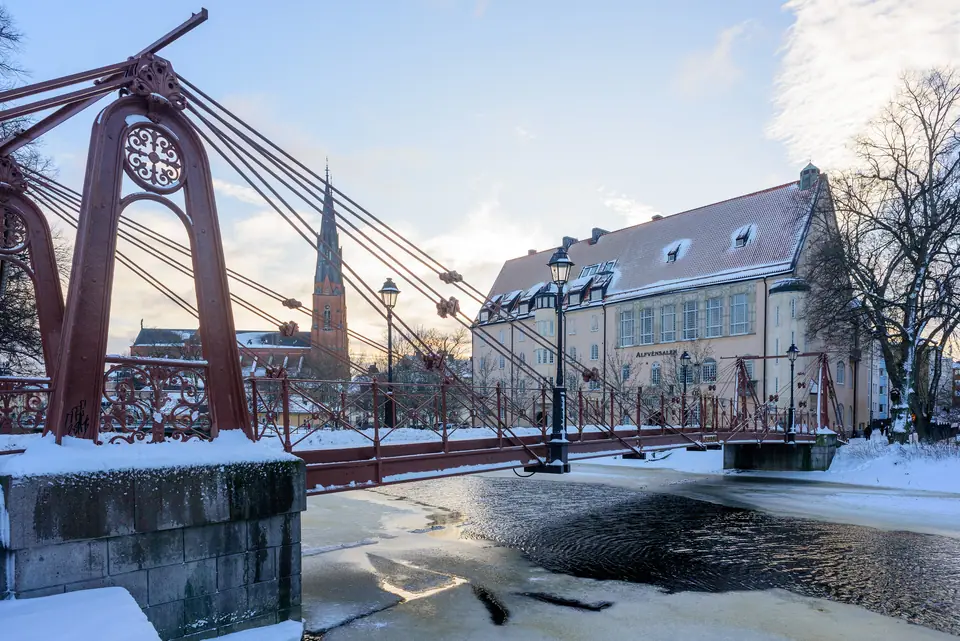
Walking the tree-lined riverside paths along Västra Ågatan on the west bank and Östra Ågatan on the east bank reveals the changing character of Uppsala over a single kilometre. North of Sankt Olofsgatan, the graceful white cast-iron pedestrian arch of Jernbron spans the tranquil upper reach of the river, connecting the Linnaean Garden neighbourhood on Svartbäcksgatan with the quiet cobbled lanes below Uppsala Cathedral.
A short stroll downstream brings you to the medieval stone bridge of Dombron ('Cathedral Bridge'), linking the cathedral square with the eastern town. Immediately south of Dombron, water cascades over the stone weir of Kvarnfallet beside the historic brick watermill building on the small island of Sankt Eriks torg, which today houses Upplandsmuseet, the county museum of cultural history.
Nybron, Islandsfallet Fish Ladder and the Harbour Basin
Continuing south past the stone parapet of Nybron and the riverside dining tables of Uppsala Saluhall, the river drops over its second central weir at Islandsfallet. Here a specially engineered concrete fish ladder allows spawning asp to bypass the drop, while every 30 April during Valborg homemade student rafts plunge over both Kvarnfallet and Islandsfallet during the Forsränningen river race.
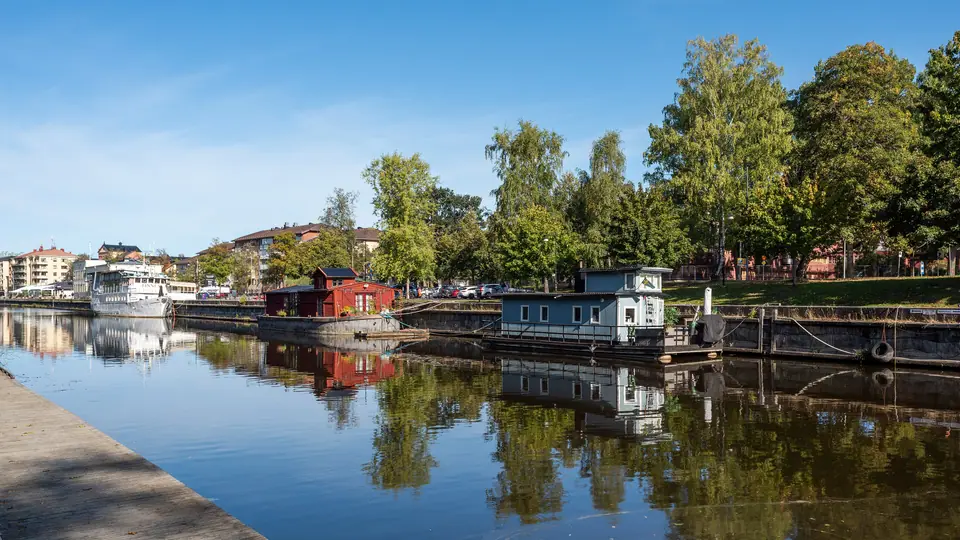
Below the road bridge of Islandsbron and the white functionalist 1936 Custom House (Tullhuset, designed by architect Per Benson), the weirs give way to the calm, navigable lower river. Weeping willows overhang wooden quays lined with moored pleasure boats, seasonal sightseeing vessels bound for Skokloster on Lake Mälaren, and colourful wooden houseboats.
Svandammen and Stadsträdgården (The City Park)
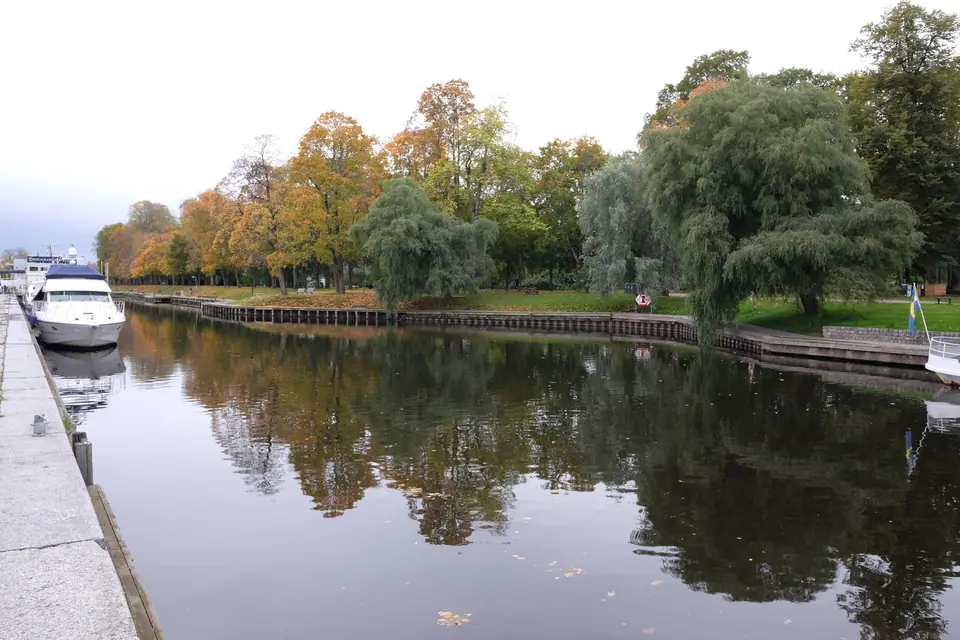
Where the western riverbank opens out at the foot of the Kasåsen ridge below Uppsala Castle lies the spring-fed swan pond Svandammen, framed by the 19th-century wooden pavilion of Restaurant Flustret and the brick halls of Svandammshallarna. Directly south of Svandammen stretches Stadsträdgården (commonly called Stadsparken), Uppsala's largest city park, bounded by the Fyrisån to the east, Studenternas IP sports ground to the south, and Uppsala University Hospital (Akademiska sjukhuset) to the west.
Laid out in the late 19th century on former hop gardens, pastureland, and brickworks clay pits known as Tegelhagen, Stadsträdgården winds along the river past rose beds, mature specimen trees, and a willow-fringed island pond crossed by white footbridges.
Gula Villan, Parksnäckan and Canoe Trails
Inside Stadsträdgården, families gather around the large children's playground and the yellow 19th-century timber pavilion of Café Gula Villan, while summer evenings bring concerts and theatre performances to the open-air stage of Parksnäckan. In winter, the park has hosted ice-sculpture festivals (such as the 2011 and 2013 Isfestivalen), and in summer paddlers can follow the marked Fyrisån canoe trail managed by Upplandsstiftelsen or swim at upstream river beaches such as Storvad in Gamla Uppsala. Popular Swedish songs by Ulf Peder Olrog and Veronica Maggio also celebrate the river's place in local life.
Following the Pelle Svanslös Trail in Fjärdingen
Just up the hill from Svandammen in the academic neighbourhood of Fjärdingen, Uppsala celebrates its most beloved literary character: Pelle Svanslös (Peter-No-Tail), the kind-hearted cat whose tail was bitten off by a rat in infancy, created by Uppsala University alumnus, radio producer, and author Gösta Knutsson (1908 to 1973). Inspired by a real tail-less cat Knutsson met on a summer holiday and modelled on student life in 1930s Uppsala, Pelle debuted in 1937 in a radio series broadcast from a small studio in the university quarter and starred in twelve children's books published between 1939 and 1972 with classic illustrations by Lucie Lundberg.
Åsgränd, Kristina Jansson's Statue and Family Walks
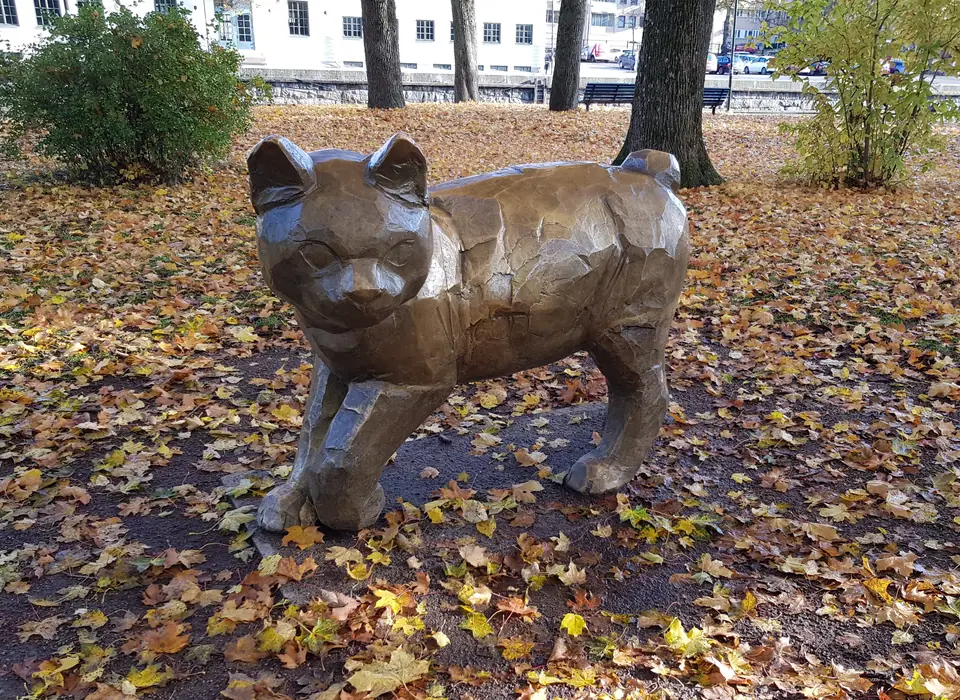
Unlike fictional settings, every alley in the Pelle Svanslös stories corresponds to a real address in Fjärdingen. Walking up Åsgränd, Övre Slottsgatan, and Kyrkogårdsgatan, you can see the woodpile cellar entrances associated with Pelle, his sweetheart Maja Gräddnos, and the scheming alley-cat bully Elaka Måns with his sidekicks Bill and Bull. On Åsgränd stands sculptor Kristina Jansson's 2012 bronze statue of Pelle Svanslös alongside miniature cat-level pedestrian crossings painted on the kerbstones, while a themed Pelle Svanslös playground sits nearby behind Carolina Rediviva. Starting at the northern footbridge of Jernbron and walking south along the embankments to the willow-shaded lawns and footbridges of Stadsträdgården takes under an hour on foot; check the official site of local tourism authorities for self-guided walking maps along the river, park paths, and historic Fjärdingen lanes.
Traveller tips
Real advice from people who have been to Fyris River (Fyrisån) & Stadsträdgården: Bridges, Parks & Pelle Svanslös. Every tip is read by our team before it goes live.
No tips yet. Been here? Yours could be the first.
Thank you! Your tip will appear here after a quick review.
More in Uppsala
Continue exploring Uppsala with related neighbourhood, food, and planning guides
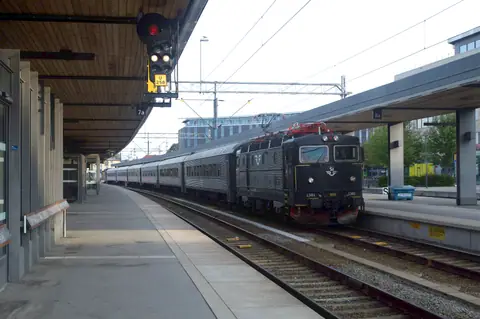
How to Get to Uppsala: Arlanda Airport, Trains from Stockholm & Local Buses
Uppsala, Sweden
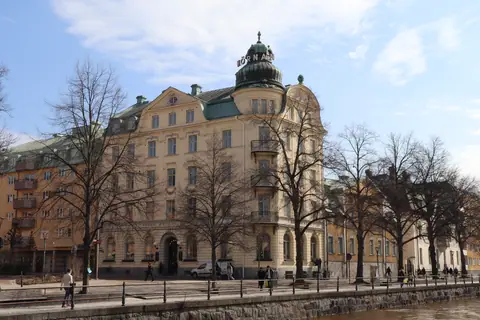
Where to Stay in Uppsala: Best Areas Around Fyrisån, Stora Torget & Station
Uppsala, Sweden
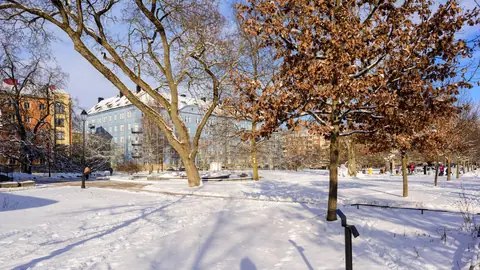
Best Time to Visit Uppsala: Seasons, SMHI Weather & Valborg Calendar
Uppsala, Sweden
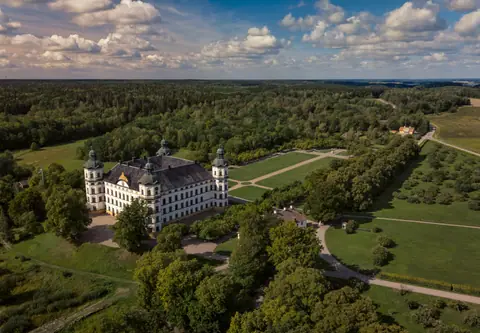
Uppsala 3-Day Itinerary: Cathedral, Gamla Uppsala, Sigtuna & Skokloster
Uppsala, Sweden
