


























Uppsala: Essential Planning for Sweden's University City
Plan your visit to Uppsala with verified facts on the Fyrisån banks, Fjärdingen academic quarter, Kasåsen ridge, and local transport.
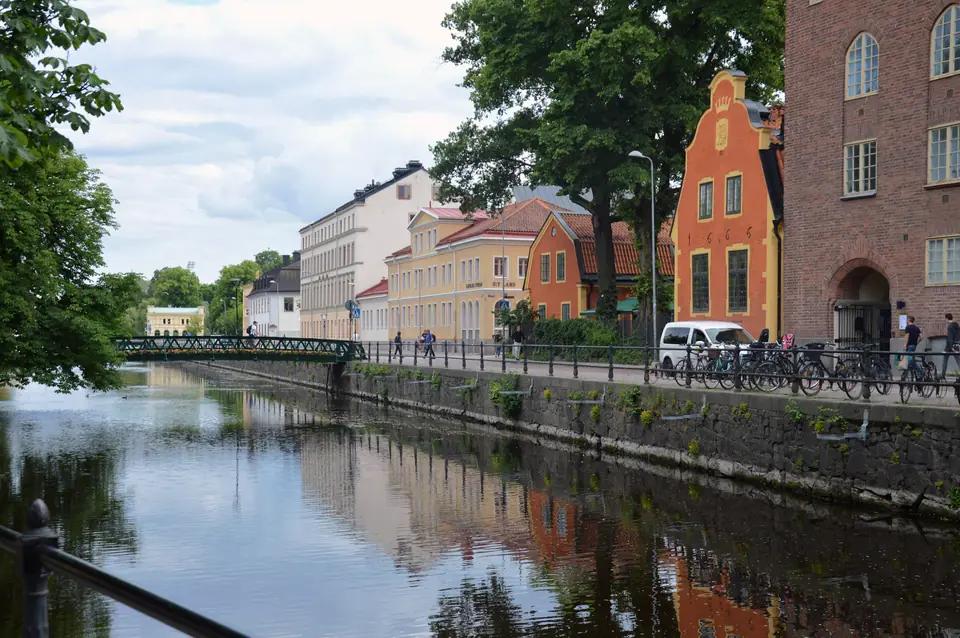
Understanding Uppsala begins with the geography of the Fyrisån (River Fyris) and the prominent glacial ridge of Uppsalaåsen. In the Viking Age and early Middle Ages, the riverside settlement here was called Aros, and later Östra Aros ('East River Mouth'), serving as the busy trading port where vessels arriving from Lake Mälaren met the river route leading up to the pagan and early Christian centre at Gamla Uppsala 5 kilometres north. After a severe fire damaged the old cathedral at Gamla Uppsala, Pope Alexander IV granted formal permission in 1258 to move the archiepiscopal see south, and when the relics of Saint Eric were transferred in 1273, Östra Aros assumed the name Uppsala.
Today Uppsala is the capital of Uppsala County and the fourth-largest city in Sweden after Stockholm, Gothenburg, and Malmö, recording 174,982 urban residents in 2023 (and 177,074 in 2019) within a wider municipality of 247,269 to 249,000 inhabitants. Despite its steady growth as a leading European centre for biotechnology, medical research, and higher education, the historic core preserves a clear spatial dialogue between ecclesiastical authority, royal power, and scientific inquiry across the fertile Uppsala flatlands.
How the River Divides the Urban Core
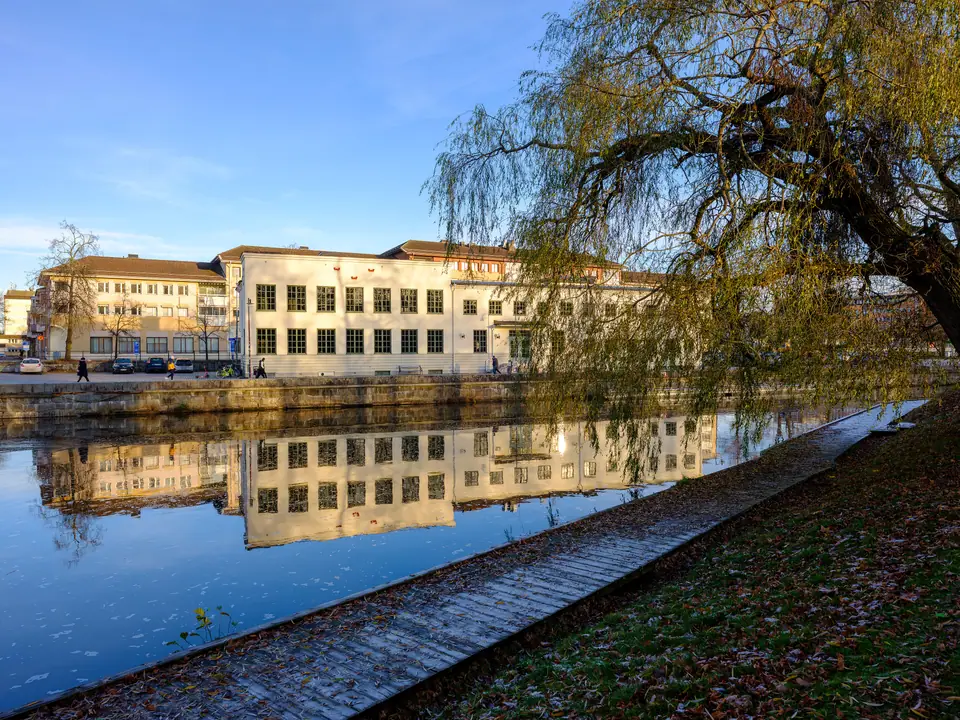
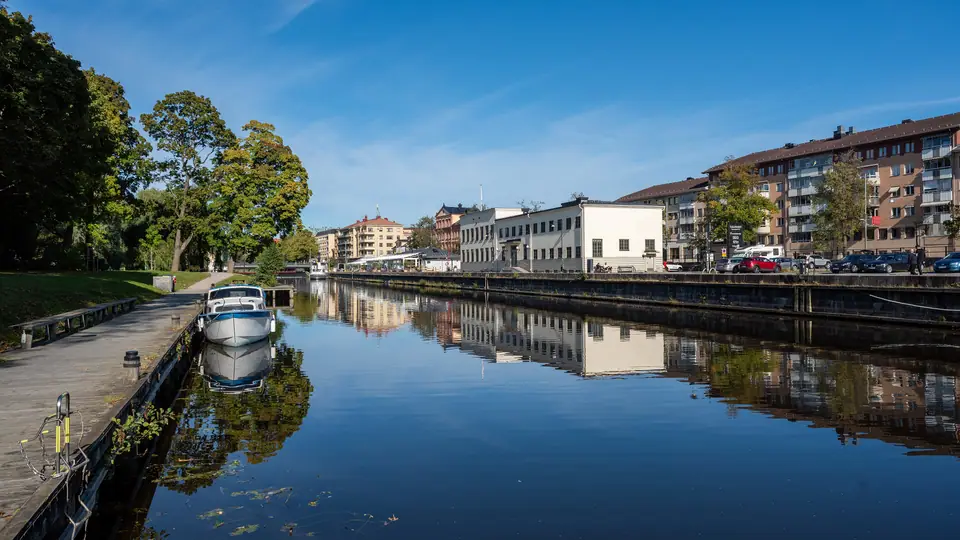
The 80-kilometre Fyrisån slices north to south through the centre of Uppsala, dividing the city into two distinct yet complementary halves linked by a sequence of pedestrian and road bridges including Jernbron, Dombron, Nybron, and Islandsbron. This historic town-and-gown layout makes orientation effortless from the moment you step off the train and walk toward the water:
- Fjärdingen and Domberget (West Bank): Rising immediately west of the river, the historical academic and clerical quarter of Fjärdingen clusters around Uppsala Cathedral, inaugurated in 1435 and reaching 118.7 metres in height as the tallest church in the Nordic countries, and Gustavianum, built between 1622 and 1625 as the oldest surviving building of Uppsala University (founded in 1477 as the oldest university in the Nordic countries). Just west across the shaded lawns of University Park stands the 1887 University Hall (Universitetshuset), while Drottninggatan climbs Carolinabacken to the 1841 Carolina Rediviva university library.
- Kasåsen and Botaniska (Southwest Ridge): South of Carolina Rediviva, the steep gravel esker of Kasåsen carries the pink-washed walls and round bastions of Uppsala Castle, begun by King Gustav Vasa in 1549 and today housing the official residence of the County Governor alongside Uppsala Art Museum. Below the castle's western slope stretches the symmetrical Baroque parterre of the Botanical Garden, donated to the university by King Gustav III in 1787.
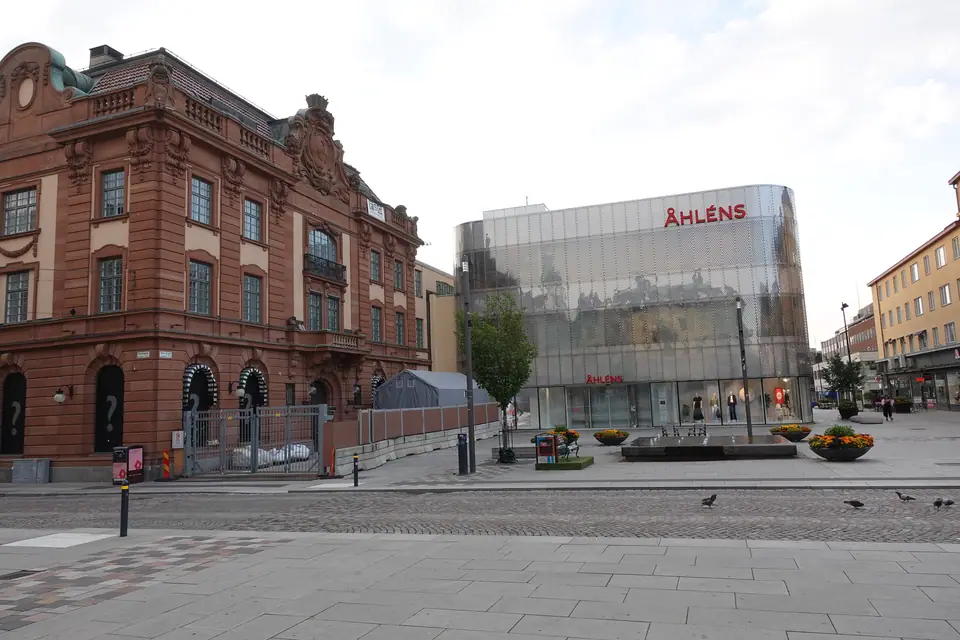
- Centrum and Svartbäcken (East Bank): On the flat alluvial plain east of the river, Stora Torget forms the commercial hub and central interchange for green UL city buses, flanked by the pedestrianised shopping streets of Drottninggatan, Kungsängsgatan, and Svartbäcksgatan. Walking north along Svartbäcksgatan brings you to the 1655 Linnaean Garden (Linnéträdgården) and the historic professor's residence housing the Linnaeus Museum, while Vaksala torg further east anchors the main concert hall.
Academic Heritage and the Legacy of Great Scholars
What sets Uppsala apart from other Nordic cities of comparable size is the physical presence of Uppsala University and the Swedish University of Agricultural Sciences (SLU). Rather than occupying a fenced suburban campus, university lecture halls, libraries, botanical collections, and the 13 historic student nations occupy listed manor houses, classical palaces, and modernist landmarks scattered throughout the central blocks. Walking from Sankt Olofsgatan down to Svandammen and the wooded trails of Stadsskogen, you pass courtyard gardens and reading rooms where generations of researchers shaped modern science, medicine, and international diplomacy.
Among the scholars whose work remains visible across the city are polymath Olaus Rudbeck the Elder, who built the 1662 anatomical theatre inside Gustavianum; astronomer Anders Celsius, who established his observatory here and devised the centigrade temperature scale; and botanist Carl Linnaeus, the father of modern taxonomy, whose systematic plant beds and family residence remain open to visitors. Later generations connected Uppsala with chemists Jöns Jacob Berzelius and Svante Arrhenius, filmmaker Ingmar Bergman, and United Nations Secretary-General Dag Hammarskjöld, who grew up inside Uppsala Castle while his father served as county governor.
Essential Transport and Cashless Logistics
Uppsala sits 71 kilometres north of Stockholm and nearly 40 kilometres northwest of Stockholm Arlanda Airport in Sigtuna Municipality, making it straightforward to reach by direct train via Uppsala Central Station. Regional Mälartåg and SL Pendeltåg services connect Arlanda to central Uppsala in under 20 minutes (or 40 to 45 minutes on UL regional bus 801), while trains from Stockholm Central take 35 to 40 minutes. Once in town, almost every landmark between the Linnaean Garden and Stadsträdgården lies within a 15-minute walk, and UL operates 14 green city bus routes that reach Gamla Uppsala in 15 minutes.
Sweden uses the krona, and everyday life in Uppsala operates on an almost entirely cash-free basis. Contactless credit and debit cards as well as mobile payment apps are accepted on UL buses, inside the Uppsala Saluhall food market, and at every museum ticket desk and riverside pastry shop. Before setting out each morning, check the official site of individual museums, castle bastions, and country estates for current seasonal opening days and guided tour schedules.
Structuring a Multi-Day Visit
While rapid rail links make Uppsala a popular excursion from the capital, staying overnight in central neighbourhoods along the Fyrisån or Stora Torget allows you to experience the quiet morning light on Domberget and the afternoon fika terraces along Östra Ågatan after day-trippers depart. Two days cover the cathedral, Gustavianum, Carolina Rediviva, Uppsala Castle, both central botanical gardens, and the royal mounds at Gamla Uppsala at an unhurried pace. Adding a third day, as outlined in our Uppsala 3-day itinerary, opens up summer excursions aboard the 33-kilometre, 891-millimetre narrow-gauge Lennakatten heritage railway, Carl Linnaeus's country estate at Linnés Hammarby, or the medieval lakeside town of Sigtuna (founded around 980) and Baroque Skokloster Castle on Lake Mälaren, tailored to the seasonal weather patterns covered in our best time to visit Uppsala guide for travellers exploring Uppland throughout the calendar year, from spring festivals to winter snow walks across the historic university quarter, leafy botanical paths, and tranquil riverside parks.
Traveller tips
Real advice from people who have been to Uppsala: Essential Planning for Sweden's University City. Every tip is read by our team before it goes live.
No tips yet. Been here? Yours could be the first.
Thank you! Your tip will appear here after a quick review.
More in Uppsala
Continue exploring Uppsala with related neighbourhood, food, and planning guides
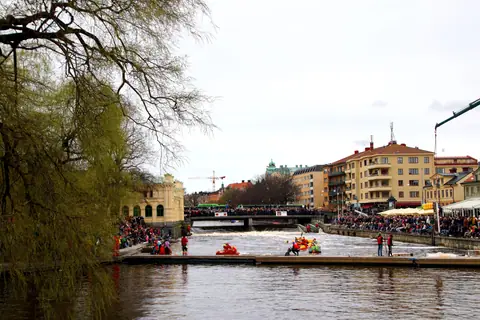
Uppsala Student Nations & Valborg: Academic Traditions & Walpurgis Night
Uppsala, Sweden
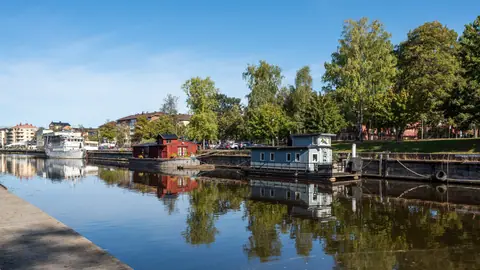
Fyris River (Fyrisån) & Stadsträdgården: Bridges, Parks & Pelle Svanslös
Uppsala, Sweden
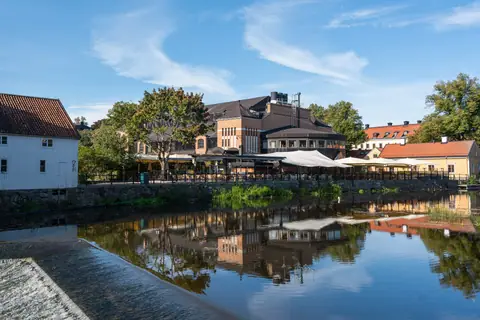
What to Eat in Uppsala: Saluhallen, Historic Konditorier & Swedish Fika
Uppsala, Sweden
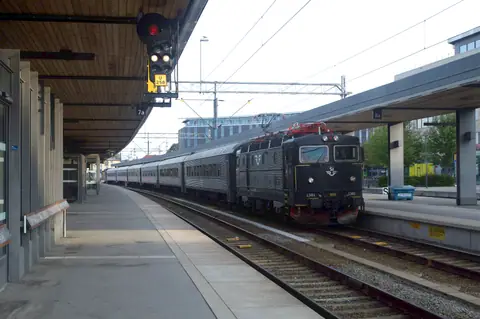
How to Get to Uppsala: Arlanda Airport, Trains from Stockholm & Local Buses
Uppsala, Sweden
