


























Uppsala's Botanical Gardens: Botaniska Trädgården, Linnéträdgården & Hammarby
Exploring the three historic Uppsala University botanical gardens shaped by Olaus Rudbeck and Carl Linnaeus.
No scientist is more closely associated with Uppsala than Carl Linnaeus (1707 to 1778, ennobled in 1761 as Carl von Linné), the physician, botanist, and zoologist who arrived at Uppsala University in 1728, met his early benefactor Olof Celsius in the neglected university garden in spring 1729, and was appointed professor of medicine and botany in May 1741. Today Uppsala University manages three linked botanical heritage sites, collectively known as Linnéminnena, that preserve the living history of binomial nomenclature and 18th-century natural science.
Together, these three gardens allow you to trace the evolution of European botany from a 17th-century academic physic garden on the low river plain to a grand Enlightenment orangery below Uppsala Castle and an intact country research farm in the Uppland countryside.
Botaniska Trädgården: From Castle Parterre to University Garden
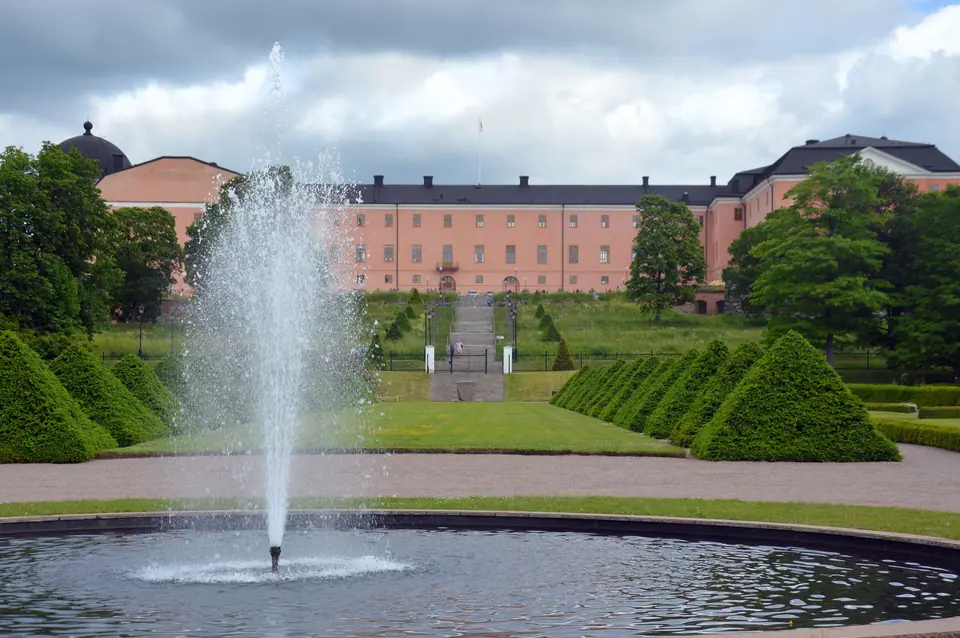
Located immediately west of Uppsala Castle and affectionately called Botan by residents, the principal Botanical Garden (Botaniska trädgården) began in 1664 as a pleasure and kitchen garden for the royal castle laid out by polymath Olaus Rudbeck the Elder, and was redesigned in the mid-18th century in formal French Baroque style by royal architect Carl Hårleman. After Linnaeus's death in 1778, his former student and successor Carl Peter Thunberg (1743 to 1828) petitioned King Gustav III to move the university's main botanical collection away from the damp, flood-prone riverside plot on Svartbäcksgatan to the drier, sunnier terraced slopes below the castle.
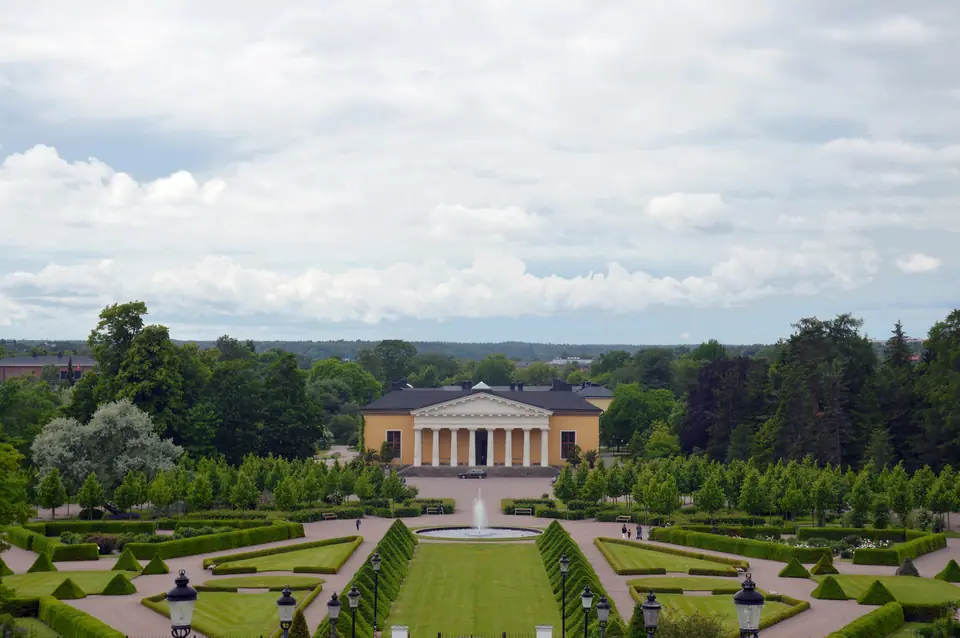
In 1787, King Gustav III donated the royal castle garden to Uppsala University along with funds for a new orangery, stipulating that the central vista looking west from the castle windows remain open and unobstructed. Today Hårleman's symmetrical Baroque parterre of clipped spruce hedges, gravel walks, and seasonal floral beds remains carefully maintained along that original royal axis, shifting over the 19th century from an exclusive site of academic instruction into a public botanical park funded for research and recreation.
The 1802 Linneanum Orangery and Tropical Greenhouse
Anchoring the western end of the Baroque parterre is the neoclassical orangery Linneanum, designed by architects Olof Tempelman and Louis Jean Desprez and officially inaugurated in 1802 in anticipation of the centenary of Linnaeus's birth in 1807. During its early decades, the building housed tender Mediterranean plants, lecture halls, and royal menagerie specimens donated by King Gustav IV Adolf, including a live lion kept inside the orangery. Today its bright galleries shelter historic orangery plants such as ancient laurels, figs, olives, and cacti during the cold months and host academic ceremonies and summer exhibitions.
West of the Linneanum across Norbyvägen spreads the modern systematic garden, rockery, and kitchen garden alongside the Tropical Greenhouse (Tropiska växthuset), Uppsala's rainforest and desert conservatory, where humid rooms hold giant Victoria water lilies, orchids, cacao trees, and succulent collections from arid climates.
Linnéträdgården: Sweden's 1655 Botanical Garden
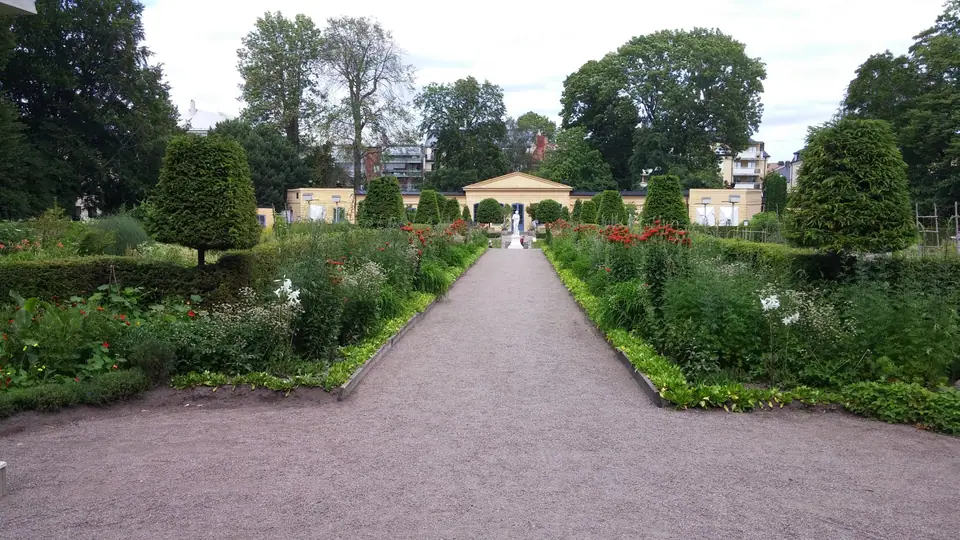
On Svartbäcksgatan in the northern city centre lies the Linnaean Garden (Linnéträdgården), founded by Olaus Rudbeck the Elder in 1655 as the oldest botanical garden in Sweden. Originally planted as a medical physic garden to train physicians in identifying healing herbs, the collection had grown to approximately 1,800 plant species by the end of the 17th century before suffering severe damage in the great Uppsala fire of 1702 and falling into nearly forty years of neglect.
Upon taking responsibility for the garden as professor in May 1741, Carl Linnaeus drained the marshy ground, commissioned Carl Hårleman to reconstruct the orangery (complete with a thermometer using the centigrade scale documented in his writings), and rearranged the twin annual and perennial beds strictly according to his sexual system of plant classification. Under Linnaeus's care, the collection expanded to around 3,000 species and was catalogued in his 1745 description and 1748 treatise Hortus Upsaliensis. Restored from 1917 by the Swedish Linnaean Society using Linnaeus's 1748 ground plan, the garden was featured on the reverse of Sweden's 100-krona banknote between 1986 and 2016.
The 1693 Professor's House and Linnaeus Museum
Standing directly inside the southeastern corner of Linnéträdgården is the yellow-plastered professor's residence built by Olaus Rudbeck in 1693. Renovated by Carl Hårleman before Carl Linnaeus moved in with his wife Sara Lisa Moraea in 1743, the house served from 1743 until his death in 1778 as both the family home and an active scientific institute where Linnaeus held private lectures, received specimens from his students travelling around the globe, and wrote Species Plantarum.
After the main botanical garden moved to the castle site, the house continued to serve university professors and was later home to the Swedish composer and director of music Hugo Alfvén until 1934. Opened as the Linnaeus Museum in 1937 by the Swedish Linnaean Society, its upstairs and downstairs rooms display original 18th-century family furniture, botanical textiles, Linnaeus's medicine chest, insect cabinet, and scientific instruments.
Linnés Hammarby Country Estate
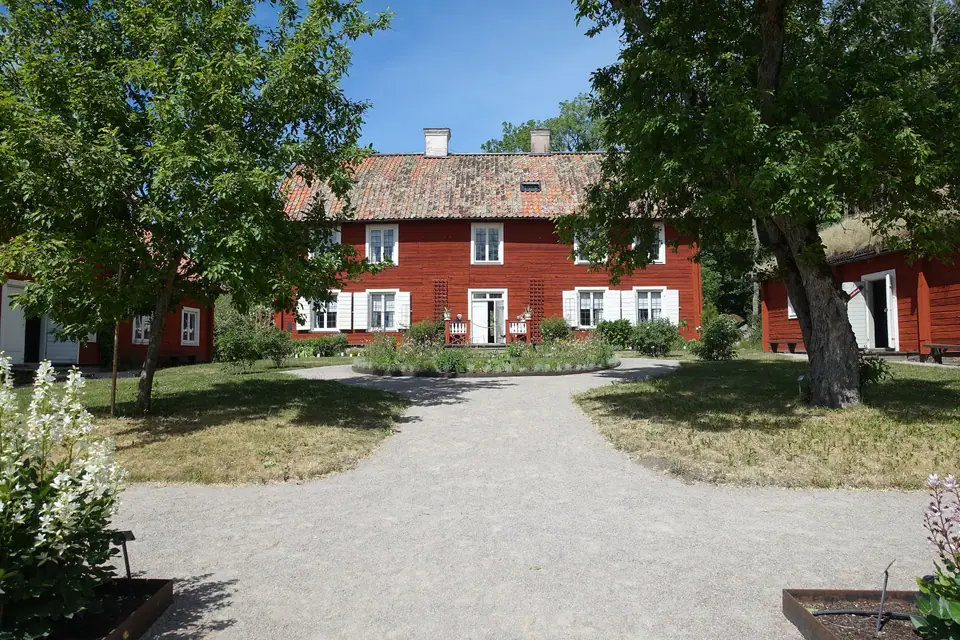
Situated 10 to 15 kilometres southeast of Uppsala in the parish village of Danmarks-Hammarby, Linnés Hammarby was purchased by Linnaeus in 1758 as a working agricultural estate and summer sanctuary away from the unhealthy air and constant fire hazard of wooden Uppsala. Between two older red-painted timber wings, Linnaeus erected the two-storey wooden main manor house in 1762, where walls in his bedroom and study remain papered with hand-coloured botanical copperplate engravings by Georg Dionysius Ehret. In 1769, following another city fire in Uppsala, he built a small unheated fireproof stone museum high on the rocky wooded hill behind the house to safeguard his herbarium, shells, insects, and library from flames.
Planning Your Route Across the Three Linnaean Sites
Purchased by the Swedish state from Linnaeus's descendants in 1879 and surrounded by a protected pre-1827 agricultural cultural reserve, Linnés Hammarby preserves hardy Siberian and European plants naturalised by Linnaeus in the woodland park. Combine all three gardens with a visit to Linnaeus's tomb inside Uppsala Cathedral, and check the official site of Uppsala University's Linnaean Gardens for seasonal opening calendars, guided tour schedules, and summer bus connections before setting out across the city and surrounding Uppland countryside during your stay in Uppsala, whether you begin among the clipped Baroque parterres below the castle or along the quiet beds of Svartbäcksgatan.
Traveller tips
Real advice from people who have been to Uppsala's Botanical Gardens: Botaniska Trädgården, Linnéträdgården & Hammarby. Every tip is read by our team before it goes live.
No tips yet. Been here? Yours could be the first.
Thank you! Your tip will appear here after a quick review.
More in Uppsala
Continue exploring Uppsala with related neighbourhood, food, and planning guides
Uppsala Cathedral (Domkyrka): Gothic Architecture, Royal Tombs & Treasury
Uppsala, Sweden
Gustavianum & University Hall: Rudbeck's Anatomical Theatre & Academic Uppsala
Uppsala, Sweden
Uppsala Castle (Uppsala Slott): Vasa Fortress, Queen Christina & Art Museum
Uppsala, Sweden
Gamla Uppsala: The Royal Mounds, Vendel History & Medieval Church
Uppsala, Sweden
