


























Gustavianum & University Hall: Rudbeck's Anatomical Theatre & Academic Uppsala
Exploring Uppsala University's 1620s museum building and 1887 Renaissance Revival ceremonial hall across from the cathedral.
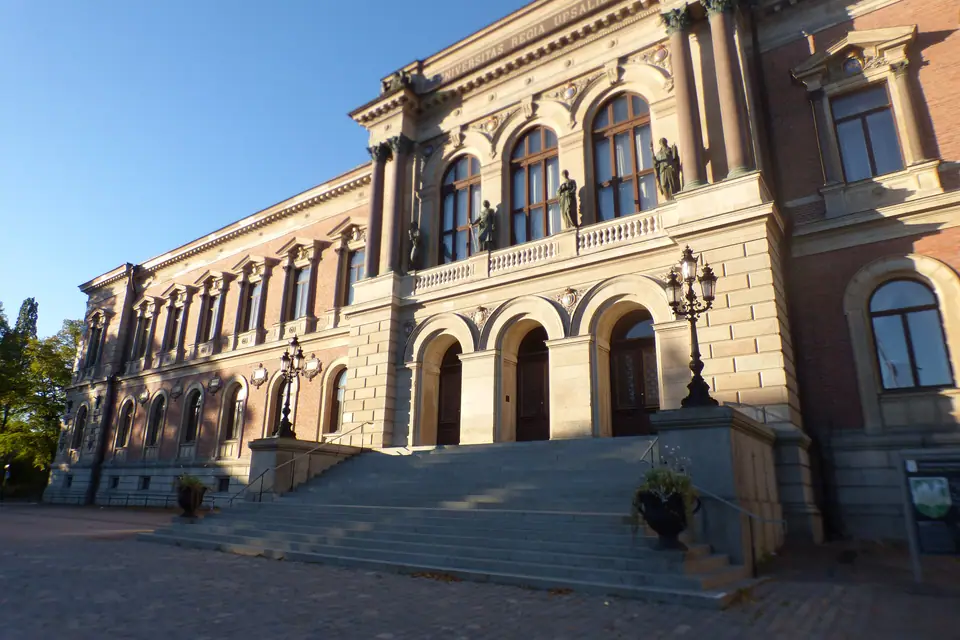
Founded in 1477 by Archbishop Jakob Ulfsson under a papal bull issued by Pope Sixtus IV on 27 February 1477, Uppsala University began lectures on 7 October 1477 as the oldest university in Sweden and the Nordic countries. Today its historic heart in Fjärdingen centres on two landmark buildings facing the shaded lawns of University Park (Universitetsparken) immediately west of Uppsala Cathedral: the 17th-century Gustavianum and the 19th-century University Hall (Universitetshuset).
Standing side by side across the gravel paths and rune-inscribed stones of the park, these two structures trace the evolution of Swedish higher education from its early Lutheran reorganisation after the Uppsala Synod of 1593 to its modern role as a major European research institution.
Origins of Gustavianum and Gustav II Adolf's Donation
During the political and religious upheaval of the 16th-century Reformation, teaching at Uppsala University declined sharply until the Uppsala Synod of 1593 formally re-established the institution as a Lutheran bastion of learning. As Sweden's imperial administration expanded in the early 1600s and student numbers grew, the medieval Academia Carolina chapter house south of the cathedral proved far too small.
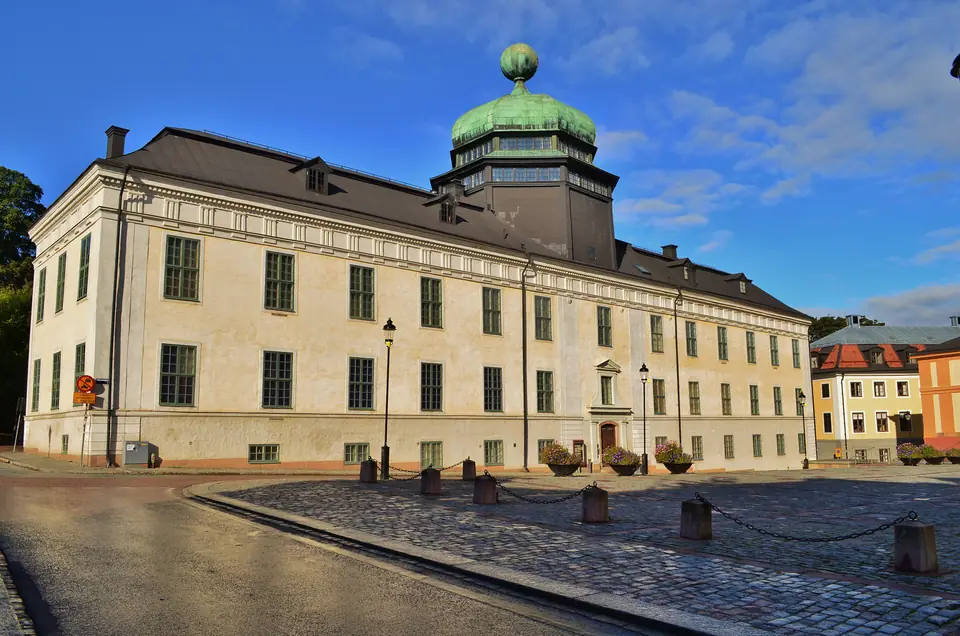
Supported by a generous financial and land donation from King Gustav II Adolf in the 1620s, construction of a second university building, named Gustavianum in the monarch's honour, took place between 1622 and 1625. Designed by Dutch royal architect Caspar van Panten, the long ochre-plastered brick structure incorporated medieval stone walls from the former archbishop's castle and housed large lecture halls, the university printing press, a dining hall, and dormitory rooms for gifted students without private means. After the demolition of Academia Carolina in 1778, Gustavianum served as the main university building until 1887.
Olaus Rudbeck's 1662 Anatomical Theatre
Between 1662 and 1663, medicine professor, botanist, and polymath Olaus Rudbeck the Elder significantly enlarged Gustavianum by adding an upper storey and crowning the centre of the roof with a tall octagonal cupola topped by a spherical sundial. Inside the cupola, Rudbeck constructed his Theatrum anatomicum, modeled on the Renaissance anatomical theatres of Padua and Leiden.
Designed so that natural daylight streamed through double rings of cupola windows directly onto the central dissection table, the steep wooden amphitheatre held up to 200 standing spectators, including medical students, professors, and paying townspeople, who watched public human and animal dissections during winter days. Used for anatomical instruction until the 1750s, the cupola later housed the university library until Carolina Rediviva opened in 1841, and subsequently served as a zoological museum. Restored to Rudbeck's original 1660s design in 1955, it is the second-oldest surviving anatomical theatre in the world and was named part of Sweden's Cultural Canon in 2025. During the great city fire of 16 May 1702, the ageing Rudbeck stood atop Gustavianum's roof directing bucket brigades to save the building and its books.
The 1633 Augsburg Art Cabinet
Inaugurated as Uppsala University's official museum by King Carl XVI Gustaf on 17 June 1997 and reopened on 24 June 2024 following a comprehensive five-year climate and interior renovation, Gustavianum presents six permanent exhibitions drawn from across the university's collections. One of its most celebrated centrepieces is the Augsburg Art Cabinet (Augsburgska konstskåpet), crafted around 1633 under master cabinetmaker Philipp Hainhofer and presented by the Protestant councillors of Augsburg to King Gustav II Adolf in 1632 during the Thirty Years' War.
Constructed of ebony, rosewood, ivory, lapis lazuli, and gilded silver, and crowned by a rock-crystal and coconut-shell mountain of Seychelles nut (coco de mer), this multi-tiered cabinet of curiosities conceals secret drawers holding roughly 1,000 miniature artefacts, including scientific instruments, optical games, musical tools, toiletries, and natural wonders intended to represent the entire known cosmos in miniature.
Valsgärde Boat Graves and Classical Antiquities
On the ground and lower floors, the permanent exhibition Valsgärde: The Vendel Period and Viking Age displays extraordinary archaeological finds excavated by Uppsala University scholars from the burial ground at Valsgärde, situated on the banks of the Fyrisån 7 kilometres north of Uppsala and just beyond Gamla Uppsala. Used continuously from the 6th to the 11th century, the cemetery yielded richly furnished warrior boat graves containing iron and bronze-plated Vendel helmets, pattern-welded swords, glass drinking vessels imported from the Continent, and carved gaming pieces.
Adjacent galleries present classical Mediterranean and Egyptian antiquities from the Victoria Museum, many excavated by Swedish archaeological expeditions in Cyprus, Greece, and Egypt, alongside a dedicated exhibition on the history of Uppsala University. Here you can inspect handwritten student lecture notes from the university's first semester in 1477 alongside botanical material linked to Carl Linnaeus (see our Botanical Garden and Linnaean Garden guide) and astronomical instruments used by Anders Celsius, who founded the Uppsala Astronomical Observatory in 1741 and proposed his centigrade thermometer scale in 1742.
Universitetshuset: The 1887 Renaissance Revival Hall
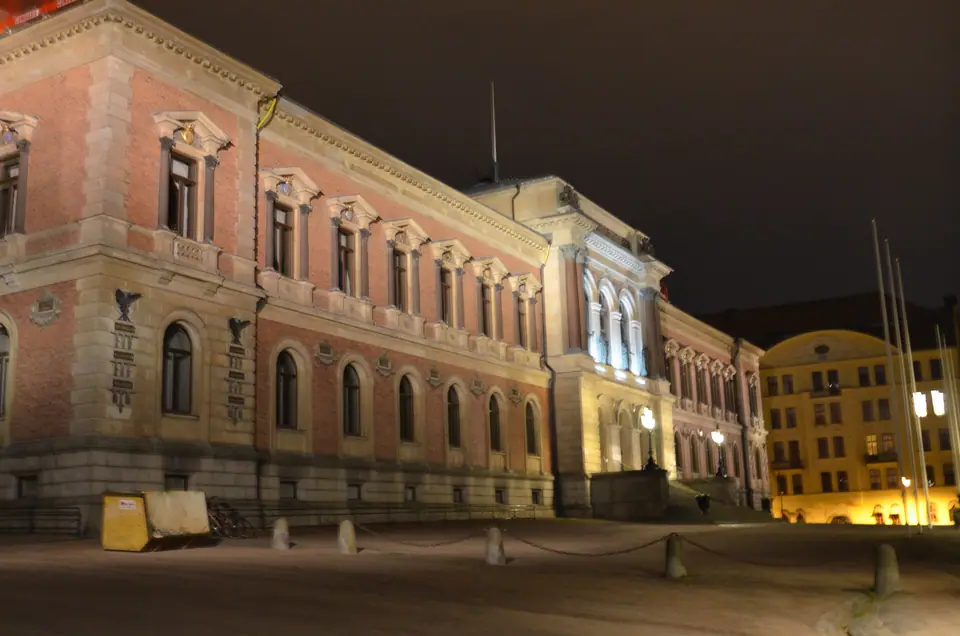
By the late 19th century, Gustavianum could no longer accommodate the expanding university administration and ceremonial assemblies. An architectural competition launched for the university's 400th anniversary in 1877 led to the construction of Universitetshuset across the park on the site of the former 18th-century castle riding school. Designed in opulent Italian Renaissance Revival style by architect Herman Holmgren, built by master builder Carl Henric Hallström, and inaugurated by King Oscar II in May 1887, the palace-like edifice blends red brick, grey limestone, and copper roofing.
Around the exterior frieze, gold-lettered plaques honour celebrated Uppsala scholars including Olof Rudbeck, Anders Celsius, Carl von Linné, and historian Erik Gustaf Geijer, while the Uppsala University Coin Cabinet (Myntkabinettet) preserves numismatic collections inside the building.
The Domed Staircase Hall, Aula and Runestones
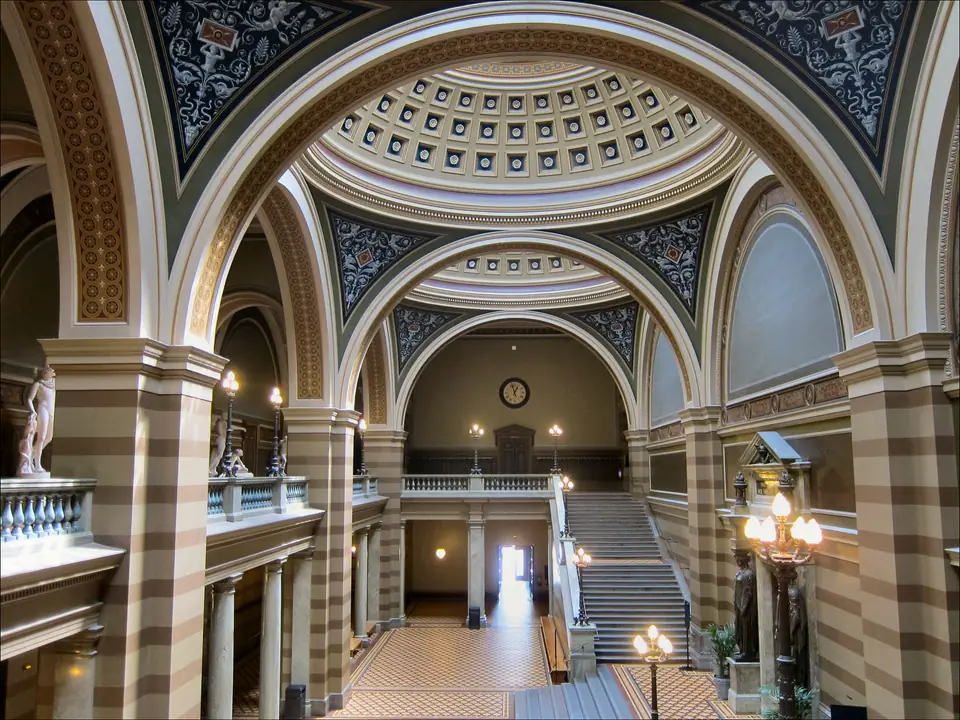
Passing through the bronze-clad main portals of Universitetshuset brings you into a monumental two-storey vestibule and staircase hall roofed by three sky-lit brick domes resting on marble columns and decorated with geometric renaissance stencils. Straight ahead opens the semicircular Grand Auditorium (Aulan), seating 1,800 people for doctoral conferment ceremonies, academic lectures, and the spring concerts of the student nations. Carved in gold letters above the auditorium entrance is 18th-century Swedish philosopher Thomas Thorild's maxim: Tänka fritt är stort men tänka rätt är större ("To think freely is great, but to think rightly is greater").
Visiting Universitetsparken and Practical Planning
Before leaving the square, walk the paths of Universitetsparken between Gustavianum and Universitetshuset to examine the collection of Viking Age Uppland runestones arranged on the lawn, as well as the 19th-century monument to poet and historian Erik Gustaf Geijer. Check the official site of Gustavianum and Uppsala University for current opening days and guided tour access to Universitetshuset, as the auditorium closes during formal academic examinations and conferences.
Traveller tips
Real advice from people who have been to Gustavianum & University Hall: Rudbeck's Anatomical Theatre & Academic Uppsala. Every tip is read by our team before it goes live.
No tips yet. Been here? Yours could be the first.
Thank you! Your tip will appear here after a quick review.
More in Uppsala
Continue exploring Uppsala with related neighbourhood, food, and planning guides
Uppsala Student Nations & Valborg: Academic Traditions & Walpurgis Night
Uppsala, Sweden
Fyris River (Fyrisån) & Stadsträdgården: Bridges, Parks & Pelle Svanslös
Uppsala, Sweden
What to Eat in Uppsala: Saluhallen, Historic Konditorier & Swedish Fika
Uppsala, Sweden
How to Get to Uppsala: Arlanda Airport, Trains from Stockholm & Local Buses
Uppsala, Sweden
