


























Sunnegga Funicular, Stellisee, Grindjisee and Five Lakes Walk Guide
How to reach Sunnegga (2,280 m) and Blauherd (2,571 m) in minutes and hike Zermatt's classic Five Lakes Walk past the Stellisee and Grindjisee.
Two kilometres east of the village on a sunny mountain terrace at 2,280 metres above sea level sits Sunnegga, literally "sunny corner" in Valais dialect. Linked to the eastern bank of the Matter Vispa by a high-speed underground funicular and extending upward by gondola and cable car to Blauherd (2,571 metres) and the Unterrothorn (3,103 metres), this eastern slope catches early morning sun and hosts Zermatt's most famous summer trail: the Five Lakes Walk (5-Seenweg).
Riding the 1980 Underground Funicular to Sunnegga and Blauherd
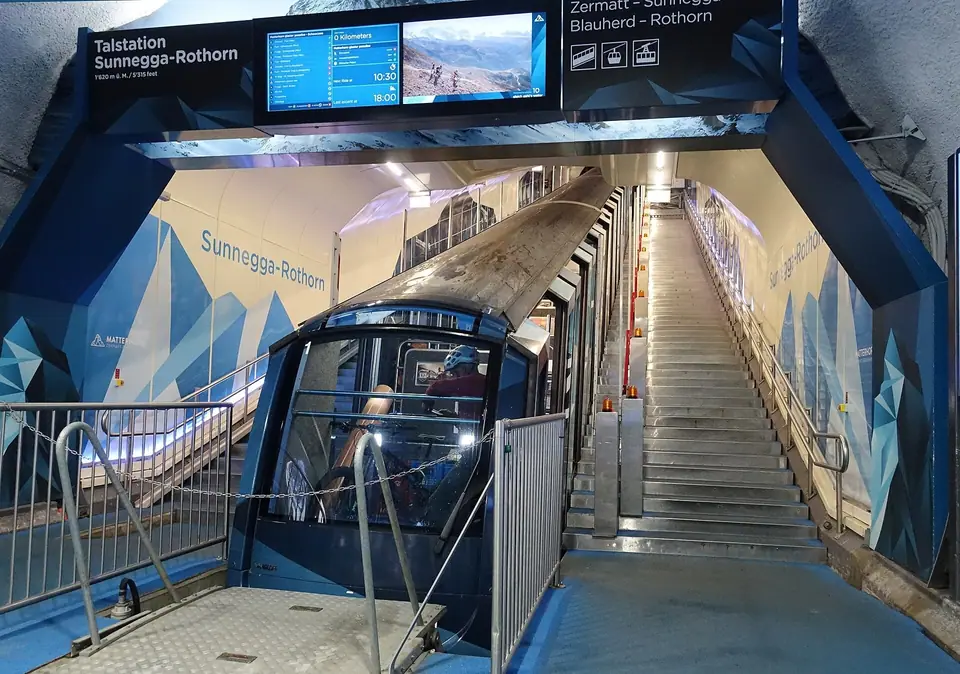
Five minutes on foot east of Zermatt railway station across the Matter Vispa river, the valley portal of the Sunnegga funicular (opened in 1980 inside a rock tunnel blasted straight through the mountainside) whisks passengers 680 vertical metres up to Sunnegga terrace (2,280 metres) in just four and a half minutes. Directly outside the top station, a free self-operated inclined lift (the Leisee-Shuttle) drops down to the Leisee (2,232 metres), a shallow family swimming and picnic tarn with a wooden raft facing the Matterhorn, while marked marmot-watching trails contour the sunny slope. From Sunnegga, the 2005 combined chairlift and eight-seat gondola continues up to Blauherd (2,571 metres), where a 150-passenger aerial cable car (built in 1996) climbs to the 3,103-metre summit of the Unterrothorn (Rothorn).
Stellisee (2,537 m) and Grindjisee (2,334 m): The Classic Reflections
To walk the full 9.8-kilometre Five Lakes Walk downhill rather than uphill, ride the funicular and gondola all the way to Blauherd (2,571 metres) and follow the signposted path (roughly two and a half hours of walking time) back to Sunnegga:
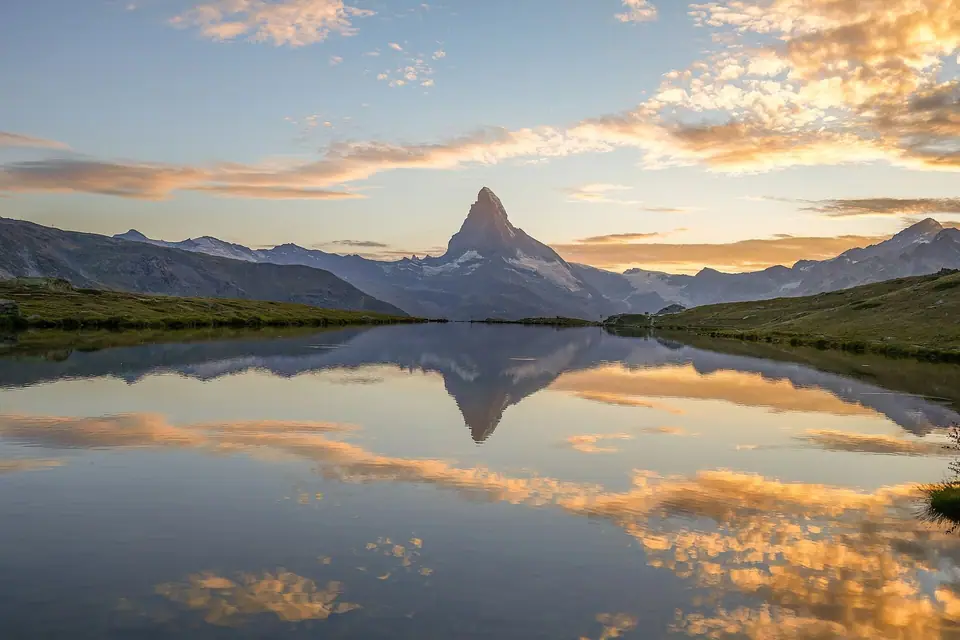
- Stellisee (2,537 m): Twenty minutes from Blauherd, this open high-alpine lake is the best-known tarn on the route, with pale shoreline boulders and cottongrass framing an unobstructed reflection of the Matterhorn, Monte Rosa, and the Findel Glacier.
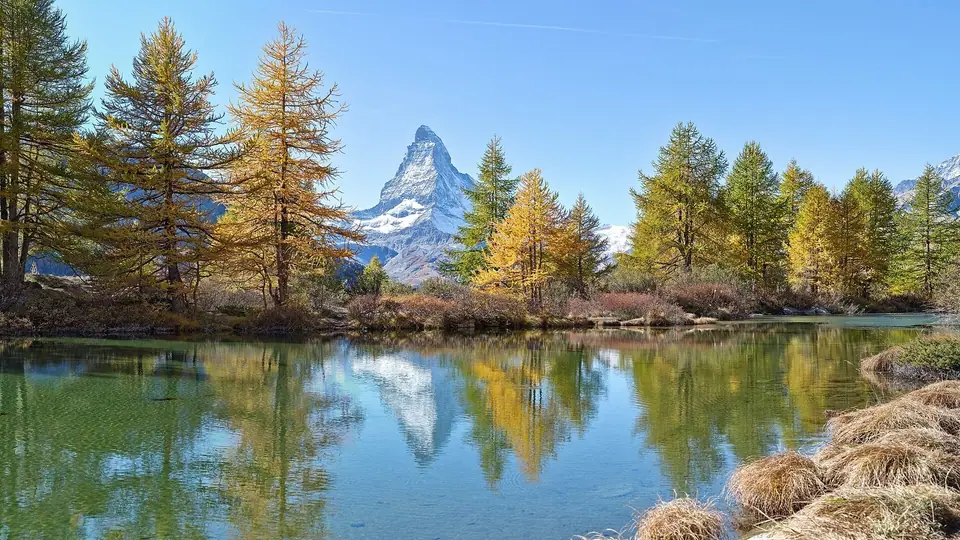
- Grindjisee (2,334 m): Descending into the upper tree line below the lateral moraine of the Findel Glacier, the Grindjisee sits sheltered by Swiss stone pines and larches that turn brilliant gold in October, sheltering rare alpine marsh plants around its dark green water.
Grünsee, Moosjisee and Descending via Findeln
Continuing south across the moraine brings you to the rugged Grünsee (2,300 metres, where hardy hikers can dip their feet in summer) and down to the milky turquoise reservoir of the Moosjisee (2,140 metres), fed by glacial meltwater from the Findelbach. A final short climb returns you past the Leisee to Sunnegga (2,280 metres), from where you can either take the tunnel funicular back to Zermatt or walk thirty minutes down through the larch-wood chapels and mountain restaurants of Findeln (2,051 metres). Compare the Stellisee angle with the western reflection at the Riffelsee.
Operating Season
While the Sunnegga funicular and Blauherd lift run in both winter (for skiing) and summer, the Five Lakes stay frozen under deep snow until mid-June; plan the lake walk between late June and mid-October.
During the winter and spring ski months, these same sunny eastern pastures transform into wide, sheltered snow slopes served by the underground funicular, gondolas, and chairlifts, while non-skiers can ride up to the sunny terrace restaurants at Sunnegga and Blauherd or follow groomed winter walking paths facing the Matterhorn.
Extending Your Ascent to the Unterrothorn Viewpoint
Before starting the downhill lake walk from Blauherd, consider riding the large aerial cable car one stage higher to the rocky summit of the Unterrothorn. Because this eastern vantage point sits across the valley from the main chain of Pennine four-thousanders, the terrace commands a sweeping panorama from the Monte Rosa massif and the Findel Glacier across the Matterhorn to the sharp snowy pyramid of the Weisshorn and the distant Bernese Alps to the north. Stepping off the return cabin at Blauherd puts you directly on the trailhead for the gentle walk to the initial lake on the circuit.
Spotting Alpine Marmots and High-Meadow Flora Along the Trail
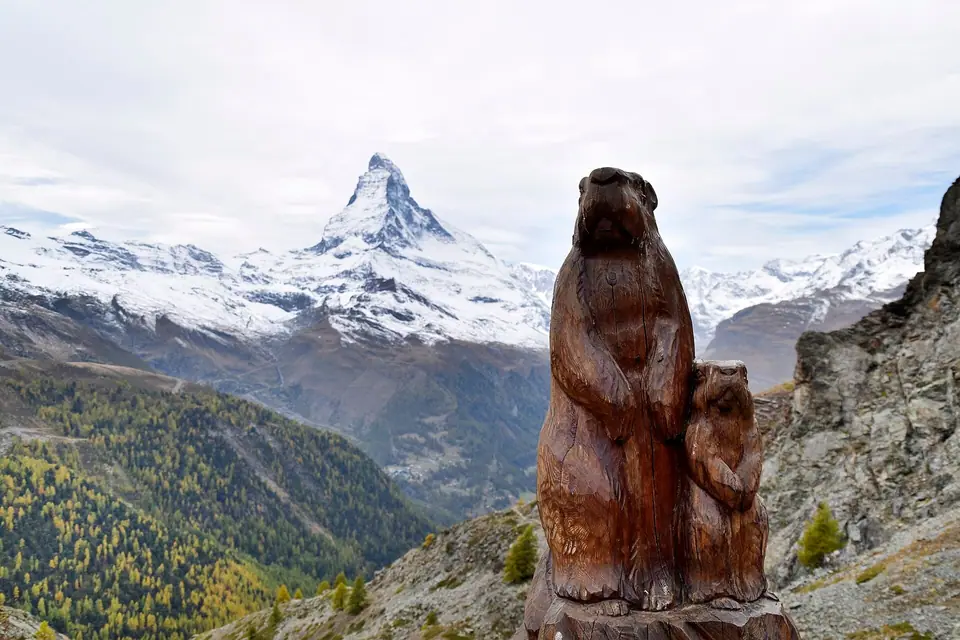
The sunlit grassy slopes between Blauherd and Sunnegga are home to large colonies of alpine marmots (Murmeltiere) that burrow beneath the boulders and pastures. Along the signposted marmot observation path near the funicular station and beside the rocky moraines on the lake route, walkers who pause quietly in the morning sun often hear the sharp whistle that sentry marmots use to warn their family groups of approaching eagles or hikers. In early and mid-summer, the meadows bordering the footpath bloom with blue gentians, alpine roses, edelweiss, and yellow mountain avens, while the boggy margins of the lower forest tarns shelter rare wetland sedges and cottongrass.
Combining the Lake Walk with a Culinary Stop in Findeln
One of the pleasures of the eastern slope is how naturally the high-alpine trail flows down into the historic farming settlement of Findeln. Rather than riding the tunnel funicular straight down from Sunnegga at the end of your loop, you can follow the stepped footpath through golden larches and dark timber barns to enjoy a long afternoon meal on a sunny wooden deck facing the Matterhorn, sampling the regional cheeses and cured meats highlighted in our food guide before strolling the final woodland descent back to the village centre.
Because the five tarns vary so widely in character, from open high-alpine boulder basins and pine-ringed forest pools to milky turquoise glacial reservoirs, walking the entire circuit gives you a rich cross-section of eastern slope ecosystems in a single half-day outing. Bring a windproof layer for the open upper ridge near Blauherd and swimwear or a small towel if you want to wade in the shallow sun-warmed edges of the lower lakes on a warm July or August afternoon.
For photographers hoping to capture a mirror-like reflection on the Stellisee, boarding one of the early morning funicular departures from the valley portal is well rewarded: morning sunlight strikes the eastern face of the Matterhorn directly across the valley while the water surface remains calm before midday valley breezes develop, making this walk the ideal opening morning in our three-day Zermatt itinerary. Clear yellow signposts at every fork along the slope show both the direct path between the lakes and shorter return tracks to the funicular station if you ever wish to shorten the loop.
Traveller tips
Real advice from people who have been to Sunnegga Funicular, Stellisee, Grindjisee and Five Lakes Walk. Every tip is read by our team before it goes live.
No tips yet. Been here? Yours could be the first.
Thank you! Your tip will appear here after a quick review.
More in Zermatt
Continue exploring Zermatt with related neighbourhood, food, and planning guides
How to Get to Zermatt: Täsch Shuttle, Visp Trains and Glacier Express
Zermatt, Switzerland
Where to Stay in Zermatt: Bahnhofstrasse, Winkelmatten & Riffelalp
Zermatt, Switzerland
Best Time to Visit Zermatt: Climate Normals, Hiking & Ski Seasons
Zermatt, Switzerland
3-Day Zermatt Itinerary: Village, Gornergrat, Lakes and Matterhorn
Zermatt, Switzerland
