


























Gornergrat Railway (3,089 m), Kulmhotel and Riffelalp Tram Guide
Everything you need to plan your ride on the 1898 Gornergrat Railway to 3,089 metres, including the Kulmhotel observatories and Europe's highest tram.
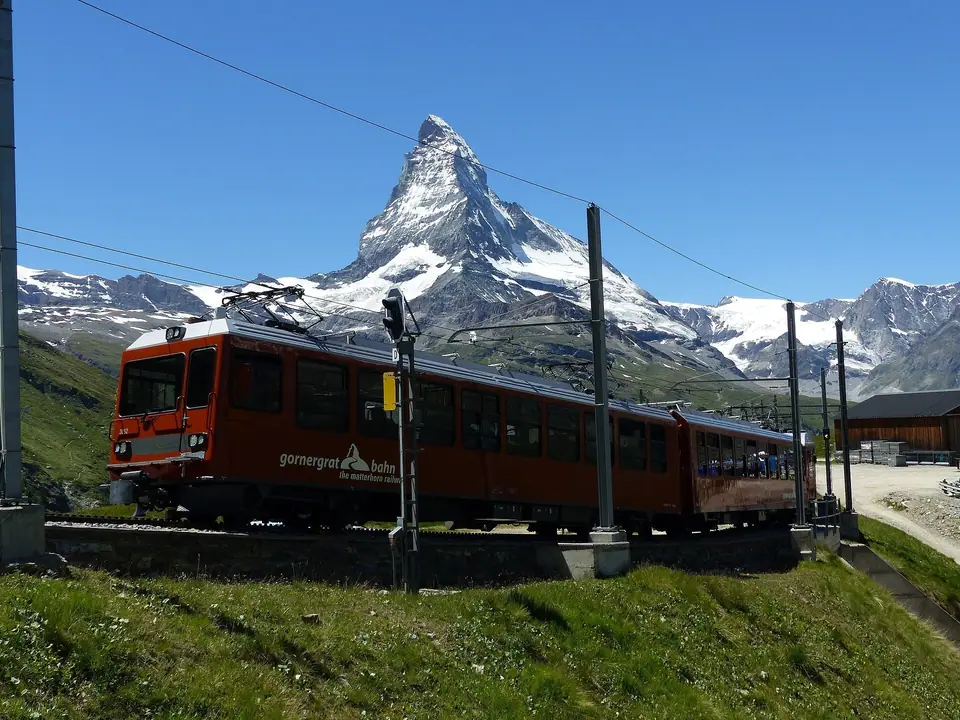
Rising southeast of Zermatt between the deep basins of the Gorner Glacier and the Findel Glacier, the rocky ridge of the Gornergrat culminates at 3,135 metres above sea level. Directly below the ridge crest at 3,089 metres sits the upper terminus of the Gornergrat Railway (Gornergrat Bahn, GGB), the highest open-air railway in Europe, second in altitude across the continent after the tunnelled Jungfrau Railway.
The 1898 Three-Phase Electric Rack Railway from Zermatt
Concessioned in 1892 shortly after the Visp-Zermatt railway reached the valley, construction of the Gornergrat line began in 1896 and opened on 20 August 1898 as the first electric rack railway in Switzerland. Departing from its own terminal directly opposite Zermatt railway station at 1,604 metres, the 1,000-millimetre-gauge Abt rack line climbs 1,485 vertical metres over a distance of 9.339 kilometres (including 3.79 kilometres of double track) at a maximum gradient of 20 percent. Remarkably, the railway still runs on three-phase alternating current (725 volts, 50 hertz), which requires two parallel overhead wires above each track, supplying two phases via twin pantographs while the steel rails form the third conductor, and allows descending trains to regenerate electricity back into the grid for ascending trains.
Stations Along the Ascent and the 770-Metre Riffelbord Gallery
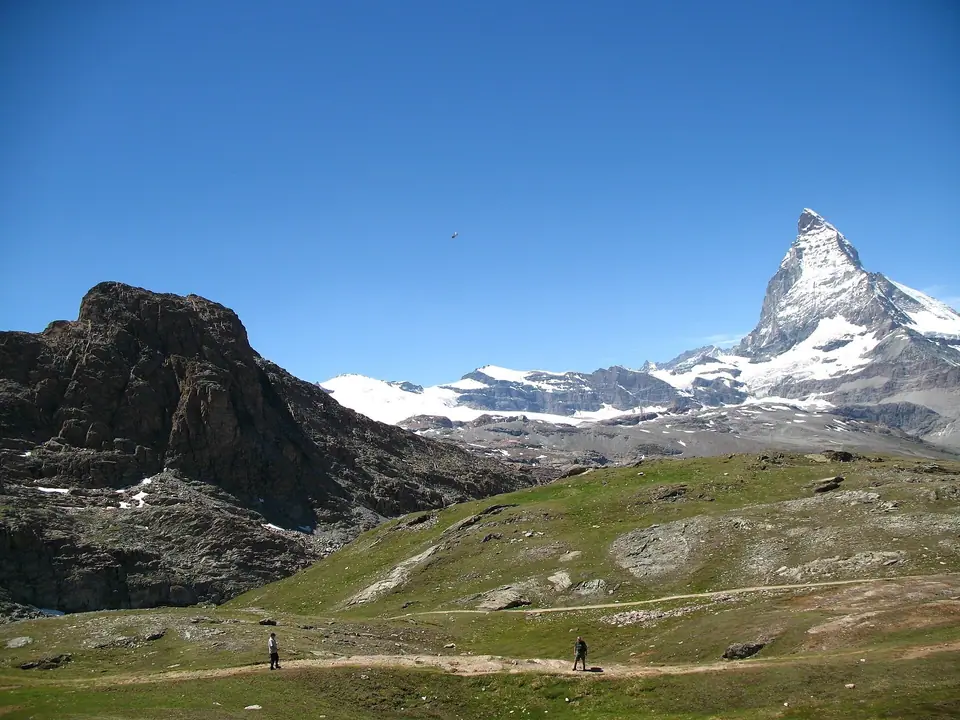
After crossing the Matter Vispa and the high stone viaduct over the Findelbach gorge, trains climb through larch and Swiss stone pine forest past Findelbach (1,770 metres) and Riffelalp (2,211 metres) before emerging above the tree line at Riffelberg (2,582 metres) and Rotenboden (2,815 metres, the stop for the Riffelsee lake and Monte Rosa Hut trail). Between Riffelberg and Rotenboden, the track passes through the 770-metre Riffelbord avalanche gallery, built between 1939 and 1941 so trains could operate to the summit in winter as well as summer. Sit on the right-hand side of the carriage when ascending from Zermatt for continuous views of the Matterhorn.
Kulmhotel Gornergrat (3,120 m) and the 29 Four-Thousanders
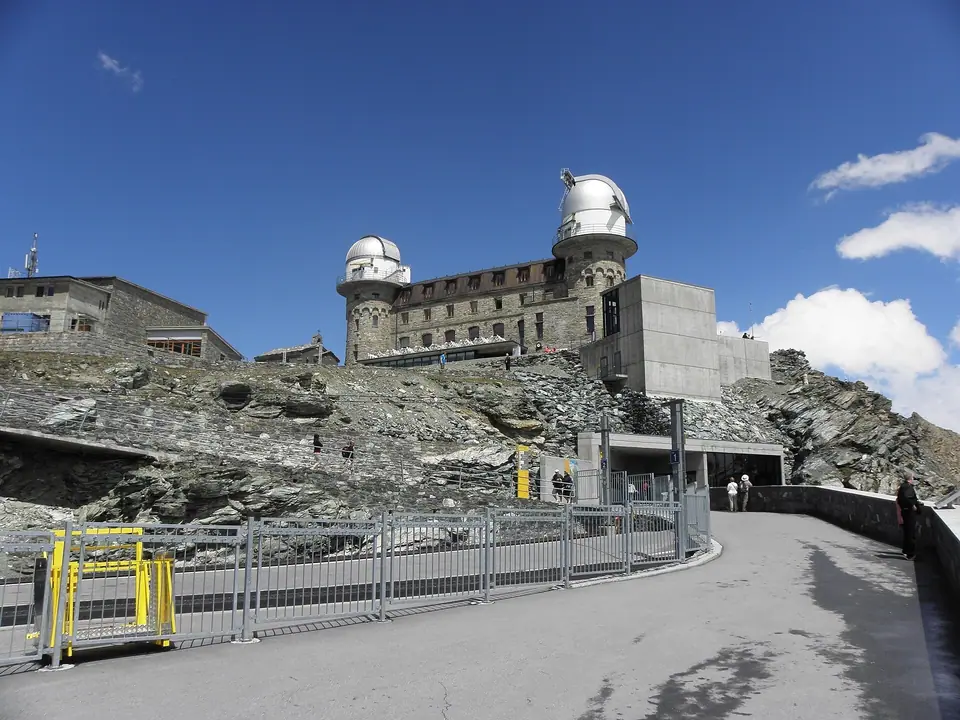
A short lift or stepped path leads from the 3,089-metre station up to the Kulmhotel Gornergrat at 3,120 metres (opened in 1907 on the site of the 1898 Belvédère hotel), whose two stone corner towers were topped with astronomical observatory domes in the late 1960s and today house the Stellarium Gornergrat telescope and the interactive ZOOOM the Matterhorn exhibition. From the viewing terrace above the hotel, the all-round panorama takes in 29 summits above 4,000 metres, stretching from the Dufourspitze (4,634 metres) and Liskamm (4,527 metres) across the Breithorn and Matterhorn (4,478 metres) to the Weisshorn and Dom.
Europe's Highest Tramway at Riffelalp (2,222 m)
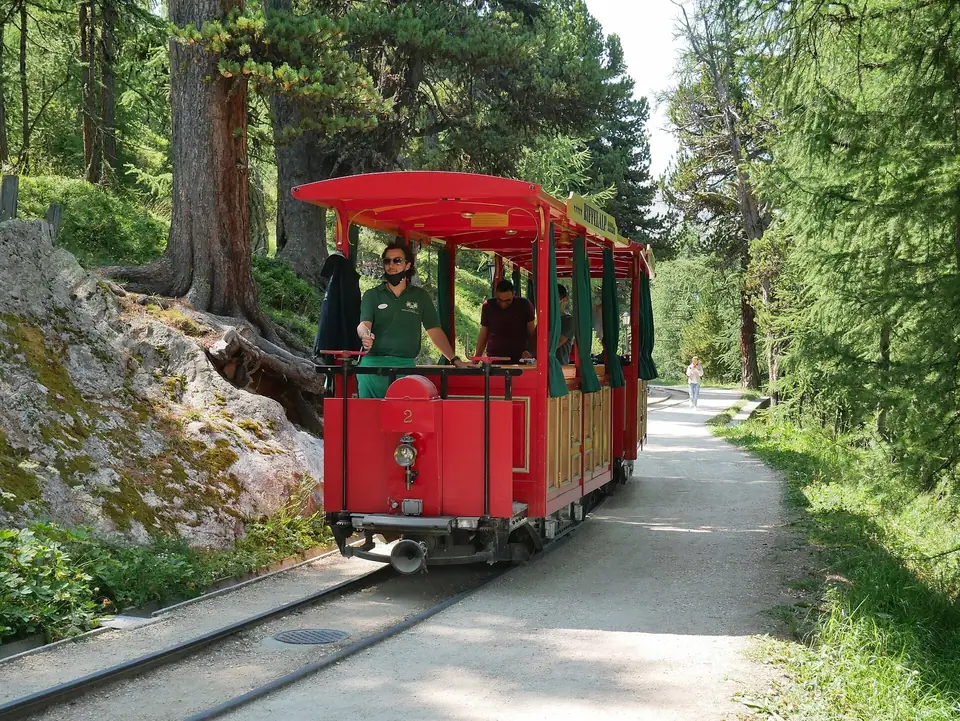
On your return, hop off at Riffelalp station (2,211 metres) between mid-June and October to see the Riffelalptram: opened by hotelier Alexander Seiler on 13 July 1899 and reopened with battery power on 15 June 2001, its 800-millimetre-gauge track runs 675 metres through stone pines to the Riffelalp Resort at 2,222 metres, making it the highest tram line in Europe.
Walking through the stone pine woods around the tram line at Riffelalp offers a peaceful contrast to the high rock ridge above. Because this sheltered mid-altitude terrace sits right at the upper boundary of the alpine forest, gnarled conifers frame wide sightlines across the valley toward the southwestern peaks while needle-carpeted footpaths wind gently toward neighbouring mountain stations and sunny restaurant terraces.
Choosing Seats, Ticket Stops and Halfway Hikes Along the Line
Because trains climb continuously along the western flank of the ridge after crossing the high viaduct over the gorge, passengers seated on the right-hand side of the carriage in the direction of ascent enjoy the widest views across the deep valley floor and up to the eastern and northern walls of the Matterhorn. Notice how the apparent height and angle of the mountain change as your carriage climbs from the pine woods past the timberline into open alpine tundra: what looks like an impossibly distant rock tower from the village square gradually meets you eye-to-eye across the gulf of the valley.
Rather than treating the railway purely as a non-stop elevator to the summit and back, plan at least one intermediate stop on your descent. Stepping off at the upper intermediate stations lets you walk downhill along gentle gravel paths beside high-alpine reflection tarns and wildflower meadows before reboarding a later train down to the valley station, or continuing on foot through the larch forest toward the hamlets of Findeln and Zum See.
Winter Sledging, Snowshoeing and Year-Round Operations
Thanks to its electric rack-and-pinion traction and long avalanche protection galleries, the railway runs every day of the year in both winter snow and summer sunshine. During the winter ski season, the open slopes flanking the tracks transform into groomed alpine ski runs, winter walking trails, and high-altitude sledging paths between the upper intermediate stations, while non-skiing visitors can ride up in ordinary winter boots to enjoy the sunny viewing terraces and indoor multimedia exhibition at the summit hotel. Regardless of season, bring a warm windproof layer and sunglasses, as breezes along the exposed ridge crest feel noticeably cooler than the sheltered streets down in the village.
Above the summit hotel, a short looped footpath climbs the final rocky steps to the crest of the ridge where panoramic direction plates name every surrounding peak and glacier tongue. Standing on this stone balcony lets you follow the sweeping medial moraines of the ice streams far below and trace how meltwater carves its way down toward the valley gorge, making the cogwheel ascent an essential cornerstone of our three-day Zermatt itinerary.
Engineering enthusiasts will also notice the twin overhead contact wires and dual pantographs on every train along the climb, a hallmark of three-phase mountain traction that has operated reliably on these steep gradients since the late nineteenth century while feeding braking energy from descending carriages straight back to trains climbing up from the valley.
Whether you ride up on the early morning departure for still lake reflections or ascend in the late afternoon when warm golden light strikes the western snowfields of Monte Rosa, the combination of open-air railway windows, intermediate meadow walks, and high-ridge observatories makes this eastern corridor one of the most rewarding alpine train journeys in Switzerland.
Traveller tips
Real advice from people who have been to Gornergrat Railway (3,089 m), Kulmhotel and Riffelalp Tram. Every tip is read by our team before it goes live.
No tips yet. Been here? Yours could be the first.
Thank you! Your tip will appear here after a quick review.
More in Zermatt
Continue exploring Zermatt with related neighbourhood, food, and planning guides
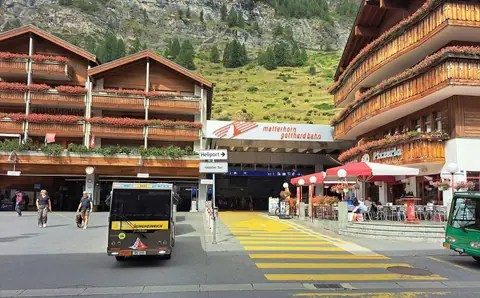
How to Get to Zermatt: Täsch Shuttle, Visp Trains and Glacier Express
Zermatt, Switzerland
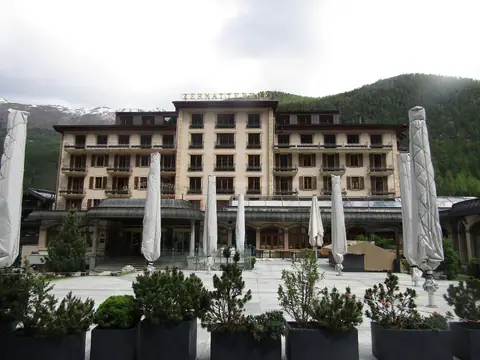
Where to Stay in Zermatt: Bahnhofstrasse, Winkelmatten & Riffelalp
Zermatt, Switzerland
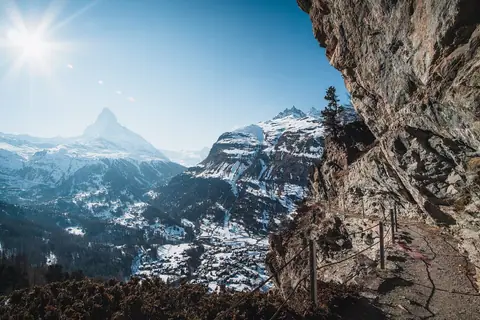
Best Time to Visit Zermatt: Climate Normals, Hiking & Ski Seasons
Zermatt, Switzerland
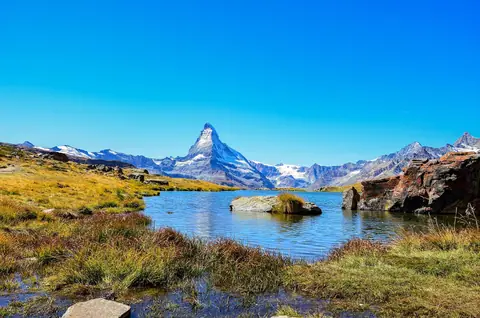
3-Day Zermatt Itinerary: Village, Gornergrat, Lakes and Matterhorn
Zermatt, Switzerland
