


























Best Time to Visit Zermatt: Climate Normals, Hiking & Ski Seasons
Month-by-month MeteoSwiss climate normals for Zermatt at 1,638 metres, comparing the summer hiking window with winter and glacier skiing.
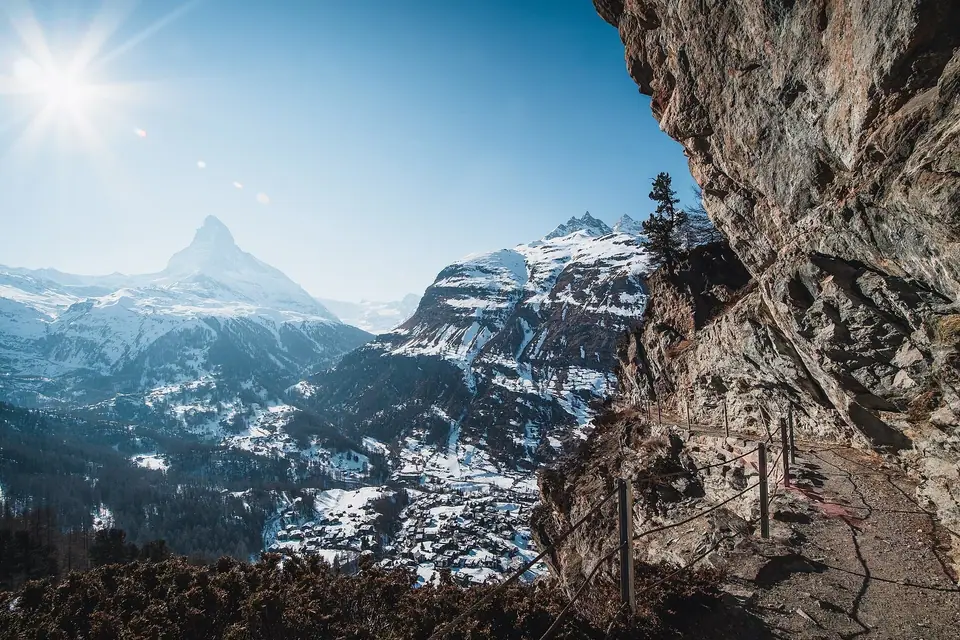
Because Zermatt sits at 1,620 metres inside an inner-alpine valley ring-fenced by 4,000-metre peaks on the east, south, and west, its climate is remarkably sunny, dry, and continental compared with the northern front ranges of the Alps. Shielded from wet Atlantic and Mediterranean air masses, the valley floor supports one of the highest timberlines in Central Europe (2,200 to 2,300 metres) while its surrounding glaciers reach 4,634 metres.
MeteoSwiss 1991 to 2020 Climate Normals at Zermatt (1,638 m)
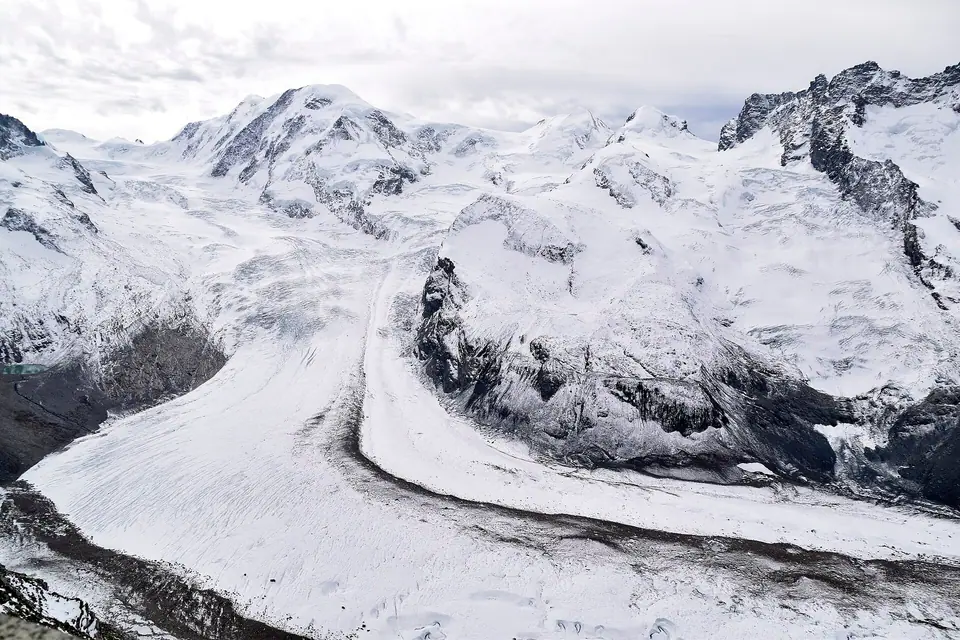
According to the official 1991 to 2020 climate normals recorded by MeteoSwiss at the Zermatt weather station (elevation 1,638 metres), the annual mean temperature is 4.7 °C, with an average annual daily maximum of 10.2 °C and an average annual minimum of 0.3 °C. Because surrounding mountains block rain clouds, total annual precipitation in the village is just 640.4 millimetres spread across 89.7 wet days (at least 1.0 mm of precipitation), barely half the rainfall of Interlaken or Lucerne, while annual sunshine reaches 1,648.5 hours (60 percent of possible daylight). Note the contrast with the high peaks: while the village receives 640.4 mm of precipitation, the Signalkuppe of Monte Rosa (4,554 metres) receives roughly 4,100 mm per year, and temperatures at Klein Matterhorn (3,883 metres) rarely exceed +5 °C in summer and drop to -35 °C in winter.
Summer Hiking Window (Late June to September)
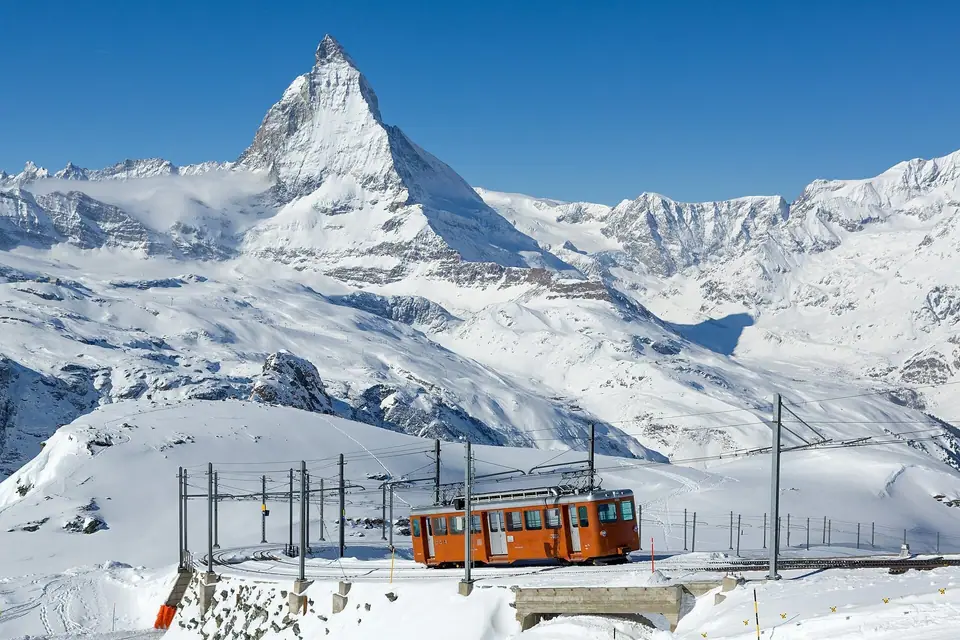
July is the warmest month in Zermatt (average daily high 20.0 °C, daily mean 13.7 °C, overnight low 8.3 °C, and 185.3 hours of sunshine), followed closely by August (average high 19.6 °C, low 8.3 °C) and June (high 17.8 °C, low 6.6 °C). Because of the 1,620-metre elevation, the village records only 8 to 9 summer days (25 °C or above) per year, making midday hikes refreshingly cool. From late June through September (average high 15.4 °C, low 5.0 °C, with just 7.3 wet days and 65 percent possible sunshine), the high-alpine lakes of the Five Lakes Walk and the Riffelsee are ice-free, the Hörnli Hut trail (3,260 m) and Gorner Gorge are open, and the 2,222-metre Riffelalptram runs daily.
Autumn Larch Gold (October) and Winter Snow (December to April)
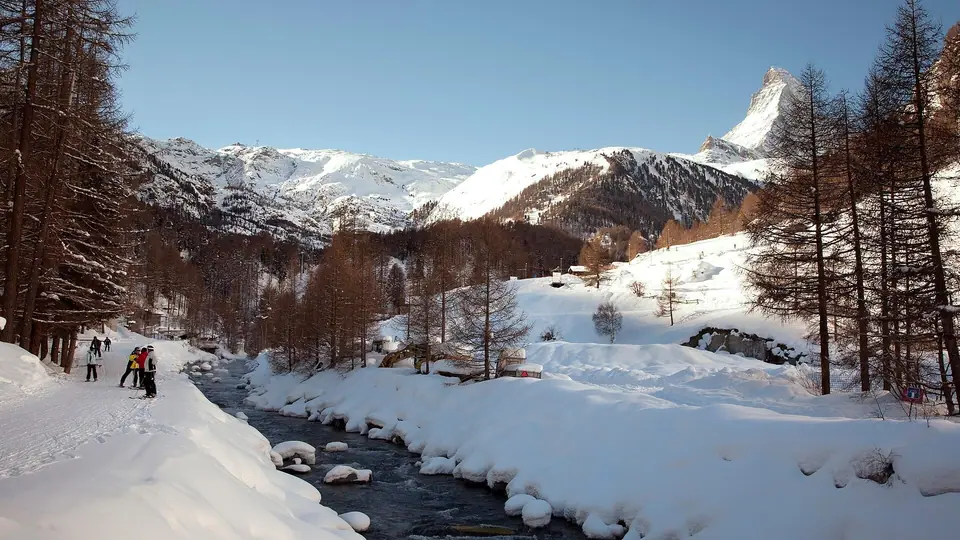
In October (average high 11.2 °C, low 1.4 °C, and 7.0 wet days), the larch forests around Findeln, Zmutt, and Grindjisee turn bright gold before high hiking trails close under early snow. Winter is cold, crisp, and sunny (56 to 63 percent of possible sunshine from December to March): January is the coldest month (average high 0.8 °C, daily mean -3.9 °C, overnight low -7.4 °C), alongside December (high 1.5 °C, low -6.3 °C, 56.9 cm of snow) and February (high 1.7 °C, low -7.3 °C). Over the year, Zermatt records an average of 171 frost days, 42 ice days, and roughly 325 centimetres of snowfall, supporting winter skiing from late November through April and year-round glacier skiing on the Theodul Glacier.
Spring and Late-Autumn Shoulder Months (May and November)
Between the main winter ski season and the mid-summer hiking peak lie the quieter transition months of May and November. In May, springtime warmth reaches the valley floor along Bahnhofstrasse and lower woodland trails to Zmutt and Findeln bloom with early wildflowers, even while high-altitude trails above the tree line remain buried under winter snowpacks. November is the calmest month of the year in the village: several mountain cableways pause briefly in rotational stages for scheduled annual cable maintenance, and some hotels take a short pre-winter break, yet the Gornergrat Railway and glacier ski access continue operating so visitors can enjoy peaceful streets and crisp early winter panoramas without crowds.
How Elevation and Aspect Shape Daily Mountain Weather
When packing and planning daily excursions, remember that vertical elevation changes the climate far faster than the calendar date alone. On a sunny mid-summer day when café terraces in the village feel pleasantly warm, the rocky ridge at Gornergrat sits in brisk alpine air and the glacier snowfields at Klein Matterhorn remain gripped in winter frost. Morning hours almost always bring the clearest skies and calmest winds across the upper peaks, whereas solar heating on warm summer afternoons can build convective cumulus clouds along the Italian border ridge, occasionally shrouding the upper pyramid of the Matterhorn while the valley floor stays sunny.
Matching Your Travel Dates to Your Primary Interests
- Mirror-lake photography and high-alpine trail hiking: Aim for late June through September, when the five eastern lakes and the Riffelsee are completely thawed, alpine cottongrass and wildflowers frame the water, and the rocky path up to the Hörnli Hut is free of winter snow.
- Autumn foliage and quiet valley walks: Visit during the opening three weeks of October, when high-pressure systems deliver crisp blue skies, low rainfall, and glowing golden larch forests across the mid-altitude terraces.
- Winter piste skiing and snow sports: Plan between December and April for deep natural snow cover across all three interconnected mountain sectors and cross-border runs into Italy.
What to Pack for Rapid Altitude Transitions
Regardless of the month on your ticket, dress in breathable layers that you can add or shed as you ride from the valley floor up to the glacier terminals: a moisture-wicking base layer, an insulating fleece or light down jacket, a windproof outer shell, sunglasses rated for strong glacier glare, high-factor sunscreen, and sturdy footwear with lugged soles for gravel paths and snow-dusted viewing decks, then sequence your days using our three-day Zermatt itinerary.
Checking the official mountain lift and trail bulletin each evening helps you fine-tune the next morning's departure time. Because sunrises strike the eastern rock wall of the Matterhorn early in the day, stepping out onto the village bridge or boarding an early morning cogwheel train rewards you with the sharpest light and stillest mountain air of your trip.
Even during a multi-day spell of unsettled weather across the wider Alps, the high mountain ring surrounding the Mattertal frequently creates a local foehn or rain-shadow window over the village, allowing walkers to enjoy dry valley footpaths and cosy Valais dining rooms while waiting for the upper ridges to clear.
Traveller tips
Real advice from people who have been to Best Time to Visit Zermatt: Climate Normals, Hiking & Ski Seasons. Every tip is read by our team before it goes live.
No tips yet. Been here? Yours could be the first.
Thank you! Your tip will appear here after a quick review.
More in Zermatt
Continue exploring Zermatt with related neighbourhood, food, and planning guides
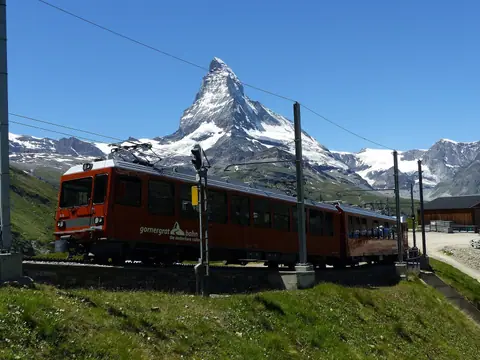
Gornergrat Railway (3,089 m), Kulmhotel and Riffelalp Tram Guide
Zermatt, Switzerland
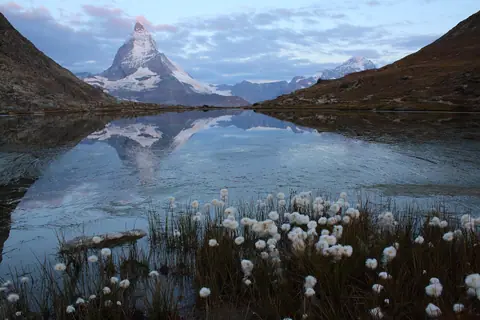
Riffelsee Mirror Lake, Gorner Glacier and Monte Rosa Hut Guide
Zermatt, Switzerland
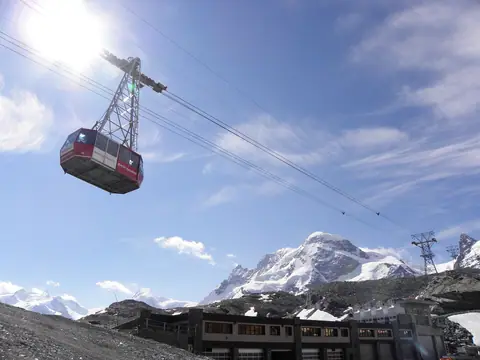
Klein Matterhorn (3,883 m), Glacier Paradise and 3S Cableway Guide
Zermatt, Switzerland
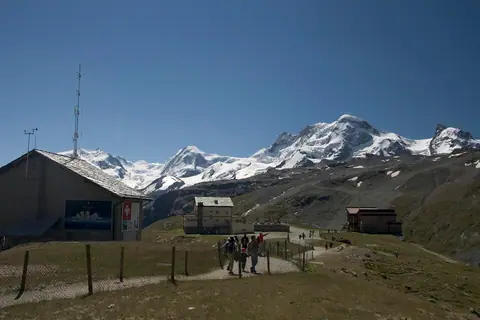
Schwarzsee (2,583 m), Maria zum Schnee Chapel and Hörnli Hut Hike
Zermatt, Switzerland
