Sultanahmet Guide: Hagia Sophia, the Blue Mosque, Topkapı and More
How to see Istanbul's historic heart in the right order: the great monuments, the museums, the quieter corners, and where to eat and stay.
Sultanahmet is the oldest and most visited corner of Istanbul, and the most concentrated piece of history in the city. Hagia Sophia and the Blue Mosque face each other across a garden square, the Hippodrome of Byzantine Constantinople runs along one side, the Basilica Cistern lies under the street, and Topkapı Palace fills the headland above the point where the Bosphorus meets the Sea of Marmara. Fifteen centuries of Byzantine and Ottoman history sit within a walk of less than two kilometres.
That density is the district's strength and its trap. The sights are close together, but they open and close at different times, two of the biggest are working mosques that pause for prayer, and the square fills with tour groups by mid-morning. A day here goes well when you plan the order, not the list. This guide is about that order: what each place is, how long it needs, what to pair it with and what you can skip. For the rest of the city, start with our Istanbul destination page and the Istanbul travel guide.
The short answer
- How long? One full day covers the essential monuments. Two days let you add the big museums without rushing.
- Where to start? Hagia Sophia or the Blue Mosque, early, depending on the day's prayer times.
- The best paid pairing: Topkapı Palace and the Istanbul Archaeological Museums, which stand next to each other.
- The most atmospheric stop: the Basilica Cistern.
- The free part: the Hippodrome, the square, the Blue Mosque and Gülhane Park.
- The biggest mistake: arriving late in the morning and trying to fit every monument into one block.
- When to go: spring and autumn, covered in our best time to visit Istanbul guide.
- Where to sleep: Sultanahmet itself for sightseeing, Sirkeci for better transport. More in our Istanbul where to stay guide.
The simplest route that works: Hagia Sophia, the Blue Mosque, the Hippodrome, the Basilica Cistern, lunch, Topkapı Palace, then a slow walk down through Gülhane Park. We explain each step below, and our Istanbul 3-day itinerary shows how Sultanahmet fits into a longer stay.
How Sultanahmet is laid out
Sultanahmet sits on the tip of the historic peninsula, the old walled city between the Golden Horn and the Sea of Marmara. The whole area is part of the Historic Areas of Istanbul, listed by UNESCO in 1985, and the Sultanahmet section is the densest part of that listing.
Once you have the geography in your head, the district is easy. Think of a compact triangle around Sultanahmet Square:
- Hagia Sophia on the north-east side of the square.
- The Blue Mosque on the south side, facing it.
- The Hippodrome running along the west side of the mosque.
- The Basilica Cistern just across the tram line from Hagia Sophia.
- Topkapı Palace uphill to the north-east, behind Hagia Sophia, with the Archaeological Museums beside it.
- Gülhane Park below the palace, sloping towards the water.
- The Arasta Bazaar behind the Blue Mosque, and Little Hagia Sophia a few streets further south.
Everything here is walkable, and walking is almost always faster than a taxi in these narrow streets. The ground is cobbled and uneven in places, so wear proper shoes; our guide to what to wear in Istanbul covers shoes and mosque clothing.
Hagia Sophia
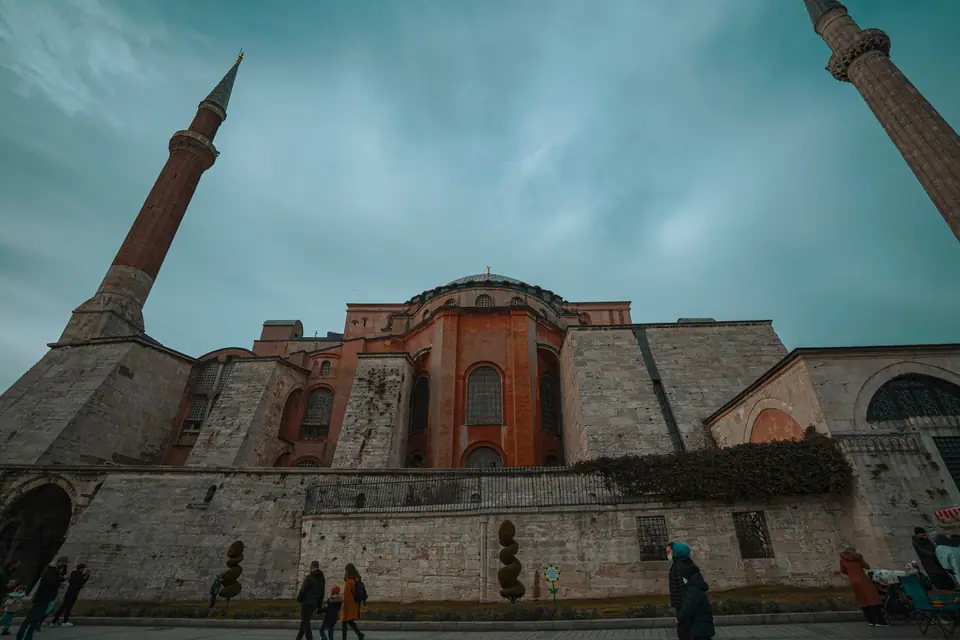
Hagia Sophia is the building that explains why Sultanahmet matters. The present structure was built under Emperor Justinian in the 6th century as the cathedral of Constantinople. After the Ottoman conquest of 1453 it became a mosque, then a museum in the republican era, and it returned to use as a mosque in 2020.
The visit today is not the old museum visit. Since 2024 the Ministry of Culture and Tourism has run a visitor system that separates tourists from worshippers: foreign visitors buy a ticket and follow a route through the upper galleries, while the ground floor remains the prayer hall. From the galleries you see the scale of the dome, the Byzantine mosaics that survive up there, and the layering of Christian and Ottoman decoration. Our dedicated Hagia Sophia guide explains the ticket system, the rules and the gallery route in detail.
What to look at: not a checklist of mosaics, but the space itself. Stand under the dome, look at how the huge circular Ottoman medallions sit against the Byzantine walls, and notice how the light comes in from the ring of windows at the base of the dome.
When to go: early. The queue grows fast once groups arrive. Allow about an hour to an hour and a half.
Do not confuse the mosque visit with the Hagia Sophia History and Experience Museum, a separate building on At Meydanı Sokak with multimedia displays about the building's history. It is a useful extra on a rainy afternoon, but if you have time for only one, choose the real building. The Museum Pass is not valid there, so check the official site for tickets.
The Blue Mosque
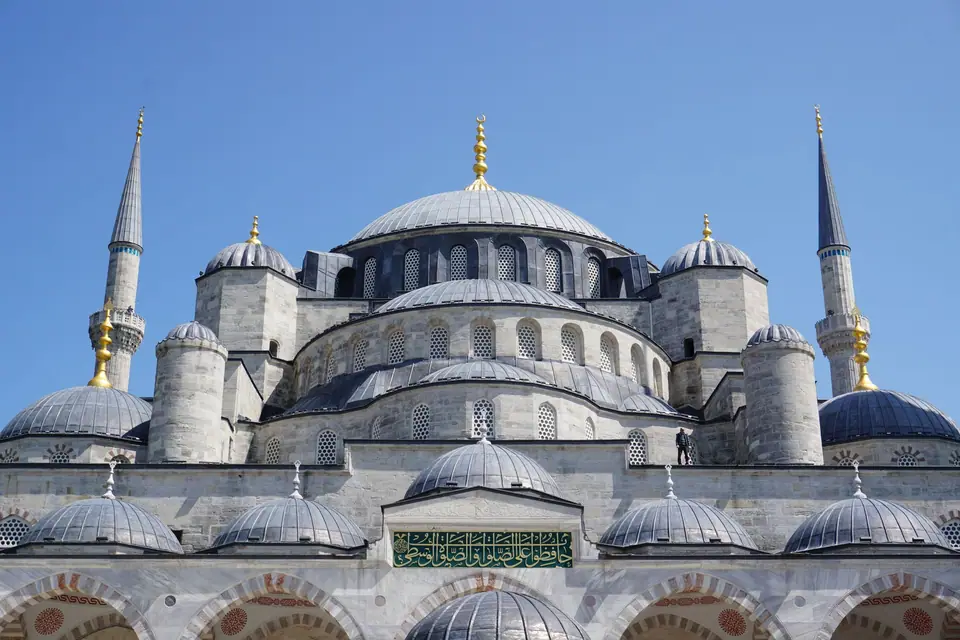
The Sultan Ahmed Mosque, known to everyone as the Blue Mosque, was built for Sultan Ahmed I in the early 17th century and gave the district its name. It is famous for its cascade of domes, its six minarets and the thousands of İznik tiles inside, mostly blue and green, which give it the English name. Standing opposite Hagia Sophia, it was built partly to answer it.
It is a working mosque first and a sight second. Entry is free, but visiting closes for each prayer, from shortly before the call to prayer until after the prayer ends, and on Fridays visitors are let in only in the afternoon, after the main weekly prayer. Check the mosque's visiting times on the day, and plan around the midday prayer in particular.
Dress and behaviour: cover your shoulders and knees, and women cover their hair; scarves and wraps are lent at the visitor entrance. Shoes come off before the prayer area, so bring a bag for them. Keep your voice down, keep out of the roped prayer space and don't photograph people praying. Pushchairs are not allowed inside. Our what to wear guide has a short packing list for mosque days.
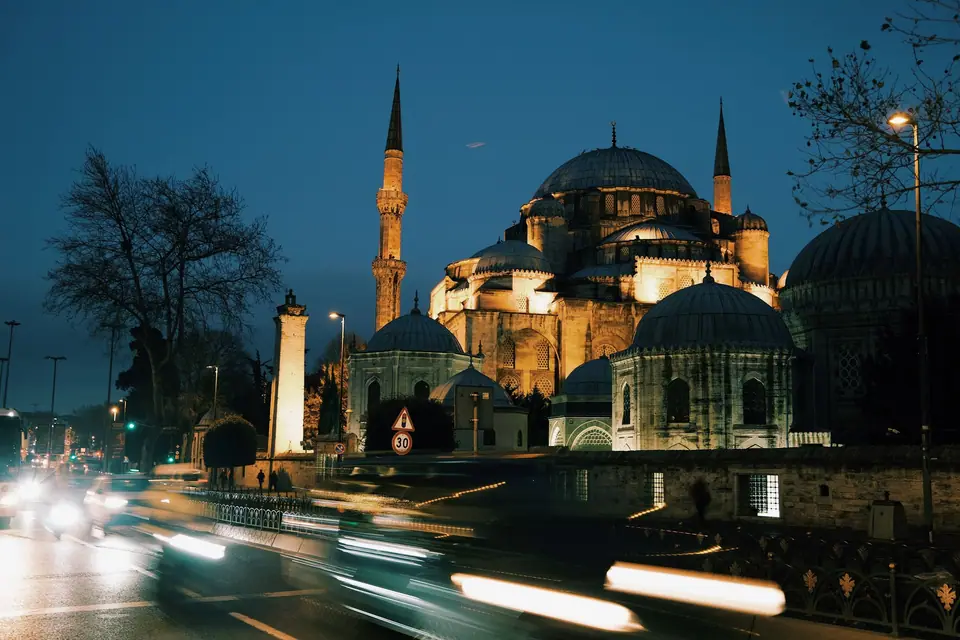
How long: thirty to forty-five minutes is enough. Come back after dark when your schedule allows: the mosque is floodlit, and the square between it and Hagia Sophia is at its best in the evening.
The Hippodrome and Sultanahmet Square
The long open space beside the Blue Mosque follows the line of the Hippodrome of Constantinople, where the Byzantine city raced chariots, crowned emperors and rioted. The racetrack itself is buried, but three monuments still stand on its central spine:
- The Obelisk of Theodosius, an Egyptian obelisk from Karnak, more than three thousand years old, set on a carved Roman base.
- The Serpentine Column, a bronze column of twisted snakes brought from Delphi, now headless and sunk below today's ground level.
- The German Fountain, an octagonal domed fountain given by Kaiser Wilhelm II.
Give it twenty minutes to half an hour. The point is not to stare at one monument but to walk the length of the space and see how the mosque, the square and the old palace buildings frame it. It is also the easiest place in the district to orient yourself. The Turkish and Islamic Arts Museum stands on its west side, which makes a natural pairing (see the museums section below).
The Basilica Cistern
The Basilica Cistern is the strongest change of mood in Sultanahmet. You leave the bright square, go down a flight of steps and find yourself in a 6th-century Byzantine reservoir, a forest of 336 marble columns standing in shallow water under brick vaults. It once stored water for the Great Palace; today it is lit low and cool, with a walkway between the columns.
The famous sights are the two Medusa heads used as column bases at the far end, one on its side and one upside down. But the real experience is the space: the reflections of the columns in the water and the rhythm of the arches. Allow about an hour.
The cistern changed management in June 2026, and its own visitor page warns that opening times and ticket prices have been changing since. Check the official notice on the day rather than a figure from a blog. The floor can be wet and slippery, and large bags, suitcases and professional camera gear without permission are not allowed.
Topkapı Palace and the Harem
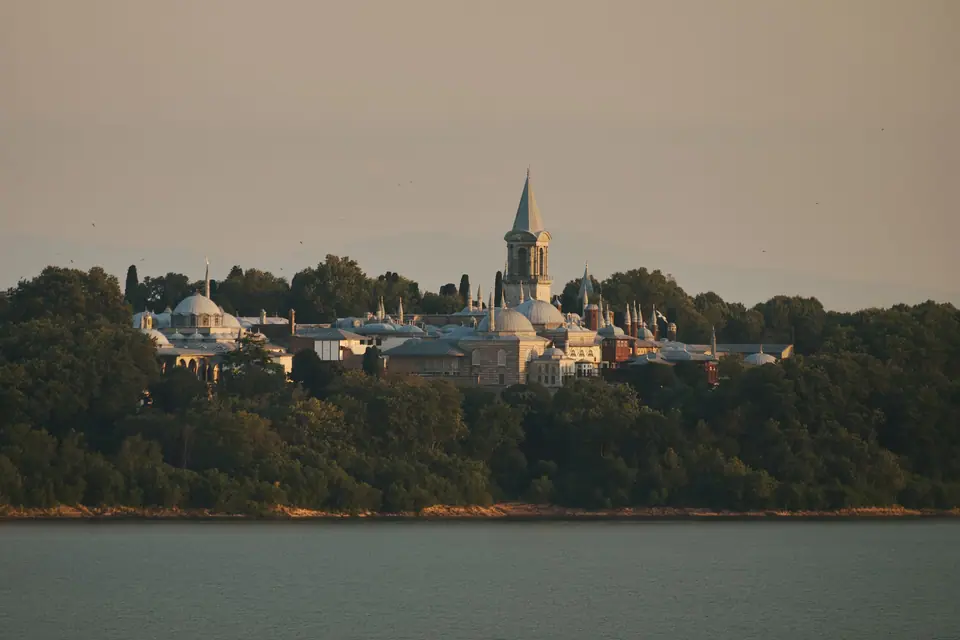
Topkapı Palace is the biggest time commitment in Sultanahmet and should get the biggest block of your day. For around four centuries it was the home of the Ottoman sultans and the seat of government: a complex of courtyards, council halls, kitchens, treasuries, pavilions and gardens spread over the headland, with views over the Golden Horn, the Bosphorus and the Sea of Marmara.
Think of it as an imperial campus rather than one building. The four courtyards lead progressively deeper and more private. Highlights include the Imperial Council hall, the palace kitchens, the Treasury with its jewelled objects, the rooms holding sacred relics and the terraces of the fourth courtyard, where the view across the water is one of the best in Istanbul.
The Harem needs its own time. It is not a decorative extra but the private world of the sultan's household: hundreds of rooms, tiled corridors and courtyards that explain how the dynasty actually lived. The main palace ticket can be bought with the Harem and Hagia Irene, the Byzantine church in the first courtyard; check the National Palaces website for the current ticket options.
Closed on Tuesdays. This is the single most important planning fact for a Sultanahmet visit: if your day here falls on a Tuesday, swap the palace for the museums. Allow two and a half to three and a half hours, more if Ottoman history is your thing. Go through the main courtyards first, then the Harem, then slow down for the views and the collections. People who try to do it quickly remember the courtyards and nothing else.
The museums of Sultanahmet
Sultanahmet has more museums than most visitors can use. Choose by what interests you rather than trying to do them all.
Istanbul Archaeological Museums
Three museums in one complex next to Topkapı: the main Archaeological Museum, the Museum of the Ancient Orient and the Tiled Pavilion, one of the oldest Ottoman buildings in the city. Together they hold close to a million objects from the cultures of Anatolia, the Near East and the Mediterranean. If Topkapı explains the Ottoman capital, this explains the much larger world around it. Allow an hour and a half to two and a half hours, and pair it with the palace.
Turkish and Islamic Arts Museum
Housed in the 16th-century palace of İbrahim Pasha on the Hippodrome, with outstanding carpets, manuscripts, woodwork and calligraphy. For visitors more curious about Ottoman and Islamic culture than about ancient archaeology, it is the better choice of the two, and it slots easily into the middle of the day between the Blue Mosque and the Hippodrome.
Great Palace Mosaic Museum
Floor mosaics from the Great Palace of the Byzantine emperors, with lively scenes of hunting, animals and daily life. At the time of writing the Ministry lists it as closed, so do not build a day around it; check its status before you go.
Opening days and ticket rules differ between the museums, and the Museum Pass covers some but not others. Check the official Ministry site for each before you plan.
Gülhane Park, Little Hagia Sophia and the quieter edges
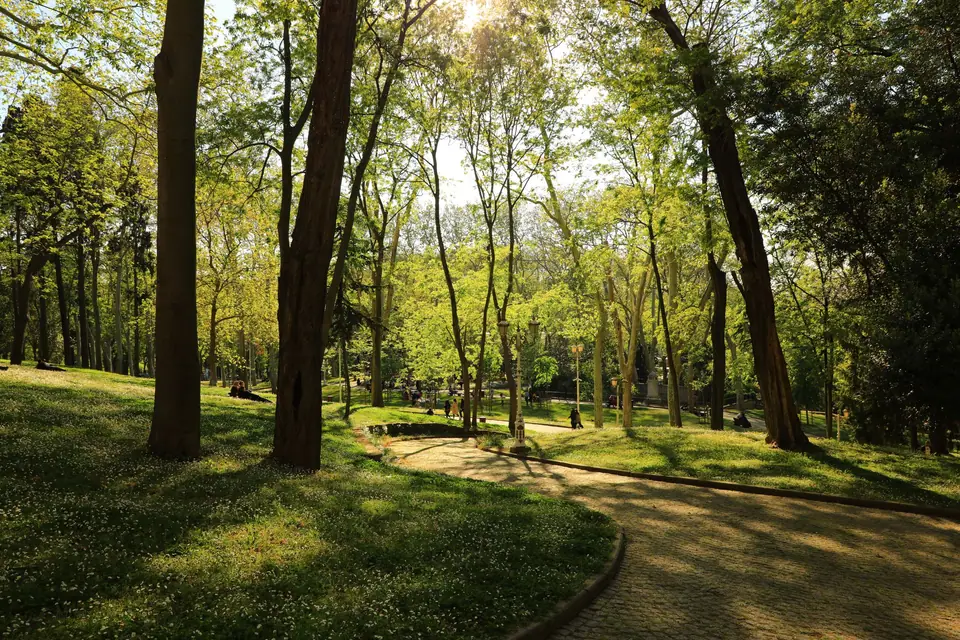
Gülhane Park was once the outer garden of Topkapı Palace and is now a public park running down from the palace walls towards the water. After hours of monuments it is the place to stop planning and just walk: shaded paths, tea gardens, and in spring the tulips the city plants every April. It is also the natural way out of the district towards Sirkeci and the waterfront.
Little Hagia Sophia (Küçük Ayasofya), south of the Blue Mosque near the Marmara shore, began as the Byzantine church of Saints Sergius and Bacchus and later became a mosque. It is small, quiet and beautiful, and it shows another chapter of the city's Byzantine-to-Ottoman story without the crowds. It is not a substitute for Hagia Sophia, more a calm counterpoint to it; go late in the day, when the main square is at its busiest.
Between the two, the backstreets running down from the Blue Mosque towards the sea are lined with old wooden houses and small hotels, and they show a residential side of Sultanahmet most visitors never see.
One day in Sultanahmet
This order is built around how the sights open and fill up, not around a list. Adjust the first two stops to the day's prayer times.
- Early morning: Hagia Sophia or the Blue Mosque. Use the first visiting window of the mosque if it is open; if prayer times get in the way, do Hagia Sophia's gallery route first (our Hagia Sophia guide has the details) and come back to the mosque later.
- Mid-morning: the Hippodrome. The obelisk, the Serpentine Column and the German Fountain, then a look at the square from its south end.
- Late morning: the Basilica Cistern. Go underground before the middle of the day, when the queue is at its longest.
- Lunch. Walk a few streets away from the monument entrances before choosing where to eat (more on food below).
- Afternoon: Topkapı Palace. The longest block of the day, with the Harem. On a Tuesday, swap in the Archaeological Museums or the Turkish and Islamic Arts Museum.
- Late afternoon: the Archaeological Museums, only if your energy and the closing time allow.
- Early evening: Gülhane Park. End with a walk, not another ticket.
- Evening: walk down to Sirkeci and Eminönü for the Bosphorus ferries and the Galata Bridge, or back to the square to see the Blue Mosque lit up.
Two days in Sultanahmet
Two days suit anyone who dislikes rushing, and they stop three museums landing in one afternoon.
Day 1, the great monuments: Hagia Sophia, the Blue Mosque, the Hippodrome, the Basilica Cistern, the Arasta Bazaar and an evening walk around the floodlit square.
Day 2, history in depth: Topkapı Palace and the Harem in the morning, the Archaeological Museums or the Turkish and Islamic Arts Museum after lunch, Little Hagia Sophia late in the afternoon, and dinner towards Sirkeci or Eminönü.
With a third day, leave the peninsula: take a ferry along the Bosphorus with our Bosphorus guide, cross to Galata and Karaköy, or follow the rest of our 3-day Istanbul itinerary.
Getting to Sultanahmet
The district is easy to reach by public transport, and once you are there you walk.
- T1 tram. The Kabataş to Bağcılar tram line is the spine of sightseeing on the peninsula. Get off at the Sultanahmet stop for the main square, or at Gülhane for the park and the palace. The tram also links Sultanahmet with Eminönü, Sirkeci, Beyazıt (for the Grand Bazaar) and Kabataş.
- From the Asian side. Take the Marmaray rail line under the Bosphorus to Sirkeci, then walk up or take the tram a few stops. The ferries to Eminönü are slower but far more enjoyable.
- From Taksim. Take the funicular down to Kabataş and change to the T1 tram.
- From the airports. Rail and bus links connect both Istanbul Airport and Sabiha Gökçen with the city; combine them with the tram rather than assuming a taxi is the only option.
Routes change with works and service disruptions, so use a live transit planner on the day. The Istanbul getting there guide covers the airports, the Istanbulkart transport card and the tram network in detail.
Where to stay near Sultanahmet
The right base depends on how much of your trip is about the historic monuments.
- Sultanahmet is the choice when sightseeing is the point, especially on a short stay. You walk out of the door and reach Hagia Sophia in minutes, before the crowds. The trade-off is that the area feels touristy by day and quiet in the evening, with fewer good restaurants.
- Sirkeci is the practical compromise: still a walk from the monuments, with the Marmaray rail line and the tram on the doorstep for the rest of the city.
- Eminönü is busier and more commercial, close to the ferries, the Golden Horn and the Spice Bazaar.
- Karaköy, across the Galata Bridge, has better restaurants, cafés and nightlife, and a short tram ride back to the monuments.
- Beyoğlu suits visitors who want modern Istanbul and a lively evening scene, at the cost of a longer trip to Sultanahmet each morning.
We compare all the main neighbourhoods of the city in our where to stay in Istanbul guide.
Eating in and around Sultanahmet
Sultanahmet has plenty of restaurants, but don't judge Istanbul's food by the ones facing the monuments: the closer a restaurant is to a ticket queue, the more you pay for the location and the less effort goes into the cooking. Walk a few streets away, or down towards Sirkeci and Eminönü, where the city's own office workers eat.
What to look for on the peninsula:
- A Turkish breakfast, with cheeses, olives, tomatoes, eggs, honey and kaymak (clotted cream).
- Köfte, grilled meatballs, a lunchtime classic of the district.
- Pide, the boat-shaped Turkish flatbread with toppings, and börek, flaky filled pastry.
- Meze and grilled meats in the evening.
- Balık ekmek, a grilled fish sandwich, at the Eminönü waterfront.
- Baklava and Turkish coffee or tea to finish.
For a guided introduction to the city's food beyond the tourist core, see our Istanbul street food tour. The food section of the Istanbul destination page explains the classic dishes in more detail.
Shopping: the Arasta Bazaar and the Grand Bazaar
The Arasta Bazaar is a short row of shops in the old market street behind the Blue Mosque, built to fund the mosque's upkeep. It is calmer than the big bazaars and fine for a quick look at carpets, ceramics and textiles between sights.
For serious shopping, give the Grand Bazaar its own visit. It is a ten-minute walk or two tram stops away at Beyazıt, one of the oldest covered markets in the world, with thousands of shops under painted vaults. Our Grand Bazaar guide has a route through it, bargaining advice and what to buy, and the Spice Bazaar at Eminönü makes a natural next stop on the way to the water.
Beyond Sultanahmet
Sultanahmet is the beginning of Istanbul, not all of it. Once you have seen the historic heart, these are the experiences we would add:
- The Bosphorus. A ferry or cruise up the strait between Europe and Asia, past palaces and wooden waterside mansions. Read our Bosphorus guide for the public ferries, or book the Bosphorus cruise.
- A hammam. Several historic Ottoman baths are in and near Sultanahmet; our Turkish hammam experience explains what happens and how to choose one.
- A whirling dervish ceremony. The sema of the Mevlevi order is a religious ceremony, not a show; see our whirling dervish ceremony guide to find an authentic one.
- The rest of the city. Our best things to do in Istanbul covers Galata, Balat, Kadıköy and more, and the best time to visit Istanbul explains the seasons, the crowds and the tulip festival.
And beyond Istanbul: our Turkey travel guide shows how to combine the city with Cappadocia, Ephesus, Pamukkale and the coast around Antalya on a first trip to the country.
When to visit Sultanahmet
April, May, late September and October are the easiest months: mild weather for a day of walking, and long enough light for an evening in the square. July and August are hot, and the queues for Hagia Sophia, the Basilica Cistern and Topkapı are at their longest, so start at opening time and plan a break indoors in the middle of the day. Winter is quiet and cheaper, but rain turns the cobbles slick and the Topkapı terraces are much less pleasant. Our best time to visit Istanbul guide compares the seasons month by month, and the what to wear guide matches clothes to each one.
The week matters as much as the month. Tuesday closes Topkapı, Friday delays the Blue Mosque, and weekends bring the largest local crowds to the square and Gülhane Park. Midweek mornings are the calmest window of all.
Plan the rest of your Istanbul trip
Sultanahmet works best as one chapter of a longer stay. These are the guides we would read next, in roughly the order a first trip needs them:
- Istanbul destination guide, the overview of the whole city.
- Istanbul travel guide, for the practical basics.
- How to get to Istanbul, for airports, trains and transfers.
- Best time to visit Istanbul, for seasons and crowds.
- What to wear in Istanbul, for mosques and weather.
- Best things to do in Istanbul, for everything beyond the old city.
- Hagia Sophia guide, for tickets and the gallery route.
- Grand Bazaar guide, for shopping and bargaining.
- Bosphorus guide, for ferries and waterside villages.
- Where to stay in Istanbul, neighbourhood by neighbourhood.
- Istanbul 3-day itinerary, for pacing the whole stay.
- Bosphorus cruise, Istanbul street food tour, Turkish hammam and whirling dervish ceremony, our four Istanbul experiences.
- Turkey travel guide, for linking Istanbul with the rest of the country.
Frequently asked questions
Is one day enough for Sultanahmet?
For the main monuments, yes, if you start early and follow a sensible order. If you want Topkapı's Harem and the Archaeological Museums as well, take two days.
Can I visit Hagia Sophia and the Blue Mosque on the same morning?
Yes, and our Hagia Sophia guide explains how the visitor route works. They are a two-minute walk apart. Plan around the prayer times, which close the Blue Mosque to visitors for a while, and around Friday, when it opens to visitors only in the afternoon.
Which day should I avoid?
Tuesday, if Topkapı Palace matters to you, because the palace is closed (the 3-day itinerary shows how to rearrange the days). Friday morning is also awkward for the Blue Mosque.
Do I need to dress modestly?
Inside the mosques, yes: shoulders and knees covered, and a headscarf for women. In the streets, normal summer clothes are fine. See our what to wear in Istanbul guide.
Should I buy the Museum Pass?
It can pay off if you plan several Ministry museums in a few days, but it does not cover everything, for example the Hagia Sophia History and Experience Museum. Check what it includes on the official site before you buy.
Is Sultanahmet safe?
Yes. The usual big-city care applies in crowds and on the tram. The more common nuisance is the friendly stranger who offers to show you a carpet shop or a "better" entrance: a polite no is enough.
For everything else about planning your stay, our Istanbul travel guide covers money, transport cards, etiquette and how many days to give the city.