






















Ad-Deir (The Monastery) & Little Petra Back-Door Hike: 800 Steps vs 4x4 Shuttle Route
Compare the two routes to Ad-Deir (The Monastery), Petra's largest monument: the 800-step climb from the Basin vs the scenic Back-Door hike from Little Petra (Siq al-Barid), plus how to avoid donkey scams.
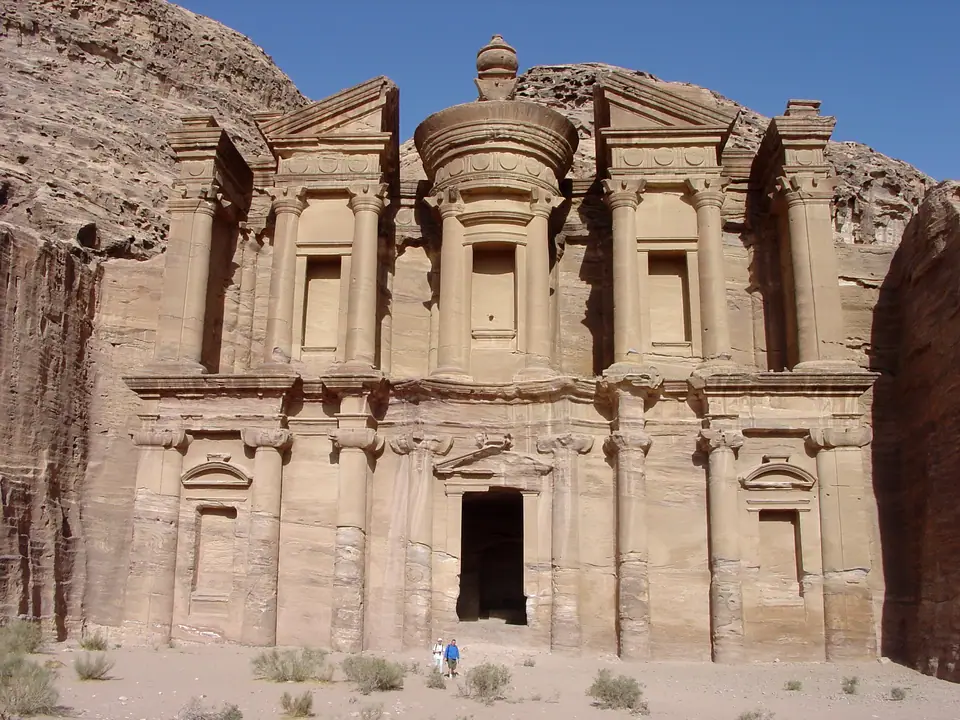
Carved into a high mountain shoulder in northwestern Petra at 1,070 metres elevation stands Ad-Deir (ad-DAYR, "The Monastery"). It is the largest and most commanding rock-cut monument in the entire 26,171-hectare archaeological park. While Al-Khazneh (The Treasury) wins on delicate Hellenistic sculptural relief, Ad-Deir dwarfs it in raw physical scale and setting, facing a sweeping flat sandstone plaza perched above the precipices of Wadi Araba. Reaching this mountain sanctuary is the highlight of a two- or three-day visit, and you have two distinct routes to get there. You can climb the classic 800-plus rock steps from the Basin, or hike the panoramic Back-Door trail from Little Petra (Siq al-Barid). Below, we compare both routes step by step and explain how to bypass the donkey and taxi traps along the way.
| Route Option | Distance & Steps | Elevation & Duration | Best For |
|---|---|---|---|
| 1. Classic Basin Staircase | 2.5 km one-way (800+ rock steps) | +180 to 220 m climb (45 to 60 min up) | Day 1 visitors already inside the main park |
| 2. Little Petra Back-Door Hike | 5 km 4x4 shuttle + 4.5 km trail | Mostly downhill/ridge walk (60 to 90 min) | Avoiding the uphill stair climb; seeing Little Petra first |
Ad-Deir architecture: Why the largest monument in Petra is called "The Monastery"
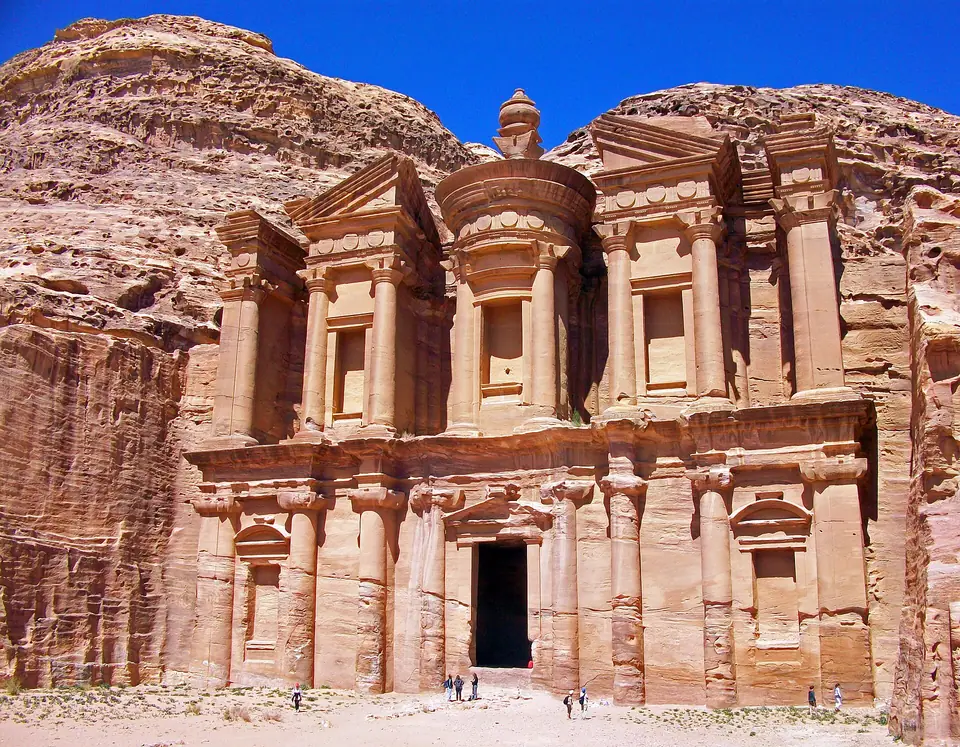
Ad-Deir towers 45 metres (148 feet) high and 47 to 50 metres (154 to 164 feet) wide, carved in the late first or early second century CE. Its central doorway stands 8 metres tall beneath a 9-metre funerary urn. A Nabataean inscription found nearby links the sanctuary to the deified King Obodas I (who defeated the Seleucids and Hasmoneans in the first century BCE). This suggests that the broad plaza outside served as a ceremonial gathering ground for religious symposiums (marzeah) and processions.
Unlike Al-Khazneh, whose columns carry ornate floral acanthus capitals, Ad-Deir displays bold, simplified Nabataean horned (blocked-out) capitals and smooth, uncarved round niches flanked by engaged half-columns below a massive broken pediment and central tholos. Step through the 8-metre doorway into the single 11.5-by-12-metre interior hall and look at the rear altar niche (motab) flanked by two small staircases. During the fourth and fifth centuries CE, Christian hermits incised multiple Byzantine crosses into the rear wall. This gives the monument its modern Arabic name, Ad-Deir ("The Monastery").
Route 1: The classic 800-step climb from the Basin restaurant
Visitors entering from the main Wadi Musa Visitor Center walk 4 kilometres through the Siq and the Colonnaded Street. The standard Monastery Trail begins at the northwestern edge of the Basin behind the Nabataean Tent Restaurant:
- Distance, Elevation Gain, and Duration. The ancient processional path climbs roughly 2.5 kilometres one way through a winding sandstone gorge, ascending 180 to 220 vertical metres across more than 800 hand-carved rock steps. At a steady walking pace with brief water and photo stops, the uphill climb takes 45 to 60 minutes (or up to 75 minutes in warm weather), while the downhill descent takes 35 to 45 minutes.
- Landmarks Along the Gorge Climb. Just five minutes up the lower stairs, pause on the left to inspect the Lion Triclinium. This recessed rock-cut banquet hall sits inside a narrow cleft, with two relief lions and a Medusa head frieze flanking its doorway. Higher up, the rock staircase winds between shaded canyon bends lined with small Bedouin souvenir and fresh pomegranate-juice stalls before cresting the mountain shoulder right beside Ad-Deir's forecourt.
Field engineering: Defeating the Basin donkey touts on the Monastery stairs
The trailhead behind the Basin restaurant is the most persistent animal-tout bottleneck in Petra. If you arrive at the bottom of the stairs between 10:30 and 14:30, handlers will surround you with three standard claims that you should firmly ignore:
- The "Two-to-Three Hours Uphill / Trail Closing" Lie. Handlers routinely tell walkers that the Monastery is "two and a half hours away", "1,500 vertical steps", or "closing in thirty minutes unless you take a donkey". In reality, the climb is under an hour on foot and remains open throughout afternoon park hours.
- The Safety and Ethical Hazard of Donkey Rides on Polished Stone. Wearing the grippy lug-soled trail shoes recommended in our Petra footwear guide gives you far safer footing than sitting on a donkey. Two millennia of erosion have polished the sloped Cambrian sandstone steps like glass. Donkeys forced to carry adult riders up and down these unguarded drop-offs frequently slip near cliff edges. Meanwhile, international veterinary charities operating in Wadi Musa document severe saddle sores and joint trauma among working trail animals.
- How to Walk Past Friction-Free. Keep a steady walking cadence at the trailhead, say "La, shukran" without stopping to debate distances, and step onto the right-hand side of the stairs whenever donkeys pass so you stay clear of the outer cliff edge.
Route 2: The Little Petra (Siq al-Barid) Back-Door hike and 4x4 shuttle mechanics
You can experience Ad-Deir without climbing the 800 steps uphill while seeing the caravan suburb of Little Petra (Siq al-Barid) on the same morning. Follow the Back-Door Route featured on Day 2 of our 3-day Petra itinerary:
- Step 1: Validate Your Ticket at the Main Visitor Center First. This is the golden rule of the Back-Door hike. There is no ticket sales window at the Little Petra trailhead checkpoint. Rangers at the Al-Beida entry booth only scan and punch already-validated Petra tickets or Jordan Passes. Validate your multi-day pass on Day 1 at the main Wadi Musa Visitor Center, or stop at the Visitor Center ticket hall at 06:30 on your morning of departure before driving north to Little Petra.
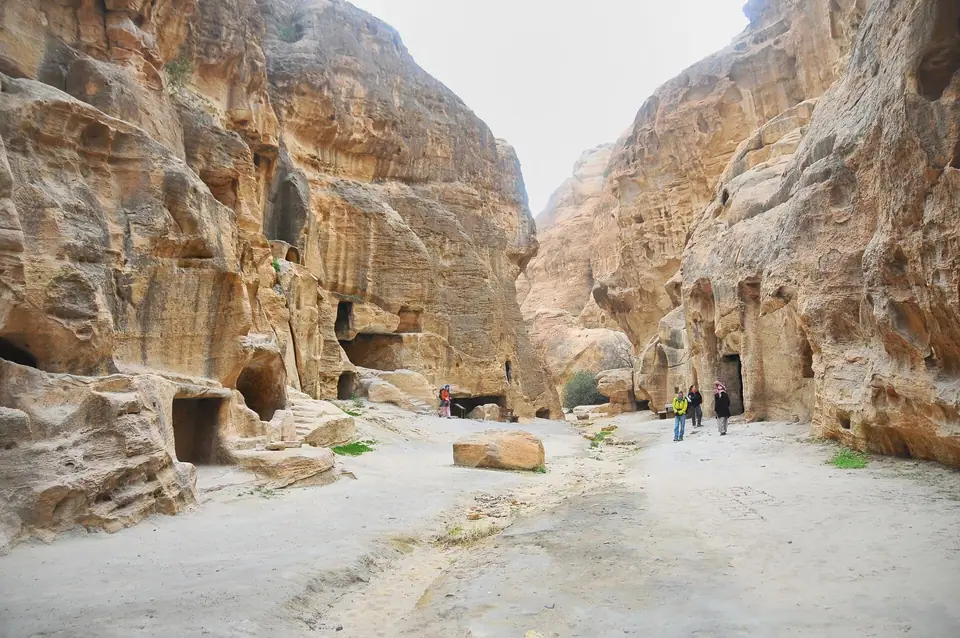
- Step 2: Explore Little Petra (Siq al-Barid) and the Painted Biclinium. Drive or take a 15-minute taxi 9 kilometres north from Wadi Musa to the free-entry car park of Little Petra in Al-Beida. Enter the narrow 350-metre slot canyon to admire its rock-cut triclinia, water cisterns, and the Painted Biclinium (Painted House). Its first-century CE ceiling preserves rare Hellenistic frescoes of grape vines, birds, and Dionysian cupids restored between 2006 and 2010.
- Step 3: Take the Official Bedouin 4x4 Cooperative Shuttle (5 km Dirt Track). Do not pay a Wadi Musa town taxi driver extra to "drive you to the Monastery trailhead". Private cars and town taxis are stopped at the barrier outside Little Petra. From that barrier, official local Bedouin cooperative 4x4 pickup trucks shuttle hikers across the 5-kilometre sandy jeep track through Al-Beida. They drop you at the official Back-Door ticket checkpoint for a fixed cash fare (around 5 JOD per person one-way as of November 2026, subject to seasonal adjustment).
- Step 4: Hike the Scenic Plateau Ledge to Ad-Deir (4.5 km, 60 to 90 Minutes). From the 4x4 drop-off checkpoint, a signposted trail winds across open sandstone hills and climbs a brief flight of stone steps. It follows a wide cliff ledge high above Wadi Araba and arrives straight at the plaza of Ad-Deir. After exploring the Monastery and its opposite cliff viewpoints ("End of the World" lookouts facing Jabal Haroun), you walk down the 800 steps into the Basin and exit eastward through the Colonnaded Street and Siq.
Viewpoints opposite Ad-Deir and afternoon golden hour
Directly across the sandy plaza in front of Ad-Deir rise three low sandstone ridges crowned with Bedouin tea tents. Their viewpoints look west over Wadi Araba toward the white-domed shrine of the Prophet Aaron atop Jabal Haroun (1,350 metres). Because Ad-Deir faces west-southwest, its 45-metre facade catches direct golden sunlight from roughly 11:00 until sunset, glowing richest between 14:30 and 16:30 in our seasonal weather guide. Bring small JOD notes (around 1 to 2 JOD per glass as of November 2026, subject to seasonal change). Sit on the carpets of the cliff-top Bedouin café opposite the facade with a glass of sage tea. Afterwards, descend into the Basin and head back for dinner in Wadi Musa.
Water, washrooms, and timing your return from Ad-Deir
Before starting either the 800-step climb from the Basin or the Back-Door hike from Little Petra, check your water supply and turnaround clock. Toilet facilities sit at the Basin restaurant complex at the bottom of the Monastery staircase and at the Little Petra visitor car park in Al-Beida, with simple facilities near the Monastery plateau cafe. Carry at least 1.5 litres of water per person dedicated solely to the Ad-Deir circuit, as stone steps radiate strong heat between 11:00 and 15:00. Treat the Back-Door trail as a morning entry route since Al-Beida 4x4 shuttles stop by mid-afternoon, and start descending from Ad-Deir two hours before sunset.
Where it is
- 1Ad-Deir (The Monastery) & Little Petra Back-Door Hike
- Ramon International Airport (ETM) · about 79 km from here in a straight line
- Directions in Google Maps
Traveller tips
Real advice from people who have been to Petra. Every tip is read by our team before it goes live.
No tips yet. Been here? Yours could be the first.
Thank you! Your tip will appear here after a quick review.
More in Petra
Continue exploring Petra with related neighbourhood, food, and planning guides
Where to Stay in Petra: Lower Tourism Street vs Upper Wadi Musa, Uum Sayhoun & Taybeh
Petra, Jordan
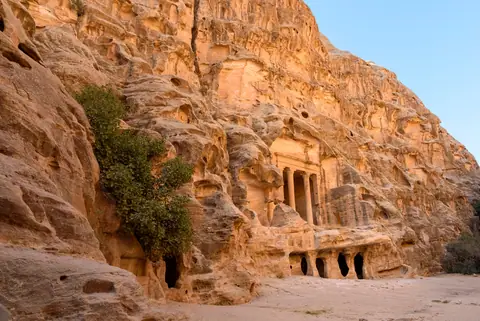
Petra 3-Day Itinerary: Main Spine, Little Petra Back-Door Hike & High Place of Sacrifice
Petra, Jordan
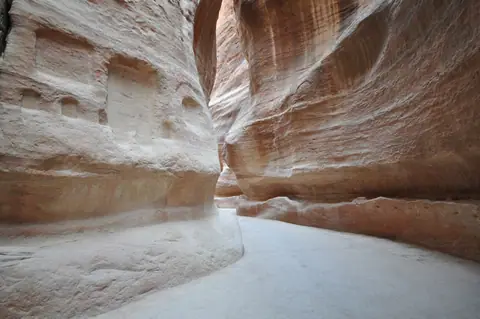
Bab al-Siq & The Siq Walk: Djinn Blocks, Obelisk Tomb, Dam & Nabataean Water Channels
Petra, Jordan
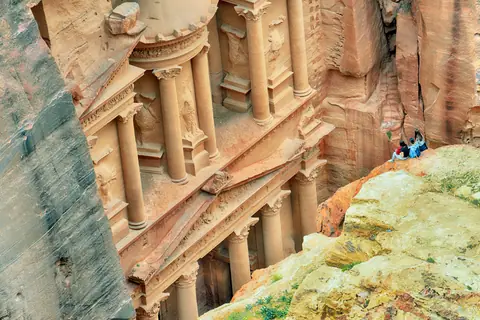
Al-Khazneh (The Treasury): Architecture, Cliff Viewpoint Scams, Lighting & Crowd Timing
Petra, Jordan
