























What to Wear in Petra: Sandstone Canyon Footwear, Sun & Dust Protection & Modest Dress
Pack the right footwear and clothing for Petra: lug-soled trail shoes for polished sandstone steps, desert sun and dust protection, modest local dress, and highland layers.
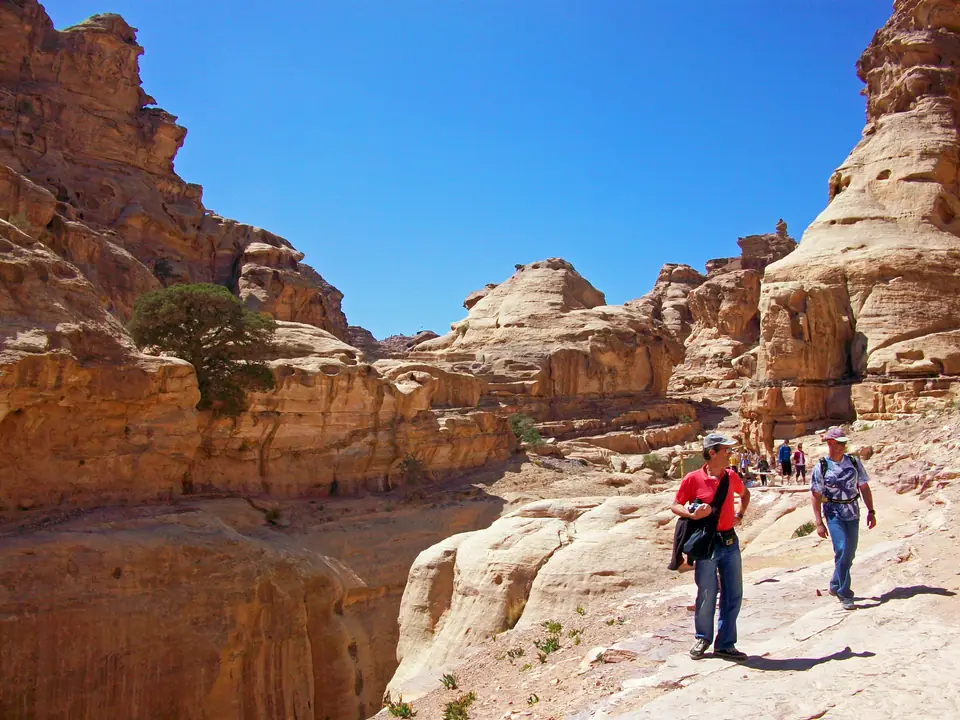
Packing for Petra requires solving three physical challenges at once. Walking 12 to 18 kilometres per day across four different ground surfaces, managing a 12°C to 15°C temperature swing between shaded morning gorges and exposed midday plateaus, and respecting conservative rural dress norms in the town of Wadi Musa and among local Bedouin communities. What works for a city pavement walk or a resort pool in Aqaba will leave you with blistered feet, sunburn, or wind-chill shivers inside the 26,171-hectare archaeological park. Below is a field-tested breakdown of footwear, layering, sun and dust gear, and cultural etiquette tailored to Petra's terrain.
Footwear engineering: Why flat sneakers fail on Cambrian sandstone
The single most important item in your luggage is your pair of shoes. Over a two- or three-day visit following our Petra itinerary, your feet encounter four distinct surfaces that punish thin or smooth soles:
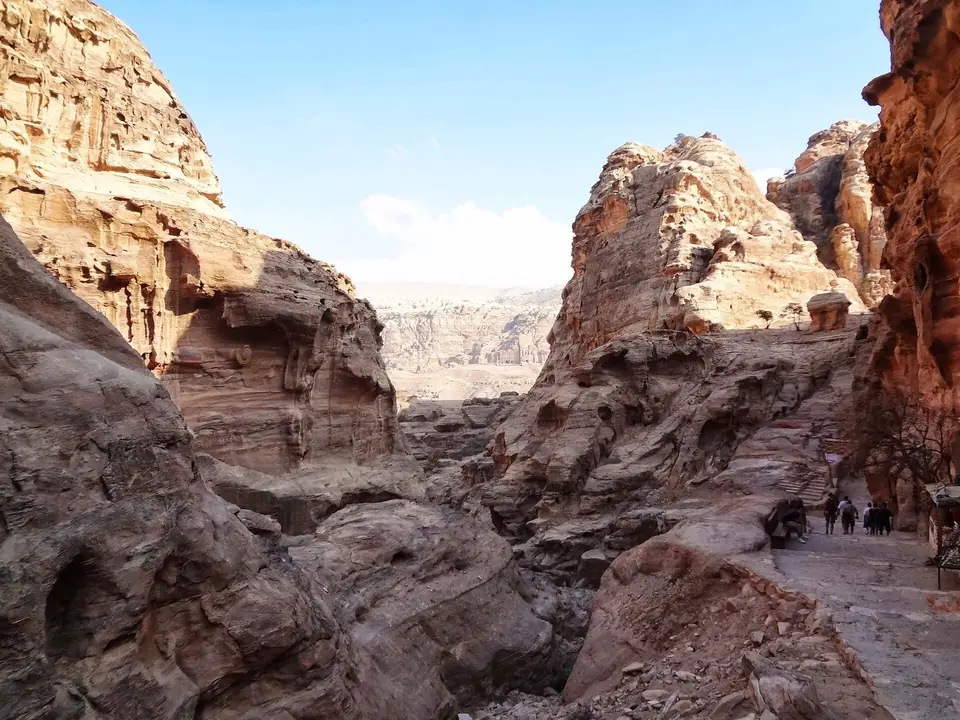
- 1. Polished, Sloping Nabataean Rock Steps (The Slip Hazard). To reach Ad-Deir (The Monastery), the High Place of Sacrifice, or the Al-Khubtha cliff viewpoint, you climb and descend between 600 and 850 hand-carved sandstone steps per trail. Two millennia of wind, winter rain, and foot and donkey traffic have worn the iron-rich Umm Ishrin and Disi sandstone smooth. Meanwhile, a fine layer of loose quartz sand acts like ball bearings on the rock. Flat-soled canvas sneakers, fashion trainers, and leather sandals slide dangerously on the descent.
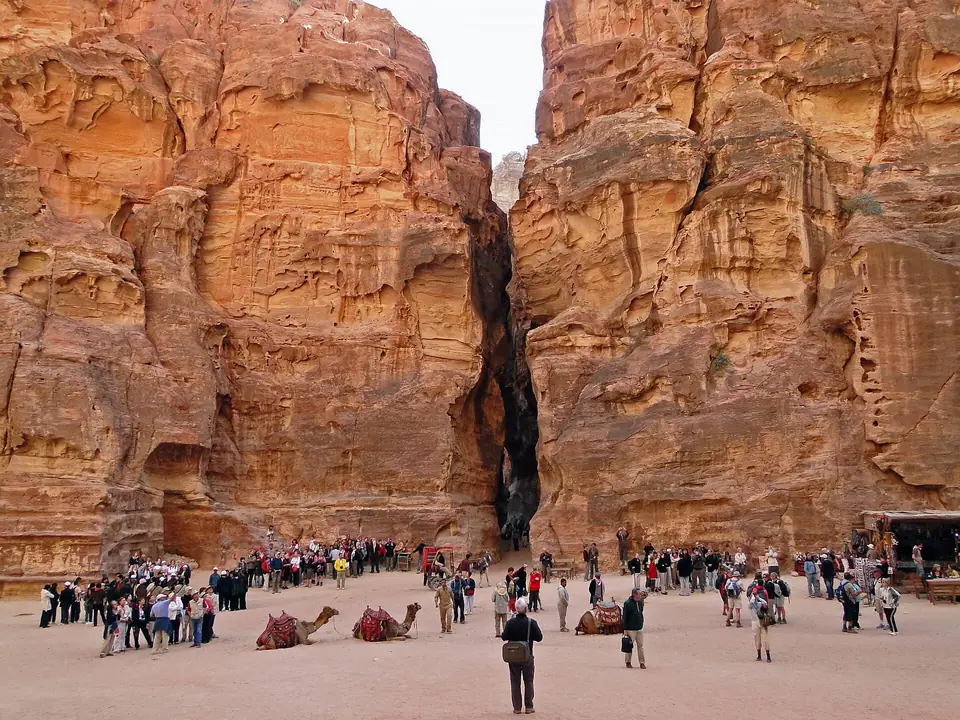
- 2. Crowned Roman Limestone Cobbles and Gravel in the Siq: Inside the 1.2-kilometre Siq and along the Roman Colonnaded Street, stretches of original first-century limestone flagstones alternate with compacted gravel and uneven river cobbles that bruise feet through thin midsoles after ten kilometres.
- 3. Deep Soft Wadi Sand in the Basin and Outer Siq. Between the Street of Facades, Theater, and Royal Tombs, the canyon floor consists of fine reddish-pink sand that pours into open-toed sandals and causes severe friction blisters when mixed with sweat.
- What to Wear on Your Feet. Pack broken-in low-cut trail-running shoes or lightweight mid-cut hiking boots equipped with deep, multi-directional rubber lugs (such as Vibram or Continental outsoles) and a cushioned EVA midsole. Pair them with mid-weight merino wool or synthetic trekking socks that wick moisture and pad the Achilles tendon on long downhill descents. Leave flip-flops, heels, and open sandals at your hotel.
Cultural dress etiquette in Wadi Musa and inside the archaeological park
Jordan does not enforce statutory religious dress laws on foreign tourists, and visitors inside the Petra Archaeological Park wear practical hiking clothes. However, southern Jordan outside Amman and Aqaba is socially traditional. Dressing modestly shows respect for the families of Wadi Musa and the Bdoul and Ammarin Bedouin hosts working across the park while simultaneously protecting your skin from intense high-altitude ultraviolet radiation:
- For Both Men and Women. Aim to keep shoulders and knees covered. This matters most when walking through Upper Wadi Musa town, visiting local restaurants in our Wadi Musa dining guide, or riding the JETT coach. Loose, breathable long trousers (such as convertible nylon trekking pants or linen trousers) or knee-length hiking shorts work well for both men and women. Pair them with a collared UPF shirt for the ideal balance of airflow, sun protection, and cultural respect.
- What to Avoid on the Trails. Avoid crop tops, plunging necklines, sheer fabrics, ultra-short running shorts, or walking shirtless on mountain trails, even during the summer heat of July and August. Not only does bare skin invite unwanted attention and sunburn at 1,100 metres elevation, it leaves you exposed to abrasive blowing sand when afternoon canyon gusts pick up.
- The Traditional Keffiyeh (Shemagh) Advantage. You will see Bedouin rangers and locals wearing the red-and-white checkered Jordanian shemagh (sheh-MAHG) or cotton scarf wrapped around the head and neck. Carrying a lightweight cotton scarf or neck gaiter is practical in Petra. It shields the back of your neck from direct sun on the exposed Monastery climb and pulls across your nose when passing donkeys kick up canyon dust. It also serves as an extra warmth wrap in the chilly shaded corridor of the Siq.
Season-by-season layering for Wadi Musa's 1,100-metre altitude
Match your clothing layers to the 1991-2020 JMD climate normals for the Jabal ash-Sharah highlands:
- Spring (March to May) and Autumn (Late September to November). Dress in a three-layer system. Start at 06:00 or 07:00 in a breathable moisture-wicking base T-shirt plus a lightweight fleece pullover or packable windbreaker. Early mornings inside the 80-to-180-metre-deep shadow of the Siq feel brisk (6°C to 12°C) even when the afternoon forecast calls for 24°C. By 10:00, once you emerge into the open sunlight of the Outer Siq and Royal Tombs, stow the fleece in your daypack.
- Summer (June to August). Prioritize light-coloured, loose-fitting UPF 50+ long-sleeved sun hoodies or breathable linen shirts and lightweight trekking trousers. Add a wide-brimmed hat with a chin cord (ridge winds at the High Place of Sacrifice easily blow unsecured caps off the cliff) and polarized UV400 sunglasses. Still pack one light long-sleeved layer for air-conditioned JETT buses and breezy evenings in Wadi Musa.
- Winter (December to February). Pack for genuine mountain cold and occasional winter rain. Bring a thermal base layer, a warm mid-layer fleece or packable down jacket, and a waterproof windbreaker for winter highland showers. Pack long trekking trousers, a warm beanie hat, and light gloves for sunrise walks when temperatures sit near 3°C to 4°C.
Daypack essentials: Water capacity, sun protection, and cash
Because you remain inside the canyon for 6 to 10 hours per day with steep ascents, carry a comfortable 15-to-22-litre ventilated daypack containing these core items:
- 2 to 3 Litres of Water per Person + Electrolyte Packets. Low desert humidity evaporates sweat before you notice it. Carry reusable insulated bottles and oral rehydration salts rather than relying solely on spaced-out trail kiosks, and refill at the Visitor Center or Basin restaurants before climbing.
- High-SPF Sunscreen, Lip Balm, Microfibre Cloth, and Wet Wipes. Pale sandstone walls reflect UV light upward onto your chin and nose. Wet wipes and a lens cloth help clean fine red canyon dust off your hands, sunglasses, and camera optics before lunch.
- Physical Passport, Jordan Pass QR Code, Headtorch, and Small JOD Banknotes. Your passport is required for ticket validation at the Visitor Center on Day 1, and small banknotes cover cash-only tea tents and electric club cars in our Petra orientation guide. A compact headtorch or phone flashlight keeps you sure-footed if you walk out through the unlit Siq after sunset.
Photography gear protection, trekking poles, and blister prevention
Fine quartz and iron-oxide sand suspended in the canyon air can work its way into camera zoom rings and phone charging ports. Carry your camera inside a zip-closed pouch when walking behind horse carriages on Bab al-Siq or passing donkey trains on the Monastery stairs. Never change camera lenses in the open wind of the Basin or on the exposed summit of Al-Madbah. Collapsible rubber-tipped trekking poles are another smart addition to your luggage. Using adjustable poles on the 800-step descent from Ad-Deir and the steep western staircase of Wadi Farasa absorbs up to twenty percent of knee impact and steadies your balance on loose sand. Finally, pack hydrocolloid blister plasters in your daypack pocket and apply one at the first sign of heel friction rather than waiting until evening.
For travellers visiting Petra with children or older relatives, pack a compact first-aid kit inside your daypack. Include oral rehydration salts, ibuprofen, antiseptic wipes, adhesive bandages, and chafe balm for warm afternoon walks. Because pharmacies are located up in Wadi Musa town rather than inside the archaeological park, carrying your own daily essentials prevents cutting a hike short. At the end of each day, shake out your trail shoes and socks before stepping into your hotel shower. Hang damp base layers on a balcony chair, where the dry highland breeze dries synthetic and merino fabrics within two hours.
Smart packing also covers electronics and battery management. Cold winter mornings in January and high summer heat in July both drain lithium-ion smartphone and camera batteries faster than temperate city weather. Carry a 10,000 mAh USB power bank and a short charging cable in your daypack so your phone stays charged all day. You will rely on that backup battery for offline GPS trail maps, sunset photography at the Royal Tombs, and showing digital hotel vouchers on the walk back into town.
Where it is
- 1Petra
- Ramon International Airport (ETM) · about 79 km from Petra in a straight line
- Directions in Google Maps
Traveller tips
Real advice from people who have been to Petra. Every tip is read by our team before it goes live.
No tips yet. Been here? Yours could be the first.
Thank you! Your tip will appear here after a quick review.
More in Petra
Continue exploring Petra with related neighbourhood, food, and planning guides
Street of Facades, Nabataean Theater & The Royal Tombs: Urn, Silk, Corinthian & Palace Tombs
Petra, Jordan
The Basin Core: Colonnaded Street, Great Temple, Qasr al-Bint, Byzantine Church & Petra Museum
Petra, Jordan
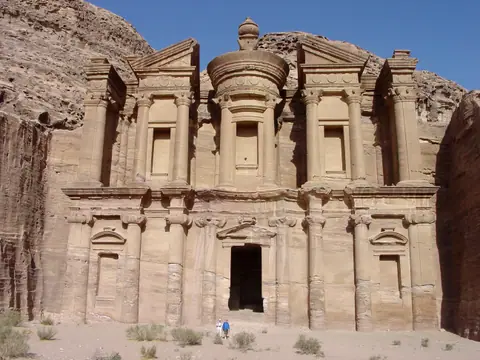
Ad-Deir (The Monastery) & Little Petra Back-Door Hike: 800 Steps vs 4x4 Shuttle Route
Petra, Jordan
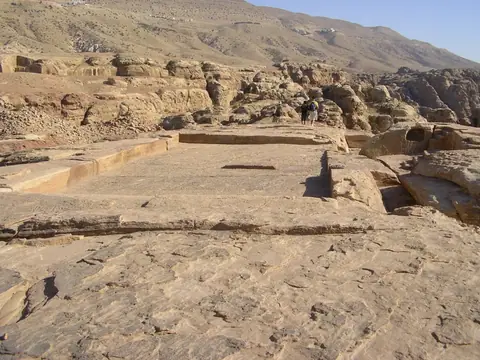
Elevated Trails of Petra: High Place of Sacrifice (Al-Madbah), Wadi Farasa & Al-Khubtha
Petra, Jordan
