






















Best Time to Visit Petra: Wadi Musa Climate Normals, Flash Floods, Heat & Crowd Strategy
Plan your visit around Jordan Meteorological Department 1991-2020 climate normals for Wadi Musa, winter wadi flash-flood safety, summer canyon heat, and daily crowd waves.
Because Petra is a desert landmark in the Middle East, many travellers assume it swelters in year-round tropical heat on a par with Dubai or the Red Sea coast at Aqaba. In reality, altitude reshapes the climate completely. The gateway town of Wadi Musa sits between 1,080 and 1,450 metres (3,540 to 4,760 feet) above sea level on the western rim of the Jabal ash-Sharah highlands. Meanwhile, the archaeological basin drops to 890 metres. According to 1991-2020 climatological normals compiled by the Jordan Meteorological Department (JMD) and archived by the World Meteorological Organization (WMO), Petra experiences a highland semi-arid climate. Expect bone-dry, sunny summers, a compact winter rainy season from November to April, and sharp 12°C to 15°C diurnal temperature swings between midday sun and desert nightfall.
Wadi Musa and Petra month-by-month climate normals (1991-2020)
The official JMD and WMO baseline averages for the Wadi Musa / Petra highland station break down across the four seasons as follows:
- Spring (March to May: The Prime Wildflower and Hiking Window). Daytime mean highs climb from 18°C in March to 22°C in April and 27°C in May. Meanwhile, overnight lows rise from 6°C in March to 9°C in April and 13°C in May. Rain days drop rapidly from 5 days in March and 3 days in April to 1 day in May. Brief winter rains trigger a short-lived bloom of wild desert irises, red poppies, white broom, and pink oleander bushes along the dry wadi beds. Meanwhile, green barley fields cover the highland terraces of Taybeh and Upper Wadi Musa. April and early May combine comfortable climbing temperatures on the 800-step mountain staircases with eleven to thirteen hours of daylight.
- Autumn (Late September to November: Warm Sandstone and Clear Skies). After summer's peak, mean highs ease from 30°C in September to 26°C in October and 20°C in November, paired with crisp overnight lows of 16°C, 12°C, and 8°C. September remains rainless (0 rain days), October averages just 2 rain days, and November marks the gentle return of autumn showers (4 rain days). October rivals April as the most sought-after trekking month across Jordan. Book rooms near the Visitor Center and seats on JETT coaches from Amman well ahead for April, May, and October.
- Summer (June to August: Zero Rain, High UV, and Early-Morning Canyon Strategy). From June through August, measurable rainfall is 0 mm across 0 rain days. Mean daily highs reach 31°C in June and 33°C in July and August at Wadi Musa's 1,100-metre elevation. Down in the lower Basin around Qasr al-Bint (890 metres) and on exposed sandstone staircases, radiant rock heat makes early afternoon temperatures feel closer to 36°C-38°C. However, relative humidity stays low (under 30 percent) and nights cool quickly to 16°C-18°C. If you visit in summer, enter the park at dawn and finish high climbs before 10:30. Rest inside the air-conditioned Petra Museum or shaded Nymphaeum at midday, and wear the UPF sun protection in our Petra packing guide.
- Winter (December to February: Crisp Highlands, Quiet Trails, and Frost Risk). Winter is cool, quiet, and occasionally snowy on the surrounding Jabal ash-Sharah ridges. Mean daytime highs sit at 14°C in December, 13°C in January, and 14°C in February. Meanwhile, nighttime lows drop to 4°C, 3°C, and 4°C, occasionally dipping below freezing when polar air masses sweep down from eastern Europe. Almost all of Petra's annual 90 to 100 mm of precipitation falls during these winter months (averaging 5 to 6 rain days per month). In exchange for packing a warm fleece and windproof shell, winter visitors enjoy empty trails at Al-Khazneh and low-season hotel rates.
Field engineering: How wadi flash floods work and Nabataean vs modern flood defence
The single most serious weather hazard in Petra and Wadi Rum occurs between November and March (extending into April). Sudden desert flash floods (suyul). Why does a region receiving only 90 to 100 millimetres of annual rain flood so violently? The answer lies in catchment geology and ancient hydraulic engineering:
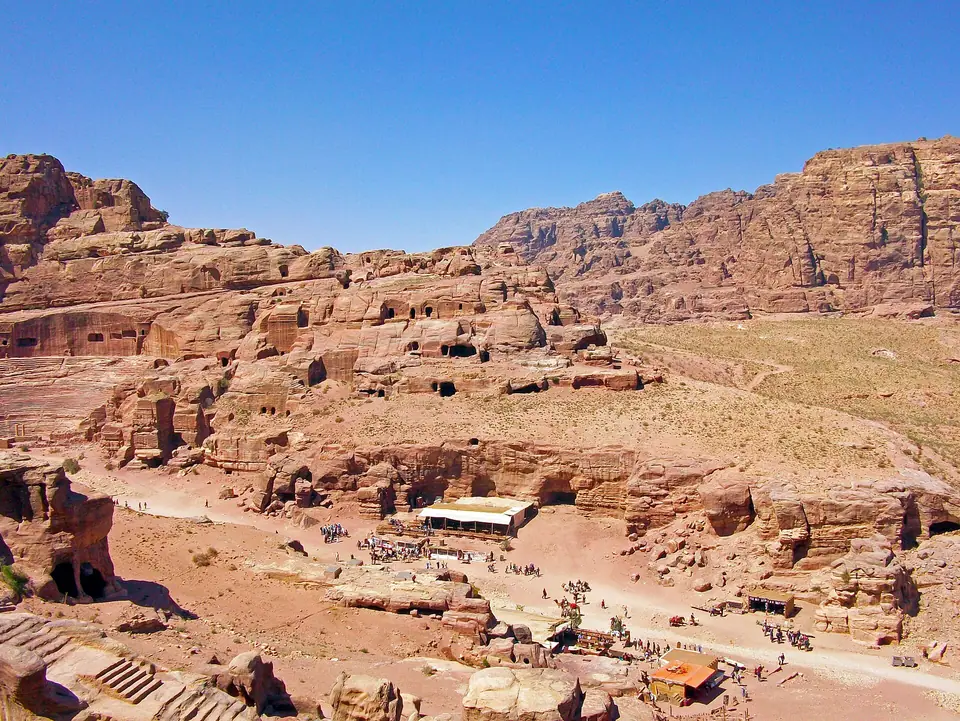
- Impermeable Rock and Steep Watersheds. The limestone hills of Upper Wadi Musa (1,400+ metres) drain westward into a steep funnel of bare, sun-baked sandstone domes that absorb almost no surface water. When a heavy winter storm strikes the upper town or mountains several kilometres upstream, run-off converges rapidly into the Wadi Musa channel even if the sky directly above the Treasury looks clear.
- The 1963 Disaster and Nabataean Hydraulic Restoration. In the first century BCE, Nabataean engineers blocked the natural entrance of the Siq with a masonry diversion dam. They also carved an 88-metre-long diversion tunnel (Wadi al-Mudhlim) through solid rock on the northern cliff to shunt floodwaters safely around the sacred gorge via Wadi Mataha. After centuries of neglect allowed the ancient dam to collapse, a flash flood on 8 April 1963 trapped and killed 22 French tourists and their local guide inside the narrow Siq. In 1964, the Jordanian government and USAID rebuilt the protective dam at the head of the Siq and cleared the ancient Nabataean diversion tunnel. This you walk across today on the bridge at the end of Bab al-Siq.
- Modern Early-Warning Sirens and FCDO Guidance. Following another severe flood event in November 2018 that forced the preventive evacuation of nearly 3,700 visitors, PDTRA installed meteorological radar sensors, canyon flood sirens, and elevated emergency escape stairs along the Siq and main wadis. In line with UK FCDO travel advice for Jordan, check the forecast before entering any wadi between November and April. Obey PDTRA rangers immediately if they close the Siq or sound the sirens, and climb to higher ground rather than walking through flowing water. Avoid narrow side canyons such as Wadi Mudhlim or Wadi Siyyagh for at least 24 hours after heavy rain.
Beating the daily 10:00-to-14:00 tour-bus wave and lighting angles
Regardless of the month you choose, crowd density and photography light inside Petra follow a strict daily clock driven by coach arrivals from Amman and Aqaba:
- Early Morning (Park Opening to 09:30). Coaches departing Amman at dawn do not reach Wadi Musa until roughly 09:30 to 10:00. Walking through the Siq during the first two hours after opening gives you near-solitude in the canyon and cool shade for climbing the Monastery steps or the High Place of Sacrifice.
- Midday Peak (09:30 to 14:30) and the Treasury Sun Window. Day-trip groups pack the Siq and the Treasury plaza during these four hours. Note that direct sunlight strikes the east-facing facade of Al-Khazneh for only about two hours between mid-morning and late morning as the sun passes across the narrow slot of the Siq overhead. Once you photograph that light, escape the midday crowd by ascending a mountain trail or exploring the wide Great Temple and Qasr al-Bint Basin.
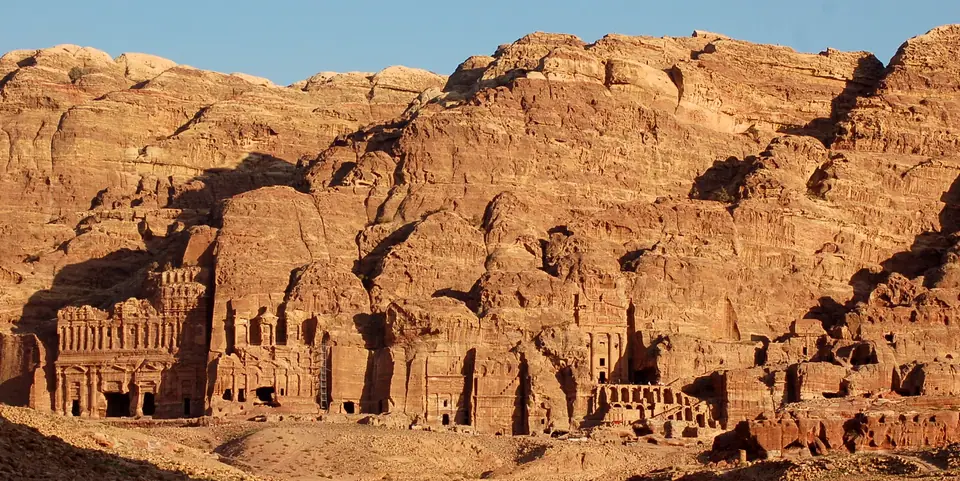
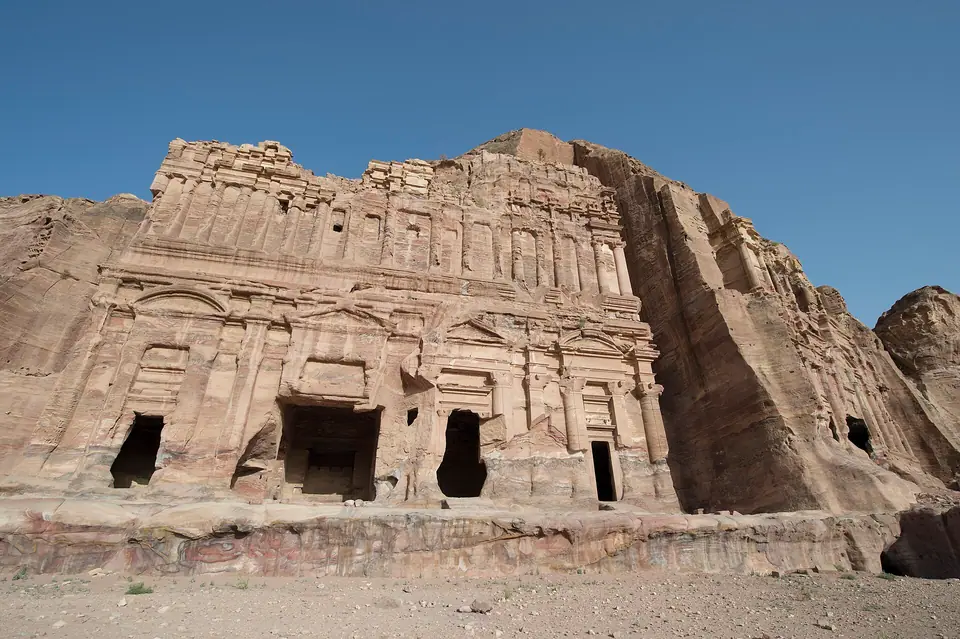
- Late Afternoon (14:30 to Sunset). Because Ad-Deir and the Royal Tombs on Jabal al-Khubtha face west and southwest, their sandstone facades catch the best late-afternoon sun. They glow in deep crimson and amber light during the final two hours before sunset, right after day-trip buses depart. Build this timing into our 3-day Petra itinerary.
Daylight hours, Ramadan considerations, and photography windows
Seasonal daylight length shapes how many trails you can link in a single day. In late December and January, sunset arrives around 16:45, and park rangers begin clearing the outer trails in the Basin by 16:00. By contrast, late April, May, and September offer thirteen to fourteen hours of daylight, allowing late-afternoon hikes down from Ad-Deir or the Royal Tombs without rushing. If your visit coincides with the Islamic holy month of Ramadan, the Petra Archaeological Park, the Petra Museum, and tourist restaurants on Lower Tourism Street remain open as usual during the day. Show courtesy in Upper Wadi Musa by eating, drinking, and smoking indoors rather than on public town pavements during daylight fasting hours. After the sunset call to prayer, the town square comes alive with evening family strolls and fresh pastries.
Evening stargazing and night walks also shift with the calendar. During the cloud-free nights of May, June, September, and October, low humidity and high-altitude mountain air create crystal-clear skies. That makes the Treasury plaza and desert camps in Al-Beida and Wadi Rum prime spots for viewing the Milky Way. In winter, pack an extra insulated flask of hot tea if you attend an evening walk, as canyon temperatures drop rapidly to 5°C within an hour of sunset.
Where it is
- 1Petra
- Ramon International Airport (ETM) · about 78 km from Petra in a straight line
- Directions in Google Maps
Traveller tips
Real advice from people who have been to Petra. Every tip is read by our team before it goes live.
No tips yet. Been here? Yours could be the first.
Thank you! Your tip will appear here after a quick review.
More in Petra
Continue exploring Petra with related neighbourhood, food, and planning guides
Where to Stay in Petra: Lower Tourism Street vs Upper Wadi Musa, Uum Sayhoun & Taybeh
Petra, Jordan
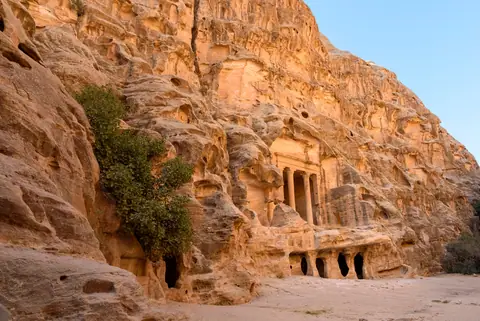
Petra 3-Day Itinerary: Main Spine, Little Petra Back-Door Hike & High Place of Sacrifice
Petra, Jordan
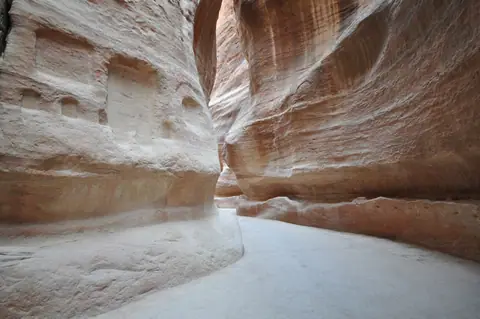
Bab al-Siq & The Siq Walk: Djinn Blocks, Obelisk Tomb, Dam & Nabataean Water Channels
Petra, Jordan
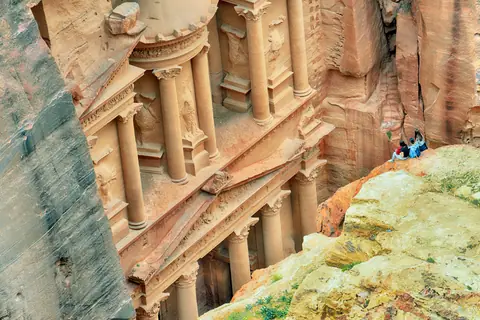
Al-Khazneh (The Treasury): Architecture, Cliff Viewpoint Scams, Lighting & Crowd Timing
Petra, Jordan
