


























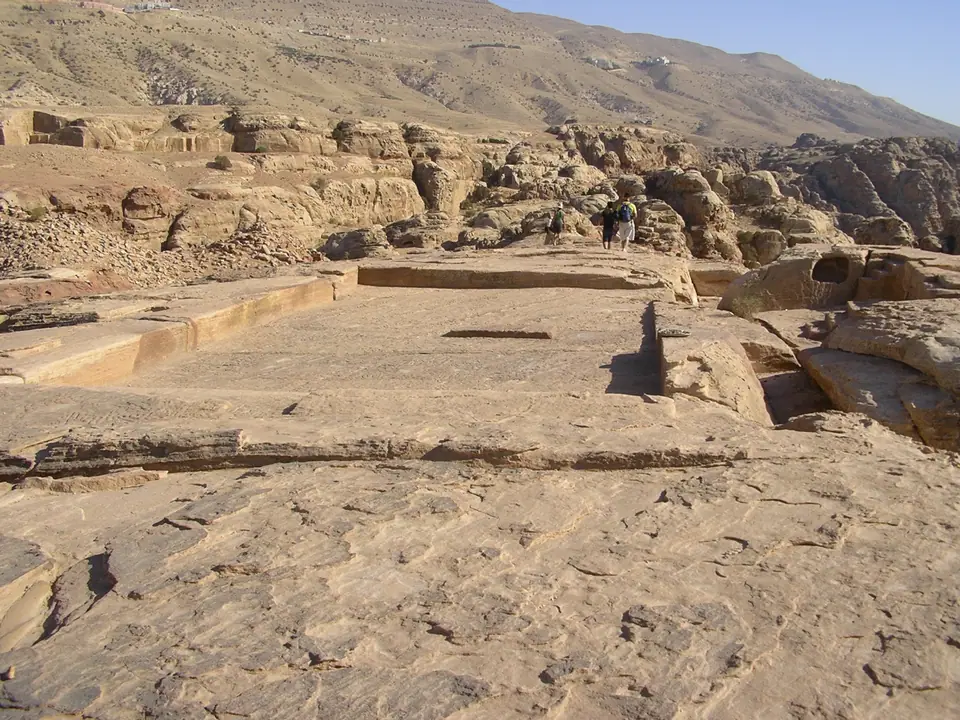
Elevated Trails of Petra: High Place of Sacrifice (Al-Madbah), Wadi Farasa & Al-Khubtha
Hike Petra's two finest high-altitude ridge trails: the High Place of Sacrifice (Al-Madbah) and Wadi Farasa loop on the south ridge, and the legal Al-Khubtha Trail to the aerial Treasury viewpoint.
While ninety percent of visitors stay on the main valley floor between the Siq and the Basin, the ancient Nabataeans worshipped their mountain gods high on the open sandstone summits overlooking the city. Carving monumental ceremonial staircases straight up the cliffs of Jabal al-Madbah to the south and Jabal al-Khubtha to the northeast, Nabataean stonecutters created two extraordinary ridge circuits that remain fully walkable today. Both trails are free with your standard Petra admission ticket and require no guide in dry weather. They deliver the finest 360-degree panoramas in the park, including the only legal, safe aerial view looking down onto Al-Khazneh (The Treasury). Below is a detailed field guide to navigating both high routes.
| Trail Circuit | Distance & Steps | Elevation & Duration | Best For |
|---|---|---|---|
| 1. High Place & Wadi Farasa Loop | 4.5 km loop (600+ rock steps) | 1,065 m summit (3 to 3.5 hours total) | Twin obelisks, sacrificial altar, and Lion Fountain gorge |
| 2. Official Al-Khubtha Trail | 3.5 km out-and-back (600+ steps) | 1,100 m cliff rim (2 to 2.5 hours return) | Legal aerial viewpoint looking down onto the Treasury |
Trail 1: The High Place of Sacrifice (Al-Madbah) & Wadi Farasa Loop
Rising to 1,065 metres elevation (roughly 170 vertical metres above the Outer Siq floor), the High Place of Sacrifice (Al-Madbah, pronounced al-MAD-bah, "The Altar") crowns the flat summit of Jabal al-Madbah. Do not climb up and retrace your steps down the same steep eastern staircase. Instead, hike a one-way mountain loop of 3 to 3.5 hours (4.5 kilometres total) ascending from the Outer Siq and descending through Wadi Farasa to Qasr al-Bint:
- The Trailhead in the Outer Siq (Just Past the Treasury). Walk 250 metres northwest out of the Treasury plaza to the start of the Street of Facades. Immediately on your left (south side of the wadi), opposite a Bedouin refreshment kiosk, a stone-cut staircase marked by an official PDTRA trail sign climbs into a narrow side gorge.
- The 35-to-45-Minute Ascent and the Twin 6-Metre Obelisks. Climbing steadily up roughly 600 steps carved into red-and-ochre banded sandstone, you emerge onto an intermediate ridge dominated by two freestanding 6-metre-tall monolithic obelisks separated by 30 metres. Notice how Nabataean quarrymen did not build these obelisks from blocks. Instead, they chiselled away the entire surrounding hilltop to leave two solid rock needles representing the deities Dushara and Al-Uzza.
- The Summit Altar Platform of Al-Madbah. Five minutes past the obelisks and the ruins of a small Nabataean and Crusader watchtower fort, the path reaches the flat bedrock summit of Al-Madbah. Cut directly into the mountain top is a rectangular sunken court (14.5 by 6.5 metres) with a raised central stone banqueting bench for priests. Beside it sit a raised rectangular sacrificial altar platform with three rock-cut steps, a circular basin fitted with a drainage runnel for wine, water, or blood libations, and a deep rain-fed cistern. Walk thirty metres to the western cliff edge for an unobstructed panorama over the central Basin, the Royal Tombs, and the distant peak of Jabal Haroun.
- The Western Descent Through Wadi Farasa ( Lion Fountain to Soldier Tomb). From the tea tent below the High Place, do not turn back toward the obelisks. Instead, follow the signposted western staircase descending into Wadi Farasa:
- The Lion Monument (Lion Fountain). Five minutes down the western cliff face, look left to see a 4.5-metre relief of a striding lion carved into the sandstone wall. Water from the high cistern once flowed through a channel along the cliff and poured out of a spout in the lion's open mouth into a basin below.
- The Garden Tomb and Reservoir. Further down the gorge, the path passes a huge rock-cut water reservoir dammed by a thick ashlar wall beside a columned temple-tomb fronted by an irrigated terrace.
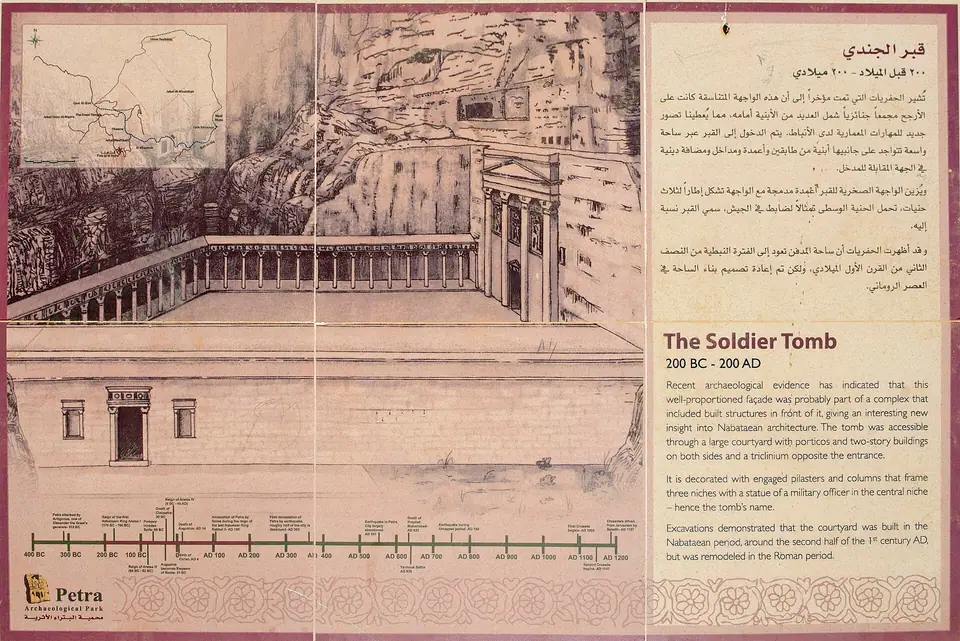
- The Roman Soldier Tomb and Painted Triclinium. On the valley floor stands the Roman Soldier Tomb, named for the three life-sized relief statues in Greco-Roman military cuirasses set into niches above the doorway. Directly opposite across the ancient courtyard sits its matching funerary banquet hall, the only rock-cut interior room inside the main Petra park decorated with carved fluted columns and alternating niches.
- The Renaissance Tomb and Qasr al-Bint Exit. The path passes the arched pediment of the Renaissance Tomb and the trail junction for Al-Habis Crusader castle. Soon after, the Wadi Farasa track empties onto the flat valley floor just south of Qasr al-Bint and the Basin restaurants.
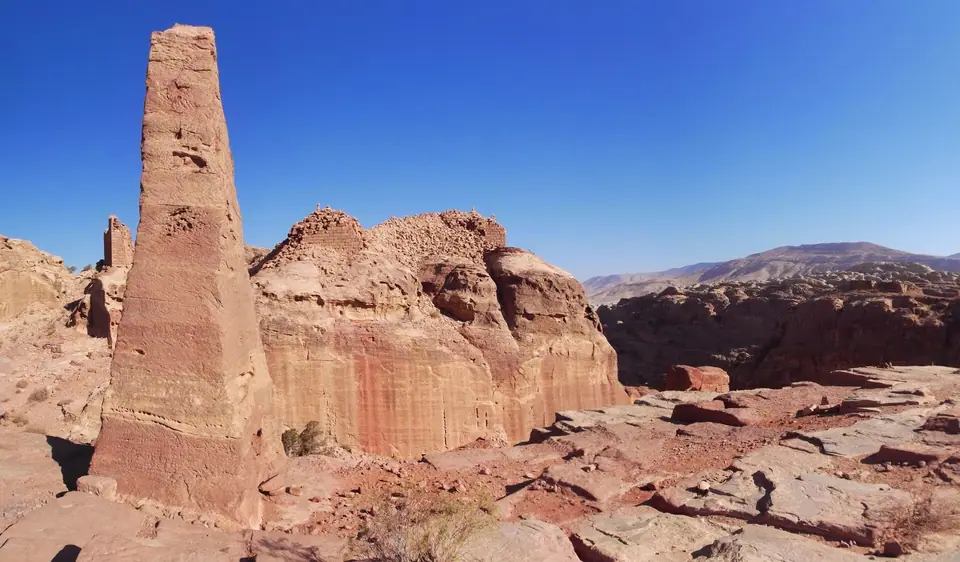
Trail 2: The Official Al-Khubtha Trail (The Legal Aerial View of the Treasury)
Every traveller has seen the photograph looking straight down from a cliff carpet onto the rose-red facade of Al-Khazneh. As detailed in our Petra tourist traps guide, touts waiting at the bottom of the Treasury plaza try to charge hikers to scramble up a dangerous, frequently closed rock gully right beside the monument. The official Al-Khubtha Trail is the legal, signposted, and architecturally rewarding route to that high cliff rim, approaching from the opposite side of the mountain:
- Where the Trail Starts (North of the Palace Tomb): Walk along the terrace of the Royal Tombs past the Urn, Silk, Corinthian, and Palace Tombs. Walk just past the northern flank of the Palace Tomb and before the small Tomb of Sextius Florentinus. There an official brown PDTRA trail board marks the wide Nabataean staircase climbing the western face of Jabal al-Khubtha.
- The 600-Step Ascent Over the Nabataean Theater Viewpoint. Over the first 30 to 40 minutes, you ascend roughly 600 wide, well-cut sandstone stairs switching back up the cliff. Halfway up, the staircase looks directly down across the entire semi-circle of the 7,000-seat Nabataean Theater, the Street of Facades, and the Colonnaded Street, offering a vantage point you never see from the illegal plaza scramble.
- The High Sanctuary Plateau and Final Descent to the Treasury Lookout. Reaching the upper plateau of Jabal al-Khubtha (around 1,100 metres), the path passes a rock-cut water cistern and an open-air Nabataean high sanctuary. From there, it undulates southward across slickrock domes marked by stone cairns before descending a short staircase to the Bedouin cliff tent 150 metres above Al-Khazneh.
- Field Etiquette at the Cliff Tent and Return Timing. Allow 2 to 2.5 hours round trip from the Palace Tomb (roughly 3.5 kilometres out-and-back). Wear the lug-soled shoes from our packing guide and carry 1.5 litres of water for this climb alone. Bring small cash notes (around 1 to 2 JOD for mint tea as of November 2026, subject to seasonal change) if you wish to sit inside the Bedouin cliff shelter while photographing the Treasury below. Return the exact way you came down the Royal Tombs staircase as part of Day 1 of our 3-day Petra itinerary.
Trail safety, footwear grip, and weather rules on the high ridges
Both the High Place of Sacrifice loop via Wadi Farasa and the Al-Khubtha Trail follow clear Nabataean stone-cut staircases in dry weather. However, neither route has modern metal handrails along its upper cliff edges. Hikers who suffer from severe vertigo should take their time on the final narrow rock ledges approaching the twin obelisks of Al-Madbah and the upper slickrock dome of Jabal al-Khubtha. Never attempt either mountain trail during rain, high winds, or thunderstorm warnings between November and April. Wet sandstone turns slick underfoot, and the steep rock-cut gullies of Wadi Farasa and Jabal al-Khubtha act as water chutes during winter flash floods. Start your climb before 09:00 in cool morning shadow, follow the painted trail arrows and stone cairns, and allow a full half-day for each circuit.
Photographers tackling both elevated trails should match each climb to the direction of the sun. On the High Place of Sacrifice loop, climbing the eastern staircase between 07:00 and 08:30 puts the rising sun behind you. Morning light illuminates the twin 6-metre obelisks and casts crisp side-lighting across the Lion Fountain and Roman Soldier Tomb during your descent. On the Al-Khubtha Trail, aim to reach the cliff-edge tent above the Treasury between 09:30 and 11:00. That window lets you look straight down onto Al-Khazneh while the morning sunbeam illuminates its rose-red facade. By afternoon, when the sun shifts west over Wadi Araba, the western staircase of Jabal al-Khubtha above the Royal Tombs glows in warm amber light for your walk down.
Pack a dedicated 1.5-litre water bottle and a handful of salted almonds or dates for each ridge walk. Although seasonal Bedouin stalls sell water and sage tea near the High Place summit, beside the Roman Soldier Tomb in Wadi Farasa, and at the Al-Khubtha lookout, carrying your own water keeps you self-sufficient.
Download an offline map before leaving Wadi Musa, since mobile signal drops inside Wadi Farasa.
Where it is
- 1Elevated Trails of Petra
- Ramon International Airport (ETM) · about 78 km from here in a straight line
- Directions in Google Maps
Traveller tips
Real advice from people who have been to Petra. Every tip is read by our team before it goes live.
No tips yet. Been here? Yours could be the first.
Thank you! Your tip will appear here after a quick review.
More in Petra
Continue exploring Petra with related neighbourhood, food, and planning guides
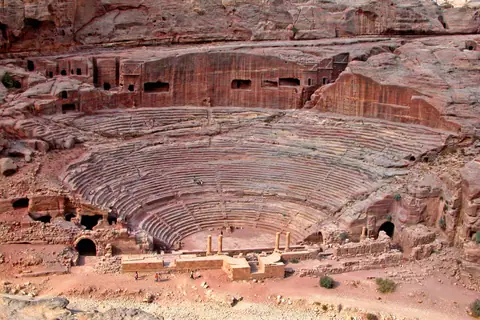
Street of Facades, Nabataean Theater & The Royal Tombs: Urn, Silk, Corinthian & Palace Tombs
Petra, Jordan
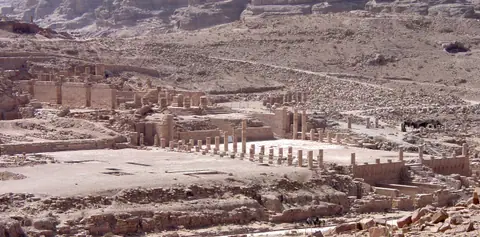
The Basin Core: Colonnaded Street, Great Temple, Qasr al-Bint, Byzantine Church & Petra Museum
Petra, Jordan
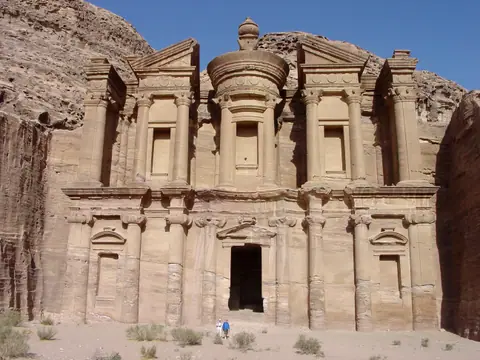
Ad-Deir (The Monastery) & Little Petra Back-Door Hike: 800 Steps vs 4x4 Shuttle Route
Petra, Jordan
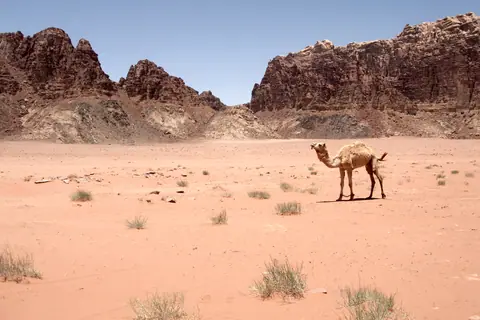
Day Trips & Onward Loops from Petra: Wadi Rum, Aqaba Red Sea, Shobak Castle & Dana
Petra, Jordan
