Gamle Stavanger (Old Town) and IDDIS Canning Museum
Walk Øvre Strandgate's 173 protected eighteenth- and nineteenth-century wooden houses and tour the 1916 brisling smokehouses at IDDIS.
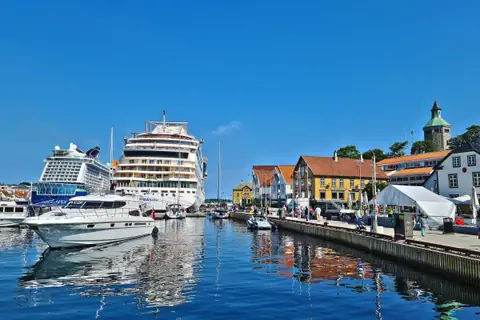
Rising along the western slope of Vågen harbour, Gamle Stavanger, historically known as Straen, contains the largest concentration of wooden buildings in Northern Europe, comprising 173 protected timber buildings built primarily at the end of the eighteenth century and throughout the nineteenth century. Most are small whitewashed one- and two-storey cottages constructed in Empire and late-baroque timber styles by seafarers, shipwrights, coopers, and cannery workers after the herring fishery returned to the Rogaland coast in 1808. Across the wider city of Stavanger, approximately 8,000 wooden houses survive inside the historic building zone.
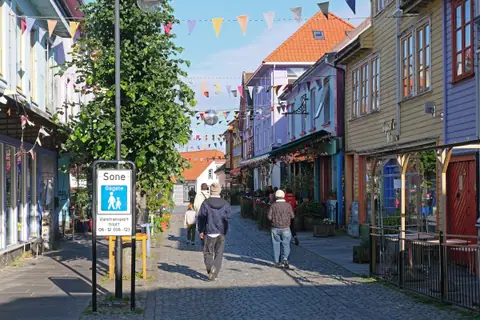
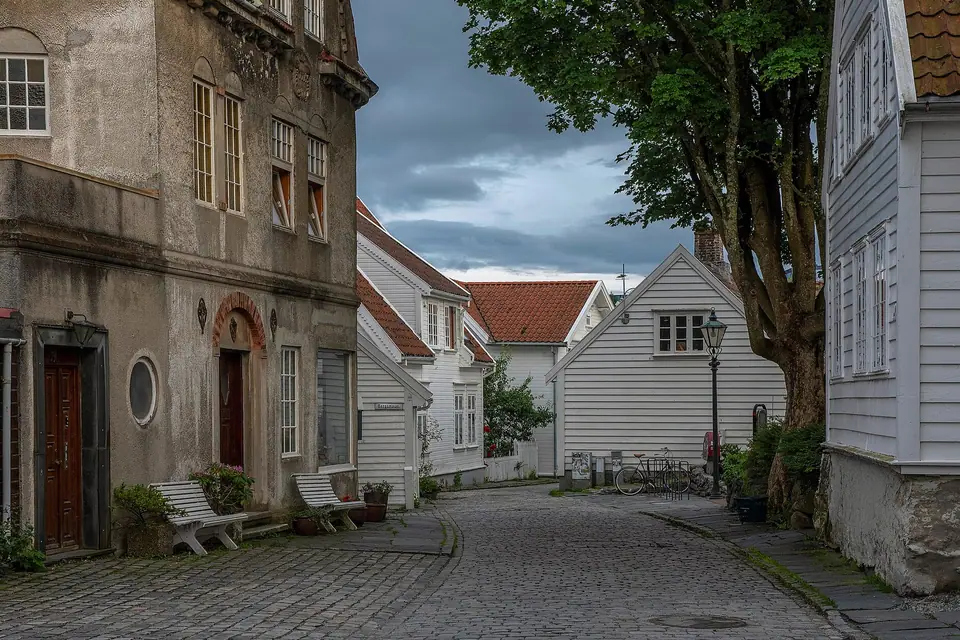
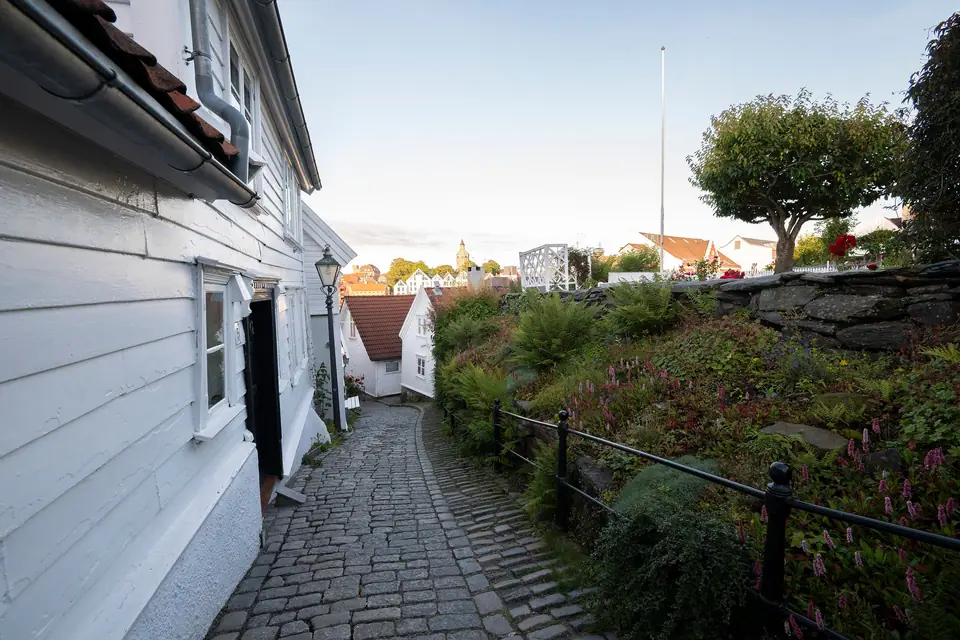
Walking up from the harbour quayside into the quiet cobbled lanes of Øvre Strandgate and Mellomstraen immediately shifts the scale of the city. Because the hillside cottages were built on narrow plots adapted to the natural bedrock, the rooflines step gently upward above the water, with small walled gardens, climbing roses, and painted wooden gates framing views back toward the shipping wharves and the medieval cathedral spire across the inlet. Pedestrian alleys connect the upper ridge with the lower waterfront, allowing visitors to wander through a neighbourhood that escaped the industrial demolition waves of the mid-twentieth century.
Preservation of Straen and Øvre Strandgate
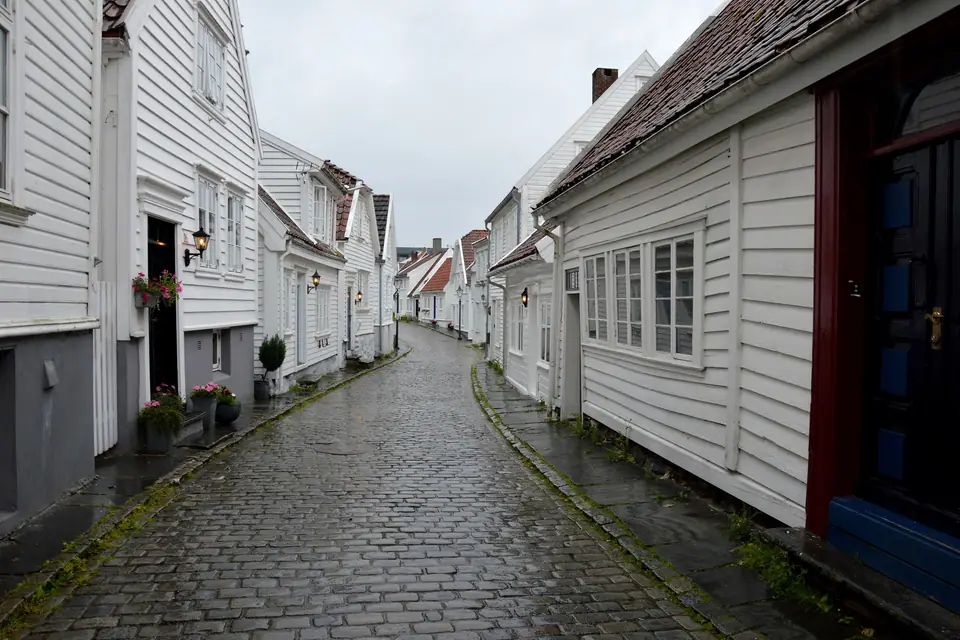
After the Second World War, municipal redevelopment plans proposed clearing the wooden district to build modern concrete blocks and wider roads. In 1951 the City Architect Einar Hedén presented a conservation plan to preserve the quarter around Øvre Strandgate, Mellomstraen, and Nedre Strandgate; initial municipal funding followed in 1956, and during the European Architectural Heritage Year in 1975 Gamle Stavanger was selected alongside Røros and Nusfjord as one of Norway's three national pilot projects for historic preservation. The district holds four awards for conservation, where private residents and the municipality maintain the hand-laid cobblestone lanes, cast-iron gas-style streetlamps, and rose and hollyhock front gardens.
Unlike open-air folk museums where historic buildings have been relocated from elsewhere, Straen remains a living residential neighbourhood on its original foundations. Homeowners care for the exterior timber cladding, traditional pan-tiled roofs, and multi-pane sash windows under strict heritage guidelines, while municipal craftspeople maintain the stone paving and historic street furniture. Visitors strolling the streets are welcome at any time of day, though keeping voices low and respecting private doorways, window ledges, and courtyard gardens helps preserve the tranquil character of the quarter when cruise ships berth along nearby Strandkaien. Small municipal plaques mounted on selected facades explain the occupational history of the original nineteenth-century households, from master mariners and ship carpenters to seamstresses and factory foremen.
IDDIS: The Norwegian Canning and Printing Museums
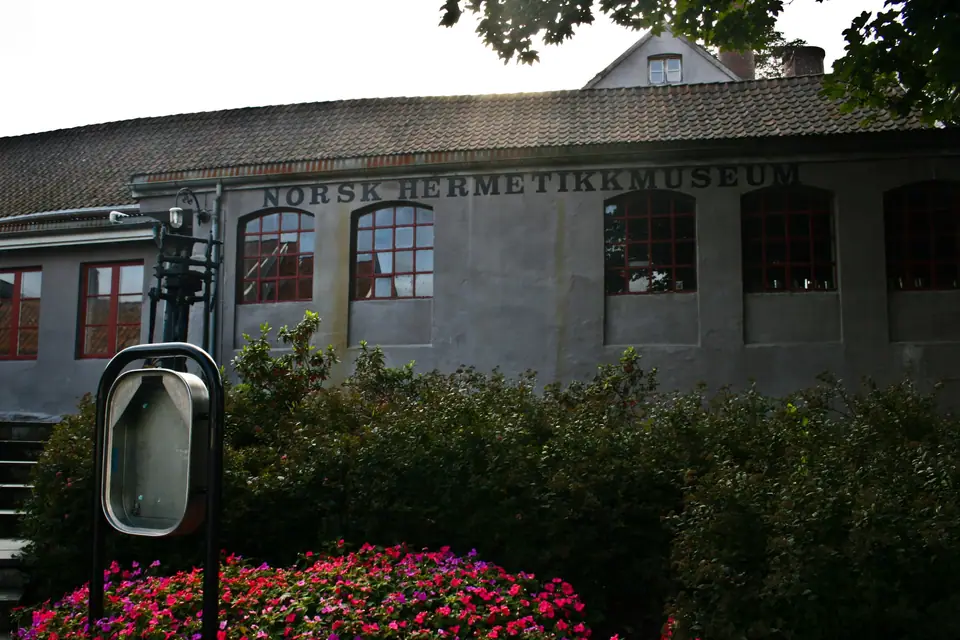
At Øvre Strandgate 88 and 90 stands IDDIS, the joint museum complex uniting the Norwegian Canning Museum (Norsk Hermetikkmuseum) and the Norwegian Printing Museum (Norsk Grafisk Museum). The Norwegian Canning Museum was established in 1975 and opened on 28 June 1982 inside a preserved sardine cannery built in 1916 and operated until the mid-1950s. At the industry's height between 1890 and 1960, Stavanger housed more than 50 canneries, with 71 across Rogaland, employing over half of the city's industrial workforce to smoke and pack brisling (European sprat) and sild in olive oil or tomato sauce until the last local cannery closed in 2002.
The proximity of the factory walls to the surrounding cottages shows how closely residential life and industrial production were intertwined along the western side of Vågen. Workers stepped just a few paces from their front doors to the sorting tables, smoking kilns, and tin-stamping shops, while schooners and steamers unloaded catches and salt barrels directly onto the lower quays along Nedre Strandgate. Inside the museum courtyard, preserved brick chimneys and timber warehouse wings illustrate the compact scale of a turn-of-the-century Norwegian cannery, while a reconstruction of a cannery worker's cottage rooms shows how families furnished small timber dwellings during the interwar decades.
Inside the Smokehouses and Lithographic Press
Inside the 1916 factory, machinery dating from 1880 to 1925 demonstrates how women threaded sprats onto steel rods (spidd), how oak-wood smokehouses cured the fish, and how mechanical seaming presses sealed the tins. On the first Sunday of each month and on Tuesdays and Thursdays in summer, museum staff light the original wood-fired smoking ovens. Since 2021 the cannery has been connected to the adjacent Norwegian Printing Museum (founded in 1991 and opened on 23 October 1993 in a 1913 canning warehouse), celebrating the lithographic workshops that printed the colourful paper sardine tin labels known in Stavanger dialect as iddiser.
These intricate paper labels featured royal portraits, polar explorers, maritime scenes, and foreign brand names designed for export markets around the globe. Examining the heavy lithographic stones, hand-set type cases, and vintage printing presses explains how Stavanger's canneries built an international graphic design and packaging industry alongside their smokehouses. Interactive displays also trace how labour unions, factory shifts, technological inventions such as key-opened tin lids, and seasonal fishing runs shaped daily family life across the surrounding timber streets.
Walking Routes Through the Western Harbour
Allow at least two to three hours to explore the lanes of Gamle Stavanger and the exhibition halls at IDDIS at an unhurried pace. Begin at the southern entrance near Torget and climb Øvre Strandgate to the museum courtyard, pause at the museum café for coffee and freshly baked pastries, and then return along Mellomstraen and down the stepped cross-lanes to the waterfront wharves of the Stavanger Maritime Museum. Because the cobblestones are uneven and can become slippery after coastal rain, flat rubber-soled footwear is strongly advised. From the quayside, you can continue across Vågen to the Norwegian Petroleum Museum, walk east into Øvre Holmegate, or sample local seafood in our Stavanger food guide.
Photographers and architecture enthusiasts visiting Straen will notice subtle variations in the white timber joinery as they move between the lower and upper lanes. Many cottages display classical door surrounds, carved wooden cornices, and small projecting storm porches built to block winter draughts blowing off the fjord, while backyard sheds and narrow garden plots follow the ancient parcel lines of the nineteenth-century fishing suburb. In late spring and summer, climbing roses, hydrangeas, and hollyhocks frame the whitewashed clapboards in vivid colour, whereas autumn and winter mornings highlight the crisp geometry of the red clay roof tiles, brick chimneys, and wet granite cobbles under soft coastal light. Taking time to explore the quiet side passages off Øvre Strandgate reveals the domestic craftsmanship that kept this maritime neighbourhood intact through generations of industrial change.
Traveller tips
Real advice from people who have been to Gamle Stavanger (Old Town) and IDDIS Canning Museum. Every tip is read by our team before it goes live.
No tips yet. Been here? Yours could be the first.
Thank you! Your tip will appear here after a quick review.
More in Stavanger
Continue exploring Stavanger with related neighbourhood, food, and planning guides