Komle Thursdays, Gladmat and Rogaland Coastal Food
Taste Thursday komle potato dumplings, smoked brisling sardines, North Sea seafood, and Jæren lamb across Stavanger's harbour kitchens.
Stavanger sits at the meeting point of two rich Norwegian larders: the cold North Sea and Ryfylke fjords to the west and north, and the 700-square-kilometre agricultural plain of Jæren to the south, where Rogaland's mild oceanic winters allow a long growing and livestock grazing period. Together with the city's twentieth-century canning heritage and international oil-era dining scene, these ingredients have made Stavanger one of Norway's leading culinary centres, recognised by Michelin Guide stars awarded to local restaurants such as RE-NAA (two Michelin stars) and Sabi Omakase.
Unlike inland Norwegian regions that relied historically on dried and salted winter provisions alone, coastal Rogaland combines daily boat landings of cold-water gadoids, langoustines, and king crab with dairy butter, greenhouse tomatoes, root vegetables, and pasture-raised lamb from the surrounding lowland farms. Whether you sit down at a white-tablecloth tasting counter near Breiavatnet or order a steaming plate of Thursday potato dumplings in a traditional harbourside café, local menus stay closely tied to the seasons of the southwest coast.
Komle-Torsdag (Potato Dumpling Thursdays)
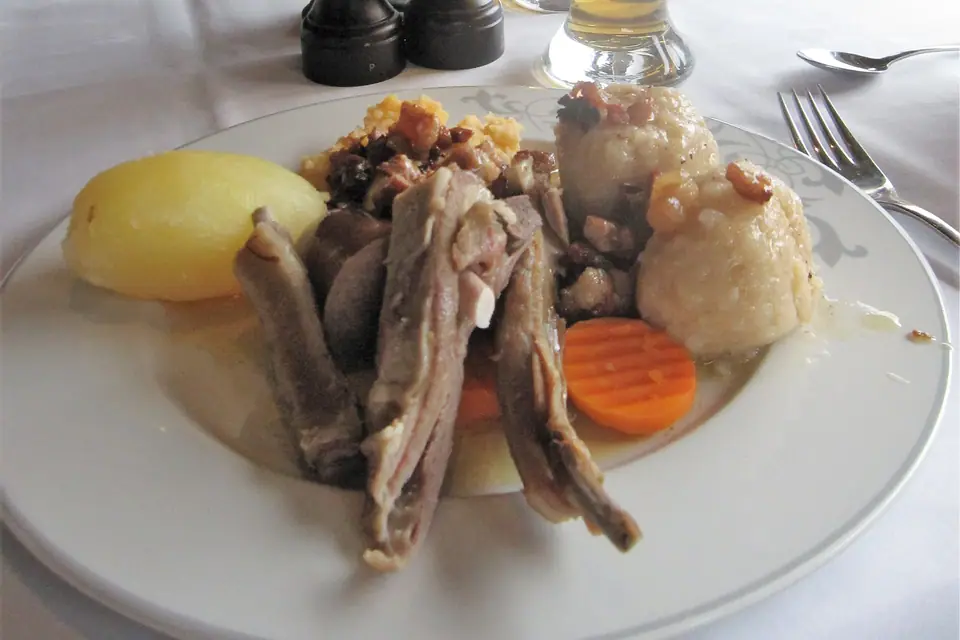
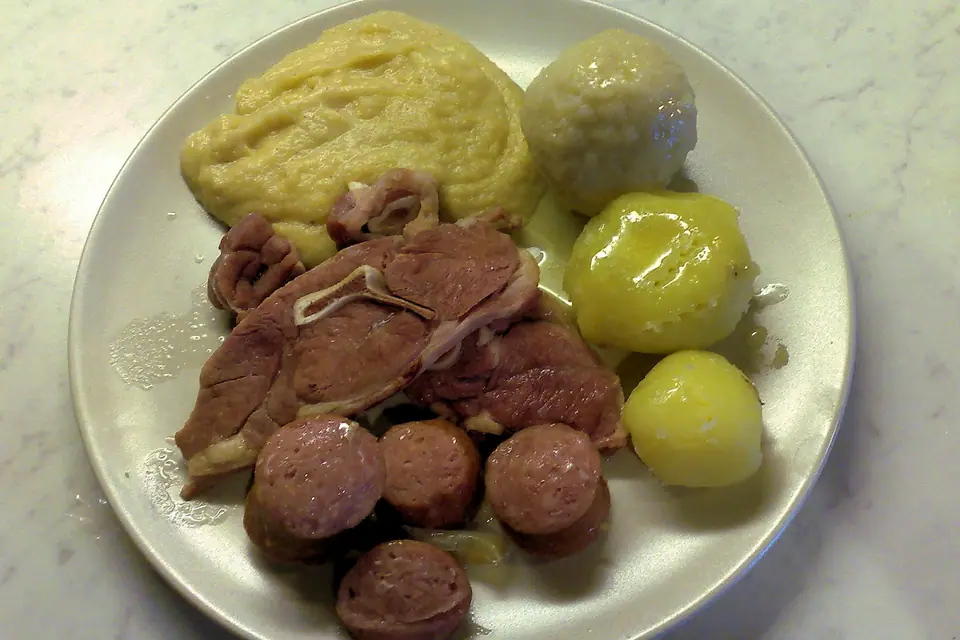
Across Stavanger and the wider Vestlandet region, Thursday is universally observed as komle-torsdag, when traditional cafés, workplace canteens, and harbourside restaurants serve komle (also spelled komla, kumle, or raspeball). Made by grating raw peeled potatoes and mixing the pulp with barley or wheat flour, salt, and water, the dense round dumplings, often stuffed at their centre with finger-thick cubes of salted pork fat called a dott, are simmered in salted meat broth and served with salted and boiled lamb or pork, smoked sausages, crispy fried bacon, melted butter, boiled carrots, and creamy mashed rutabaga (kålrabistappe), sometimes accompanied by a glass of soured milk (kefir). Leftover boiled dumplings are frequently cubed and pan-fried in butter the following day.
For visitors in town on a Thursday, ordering komle at a neighbourhood diner or traditional guesthouse around Torget, Søregata, or Eiganes is an essential local custom. Because the dish was designed to fuel farmhands and dockworkers through damp coastal afternoons, portions are generous and deeply savoury, with the sweet earthiness of mashed rutabaga balancing the smoky cured lamb and rich broth.
Oak-Smoked Brisling Sardines and Harbour Seafood
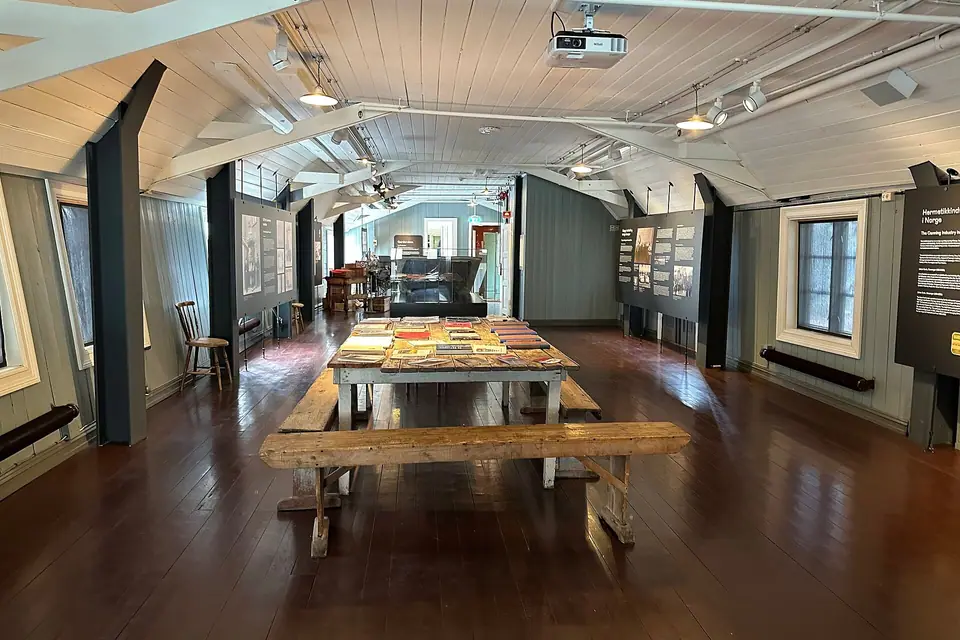
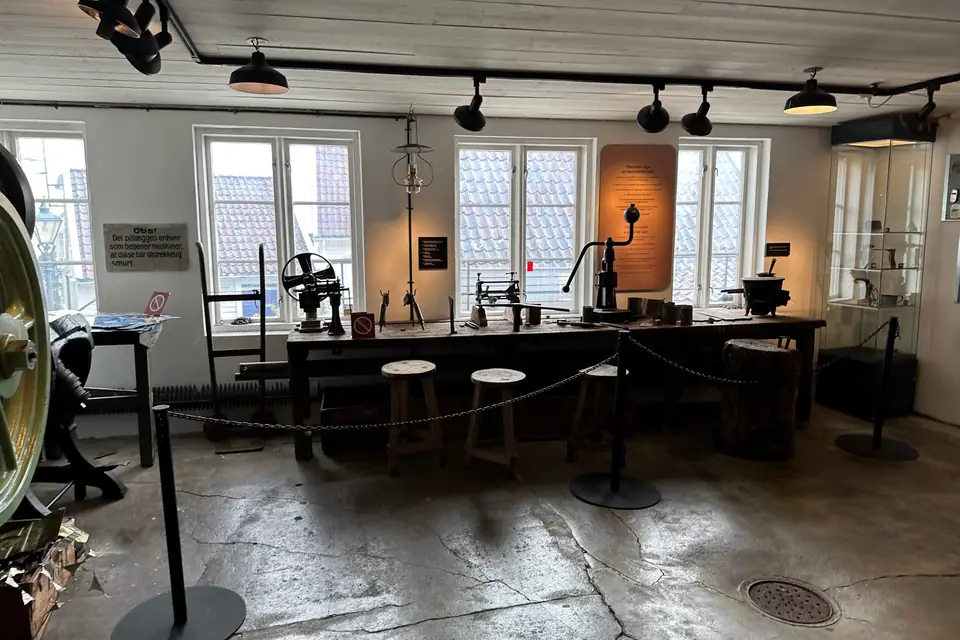
For nearly a century between the 1890s and 1960s, when over 50 canneries operated in the city, Stavanger's signature export was oak-smoked brisling (European sprat) packed in olive oil or tomato sauce inside rectangular tins decorated with colourful lithographed iddis labels. At IDDIS in Gamle Stavanger, visitors can still smell the wood-fired smoking ovens on firing days (the first Sunday of each month and Tuesdays and Thursdays in summer) and purchase tins packed to historic recipes. Along Vågen harbour and Torget, fishmongers and restaurants serve open-faced smørbrød sandwiches, fish cakes, and pan-fried cod.
At the waterfront fish counters near Fiskepiren and Torget, morning catches arrive straight from North Sea trawlers and fjord creel boats. Travellers looking for a casual midday meal can pick up warm coarse-ground fish cakes (fiskekaker) seasoned with nutmeg and chives, paper cones of peeled cold-water prawns eaten with lemon and mayonnaise on white bread, or creamy coastal fish soup garnished with mussels, salmon cubes, and julienned root vegetables.
Jæren Lamb, Pinnekjøtt, and Winter Table Traditions
In autumn and winter, menus highlight free-range sheep and lamb from Jæren and Ryfylke: fårikål (Norway's national dish of mutton and cabbage simmered with whole black peppercorns), slow-cured lamb leg (fenalår), traditional minced and canned pork-and-veal roll (Jædersylte, retaining the old Danish spelling of Jæderen), meat patties in brown sauce (kjøttkaker), and the western Norwegian Christmas dinner pinnekjøtt, salted, dried, and sometimes smoked mutton ribs steamed over birch sticks and served with mashed rutabaga.
Because sheep graze across both the coastal heather moors of Jæren and the high summer pastures above Lysefjorden, regional lamb develops a clean, herb-scented flavour prized by Norwegian chefs. From November until late December, traditional brasseries along Skagenkaien and Nedre Holmegate fill with the aroma of steaming birch twigs as local families and office groups gather for festive julebord dinners.
The Gladmat Festival and Contemporary Dining Streets
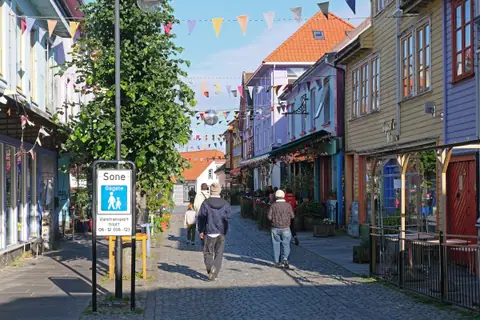
Every summer in late July along Vågen harbour (marking its tenth edition in 2010), Stavanger hosts Gladmatfestivalen, established through the Matfylket Rogaland network to celebrate regional food culture. Outside festival week, evening dining clusters around Pedersgata in the eastern centre, Skagenkaien along the water, and the painted timber lanes of Øvre Holmegate, where microbreweries, specialty coffee roasters, sourdough bakeries, and contemporary bistros showcase modern Rogaland cooking.
Exploring the eastern side of the city centre along Pedersgata and Nytorget reveals how Stavanger's culinary identity has broadened over recent decades. Once a working-class street of small artisan shops and grocery stores leading toward the canning district of Storhaug, Pedersgata has evolved into a dense corridor of independent food producers, casual bistros, noodle bars, pastry shops, and wine bars. Here, chefs trained in fine-dining kitchens work with the same local Jæren vegetables, line-caught North Sea pollack and cod, and Ryfylke dairy products found in the city's flagship tasting-menu restaurants, serving them in relaxed neighbourhood rooms.
Bakery culture also plays a central role in daily life across Stavanger. Morning commuters and weekend walkers stop at artisan sourdough bakeries around Søregata, Øvre Holmegate, and Eiganes for cardamom buns (kardemummeboller), cinnamon knots, and dense wholegrain rye loaves paired with locally roasted filter coffee. During afternoon hours, traditional konditori tearooms serve waffles topped with brown whey cheese (brunost) or sour cream and raspberry jam, alongside regional yeast pastries and layered cream cakes.
For travellers who want to bring edible souvenirs home, museum shops at IDDIS and delicatessens around Torget stock traditional tins of oak-smoked brisling sardines decorated with vintage lithographed labels, jars of local heather honey from the coastal moors, cured sheep sausages, and sea salt harvested along the North Sea coast. Planning your meals around a Thursday komle lunch, a harbourside seafood platter along Vågen, and an evening stroll down Pedersgata covers the full spectrum of Rogaland flavours, from nineteenth-century seafaring staples to contemporary Nordic cuisine, while local craft breweries pour coastal ales and stouts across the historic timber pubs of the harbour.
Traveller tips
Real advice from people who have been to Komle Thursdays, Gladmat and Rogaland Coastal Food. Every tip is read by our team before it goes live.
No tips yet. Been here? Yours could be the first.
Thank you! Your tip will appear here after a quick review.
More in Stavanger
Continue exploring Stavanger with related neighbourhood, food, and planning guides