Best Areas: Vågen Harbour, Breiavatnet and Sola Beach
Compare staying along Skagenkaien and Vågen harbour, beside Breiavatnet and Stavanger Station, in quiet Gamle Stavanger, or on Sola Beach.
Because central Stavanger's sights, train platforms, and fjord boat terminals are concentrated around two adjacent bodies of water, the saltwater inlet of Vågen and the freshwater lake of Breiavatnet within the borough of Eiganes og Våland and Storhaug, choosing a neighbourhood comes down to whether you prioritise historic harbour character, instant rail and airport bus access, quiet timber lanes, or North Sea beach dunes.
Unlike larger sprawling capitals where visitors spend long periods commuting by metro, staying anywhere within Stavanger's central peninsula places you within a ten- to fifteen-minute walk of the medieval cathedral, the canning and petroleum museums, and the morning catamarans into Lysefjorden. Nonetheless, each pocket of the waterfront and lakeside carries a distinct evening pace and architectural setting.
Vågen Harbour, Skagenkaien, and Øvre Holmegate
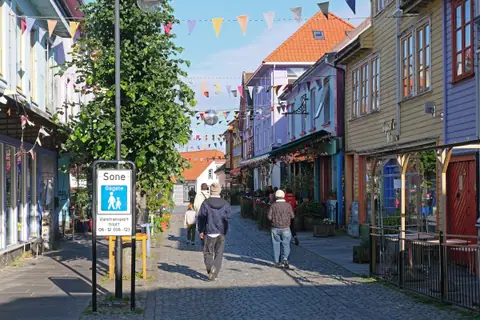
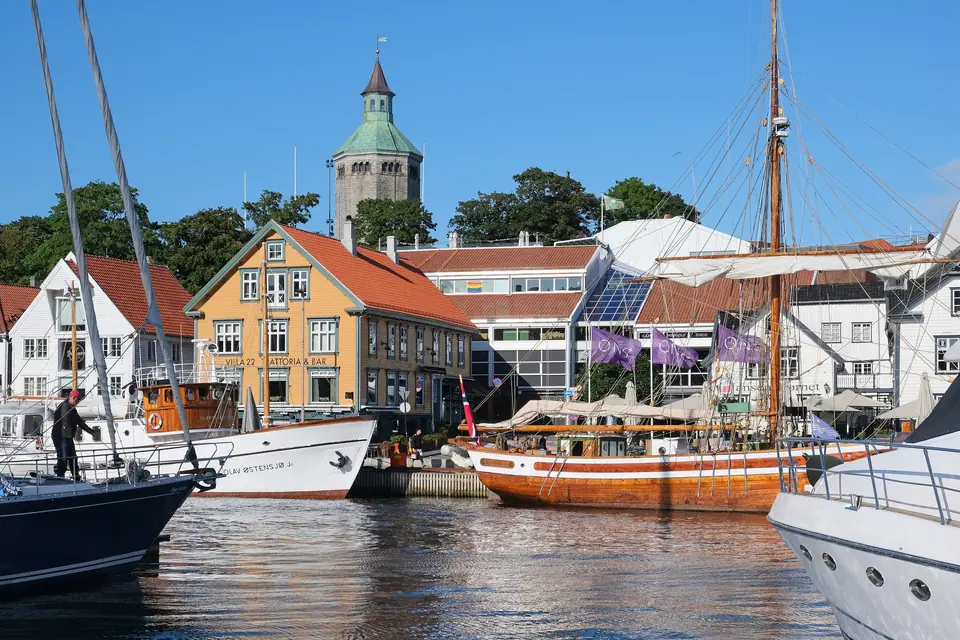
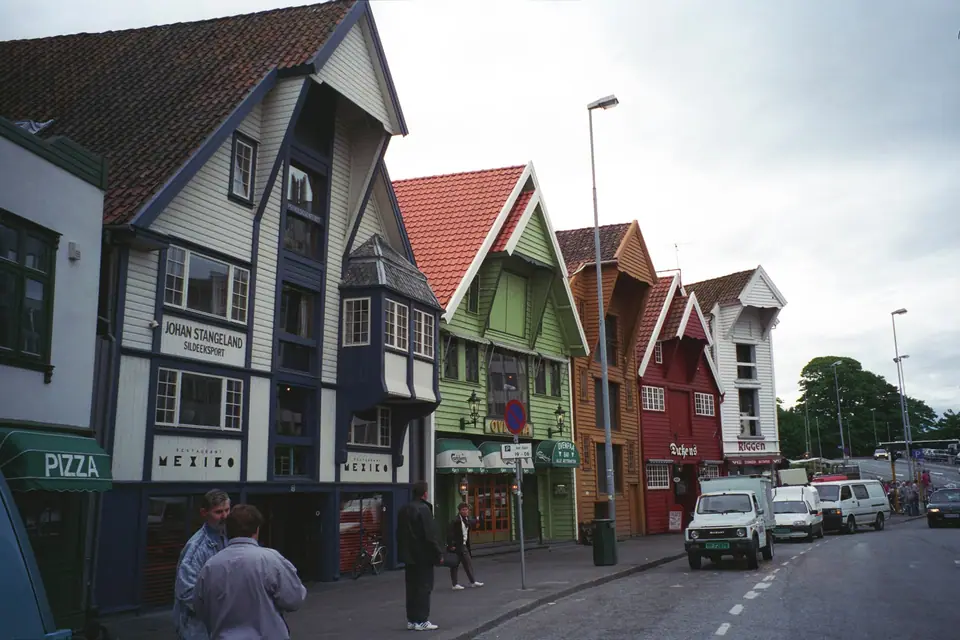
Staying along the eastern quays of Vågen between Torget, Skagenkaien, Østervåg, and Kjeringholmen places you steps from the sightseeing catamarans to Lysefjorden, the 1853 watchtower Valbergtårnet, and the painted wooden cafés of Øvre Holmegate. Several full-service hotels occupy converted nineteenth-century brick and timber merchant warehouses along Skagenkaien and Nedre Holmegate, while Strandkaien across the water faces the morning sun and the 1770 to 1840 wharves of the Stavanger Maritime Museum. Keep in mind that Skagenkaien and Vågen also host Stavanger's liveliest weekend restaurants and summer festivals such as Gladmat, so light sleepers visiting on Friday or Saturday nights should request courtyard-facing or upper-floor rooms.
For travellers who enjoy stepping straight out of their hotel lobby onto cobbled quaysides for morning harbour photography or late-evening dining along Pedersgata and Østervåg, the eastern harbour front is hard to beat. Many waterfront properties include generous Norwegian breakfast buffets featuring smoked fish, local cheeses, and freshly baked rye breads before hikers depart for the mountains.
Breiavatnet, Byparken, and Eiganes
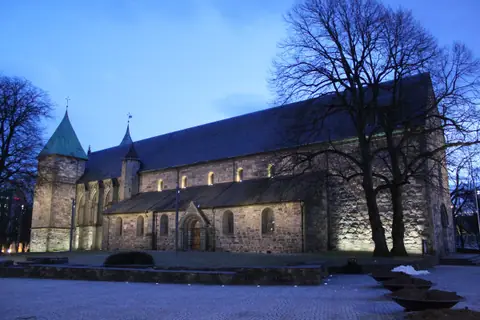
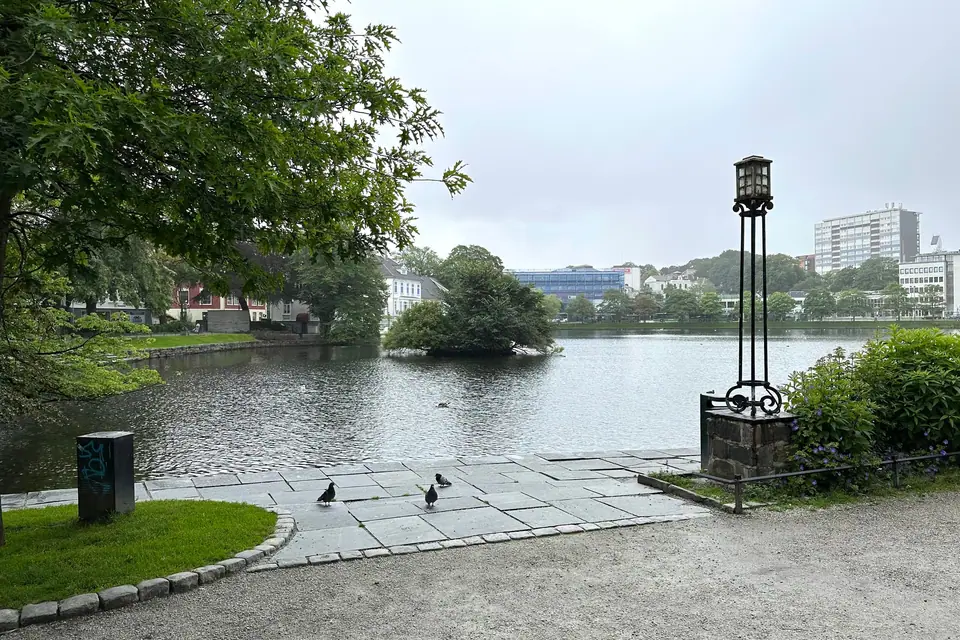
The blocks surrounding Breiavatnet lake, Byparken, and Stavanger Cathedral offer the most convenient transport base in the city. Here you are within a three-minute flat walk of Stavanger Station (where Go-Ahead Sørtoget trains from Oslo and Jæren commuter trains from Sandnes terminate), the Byterminalen bus stops for Preikestolen, Ullandhaug, and Hafrsfjord, and the Flybussen coach stop to Sola Airport. Just south and west of Breiavatnet, the cultural quarter along Muségata near the 1893 Stavanger Museum and the leafy residential avenues of Eiganes around Ledaal royal manor (1799 to 1803) and Breidablikk villa (1881 to 1882) provide quieter streets within a ten-minute walk of Torget.
Staying beside Breiavatnet also suits visitors arriving late in the evening by train or airport bus, as smooth paved walkways lead directly from the platforms to lakeside hotels without climbing hills or dragging wheeled suitcases over cobblestones. Morning joggers and walkers can follow the tree-lined park paths around Breiavatnet or head west along Eiganesveien to the woodland loop around Mosvatnet lake.
Gamle Stavanger, Bjergsted, and Outer Coastal Bases
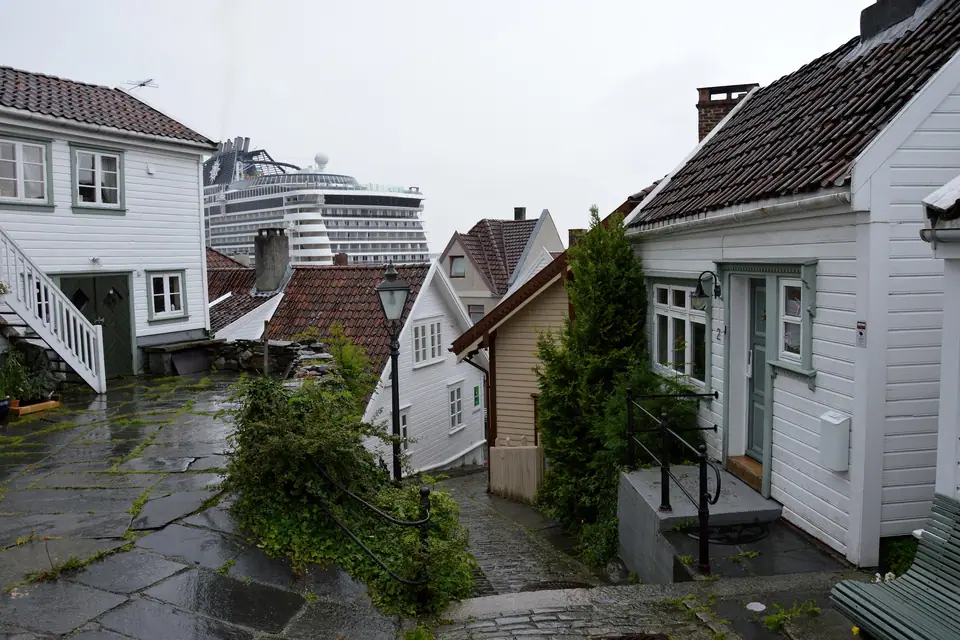
- Gamle Stavanger (Straen) and Bjergsted: On the western hillside above Vågen, the 173 protected wooden houses around Øvre Strandgate and the northern waterfront near Bjergsted Park and Stavanger Konserthus (opened 2012) offer peaceful evening walks and immediate access to IDDIS, though cruise ships berth along Strandkaien just below the slope in summer.
- Hillevåg, Ullandhaug, and Hinna: Travellers arriving by car along the E39 or visiting the University of Stavanger, Stavanger Art Museum at Mosvatnet, or Jåttåvågen on Gandsfjorden find modern hotels linked to the centre by Kolumbus buses and the Jæren Line.
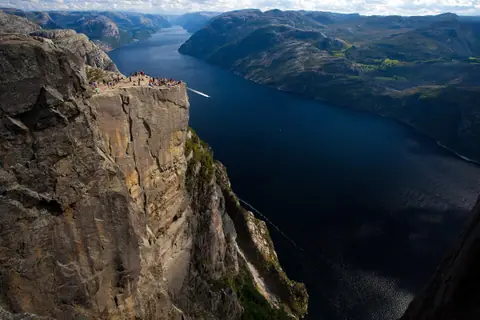
- Solastranden (Sola Beach) and Lysefjorden Cabins: Fifteen kilometres southwest of the city centre and five minutes from Stavanger Airport Sola, staying along the 2,300-metre sandy shoreline of Solastranden suits travellers with early flights and windsurfers, while hikers heading into Lysefjorden can book mountain lodge rooms at Preikestolen Fjellstue (270 m) or Stavanger Turistforening's historic quarters at Flørli (over 60 beds at Flørli 4444 and 32 beds at the self-service Flørli Turiststasjon at 80 m elevation).
Booking Strategy for Major Conferences and Summer Festivals
Accommodation demand in Stavanger peaks during the July school holidays, the late-July Gladmat food festival, and late-August years when the biennial Offshore Northern Seas (ONS) energy exhibition brings thousands of international delegates to the city. Reserving central harbour or lakeside rooms well in advance for summer and late-August dates ensures walking access to Vågen and avoids commuting from outer municipalities.
When comparing individual hotels and guesthouses across Stavanger, paying attention to building style and street gradient can make a noticeable difference to your stay. Properties housed inside converted nineteenth-century sea-houses and brick warehouses along Skagenkaien and Nedre Holmegate offer exposed timber beams, maritime views across the moored boats in Vågen, and immediate access to waterfront brasseries, though room layouts in historic structures can vary in size and face lively pedestrian cobbles on warm summer evenings. By contrast, modern purpose-built hotels around Breiavatnet, Løkkeveien, and Bjergsted Park feature standardized spacious rooms, underground parking garages, fitness rooms, and quiet double-glazed windows overlooking park trees or the outer bay.
Families and longer-stay visitors often appreciate apartment hotels and self-catering timber cottages around the edges of Gamle Stavanger, Storhaug, and Eiganes, where having a kitchen allows guests to prepare breakfast before early mountain hikes and cook fresh North Sea seafood bought at the harbour counters. If you choose a self-catering address in the historic wooden quarters, check whether your street is pedestrianised or cobbled so you know where taxis or airport shuttle buses can drop you off with luggage.
For travellers combining city sightseeing with coastal relaxation, splitting a stay between a central harbour hotel around Vågen and a beachfront room at Solastranden or a fjord cabin at Flørli provides two completely different perspectives on Rogaland. Waking up beside the cathedral bells and harbour ferries makes urban museum days effortless, while spending a night beside the North Sea dunes or deep inside Lysefjorden lets you experience the coast and mountains long after day-trippers have returned to town. Regardless of the neighbourhood you select, check proximity to either Stavanger Station or Fiskepiren so morning departures for Lysefjorden and Sola Airport remain quick and stress-free, and confirm whether breakfast service starts early enough to match morning mountain coach departures or if the hotel reception desk can prepare a packed hiking box with sandwiches and fruit the night before.
Traveller tips
Real advice from people who have been to Best Areas: Vågen Harbour, Breiavatnet and Sola Beach. Every tip is read by our team before it goes live.
No tips yet. Been here? Yours could be the first.
Thank you! Your tip will appear here after a quick review.
More in Stavanger
Continue exploring Stavanger with related neighbourhood, food, and planning guides