Stavanger Airport Sola, Sørlandet Line Trains and Fjord Boats
Arrive via Stavanger Airport Sola (11 km southwest), Go-Ahead Sørtoget trains on the 545 km Sørlandet Line, or Ryfast subsea buses and fjord ferries.
Located on Norway's southwestern coast, Stavanger is served by Norway's third-busiest airport, the western terminus of the Sørlandet Railway Line from Oslo, high-speed coastal and fjord passenger catamarans, and the European Route E39 and National Road 13 highway corridors.
Because the railway station, regional bus terminal, and harbour ferry quays all lie within a compact walk of one another between Breiavatnet lake and Vågen harbour, arriving passengers can transition smoothly from long-distance flights or trains to local buses, island boats, and city centre hotels without complicated transfers.
By Air: Stavanger Airport, Sola (SVG)
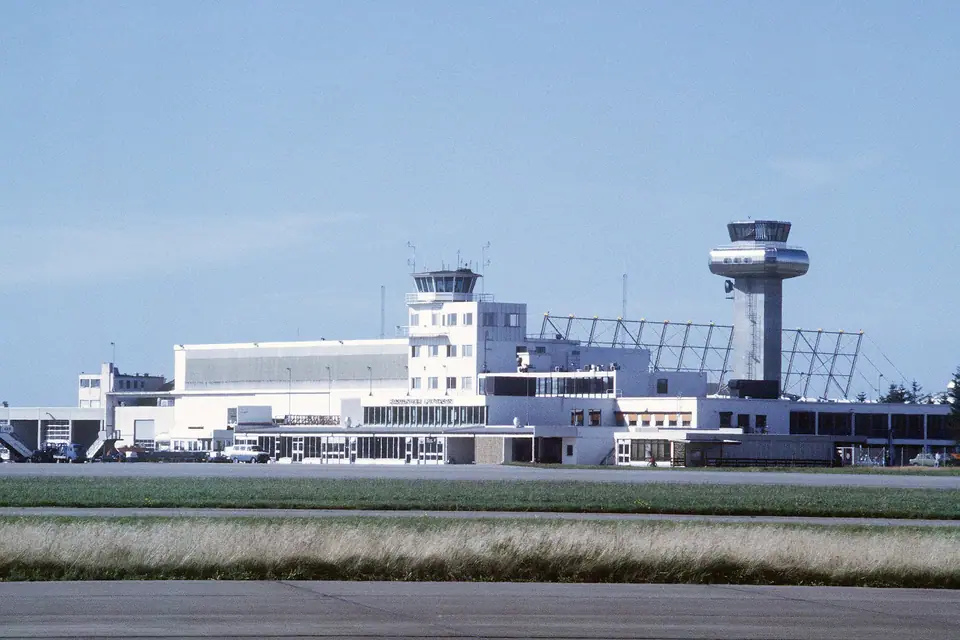
Stavanger Airport, Sola (IATA: SVG, ICAO: ENZV) lies in Sola Municipality 11 kilometres (6 nautical miles, or 15 kilometres by road) southwest of central Stavanger and 10 kilometres northwest of Sandnes. Opened by King Haakon VII on 29 May 1937, Sola handled roughly 3,970,000 passengers and 66,267 aircraft movements in 2024 across two crossing runways (north-to-south 18/36 and northwest-to-southeast 10/28) and two passenger terminals: the main fixed-wing terminal (which opened on 28 January 1987 as the first in Norway with nine passenger jet bridges and expanded in 2008 and 2009) and the separate offshore North Sea helicopter terminal opened on 7 March 1989 for CHC Helikopter Service and Bristow Norway. Frequent daily flights link Sola with Oslo Gardermoen alongside domestic routes to Bergen and 35 international destinations. Flybussen airport coaches and Kolumbus buses connect the terminal with Breiavatnet and central Stavanger hotels.
Flybussen coaches depart directly outside the arrivals hall and follow the motorway into the city centre, calling at major hotel stops around Mosvatnet, Muségata, Breiavatnet, and Fiskepiren. Travellers using regular Kolumbus regional buses can also connect via Sandnes or transfer onto local urban routes using the Kolumbus mobile ticket application.
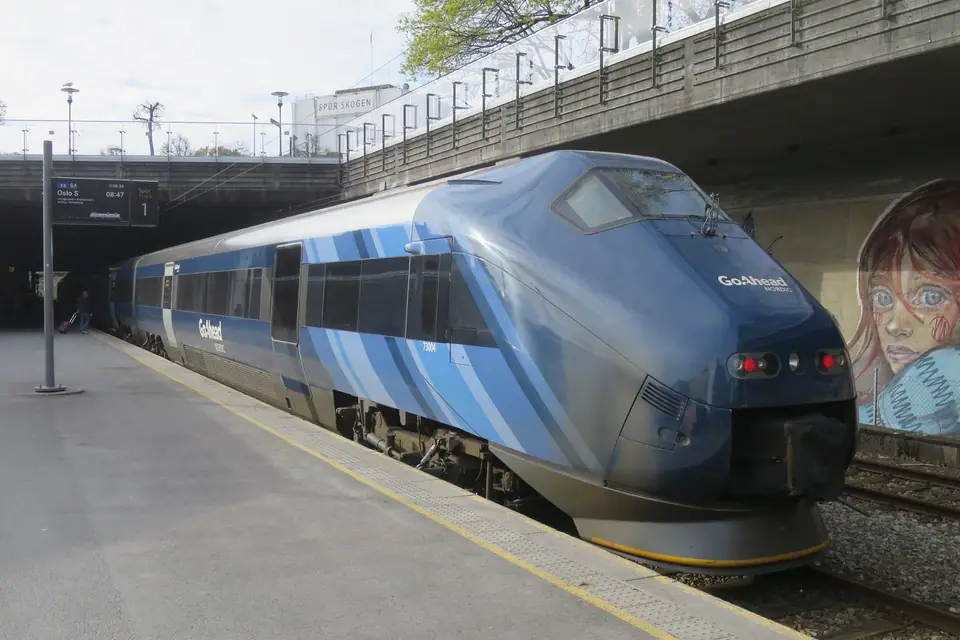
By Rail: Stavanger Station, the Sørlandet Line and Jæren Line
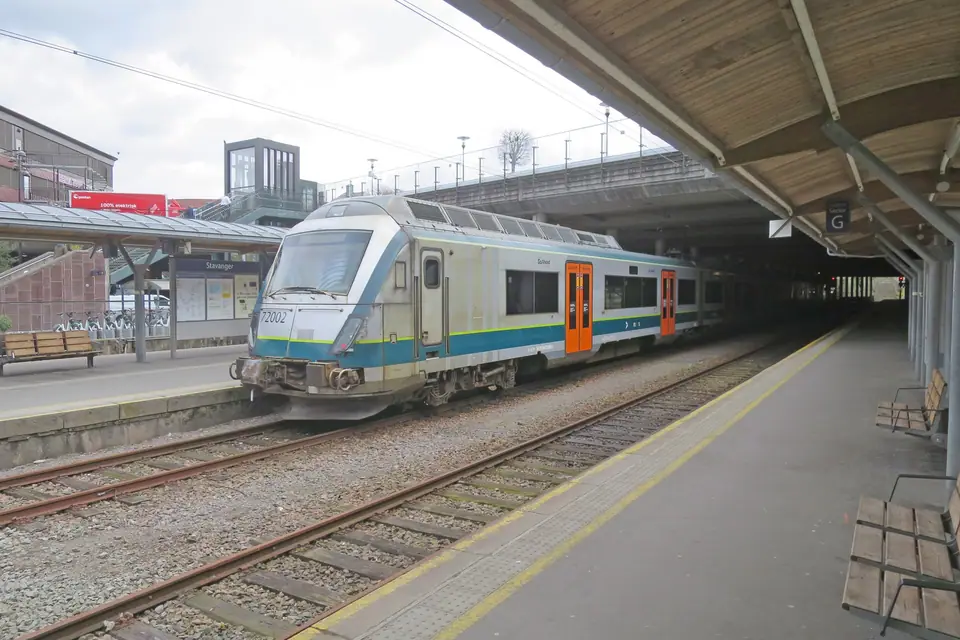
Situated at 5.3 metres above sea level on the southern edge of Breiavatnet lake, Stavanger Station opened on 27 February 1878 as the northern terminus of the narrow-gauge Jæren Line to Egersund (converted to standard gauge and electrified at 15 kV 16.7 Hz AC by 1956) and became the western terminus of the 545-kilometre Sørlandet Line from Oslo via Drammen and Kristiansand on 1 May 1944. Operated since 15 December 2019 by Go-Ahead Norge under the name Sørtoget, long-distance trains connect Oslo, Kristiansand, Egersund, Sandnes, and Stavanger, while double-track Jæren Commuter Rail trains run along the 14.5-kilometre double-track section to Sandnes via Paradis (1.4 km) and Jåttåvågen (7.2 km) and onward to Egersund (73.1 km). Stavanger Station sits beside the bus terminal and 10 minutes on foot from the ferry port.
Stavanger Station is also one of five railway stations in Norway maintaining a staffed Entur ticket office, alongside luggage lockers, waiting rooms, and step-free platform access. Boarding a daytime Sørtoget train from Oslo offers a scenic cross-country rail journey through southern Norwegian river valleys, forest lakes, and the coastal heathlands of Jæren before pulling directly up to the edge of Byparken and Stavanger Cathedral.
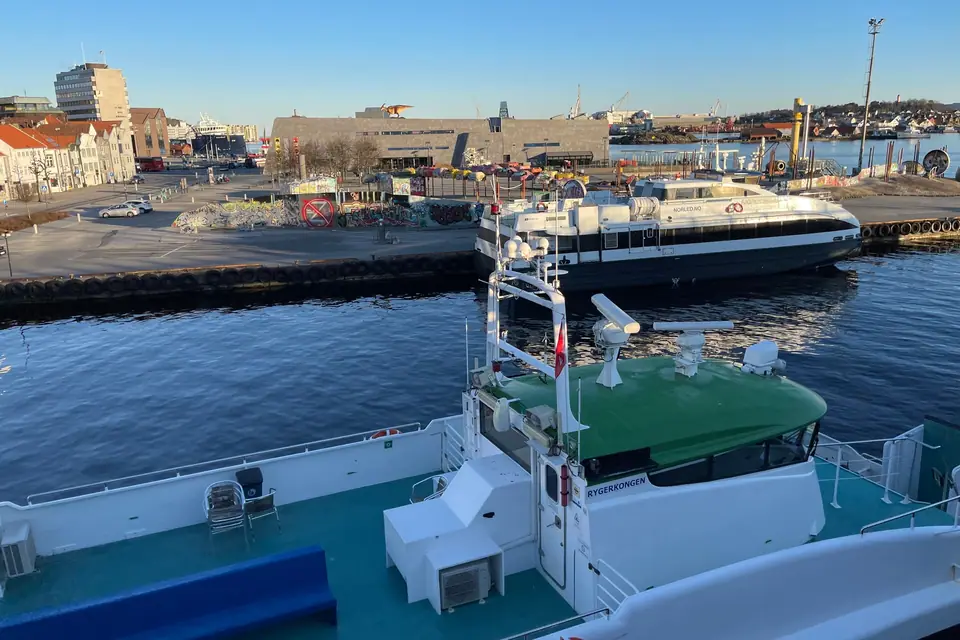
By Subsea Tunnel, Bus, and Fjord Boat
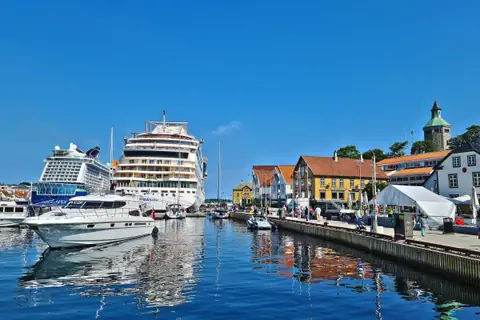
Heading east into Ryfylke and Preikestolen, National Road 13 passes directly from Stavanger through the 3.7-kilometre Eiganes Tunnel, the 5.5-kilometre Hundvåg Tunnel, and the 14.3-kilometre Ryfylke Tunnel (drilled through on 26 October 2017 and opened 30 December 2019 and 22 April 2020) to Solbakk. From Strandkaien and Fiskepiren in Vågen, Kolumbus express boats and sightseeing catamarans sail into Lysefjorden to Forsand, Flørli, and Lysebotn.
Getting Around on Kolumbus Buses and City Bikes
Within Greater Stavanger, the regional transit authority Kolumbus integrates city buses, Jæren commuter trains, island passenger boats, and electric city bicycles under a single digital ticketing system. Because parking in the historic timber quarters around Vågen is scarce and subject to municipal charges, visitors staying in the centre rarely need a rental car unless they plan to tour the outer beaches of Jæren or Utstein Monastery on their own schedule.
Road travellers driving to Stavanger from southern or western Norway follow the coastal highway European Route E39. Coming north from Kristiansand and Flekkefjord across the rolling hills of Dalane and the flat farmland of Jæren, the highway enters the urban area via Sandnes on a modern dual carriageway. Coming south from Bergen and Haugesund, drivers cross Boknafjorden on the regular car ferry between Mortavika and Arsvågen before continuing through the subsea Byfjord and Mastrafjord tunnels across Rennesøy and Mosterøy right into northern Stavanger.
Once you arrive in the city, navigating local transport is straightforward thanks to the integrated network managed by Kolumbus. The Kolumbus ticket app allows passengers to purchase single-journey tickets, daily passes, and multi-day travel cards that work across city buses, Jæren Line commuter trains between Stavanger and Sandnes, and passenger boats serving nearby islands such as Hundvåg, Vassøy, and Sølyst. Boarding city buses is brisk and cashless, and the main interchange stops around Breiavatnet, Byterminalen, and Klubbgata display clear route maps and countdown screens for every suburban line.
For seasonal mountain excursions to Preikestolen and Kjerag, dedicated express coaches operated by commercial bus companies depart directly from the city centre stops near Breiavatnet and the harbour ferry terminal, timed to match the main hiking windows and sightseeing boat sailings. Travellers who prefer the freedom of two wheels can also unlock electric city bicycles from docking stations around the railway station, Torget, Mosvatnet, and Ullandhaug, making it simple to ride along the flat lakeside paths and coastal promenades toward Hafrsfjord or Solastranden on calm days.
If you arrive with a private or rental car, use the municipal underground parking garages around the outer ring of the city centre, such as those near Stavanger Konserthus, St. Olav, or Jernbanelokket beside the station, rather than driving into the narrow pedestrianised timber lanes bordering Vågen and Torget. Electric vehicle charging points are widely available inside city garages and hotel car parks across Rogaland, and automatic toll readers register road and subsea tunnel passages seamlessly without roadside cash booths.
Before boarding regional boats at Fiskepiren or Strandkaien, check the quayside departure screens to confirm whether your vessel is a local Kolumbus commuter boat or a commercial sightseeing catamaran, as boarding gates sit alongside one another along the western harbour promenade.
Traveller tips
Real advice from people who have been to Stavanger Airport Sola, Sørlandet Line Trains and Fjord Boats. Every tip is read by our team before it goes live.
No tips yet. Been here? Yours could be the first.
Thank you! Your tip will appear here after a quick review.
More in Stavanger
Continue exploring Stavanger with related neighbourhood, food, and planning guides