Barcelona Beaches: From Barceloneta to Nova Mar Bella
Which city beach to pick, when to stay out of the water and the rules on the sand.
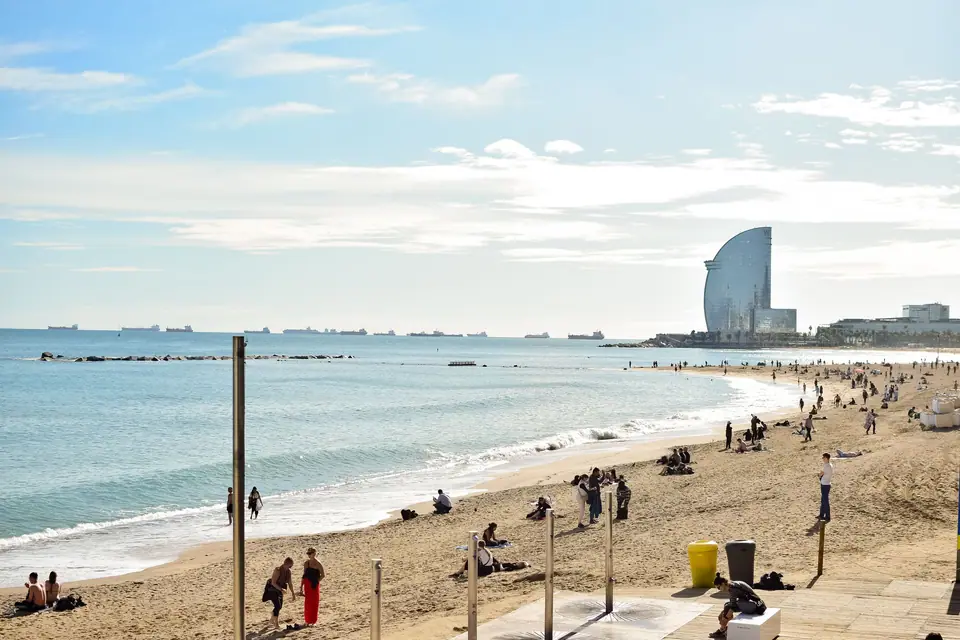
Barcelona's beaches are not a natural gift. Until the 1980s much of this shore was railway sidings, warehouses and shacks, and most of the sand you lie on was laid down when the city rebuilt its seafront for the 1992 Olympics. The result is a run of beaches about four and a half kilometres long, all reachable by metro, and a rule that holds almost every day of summer: the further north-east you walk from Barceloneta, the more space you get.
The beaches, from the port outwards
- Sant Sebastià and Sant Miquel. At the port end, below the sail-shaped W hotel. Sant Sebastià is home to the city's old swimming club and draws older locals who swim here all year.
- Barceloneta. The nearest to the old town and the most crowded. In 2026 it was the one city beach to lose its Blue Flag. Fine for a dip and a drink after the Gothic Quarter, the least pleasant for a whole day.
- Somorrostro. Named after the shanty town that stood here until the 1960s, the birthplace of the flamenco dancer Carmen Amaya. A little calmer than its neighbour.
- Nova Icària. Just past the Port Olímpic. Broad, with volleyball nets and lots of families.
- Bogatell. Long and wide, with Poblenou behind it and fewer visitors. Our pick for a half day. Metro L4 to Llacuna or Poblenou, then walk down.
- Mar Bella. Known for its naturist stretch and a water sports centre at the back.
- Nova Mar Bella and Llevant. The quietest sand, at the far end towards the Fòrum. Beyond them, the Fòrum bathing area swaps sand for sheltered platforms by the water.
Is the water clean?
In normal conditions, yes. Bogatell, Mar Bella, Nova Icària, Nova Mar Bella, Sant Sebastià, Somorrostro and the Fòrum bathing area all kept their Blue Flags for 2026. The catch is rain. The city's drains carry sewage and storm water together, and a heavy downpour can push overflow into the sea, where bacteria linger even when the water looks clear. Stay out the day after a big storm. Lifeguards raise a flag every day in season: green means swim, yellow means take care (currents or jellyfish), red means no swimming, either because of the waves or the water quality. The Catalan government's beach status service shows the same information for each beach before you leave the hotel.
Rules on the sand
Smoking is banned on all of Barcelona's beaches, with fines for repeat offenders. Swimwear belongs on the beach and not on the streets behind it, a rule our what to wear guide explains. You'll be offered cold beer, cans of mojito and massages by unlicensed sellers walking the sand. We'd say no: nobody knows where those cans have been kept. And never leave your things alone while you swim. Beach theft is quick and common, so take turns or bring only what you can lose.
Eating by the sea
The chiringuitos, beach bars on the sand, are for a cold drink in your swimwear, not for dinner. For a proper meal, walk into Barceloneta's narrow inner streets, laid out in the 18th century and long home to fishermen and port workers. This is the place for seafood rice and fideuà, and for the bomba, a fried ball of mashed potato and spiced meat that the neighbourhood claims as its invention. Further up, the Rambla del Poblenou behind Bogatell has terraces where you eat among locals rather than other beachgoers. Our where to stay guide covers sleeping by the beach, and why most first-timers shouldn't.
Traveller tips
Real advice from people who have been to Barcelona Beaches: From Barceloneta to Nova Mar Bella. Every tip is read by our team before it goes live.
No tips yet. Been here? Yours could be the first.
Thank you! Your tip will appear here after a quick review.
More in Barcelona
Continue exploring Barcelona with related neighbourhood, food, and planning guides