Photo: JourneyCities
What to Eat in Barcelona: Catalan Food, Tapas and Drinks
Catalan dishes, bar habits and the drinks locals actually order.
Barcelona eats well, but it eats on its own schedule and in its own language. The city's cooking is Catalan first and Spanish second, and the dishes most visitors order (paella, sangria, nachos with a sea view) say more about tourism than about the place. Here's how to eat the way the city does.
When to eat
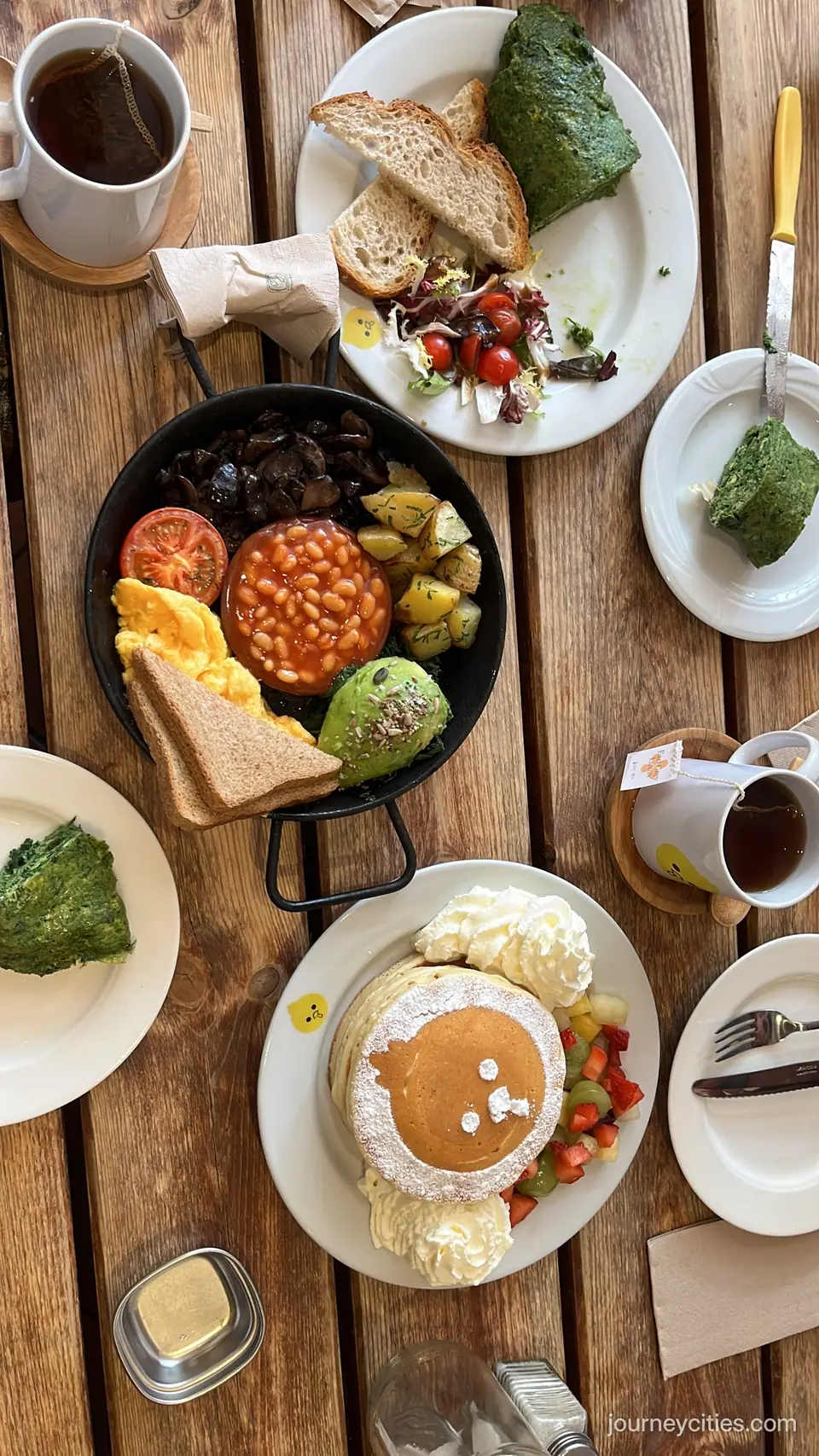
Late. Lunch is the main meal and starts well after midday; dinner rarely starts before nightfall in summer. A restaurant that's full of diners early in the evening is serving visitors. In between, bars keep you going with small plates. Breakfast is light, often just a coffee and a pastry standing at the counter, though brunch has caught on in the newer cafés. We had ours on our last morning, 11 June 2026: eggs, beans, pancakes, avocado toast and coffee. Not Catalan at all, but easy to find now.
Catalan dishes to look for
- Escalivada: peppers, aubergine and onion roasted until soft, dressed with olive oil.
- Esqueixada: a salad of shredded salt cod with tomato, onion and olives.
- Botifarra amb mongetes: grilled Catalan pork sausage with white beans.
- Arròs negre: rice cooked black with squid ink, served with allioli, a garlic mayonnaise.
- Fideuà: the paella idea made with short, thin noodles instead of rice.
- Bombas: fried balls of mashed potato and meat, a Barceloneta bar classic with a spicy sauce.
- Crema catalana: custard with a burnt sugar crust, flavoured with lemon and cinnamon.
Tapas and pintxos
Tapas are small plates you order and share: patatas bravas, croquettes, padrón peppers, anchovies. Pintxos come from the Basque Country. They're slices of bread with a topping held on by a toothpick, laid out on the bar for you to help yourself, and at the end the staff count your toothpicks to make the bill. Carrer de Blai in Poble-sec is the street for them, and our Barcelona on a budget guide has more on eating cheaply there.
Vermut and cava
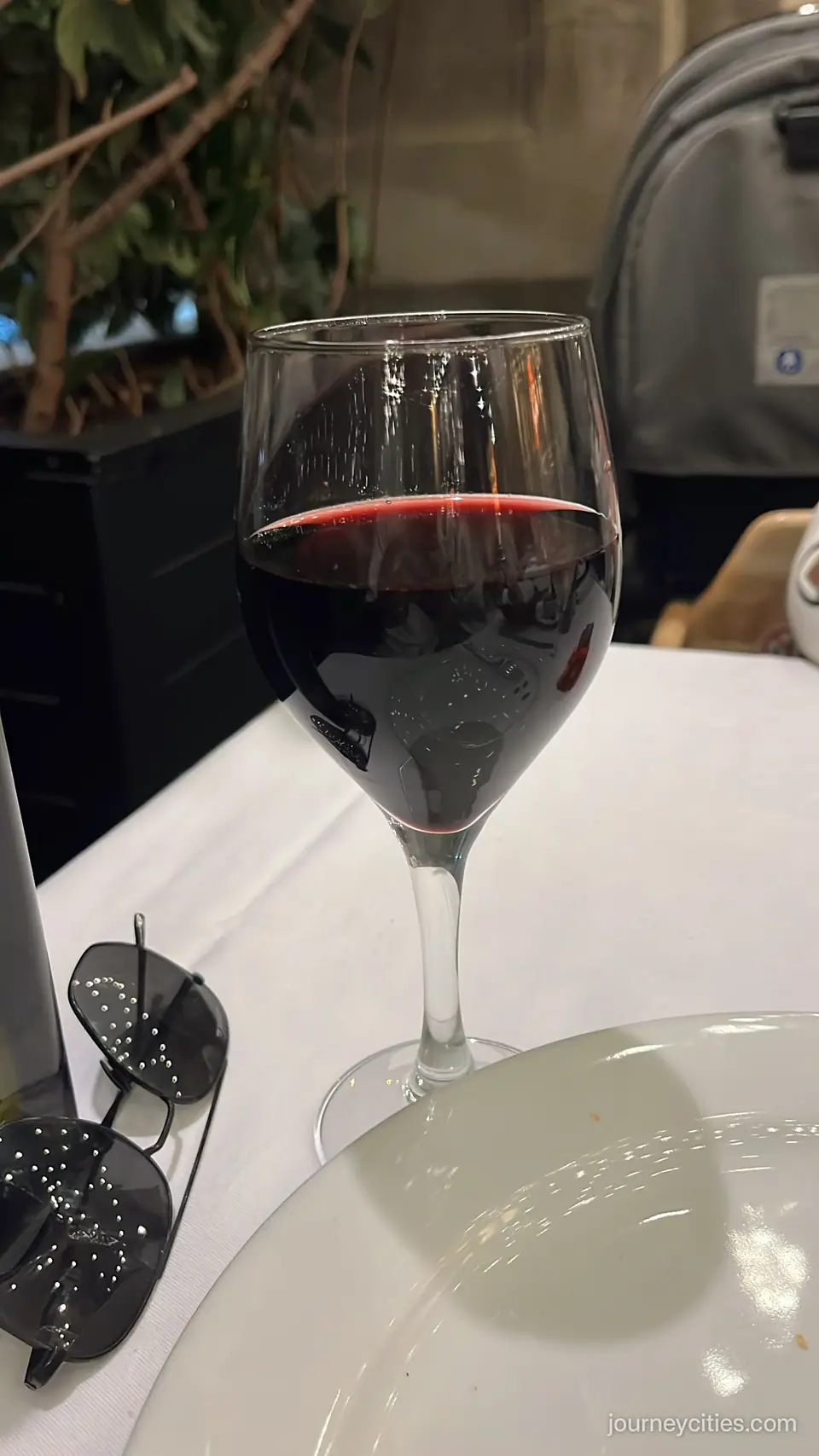
Vermut is the city's pre-lunch drink, especially at weekends. Cava is the Catalan sparkling wine, made mostly in the Penedès wine country west of the city, and it's poured by the glass in plenty of ordinary bars, not saved for celebrations. We had a glass of cava at a table in the old town in the early afternoon of 9 June 2026, between the Palau de la Música and the cathedral. With dinner, red wine from Catalan regions such as Priorat or Montsant is easy to find, and we had a glass of red with dinner on 10 June.
About sangria
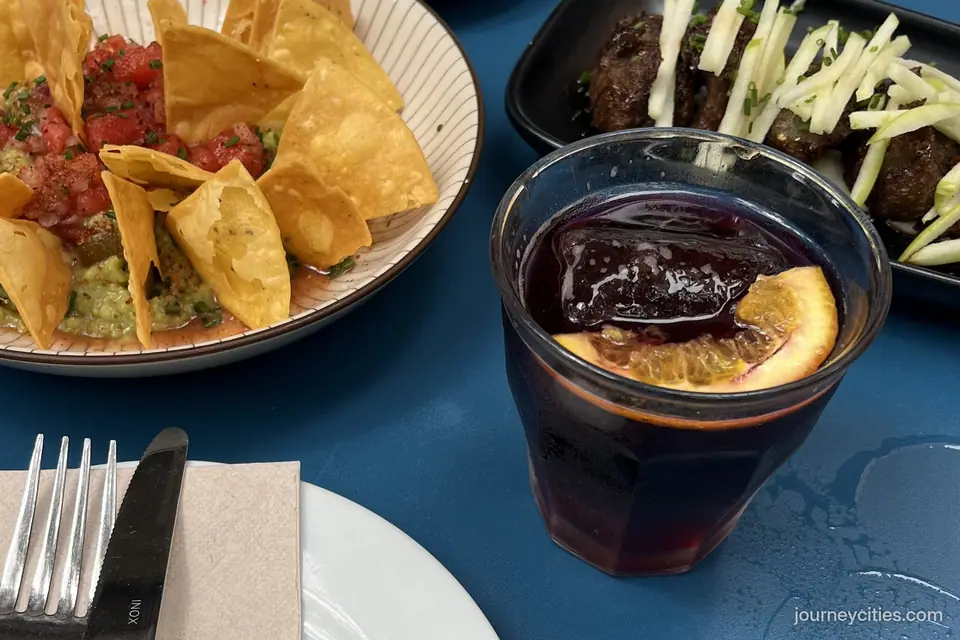
Locals rarely order it. Sangria in Barcelona is mostly a drink for visitors, and quality varies wildly, from fresh fruit and decent wine to sweet syrup from a jug. We had nachos and a sangria at lunch in the Eixample on 10 June 2026. It filled a gap between sights, but it wasn't Catalan food. If you want something locals drink on a hot day, try a tinto de verano, red wine with lemon soda.
The menú del dia
On weekdays, the fixed-price lunch menu is the most reliable meal in town: a choice of starter and main, dessert or coffee, bread and a drink. Look for a chalkboard outside. It's what office workers eat, so the places that do it well are full of them.
Markets
The Boqueria is famous and crowded, and its counter bars are a fine place for lunch if you arrive early; see our La Rambla and Boqueria guide. Santa Caterina in El Born and the Sant Antoni market are where locals do their shopping. Tipping is modest: rounding up or leaving small change is normal, and nobody expects a percentage.
Traveller tips
Real advice from people who have been to What to Eat in Barcelona: Catalan Food, Tapas and Drinks. Every tip is read by our team before it goes live.
No tips yet. Been here? Yours could be the first.
Thank you! Your tip will appear here after a quick review.
More in Barcelona
Continue exploring Barcelona with related neighbourhood, food, and planning guides