Getting Around Barcelona: Metro, Buses, Tickets and Taxis
Which ticket to buy, which lines you'll use and where walking is quicker.
Barcelona is a compact city with a transport system that's easy to read once you know which three or four lines you'll actually use. Here are the questions visitors ask most.
Do I need public transport at all?
Less than you think. The Gothic Quarter, El Born, the lower Eixample and the waterfront are all within walking distance of each other, and the old town is faster on foot than underground. You'll want the metro for anything up the hills or out to the west: Park Güell, the Bunkers del Carmel, the top of Montjuïc and Camp Nou. On our own trip in June 2026 we did the Spotify Camp Nou stadium tour and then the Four Columns and the steps up to the Palau Nacional on Montjuïc in the same afternoon, two sights that are far apart on foot but well linked by metro.
Which ticket should I buy?
- T-casual: ten journeys for one person on the metro, buses, trams and zone 1 trains. A journey can include changes within 75 minutes. Right for most short stays.
- T-familiar: eight journeys that can be shared by several people, used within 30 days.
- T-dia: unlimited travel for 24 hours.
- Hola Barcelona Travel Card: unlimited travel for two to five days, starting from the first time you use it, and including the airport metro.
- T-usual: 30 days of unlimited travel, personalised with your ID. Only for long stays.
Most tickets now come on the T-mobilitat contactless card, a cardboard card you buy and top up at station machines, or in the official app. Tap it on the reader as you enter. For the trip in from the airport, our getting there guide compares the bus, train and metro.
How does the metro work?
Lines are numbered and colour-coded. Visitors mostly use four. L3 (green) runs through Liceu, Passeig de Gràcia, Lesseps and Vallcarca for Park Güell, Palau Reial for Camp Nou, and Paral·lel and Espanya for Montjuïc. L2 (purple) and L5 (blue) both stop at Sagrada Família. L4 (yellow) serves Jaume I, Barceloneta and the beaches. The funicular up Montjuïc from Paral·lel station is part of the metro fare. Trains run late on Friday nights and all night on Saturdays. Watch your bag on L3, the busiest line with visitors and pickpockets alike.
Are buses and trams useful?
Yes, for the gaps the metro leaves. The main bus network follows the city grid: H lines run parallel to the sea, V lines run up towards the hills, and D lines cut diagonally. Bus 24 is the handy one for Park Güell. Trams mostly serve the outer districts, around Glòries and the Fòrum. At night, the NitBus lines leave from Plaça de Catalunya.
What about the Rodalies trains?
The Rodalies commuter trains take you to the airport (R2 Nord), to Sitges (R2 Sud) and up and down the coast. Inside zone 1 your T-casual works. Validate on the way in and on the way out. The network had a very rough start to 2026 after a fatal accident near Gelida in January, so check for disruption before you rely on it. The separate FGC trains run from Plaça d'Espanya towards Montserrat, as our day trips guide explains.
Can I rent a bike?
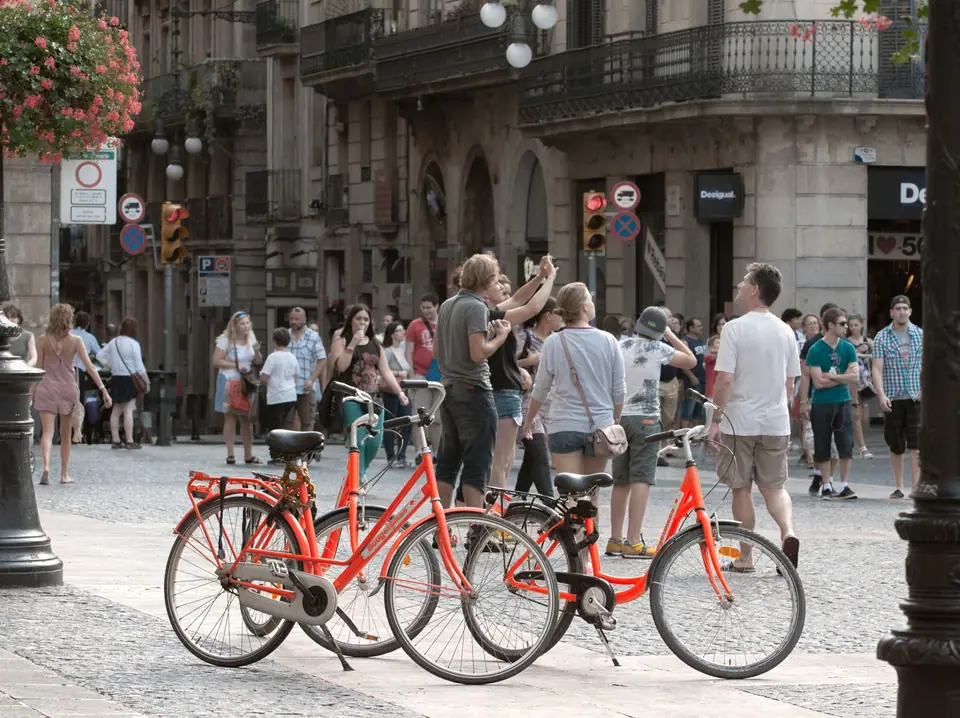
Not a Bicing bike. The city's public bike scheme needs registration and is meant for residents, and the private app-based bike-share fleets that tourists used are due to disappear on 1 January 2027, when the city lets their licences lapse. Rental shops in the old town and near the beach still hire bikes by the hour or day. Ride in the segregated bike lanes, not on the pavement.
And taxis?
Barcelona's taxis are black and yellow, and a green light on the roof means they're free. Hail one in the street or find a rank. All are metered, with a set supplement for airport trips. Most take cards, but ask before you get in.
Traveller tips
Real advice from people who have been to Getting Around Barcelona: Metro, Buses, Tickets and Taxis. Every tip is read by our team before it goes live.
No tips yet. Been here? Yours could be the first.
Thank you! Your tip will appear here after a quick review.
More in Barcelona
Continue exploring Barcelona with related neighbourhood, food, and planning guides