El Born Guide: Santa Maria del Mar, Museums and Evenings
The old merchants' quarter east of Via Laietana, best on foot and after dark.
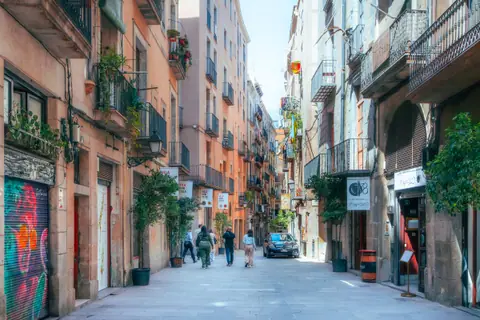
El Born is the part of the old town people fall for. It sits on the other side of Via Laietana from the Gothic Quarter, in the medieval district of La Ribera, which grew rich on sea trade in the 14th century. The lanes are just as narrow as across the road but feel less like a museum, with workshops, small shops and bars mixed in among the palaces. It's small enough to cross in ten minutes, and it rewards going slowly.
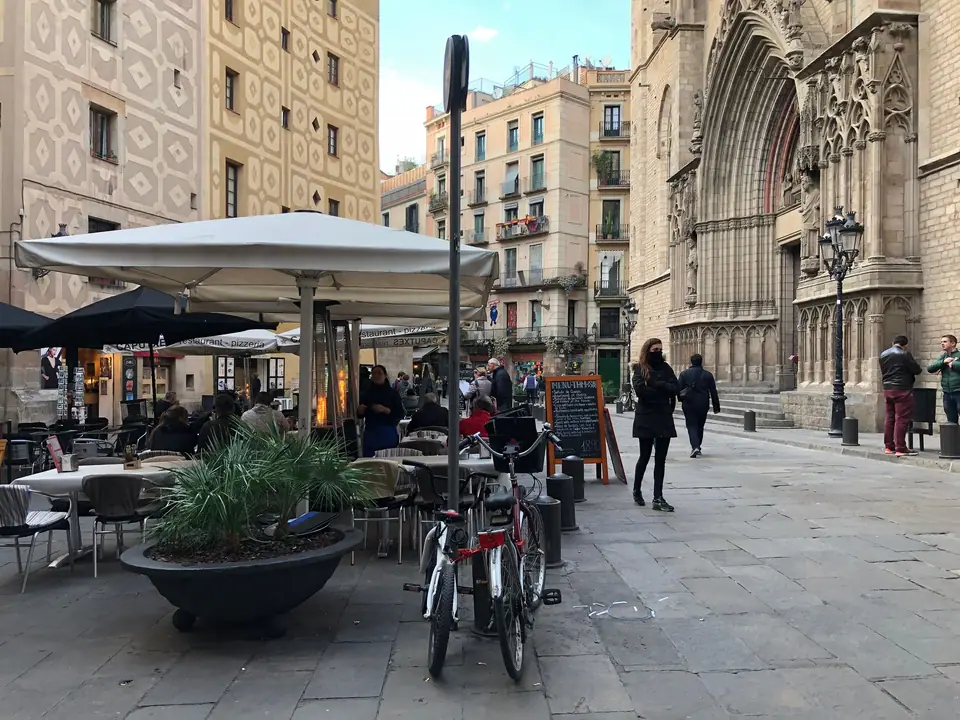
Start at Santa Maria del Mar, the church the neighbourhood built for itself. It went up between 1329 and 1383, remarkably fast for a Gothic church, which is why it has a single, consistent style: tall, wide and almost bare inside, with slender octagonal columns. Much of the interior decoration burned in 1936, and the emptiness that was left is now its best feature. Look at the bronze figures on the main doors, the bastaixos, the port porters who carried the stone down from Montjuïc on their backs for free. Guided visits to the rooftop terraces run on some days; the church's own website has details.
Beside the church is the Fossar de les Moreres, a sunken square with a curved red wall and an eternal flame. It marks a cemetery where defenders of the city were buried after the siege of 1714, the defeat that Catalans remember every 11 September on their national day. Small as it is, it explains a lot about the city's politics.
Walk out of the apse end of the church and you're on Passeig del Born, a long, tree-lined promenade where the city once held jousts and fairs. At the far end stands the iron-and-glass hall of the old Born market, opened in 1876 and now the Born Centre de Cultura i Memòria. Under its roof lie the excavated streets and house walls of the neighbourhood that was flattened after 1714 to build a fortress. Entry to the building and the walkway above the ruins is free, and the exhibitions inside are paid, with free times listed on the official site. Even if you skip the exhibitions, step in and look down.
Behind the church runs Carrer Montcada, lined with the palaces of medieval merchants. Five of them hold the Picasso Museum, covered in our Picasso Museum guide, and the Museu de Cultures del Món sits opposite. Further north, the Santa Caterina market, under its wavy, multicoloured roof, is a calmer place to shop for food than the Boqueria, which our La Rambla and Boqueria guide covers. A few minutes east is the Parc de la Ciutadella, the green space you'll want after all that stone.
By day El Born is for wandering. In the evening it's for eating and drinking: tapas bars, wine bars and cocktail bars fill the lanes around Passeig del Born and stay busy late, especially at weekends. If you're staying here, that's the trade-off to weigh, and our where to stay guide compares it with quieter bases. The Palau de la Música is a short walk north, so a concert followed by a late dinner here makes an easy evening.
Traveller tips
Real advice from people who have been to El Born Guide: Santa Maria del Mar, Museums and Evenings. Every tip is read by our team before it goes live.
No tips yet. Been here? Yours could be the first.
Thank you! Your tip will appear here after a quick review.
More in Barcelona
Continue exploring Barcelona with related neighbourhood, food, and planning guides