Gràcia Guide: Squares, Casa Vicens and the August Festa
Barcelona's former village, where the squares matter more than the sights.
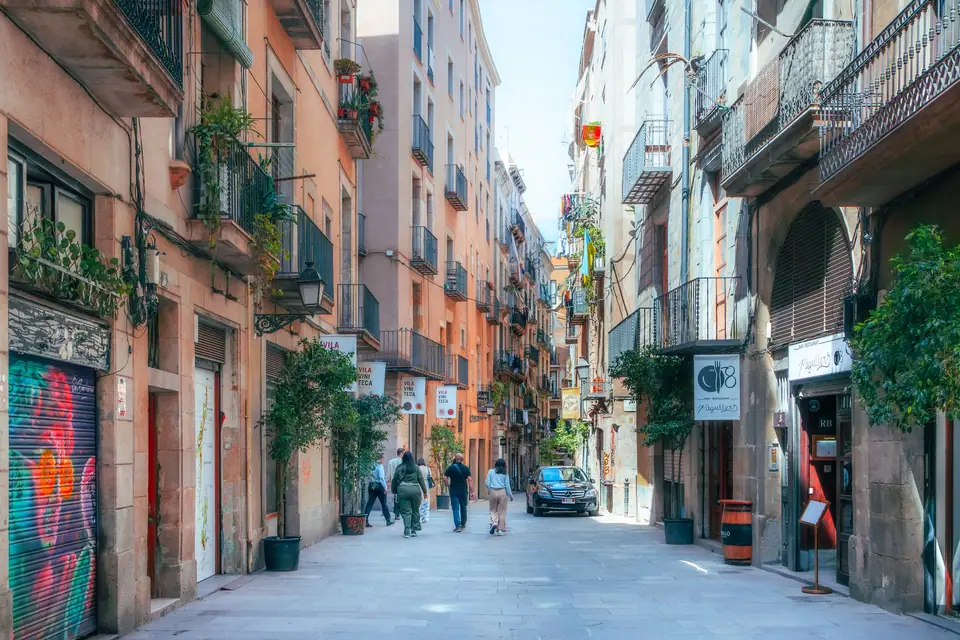
Gràcia was a separate town until Barcelona swallowed it in 1897, and in many ways it still behaves like one. The streets narrow as soon as you cross the Diagonal, the buildings drop to four or five floors, and every few blocks the grid opens into a square with a church, a bar terrace and children on scooters. There are no queues and only one ticketed sight. That is the point. Come for a long lunch, an evening in the squares or a few nights' stay, not for a checklist.
Getting your bearings
Passeig de Gràcia runs up from the Eixample and becomes Carrer Gran de Gràcia, the neighbourhood's main street, with Modernista façades above shopfronts. The life of the place is east of it, in the tight grid of lanes towards Carrer de Torrent de l'Olla and Carrer Verdi. Metro L3 stops at Diagonal, Fontana and Lesseps, L4 at Joanic, and FGC trains at Gràcia station. Everything inside is walkable in minutes.
A loop of the squares
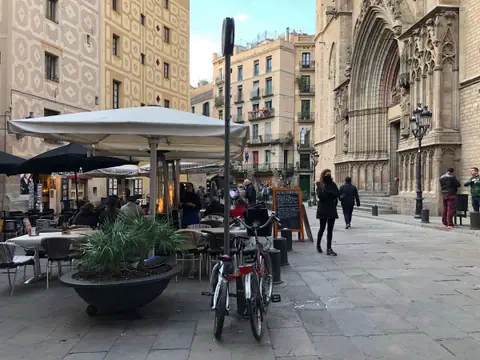
Start at Plaça de la Vila de Gràcia, the old town square, with its tall clock tower and the former town hall that is now the district office. Walk on to Plaça del Sol, the liveliest, ringed by bars and filled with young people sitting on the ground at night (neighbours have complained about the noise for years). Plaça de la Virreina, in front of the church of Sant Joan, is calmer and better for a coffee. Finish at Plaça del Diamant, which gave its name to Mercè Rodoreda's 1962 novel about a young woman's life in Gràcia before and after the Civil War. A bronze sculpture of its heroine stands in the square.
On the way, step into the Mercat de la Llibertat, an iron-framed market hall from the 1890s, and look along Carrer Verdi, where the Verdi cinemas show films in their original language.
Casa Vicens
This was Gaudí's first house, built between 1883 and 1885 as a summer home for Manuel Vicens. It looks nothing like his later work. Straight lines, green and white tiles patterned with orange marigolds, and a strong Moorish influence, most of all in the smoking room with its honeycombed ceiling. It opened as a museum in 2017 and sits on Carrer de les Carolines, a short walk from Fontana metro. Book a timed slot on its official website. It's smaller and far quieter than the Gaudí houses on Passeig de Gràcia (compare them in our Casa Batlló and Casa Milà guide), and fascinating if you want to see where he started.
Festa Major de Gràcia
For about a week from 15 August, Gràcia throws its own festival. Each street committee spends months building decorations around a theme, mostly from recycled materials, and turns its stretch of street into a jungle, a seabed or a film set. In 2026 there were 23 decorated spaces. Concerts fill the squares at night. It's one of the most enjoyable things in the Barcelona calendar, and also loud, packed and hard to sleep through. See the decorated streets in daylight when you can move, and come back after dark for the music. If you want quiet nights, stay elsewhere that week.
Up to Park Güell
Gràcia sits at the foot of the hill, so pairing it with the park makes sense. From Lesseps, Carrer de Larrard climbs steeply to the main gate. We'd rather do the park first, entering from Vallcarca as our Park Güell guide suggests, and then walk downhill into Gràcia for lunch. Casa Vicens is on the way down. It's also a fine base for a second visit, as our where to stay guide explains.
Traveller tips
Real advice from people who have been to Gràcia Guide: Squares, Casa Vicens and the August Festa. Every tip is read by our team before it goes live.
No tips yet. Been here? Yours could be the first.
Thank you! Your tip will appear here after a quick review.
More in Barcelona
Continue exploring Barcelona with related neighbourhood, food, and planning guides