Day Trips from Barcelona by Train
Six escapes from the city by train or bus, and who each one suits.
You don't need a car for any of these. Pick by mood: mountain, medieval town, beach, Roman ruins or surrealism. One practical warning first. The Rodalies regional trains had a hard 2026, with weeks of disruption after a fatal accident near Gelida in January, so check the operator's site on the morning you travel.
Montserrat
Getting there: FGC trains on the R5 line leave from Plaça d'Espanya. Get off at Aeri de Montserrat for the cable car, or ride on to Monistrol de Montserrat for the rack railway (the cremallera). The combined Trans Montserrat ticket covers the metro, train, rack railway and funiculars.
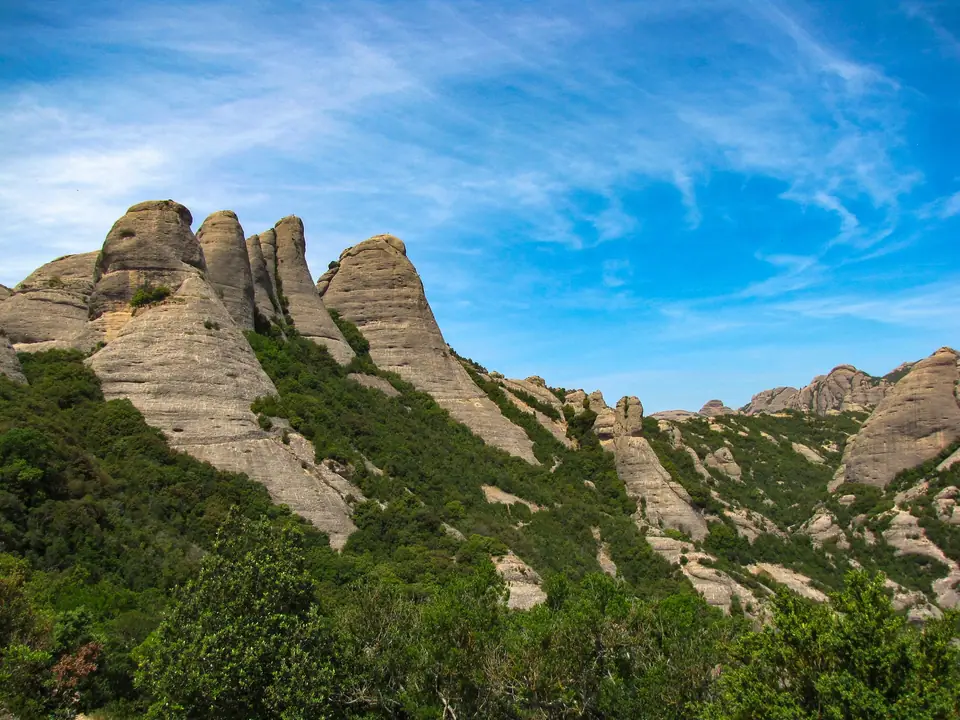
What you get: a Benedictine monastery wedged into a wall of strange, saw-toothed rock, the Black Madonna (La Moreneta) inside the basilica and one of Europe's oldest boys' choirs, the Escolania. The funiculars climb higher for walking trails with views to the Pyrenees on clear days.
Suits: walkers and anyone tired of streets. Go on a weekday, as weekends are crowded.
Girona
Getting there: high-speed trains from Sants take under 40 minutes. Regional trains are slower but need no booking.
What you get: the painted houses hanging over the river Onyar, a cathedral at the top of a long Baroque staircase, a walk along the medieval walls and the narrow lanes of the old Jewish quarter.
Suits: almost everyone. If you take only one day trip, make it this one.
Sitges
Getting there: R2 Sud trains from Sants or Passeig de Gràcia, about 40 minutes down the coast. Sitges is outside zone 1, so buy a ticket that covers the extra zones.
What you get: calmer beaches than the city's, a whitewashed old town, and the church of Sant Bartomeu i Santa Tecla on its headland. Carnival in February and the fantasy film festival in October fill it up, and it has a long-established LGBTQ+ scene.
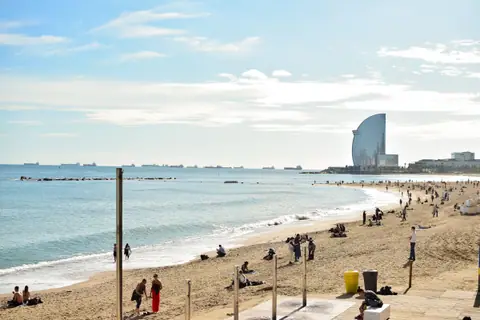
Suits: a beach day without the Barceloneta crowds (see our beaches guide for the city alternatives).
Tarragona
Getting there: regional trains from Sants run along the coast to Tarragona station, just below the old town, in a little over an hour. Avoid the high-speed trains: they stop at Camp de Tarragona, well outside the city.
What you get: the remains of Tarraco, once a capital of Roman Spain, now a UNESCO site. An amphitheatre right above the beach, the vaults of the Roman circus under later houses, long stretches of wall and a Romanesque-to-Gothic cathedral.
Suits: history lovers. It's quieter than Girona and less polished.
Figueres
Getting there: high-speed trains reach Figueres-Vilafant in under an hour, a walk of about 15 minutes from the centre. Slower regional trains stop at the town station, closer to the museum.
What you get: the Dalí Theatre-Museum, which Dalí designed himself in the shell of the town's old theatre, crowned with giant eggs. He is buried inside. Timed tickets must be booked online, and outside summer it closes on Mondays.
Suits: Dalí fans. The town itself is ordinary, so combine it with Girona on the same line for a long day.
Costa Brava
Getting there: Moventis-Sarfa buses from Estació del Nord serve Tossa de Mar, Calella de Palafrugell, Llafranc and Begur. Cadaqués has only a few direct buses a day and the ride is long, so check the timetable before you plan around it.
What you get: pine-covered cliffs, small coves and old fishing villages. Tossa's walled town on its headland is the easiest to reach.
Suits: people with time. One town by bus is a pleasant day, but this coast rewards a night or two, or a hire car. For fitting a day trip into a short stay, see our three-day itinerary.
Traveller tips
Real advice from people who have been to Day Trips from Barcelona by Train. Every tip is read by our team before it goes live.
No tips yet. Been here? Yours could be the first.
Thank you! Your tip will appear here after a quick review.
More in Barcelona
Continue exploring Barcelona with related neighbourhood, food, and planning guides