


























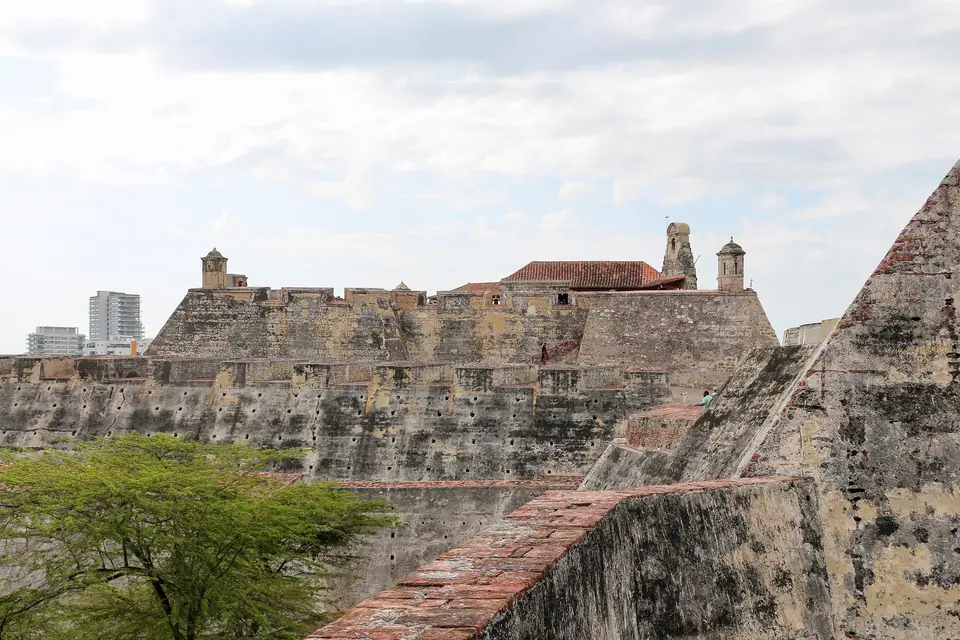
Castillo San Felipe de Barajas and Cerro de la Popa Guide
A complete guide to Cartagena’s two hilltop landmarks outside the Walled City: the 17th-century military fortress of San Felipe de Barajas and the 150-metre summit of Cerro de la Popa.
Less than one kilometre east of the Walled City and Getsemaní, two natural hills rise above the coastal plain and lagoons of Cartagena, controlling the only landward approaches to the colonial port. On the lower rocky hill of San Lázaro (41 metres above sea level) stands Castillo San Felipe de Barajas, the masterwork of Spanish military engineering in the Americas; further east, the wooded ridge of Cerro de la Popa climbs to 150 metres, crowned by a 1607 Augustinian monastery.
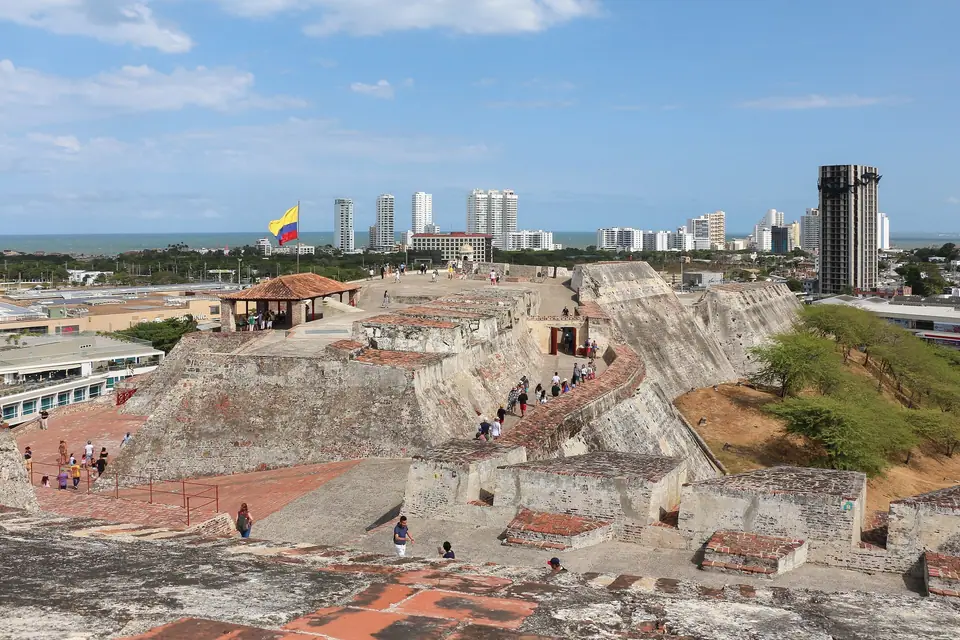
Castillo San Felipe de Barajas, Underground Tunnels and the 1741 Siege
Originally established as a small hilltop redoubt on the Cerro de San Lázaro, construction of the triangular summit castle, named in honour of King Philip IV of Spain, was carried out between 1639 and 1657 under Governor Pedro Zapata de Mendoza. After French privateer Jean-Bernard de Pointis captured the hill during the 1697 raid on Cartagena, engineer Juan de Herrera y Sotomayor repaired its walls in 1739. In March 1741, during the War of Jenkins’ Ear, British Admiral Edward Vernon arrived off Cartagena with an armada of 186 ships and roughly 28,000 men, facing fewer than 4,000 Spanish defenders commanded by one-eyed, one-legged, one-armed Admiral Blas de Lezo (whose bronze statue stands at the foot of the castle ramp) and Viceroy Sebastián de Eslava. When British assault columns stormed the slopes of San Felipe before dawn on 20 April 1741, Spanish crossfire and bayonet counter-charges repelled the attack, forcing Vernon’s fleet to withdraw in May 1741.
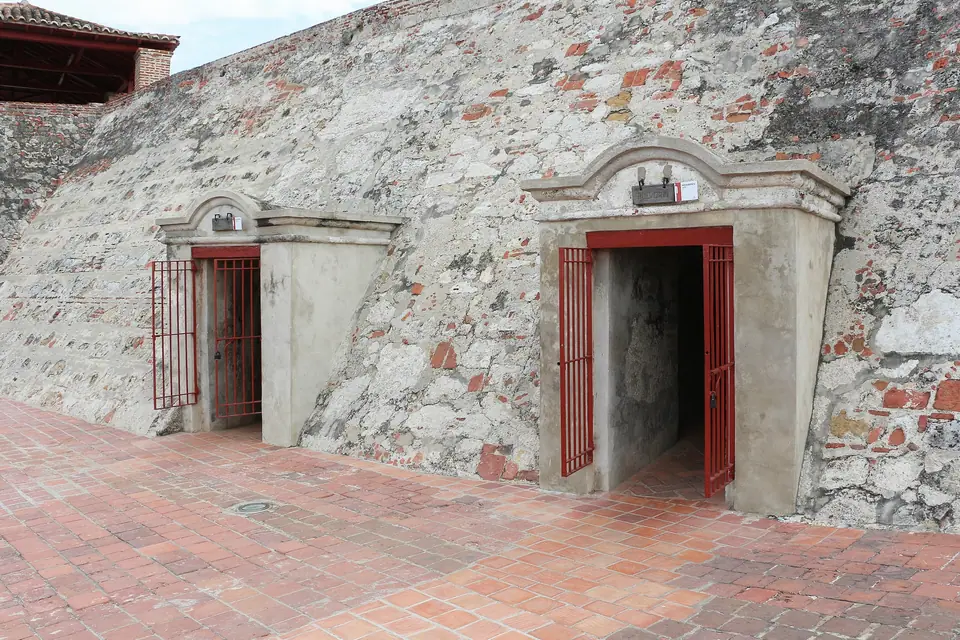
In 1763, Brigadier Antonio de Arévalo expanded the fortress across the entire hill with interlocking sloping brick-and-coral batteries, including Santa Bárbara, San Carlos y Los Apóstoles, Del Hornabeque, La Cruz, La Redención, and San Lázaro, armed with sixty-eight cannons and connected by an acoustic labyrinth of subterranean brick tunnels designed to detect enemy mine-diggers and move troops underground; check the official heritage authority site for current visitor access hours.
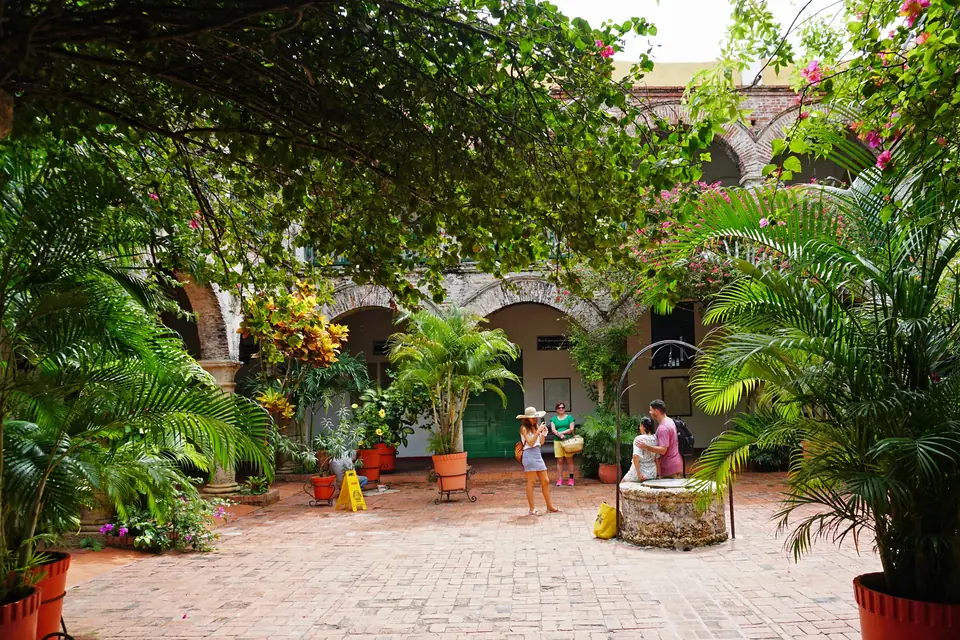
Cerro de la Popa and the Monumento a los Zapatos Viejos
Behind the foot of San Felipe sits the oversized bronze sculpture of Los Zapatos Viejos (cast in 1957 by Tito Lombana to honour Cartagena poet Luis Carlos López’s sonnet A mi ciudad nativa). From there, take a taxi up the switchback road to the 150-metre summit of Cerro de la Popa, named because its profile resembles the high stern (popa) of a Spanish galleon. Founded in 1607 by Augustinian Recollect friar Alonso de la Cruz Paredes, the Convento de Santa Cruz de la Popa centres on a flower-filled two-storey colonial brick cloister, a gilded chapel housing the venerated image of Nuestra Señora de la Candelaria, and a cliffside terrace overlooking the Walled City and the Bocagrande peninsula.
Traveller tips
Real advice from people who have been to Castillo San Felipe de Barajas and Cerro de la Popa. Every tip is read by our team before it goes live.
No tips yet. Been here? Yours could be the first.
Thank you! Your tip will appear here after a quick review.
More in Cartagena
Continue exploring Cartagena with related neighbourhood, food, and planning guides
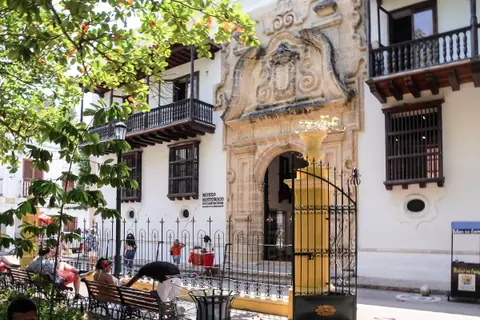
Plaza de Bolívar, Palace of the Inquisition and Cartagena Cathedral
Cartagena, Colombia
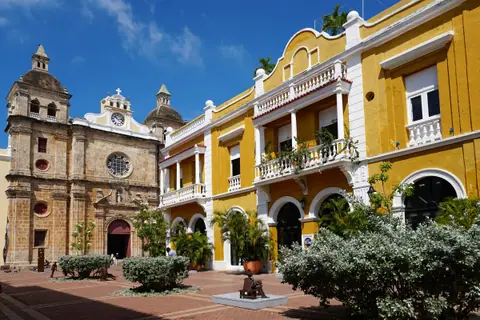
San Pedro Claver, Plaza de Santo Domingo and Colonial Plazas
Cartagena, Colombia
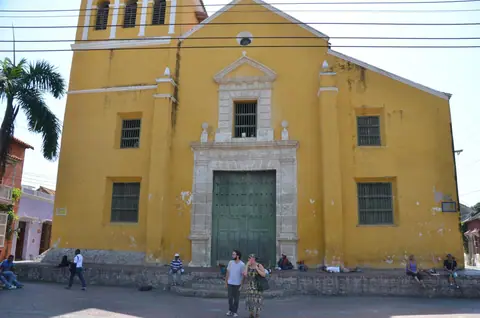
Getsemaní Cartagena Guide: Plaza de la Trinidad and Street Art
Cartagena, Colombia
Rosario Islands and Isla Barú Guide: Coral Reefs and Playa Blanca
Cartagena, Colombia
