Cartagena
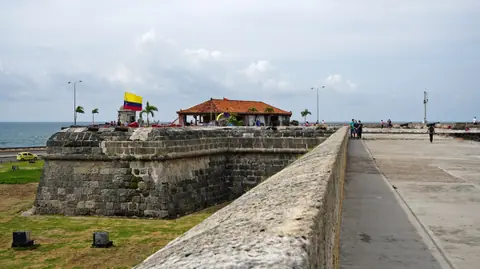
Encircled by eleven kilometres of coral-limestone ramparts on Colombia’s Caribbean coast, Cartagena de Indias pairs 16th-century plazas, Spanish military fortresses, and Afro-Caribbean street culture with offshore coral archipelagos.
Quick decisions
- How many days? Three to four days allow you to explore the intramural streets of Centro and San Diego, climb Castillo San Felipe and Cerro de la Popa, spend an evening in Getsemaní, and take a boat day trip to the Rosario Islands or San Basilio de Palenque.
- Where should I stay? Stay inside the Walled City (Centro or San Diego) for colonial courtyard mansions, in Getsemaní for mural-lined streets and lively plazas, or along the Bocagrande and Castillogrande peninsula for high-rise beachfront hotels.
- Do I need a car? No. The Walled City and Getsemaní are compact and best explored on foot, while yellow taxis, Transcaribe buses, and passenger speedboats from Muelle de la Bodeguita handle airport, fortress, and island transfers.
- Best for: Spanish colonial and military architecture, Afro-Caribbean music and gastronomy, historic plazas at dusk, and boat excursions to Caribbean coral reefs.
- Before you go: Cartagena stays hot and humid all year (daytime highs around 31 to 32 °C); pack breathable linen or cotton clothing, sun protection, and carry small peso notes for street snacks and yellow taxis, which operate on fixed zone tariffs rather than meters.
- Getting around: Walk within Centro, San Diego, and Getsemaní during the morning and late afternoon, use official yellow taxis after confirming the zone fare in advance, or ride the Transcaribe bus rapid transit line along Avenida Pedro de Heredia.
- Continue your trip: Combine Cartagena with Colombia’s coastal parks along the Troncal del Caribe toward Barranquilla and Santa Marta, or fly south to Santiago and Cusco.
Overview
Founded on 1 June 1533 by Spanish commander Pedro de Heredia on the Indigenous Kalamarí island settlement, Cartagena de Indias served for nearly three centuries as the principal Caribbean stronghold and treasure port of the Spanish Empire in South America. Through its sheltered bay passed Upper Peruvian silver, New Granadan gold, and hundreds of thousands of enslaved Africans brought under the colonial asiento system. To defend this maritime wealth against English and French privateers such as Francis Drake and the Baron de Pointis, military engineers Bautista Antonelli, Cristóbal de Roda, and Antonio de Arévalo enclosed the historic quarters of Centro, San Diego, and Getsemaní within eleven kilometres of coral-stone bastions and built the hilltop fortress of Castillo San Felipe de Barajas, designated together as a UNESCO World Heritage Site in 1984.
Beyond its colonial ramparts and flower-draped wooden balconies, Cartagena is defined by its living Afro-Colombian and Caribbean heritage. On 11 November 1811, the artisan militia known as the Lanceros de Getsemaní led by blacksmith Pedro Romero made Cartagena the first province in New Granada to declare absolute independence from Spain, and fifty kilometres inland lies San Basilio de Palenque, the first free African town in the Americas. Start planning with our Cartagena travel guide, browse the top things to do in Cartagena, or follow our 3-day Cartagena itinerary.
Getting there
Domestic and international flights land at Rafael Núñez International Airport (CTG) in the northern coastal neighbourhood of Crespo, just five kilometres northeast of the Walled City. Official airport taxi booths issue printed vouchers stating the fixed municipal fare to Centro, San Diego, Getsemaní, or Bocagrande, with the drive taking only ten to twenty minutes.
Within the city, Transcaribe articulated buses run along dedicated lanes on Avenida Pedro de Heredia to the Clock Tower, while passenger speedboats to the coral reefs of the Rosario Islands and Isla Barú depart every morning from the Muelle Turístico de la Bodeguita. Full arrival and port details are covered in How to Get to Cartagena.
Where to stay
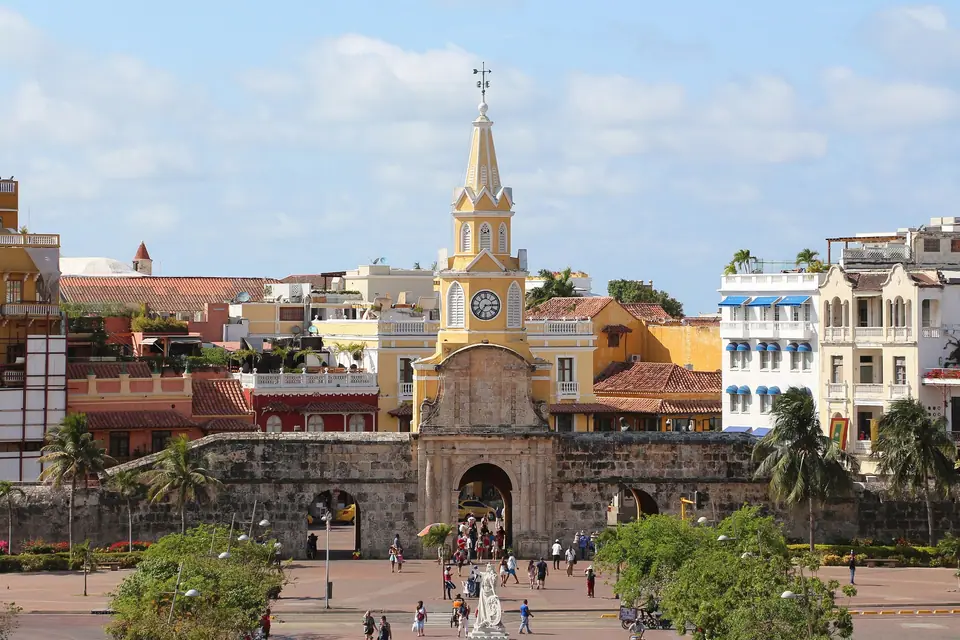
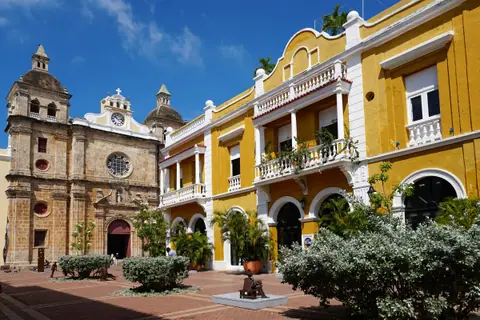
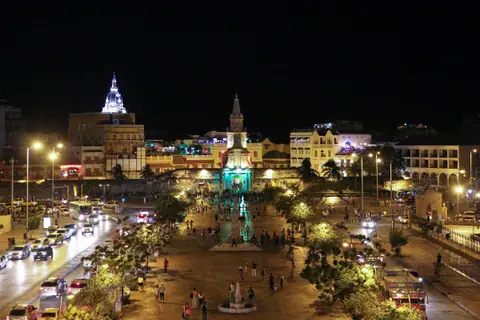
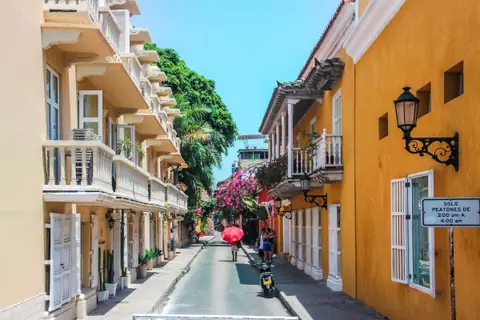
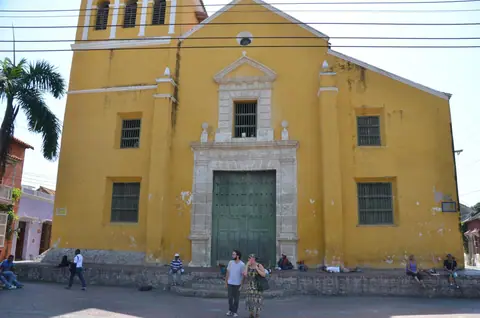
Inside the UNESCO stone ramparts, Centro and San Diego offer restored 16th- and 17th-century colonial mansions with interior palm courtyards, wooden overhang balconies, and rooftop watchtowers steps from the main museums and plazas. Immediately outside the Clock Tower, Getsemaní pairs colourful single-storey guesthouses with lively evening street life around Plaza de la Trinidad.
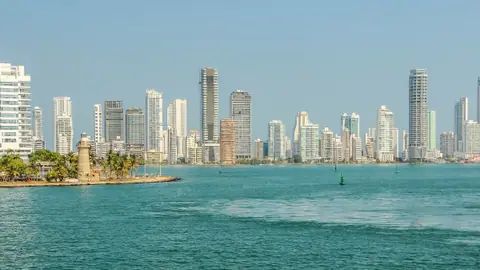
If you prefer modern high-rise hotels with large swimming pools and direct access to urban beaches, look south along the peninsula of Bocagrande, Castillogrande, and Manga. Compare all neighbourhoods in Where to Stay in Cartagena.
Things to do
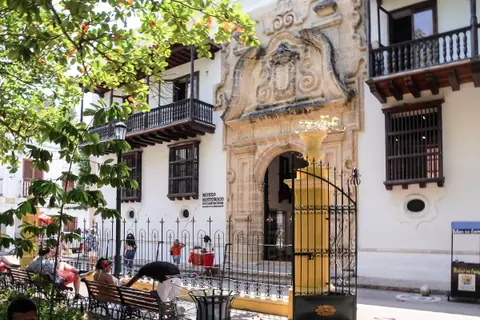
Walk the eleven-kilometre stone circuit of Las Murallas, the Torre del Reloj, and Las Bóvedas, then step into Plaza de Bolívar to visit the 1770 Baroque Palace of the Inquisition, the Museo del Oro Zenú, and the 1577 Cathedral of Santa Catalina de Alejandría. Two blocks south, explore the coral-stone Jesuit cloister of San Pedro Claver and Plaza de Santo Domingo.
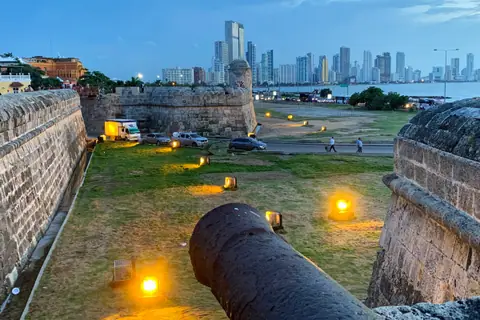
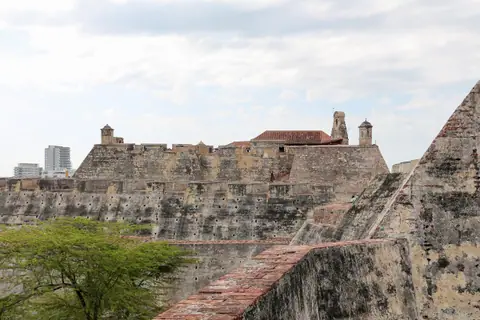
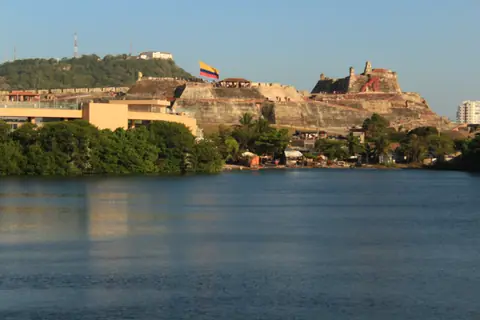
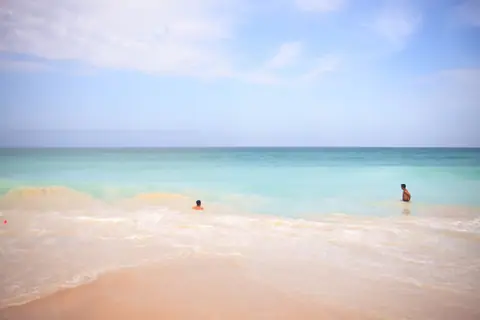
Outside the inner walls, climb the brick tunnels of Castillo San Felipe de Barajas and the 150-metre convent of Cerro de la Popa, wander the mural-painted lanes of Getsemaní, and take a speedboat across Cartagena Bay to the Rosario Islands and Isla Barú.
Food and drink
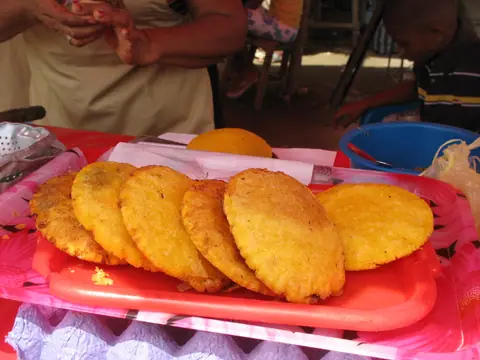
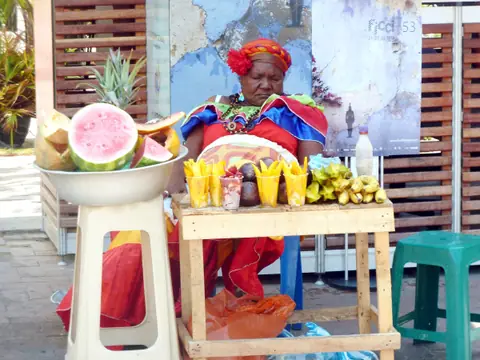
Cartagena’s coastal kitchen fuses Indigenous Zenú maize and cassava with Spanish slow-braised meats, West African frying and coconut-milk reductions, and Levantine bulgur dishes. Morning street stalls sizzle with twice-fried arepas de huevo, yuca carimañolas, and black-eyed pea buñuelitos.
At midday, order crispy whole fried Caribbean red snapper (pargo rojo frito) accompanied by twice-fried green plantains (patacones) and dark caramelised coconut rice (arroz con coco), or slow-braised posta negra cartagenera in panela reduction, finishing with handmade coconut cocadas under the Portal de los Dulces. Read our dish-by-dish guide in What to Eat in Cartagena.
Culture
From the cumbia, mapalé, and African-inspired champeta rhythms heard across Plaza de la Trinidad to the literary settings of Nobel laureate Gabriel García Márquez’s novels Love in the Time of Cholera and Of Love and Other Demons, Cartagena is one of the cultural capitals of the Caribbean basin.
January brings the Cartagena International Music Festival and Hay Festival to the colonial theatres and cloisters of the Walled City, February celebrates the Festival del Frito Cartagenero, March hosts the Cartagena International Film Festival (FICCI), and mid-November fills the streets with four days of parades for the Fiestas de Independencia del 11 de Noviembre. See month-by-month weather and festival dates in Best Time to Visit Cartagena.
Weather by month
Cartagena is warmest in June, with average highs around 32°C, and coldest in January, when nights drop to about 24°C. October is the wettest month, with rain on about 12 days.
| Month | Low | Range | High | Rain | Rainy days |
|---|---|---|---|---|---|
| Jan | 24°C | 31°C | 0 mm | 0 d | |
| Feb | 24°C | 31°C | 0 mm | 0 d | |
| Mar | 25°C | 31°C | 0 mm | 0 d | |
| Apr | 26°C | 32°C | 14 mm | 2 d | |
| May | 26°C | 32°C | 49 mm | 7 d | |
| Jun | 26°C | 32°C | 63 mm | 9 d | |
| Jul | 26°C | 32°C | 63 mm | 9 d | |
| Aug | 26°C | 32°C | 70 mm | 10 d | |
| Sep | 26°C | 32°C | 70 mm | 10 d | |
| Oct | 26°C | 32°C | 84 mm | 12 d | |
| Nov | 26°C | 32°C | 63 mm | 9 d | |
| Dec | 25°C | 31°C | 21 mm | 3 d |
Averages of daily values from 2015 to 2024. Rainy days are days with at least 1 mm of rain. Source: Open-Meteo · Compare destinations by month.
Cartagena on the map
Every place we cover in Cartagena. Tap a category or pin to explore.
In-depth Cartagena guides
Browse the guides grouped by topic: sights, neighbourhoods, food, transport, day trips and trip planning.
Sights, Landmarks & Parks
Key monuments, viewpoints, museums and nature trails.
- Things to Do in Cartagena: Fortresses, Plazas and Coral IslandsA curated guide to Cartagena’s essential experiences, spanning Spanish military engineering, 16th-century cloisters, Afro-Caribbean street culture, and offshore coral reefs.
- Walled City of Cartagena: Las Murallas, Clock Tower and Las BóvedasA historical and architectural guide to the 11-kilometre perimeter of coral-limestone bastions, the 19th-century Clock Tower gate, and the 23 neoclassical vaults of Las Bóvedas.
- Plaza de Bolívar, Palace of the Inquisition and Cartagena CathedralA detailed guide to the civic and ecclesiastical centre of colonial Cartagena, covering the 1770 Palace of the Inquisition, Zenú goldwork, and the Herrerian Renaissance Cathedral.
- San Pedro Claver, Plaza de Santo Domingo and Colonial PlazasExplore the southwestern and northern plazas of the Walled City, from the Jesuit cloister of San Pedro Claver and the Royal Customs House to Santo Domingo and Teatro Adolfo Mejía.
- Castillo San Felipe de Barajas and Cerro de la Popa GuideA complete guide to Cartagena’s two hilltop landmarks outside the Walled City: the 17th-century military fortress of San Felipe de Barajas and the 150-metre summit of Cerro de la Popa.
Neighbourhoods & Where to Stay
Districts, historic quarters and the best bases for your stay.
- Cartagena: Essential Planning for the Caribbean PortEverything you need to know before visiting Cartagena de Indias, from how the colonial walled quarters fit together to navigating tropical heat, yellow taxis, and island boats.
- Best Time to Visit Cartagena: Trade Winds, Rain and FestivalsA month-by-month breakdown of Cartagena’s coastal climate using IDEAM 1991-2020 meteorological data, comparing the breezy dry season with the quieter green months and November Independence festivities.
- Where to Stay in Cartagena: Walled City, Getsemaní and BocagrandeAn editorial comparison of Cartagena’s top accommodation districts, helping you choose between colonial courtyard mansions inside the ramparts, mural-lined lanes in Getsemaní, and modern beachfront towers.
- 3-Day Cartagena Itinerary: Walled City, Fortresses and IslandsA well-paced three-day route through Cartagena de Indias that pairs morning architectural walks and hilltop fortresses with shaded afternoon museums and a full day on the Caribbean coral reefs.
- Getsemaní Cartagena Guide: Plaza de la Trinidad and Street ArtDiscover the historic artisan neighbourhood of Getsemaní, where the 1811 independence uprising began and where vivid Afro-Caribbean murals, umbrella lanes, and Plaza de la Trinidad come alive.
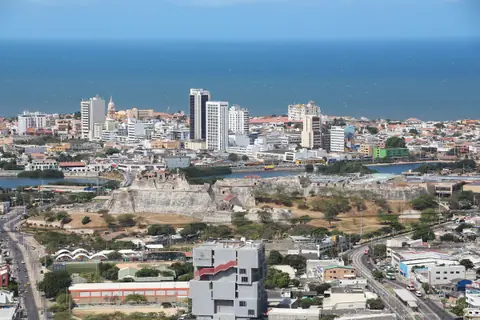
- Bocagrande, Castillogrande and Manga Waterfront GuideDiscover the waterfront districts south of the Walled City: the beachfront high-rises and underwater colonial seawall of Bocagrande, quiet Castillogrande, and historic Manga Island.
Food & Drink
Local dishes, markets, cafés and dining districts.
Getting Around & Arrival
Airport transfers, public transit, passes and driving rules.

Day Trips & Excursions
Easy half-day and full-day trips from the city.
- Rosario Islands and Isla Barú Guide: Coral Reefs and Playa BlancaEverything you need to know for a day trip or overnight stay in the Corales del Rosario National Park and the white-sand beaches of the Barú Peninsula.
- San Basilio de Palenque, Turbaco Botanical Garden and La BoquillaStep beyond the city walls to visit San Basilio de Palenque, a UNESCO-recognised Maroon heritage town 50 km from Cartagena, alongside tropical dry forests and coastal mangroves.
Reviews
Log in to write a review.
No reviews yet.