


























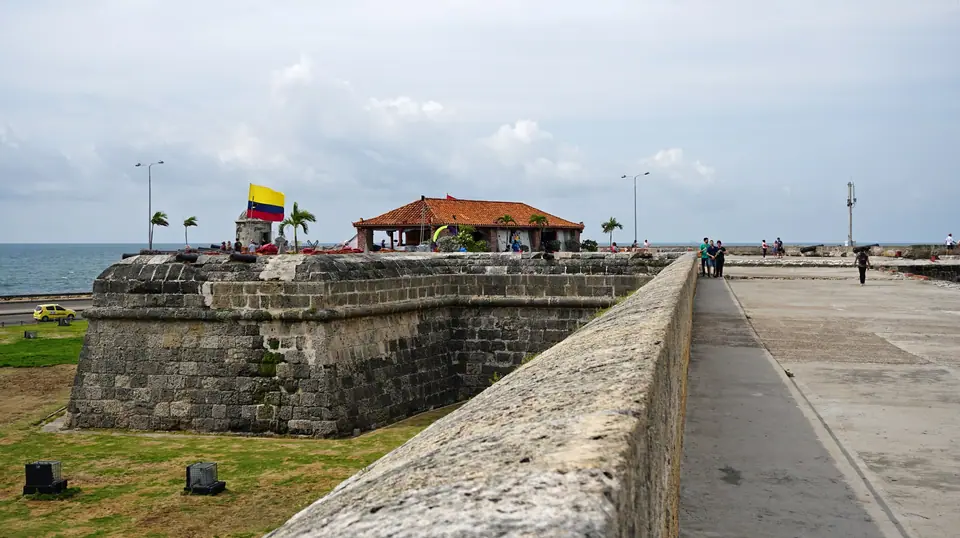
Walled City of Cartagena: Las Murallas, Clock Tower and Las Bóvedas
A historical and architectural guide to the 11-kilometre perimeter of coral-limestone bastions, the 19th-century Clock Tower gate, and the 23 neoclassical vaults of Las Bóvedas.
Inscribed on the UNESCO World Heritage List in 1984 as part of the Port, Fortresses and Group of Monuments, Cartagena, the eleven-kilometre stone circuit of Las Murallas encloses the colonial quarters of Centro, San Diego, and Getsemaní in the most complete system of Spanish military ramparts surviving in the Americas. Built from porous local coral limestone (piedra de cantera) quarried on Tierra Bomba and Barú, a stone prized by royal engineers because it absorbed cannonball impacts without shattering, the walls took more than two hundred years to complete.
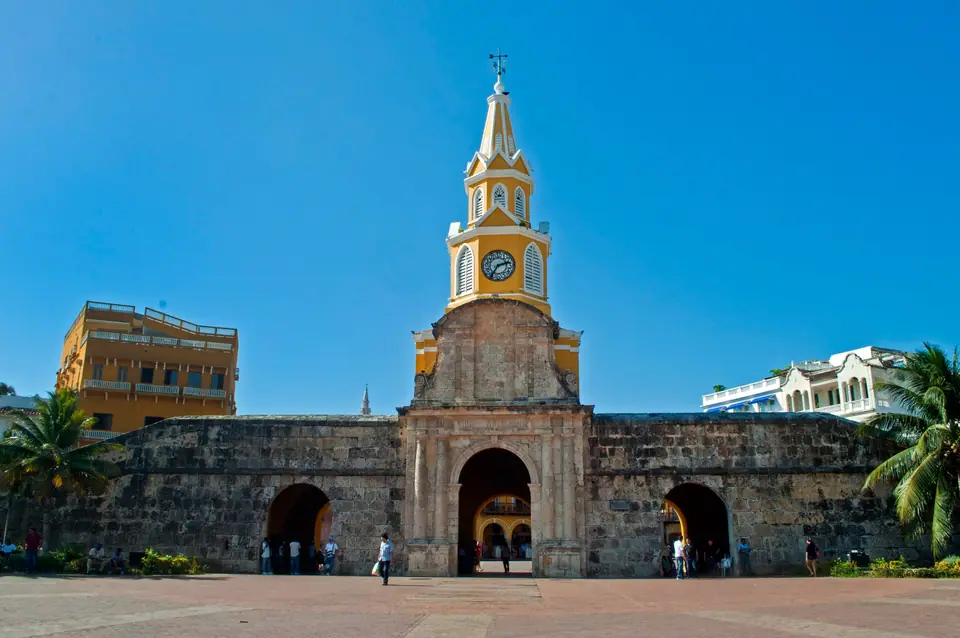
How Bautista Antonelli and Antonio de Arévalo Built Las Murallas
During its first half-century after Pedro de Heredia’s 1533 founding, Cartagena had almost no stone defences and suffered repeated raids by French and English corsairs, culminating in Sir Francis Drake’s capture and ransom of the city in 1586. King Philip II dispatched camp master Juan de Tejeda and Italian military engineer Bautista Antonelli to design a permanent Renaissance bastion trace. Antonelli laid down the western sea bastions, including the Baluarte de Santo Domingo (begun 1614), and the work was carried forward in the 17th century by his nephew Cristóbal de Roda Antonelli and son Juan Bautista Antonelli (“El Mozo”).
After storm surges breached the northern seawall in 1714 and British Admiral Edward Vernon besieged the bay in 1741, Spanish engineers Juan de Herrera y Sotomayor and Brigadier Antonio de Arévalo raised the underwater breakwater of the Escollera de Marina and completed the entire perimeter in 1796. Walking the wide stone terreplein from the Baluarte de San Ignacio past Santo Domingo, La Merced, and Santa Clara gives you continuous views of the Caribbean surf and terracotta colonial roofs.
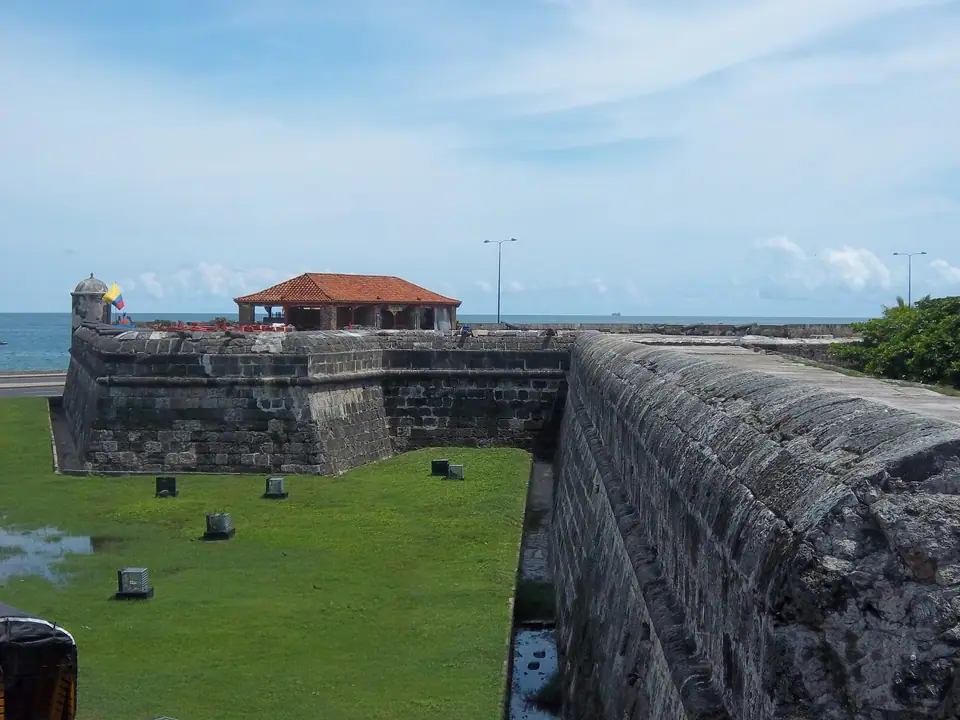
Torre del Reloj, Plaza de los Coches and the 23 Vaults of Las Bóvedas
The ceremonial entrance to the Walled City is the Torre del Reloj (originally known as the Boca del Puente because a wooden drawbridge once spanned the flooded San Anastasio moat outside the gate, linking Centro with Getsemaní). The barrel-vaulted central archway was erected between 1601 and 1631 by Cristóbal de Roda; between 1876 and 1888, Cartagena architect Luis Felipe Jaspe Franco added the yellow four-sided Gothic-revival spire. Passing through the triple arches brings you into triangular Plaza de los Coches, centred on a statue of founder Pedro de Heredia and bordered by the Portal de los Dulces (see what to eat in Cartagena).
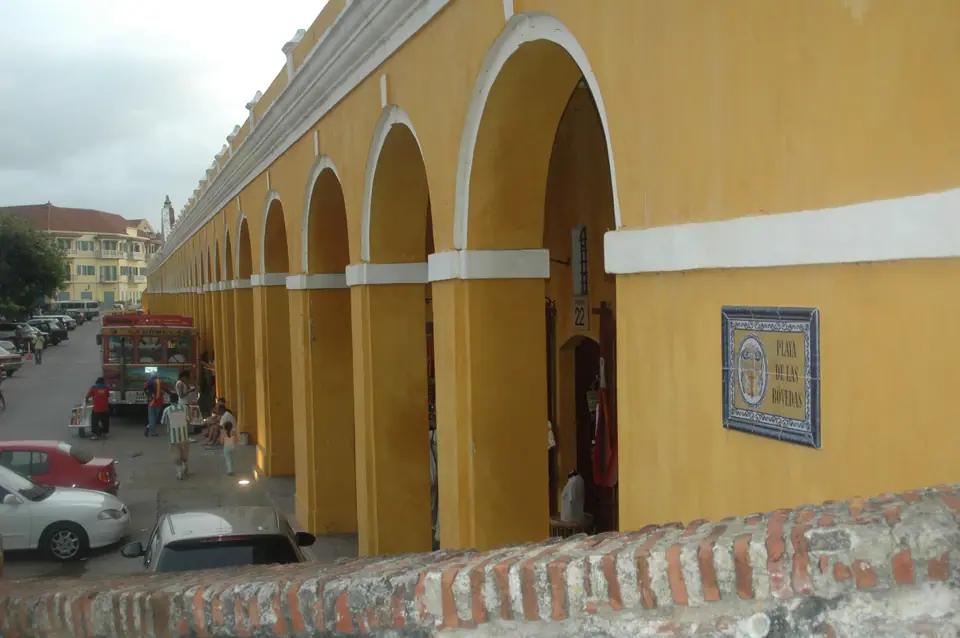
At the northern tip of the San Diego quarter, tucked between the bastions of Santa Clara and Santa Catalina, stands the last major military structure built by Spain in Cartagena: Las Bóvedas. Designed by Antonio de Arévalo and constructed between 1789 and 1795 (with its neoclassical arcade of 47 semicircular arches completed in 1798), the building contains 23 bombproof barrel-vaulted chambers with walls over three metres thick. Built to store gunpowder and garrison supplies, the vaults were used as high-tide prison dungeons during the 1815 siege and 19th-century civil wars and today house handicraft galleries just north of Plaza de Bolívar.
Traveller tips
Real advice from people who have been to Walled City of Cartagena: Las Murallas, Clock Tower and Las Bóvedas. Every tip is read by our team before it goes live.
No tips yet. Been here? Yours could be the first.
Thank you! Your tip will appear here after a quick review.
More in Cartagena
Continue exploring Cartagena with related neighbourhood, food, and planning guides
Best Time to Visit Cartagena: Trade Winds, Rain and Festivals
Cartagena, Colombia
Where to Stay in Cartagena: Walled City, Getsemaní and Bocagrande
Cartagena, Colombia
3-Day Cartagena Itinerary: Walled City, Fortresses and Islands
Cartagena, Colombia
What to Eat in Cartagena: Arepa de Huevo, Coconut Rice and Seafood
Cartagena, Colombia
