


























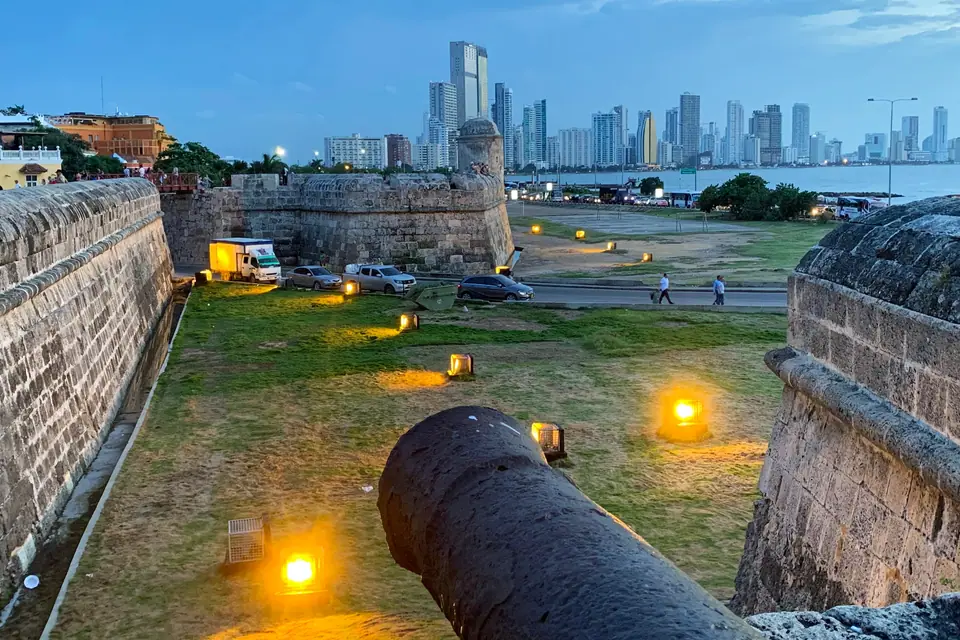
Things to Do in Cartagena: Fortresses, Plazas and Coral Islands
A curated guide to Cartagena’s essential experiences, spanning Spanish military engineering, 16th-century cloisters, Afro-Caribbean street culture, and offshore coral reefs.
Few cities in the Americas preserve the physical drama of the Spanish colonial maritime world as completely as Cartagena de Indias. Whether you are tracing subterranean brick galleries inside a 17th-century hilltop castle, examining pre-Columbian gold filigree on a shaded plaza, or crossing Cartagena Bay by boat to coral reefs, the city rewards travellers who balance architectural history with living coastal culture.
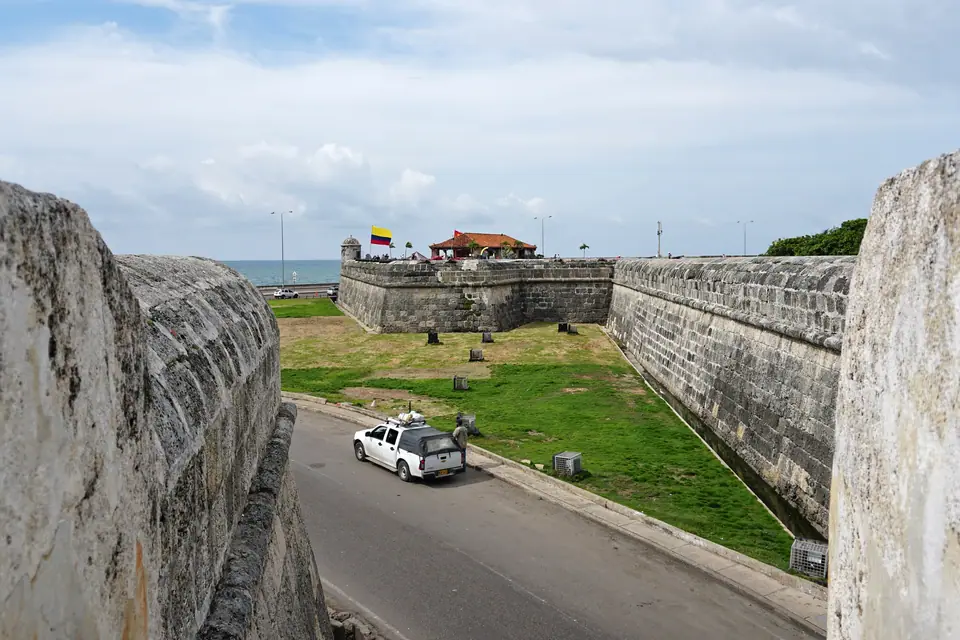
Walk the 11-Kilometre Circuit of Las Murallas and Las Bóvedas
Begin your visit by climbing onto the broad stone ramparts of Las Murallas and the Torre del Reloj. Initiated after Francis Drake’s 1586 raid and completed by royal engineer Antonio de Arévalo in 1796, the walls link wide polygonal bastions such as the Baluarte de Santo Domingo, the Baluarte de San Ignacio, and the Baluarte de Santa Catalina. At the northern corner of San Diego, inspect the forty-seven neoclassical portico arches and twenty-three bombproof vaults of Las Bóvedas, built between 1789 and 1795.
Explore Castillo San Felipe de Barajas and Cerro de la Popa
Just east of the old city on San Lázaro Hill rises Castillo San Felipe de Barajas, the largest Spanish military fortress built in the New World. Constructed in stages between 1536, 1657, and 1763, its interlocking triangular batteries repelled British Admiral Edward Vernon’s 186-ship armada in 1741 under Spanish Admiral Blas de Lezo. Combine its brick tunnels with a ride up the 150-metre hill of Cerro de la Popa to visit the 1607 Augustinian Convent of Santa Cruz de la Popa.
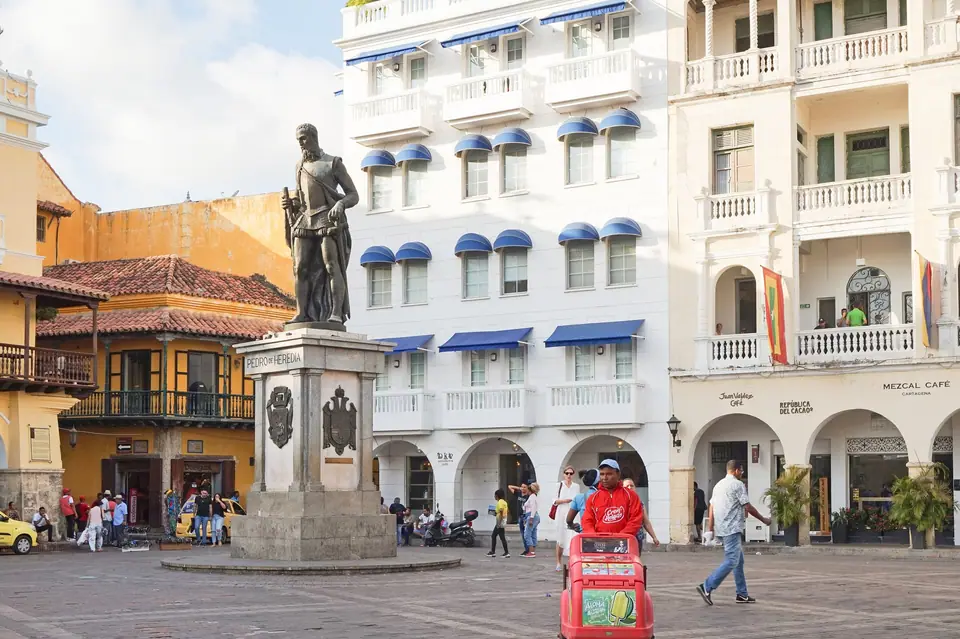
Visit the Museums and Cloisters of Centro
Around Plaza de Bolívar stand three essential cultural landmarks: the 1770 Palace of the Inquisition (now the Historical Museum of Cartagena), the Museo del Oro Zenú with its pre-Hispanic goldwork and hydraulic exhibits, and the Herrerian Renaissance Cathedral of Santa Catalina de Alejandría (1577 to 1612). Two blocks south, the coral-stone cloister of Sanctuary of San Pedro Claver honours the Catalan Jesuit priest who spent forty years caring for enslaved Africans arriving at the port.
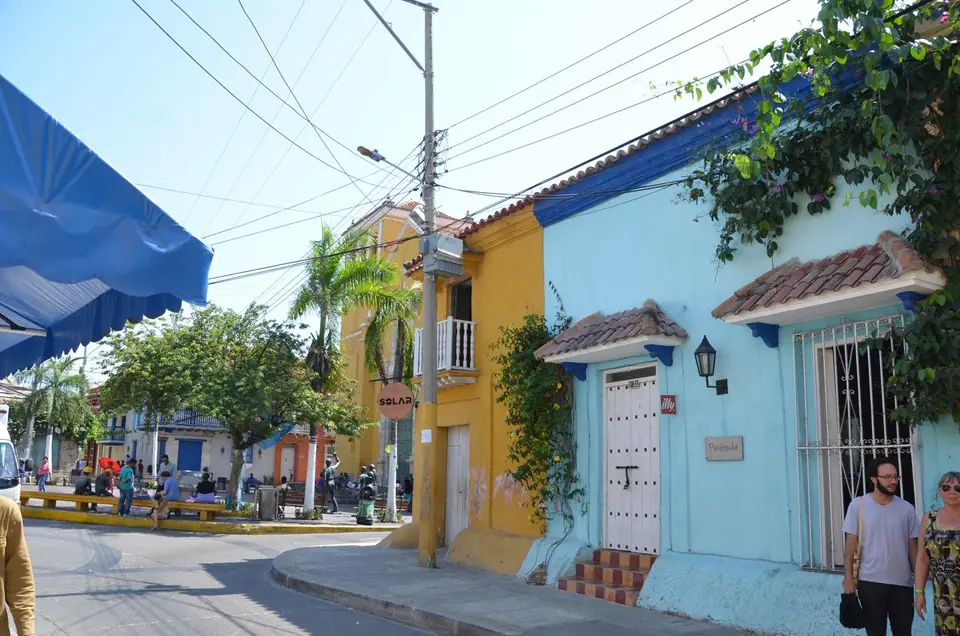
Wander the Murals and Plazas of Getsemaní
Cross Parque del Centenario (home to wild three-toed sloths and iguanas) into Getsemaní, where Afro-Caribbean street murals line Calle de la Sierpe and Calle de San Juan and evening life gathers outside the 1643 church on Plaza de la Trinidad.
Sail to the Rosario Islands or Visit San Basilio de Palenque
Board a morning speedboat from the Muelle de la Bodeguita to snorkel over the coral reefs of the Rosario Islands and Playa Blanca on Isla Barú, or travel fifty kilometres inland to San Basilio de Palenque, founded around 1603 by Benkos Biohó as the first free African town in the Americas.
Traveller tips
Real advice from people who have been to Things to Do in Cartagena: Fortresses, Plazas and Coral Islands. Every tip is read by our team before it goes live.
No tips yet. Been here? Yours could be the first.
Thank you! Your tip will appear here after a quick review.
More in Cartagena
Continue exploring Cartagena with related neighbourhood, food, and planning guides
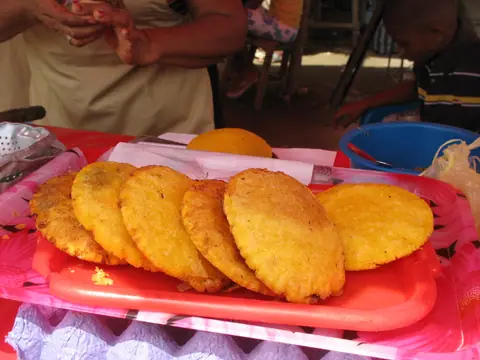
What to Eat in Cartagena: Arepa de Huevo, Coconut Rice and Seafood
Cartagena, Colombia
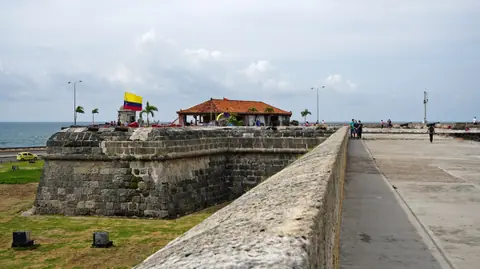
Walled City of Cartagena: Las Murallas, Clock Tower and Las Bóvedas
Cartagena, Colombia
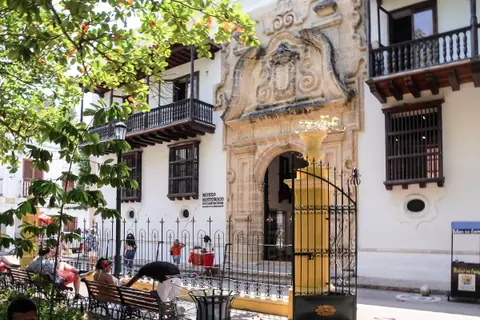
Plaza de Bolívar, Palace of the Inquisition and Cartagena Cathedral
Cartagena, Colombia
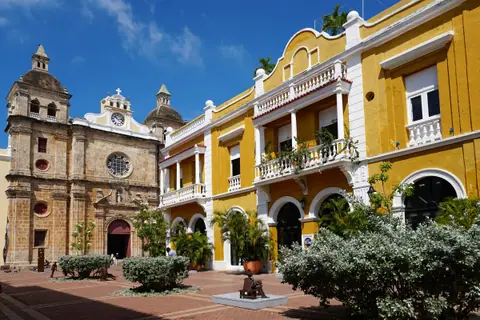
San Pedro Claver, Plaza de Santo Domingo and Colonial Plazas
Cartagena, Colombia
