


























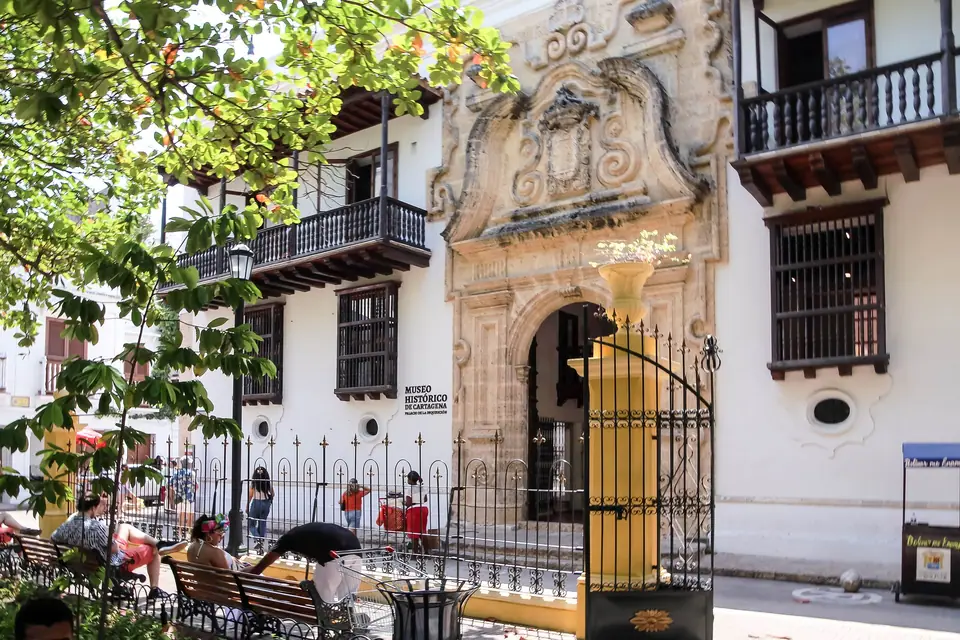
Plaza de Bolívar, Palace of the Inquisition and Cartagena Cathedral
A detailed guide to the civic and ecclesiastical centre of colonial Cartagena, covering the 1770 Palace of the Inquisition, Zenú goldwork, and the Herrerian Renaissance Cathedral.
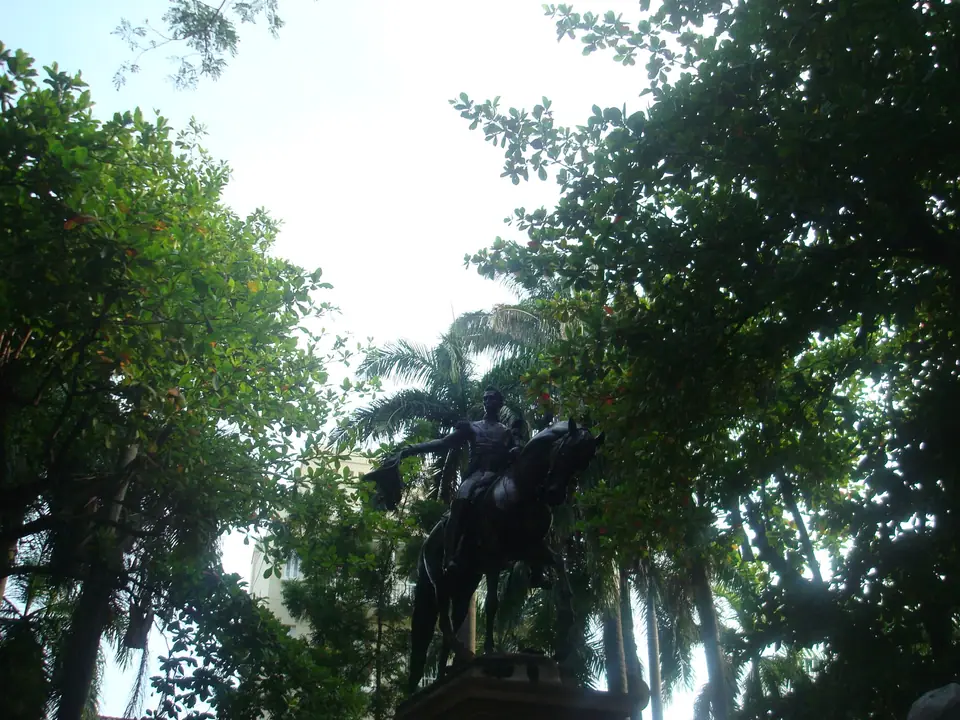
Four blocks northwest of the Clock Tower lies the shady, monumental heart of intramural Cartagena: Plaza de Bolívar. Originally laid out in the 16th century as the Plaza Mayor for military drills and bullfights, and known after 1610 as the Plaza de la Inquisición, the square was redesigned into a leafy republican park in the late 19th century and centred on an 1896 bronze equestrian statue of Simón Bolívar sculpted in Munich by Venezuelan artist Eloy Palacios. Around its perimeter stand three of the most important historical institutions in northern Colombia.
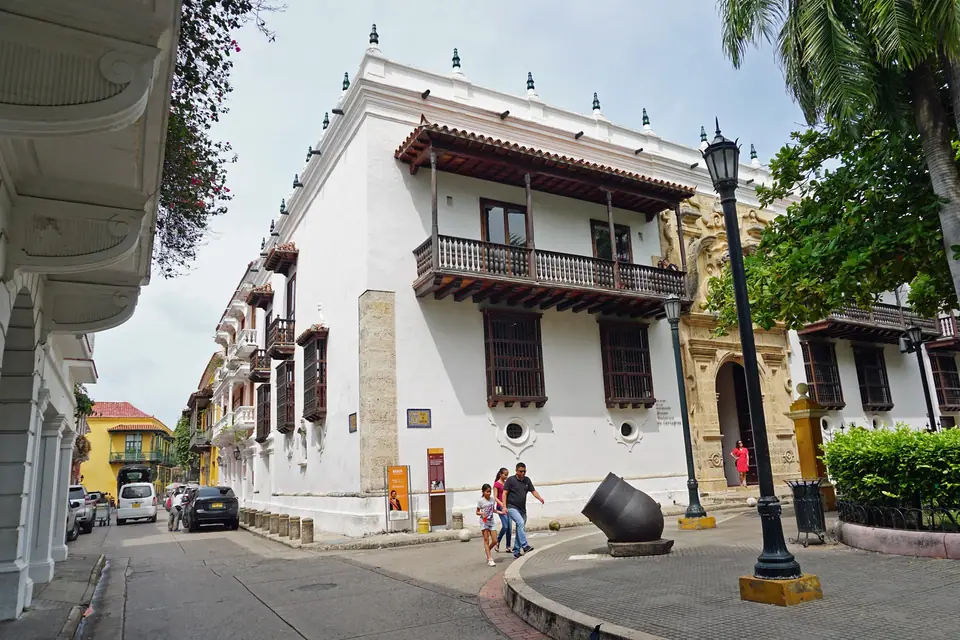
Palacio de la Inquisición (Historical Museum of Cartagena)
Dominating the western side of Plaza de Bolívar is the Palacio de la Inquisición, completed in 1770 in late Spanish Baroque style. By royal decree of King Philip III in 1610, Cartagena was chosen as the third seat of the Tribunal of the Holy Office of the Inquisition in the Americas (after Lima and Mexico City), holding jurisdiction over the Caribbean basin and New Granada until the revolutionary crowd from Getsemaní and Cartagena stormed the palace and abolished the tribunal on 11 November 1811.
Its whitewashed facade is anchored by a coral-limestone Baroque portal carved with volutes and the royal coat of arms of Spain, flanked by long turned-wood overhang balconies. Since 1953, its double interior courtyards and mahogany-floored halls have housed the Museo Histórico de Cartagena (MUHCA), tracing the city’s history from Indigenous Kalamarí settlements and the Inquisition trials to the 1741 British siege and the 1811 independence proclamation; check the official museum site for current exhibition halls.
Museo del Oro Zenú (Zenú Gold Museum)
Directly across Plaza de Bolívar inside a restored colonial mansion operated by Colombia’s central bank (Banco de la República) sits the Museo del Oro Zenú. Renovated with bilingual interactive galleries, the museum showcases the metallurgical and hydraulic achievements of the Indigenous Zenú (Sinú) people, who inhabited the floodplains of the Sinú, San Jorge, and Cauca rivers south of Cartagena from roughly 200 BC to the Spanish conquest. Highlights include delicate cast-filigree gold ear ornaments showcasing aquatic birds and caimans, hammered breastplates (pectorales), carved conch shells, and maps illustrating how Zenú engineers constructed 500,000 hectares of braided drainage canals.
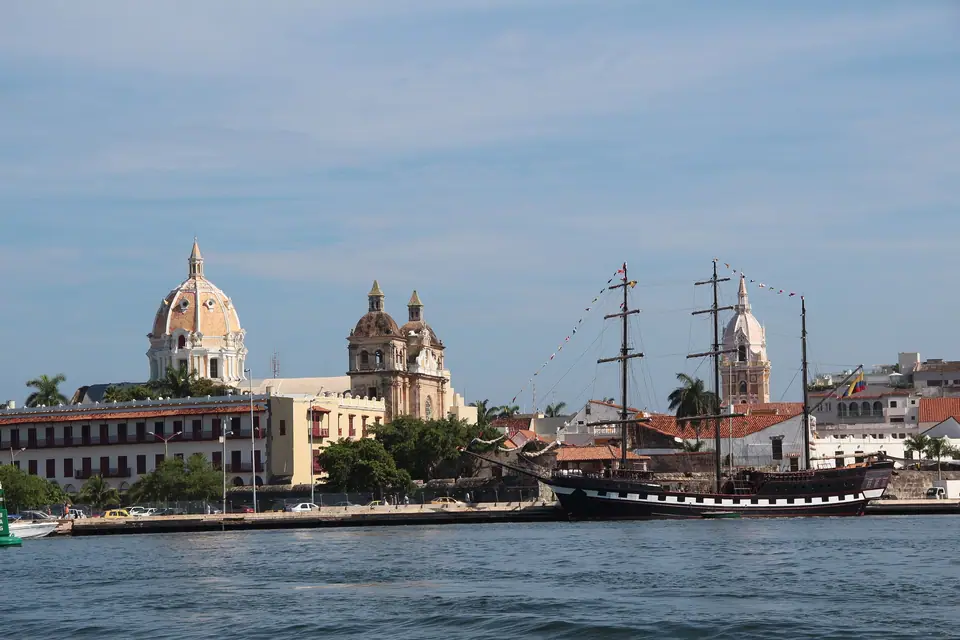
Cathedral of Santa Catalina de Alejandría and Plaza de la Proclamación
At the northeastern corner of Plaza de Bolívar, fronting the brick expanse of the Plaza de la Proclamación, rises the Catedral Basílica Metropolitana de Santa Catalina de Alejandría. Commissioned in 1577 by master builder Simón González in austere Herrerian Renaissance style to replace an earlier thatch-and-cane church, the stone basilica suffered heavy cannon damage during Sir Francis Drake’s 1586 attack before completion in 1612. In the early 20th century, French architect Gastón Lelarge added the coral-and-ochre stuccoed dome and bell tower; inside stand three naves, an 18th-century gilded Baroque high altar, and a Carrara marble pulpit just north of San Pedro Claver and Santo Domingo.
Traveller tips
Real advice from people who have been to Plaza de Bolívar, Palace of the Inquisition and Cartagena Cathedral. Every tip is read by our team before it goes live.
No tips yet. Been here? Yours could be the first.
Thank you! Your tip will appear here after a quick review.
More in Cartagena
Continue exploring Cartagena with related neighbourhood, food, and planning guides
3-Day Cartagena Itinerary: Walled City, Fortresses and Islands
Cartagena, Colombia
What to Eat in Cartagena: Arepa de Huevo, Coconut Rice and Seafood
Cartagena, Colombia
Walled City of Cartagena: Las Murallas, Clock Tower and Las Bóvedas
Cartagena, Colombia
San Pedro Claver, Plaza de Santo Domingo and Colonial Plazas
Cartagena, Colombia
