


























Best Time to Visit Lucerne: MeteoSwiss Climate, Fasnacht and Festivals
Use 1991-2020 MeteoSwiss climate data for Lucerne (454 m) to time your visit for summer lake steamers, the August-September Lucerne Festival, or winter Fasnacht.
Seated at the north-western shore of Lake Lucerne at 436 metres above sea level (with the official MeteoSwiss weather station at 454 metres), Lucerne experiences a temperate sub-alpine climate shaped by the thermal moderation of the lake, warm southerly Föhn winds descending from the Gotthard Valley, and summer convective showers formed against the surrounding Pre-Alps. Matching your dates to the seasonal timetables of the mountain railways and the city's major cultural festivals ensures you get the most out of our 3-day Lucerne itinerary.
MeteoSwiss 1991 to 2020 Climate Normals
According to the 1991 to 2020 MeteoSwiss normal period, Lucerne records an annual mean temperature of 10.1 °C (annual average daily high 14.5 °C, overnight low 6.1 °C), with roughly 50 summer days reaching 25 °C, 9 heat days reaching 30 °C, 78 frost days, and 15 ice days each year. July is the warmest month with a monthly mean of 19.5 °C, an average daily high of 24.9 °C, and an overnight low of 14.6 °C, followed by August (high 24.3 °C, low 14.4 °C) and June (high 22.9 °C, low 12.8 °C). January is the coldest month with a monthly mean of 1.1 °C, an average high of 4.0 °C, and a low of -1.6 °C, while February averages a high of 5.8 °C and a low of -1.7 °C. Annual precipitation totals 1,291.4 millimetres across 132.8 wet days (peaking in May and June at 13.1 and 13.5 wet days), alongside 46.9 centimetres of annual snow over 10.9 snow days and 1,530.0 sunshine hours (38% of possible annual sunshine).
In spring and autumn, the warm, dry downslope wind known as the Föhn frequently sweeps north down the Reuss valley and across the Urnersee. When the Föhn blows, humidity drops sharply, temperatures in Lucerne can jump several degrees within an hour, and the air turns crystal-clear, making the snowfields of the Bernese Alps appear deceptively close behind Mount Pilatus.
May to October: Mountain Railways and Paddle Steamers
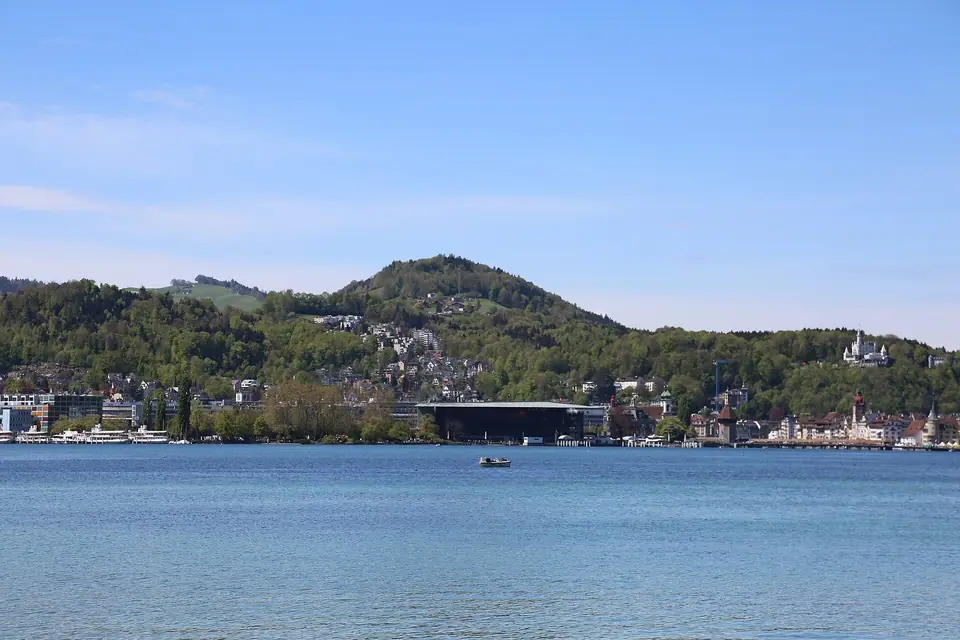
The primary outdoor season runs from May through October, when all five historic SGV paddle steamers sail regular daily schedules across the lake, the walkable towers of the Museggmauer are open (April to November), and both the Pilatus cogwheel railway from Alpnachstad and the Stanserhorn CabriO are in full operation. During July and August, water temperatures in the Lucerne Bay rise enough for outdoor swimming at the historic timber Seebad on Nationalquai, the Lido beach beside the Swiss Museum of Transport, and the Ufschötti lawn on the southern shore.
Late Summer at KKL: The Lucerne Festival and Luzern Live
From mid-August to mid-September, Jean Nouvel's KKL hosts the Summer Festival of the Lucerne Festival (founded in 1938 by Ernest Ansermet and Walter Schulthess with Arturo Toscanini's gala concert at Richard Wagner's Tribschen garden, directed from 1999 to 2025 by Michael Haefliger and since January 2026 by Sebastian Nordmann), staging roughly 100 classical concerts including around 30 symphony concerts by the Lucerne Festival Orchestra (founded in 2003 by Claudio Abbado and Michael Haefliger and directed by Riccardo Chailly), the Lucerne Festival Academy (founded in 2003 with Pierre Boulez), and the Lucerne Festival Contemporary Orchestra (founded in 2021). Earlier in summer, July brings the ten-day open-air Luzern Live music festival around the KKL and lakeside pavilions (succeeding the 1999 to 2019 Blue Balls Festival in 2023), while September hosts the World Band Festival and the Rotsee rowing regattas.
Autumn Foliage, Winter Snow Trains and Luzerner Fasnacht
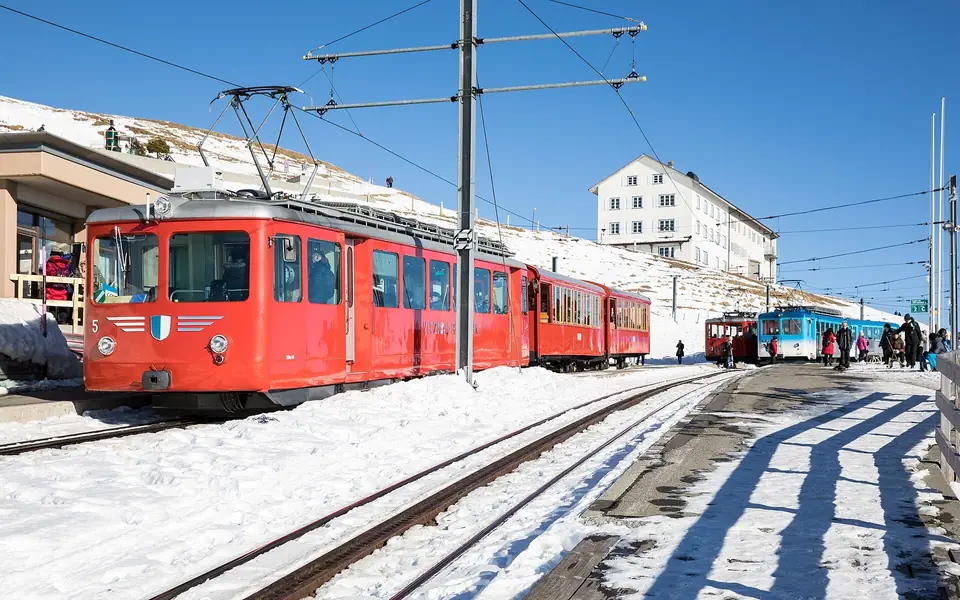
October brings golden foliage to the chestnut quays and beech forests around the lake, quieter footpaths across the Altstadt, and hearty seasonal menus featuring Luzerner Chügelipastete and Birnenweggen. In winter, the year-round Vitznau to Rigi and Arth to Rigi cogwheel trains and the Kriens to Pilatus cableways climb above the valley stratus clouds to sunlit snow trails at Rigi Kulm (1,797.5 metres) and Pilatus Kulm (2,070 metres), while December fills Franziskanerplatz and Europaplatz with Christmas markets and January illuminates the waterfront with the Lilu Light Festival.
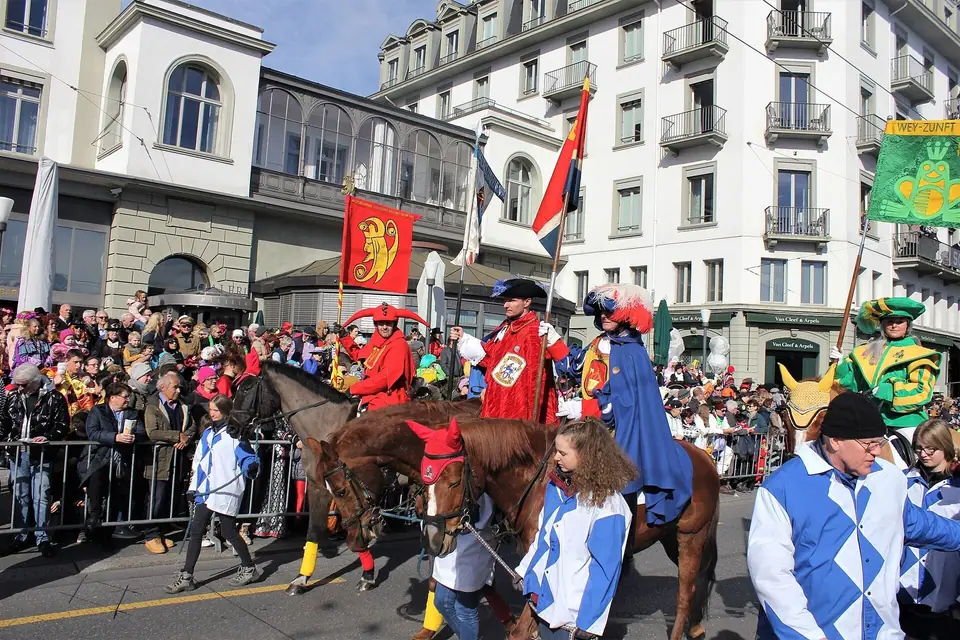
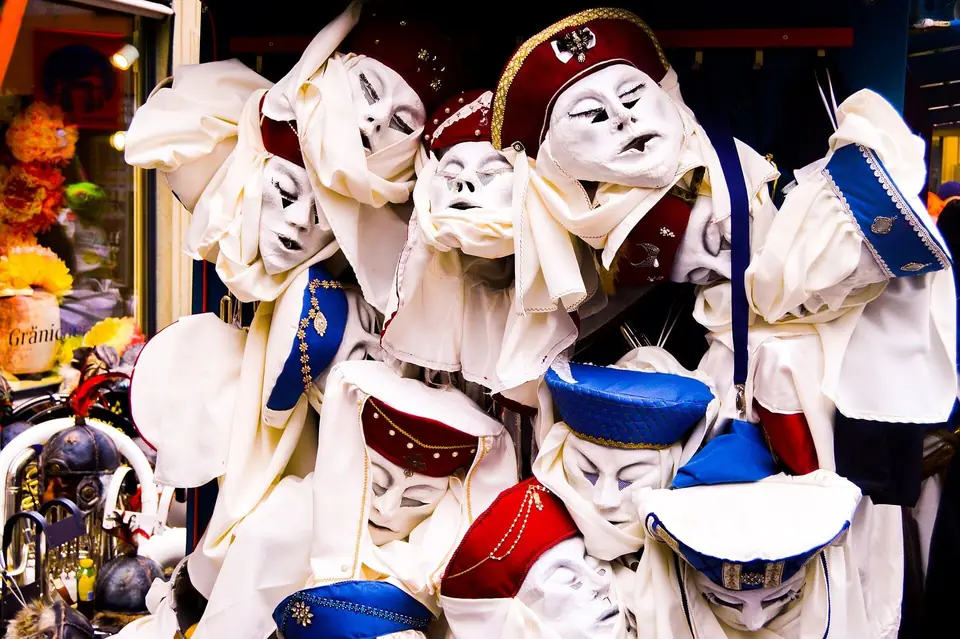
In February or early March, the Altstadt and Neustadt host Luzerner Fasnacht, Switzerland's largest carnival with a record 350,000 participants in 2025, ahead of Basel's 220,000 and Bellinzona's 150,000. Organised by the Lozärner Fasnachtskomitee (LFK, comprising the circa-1400 Zunft zu Safran, Wey-Zunft, Fidelitas Lucernensis, and Maskenliebhaber-Gesellschaft) and the Vereinigte brass-band association, the carnival begins at dawn on Dirty Thursday (Schmutziger Donnerstag) when Brother Fritschi and his family arrive by boat at Schweizerhofquai to the blast of the Urknall, followed by the five-million-piece Fötzeliräge paper confetti shower and orange toss around the 1581 Fritschibrunnen on Kapellplatz, the afternoon parade from the Hofkirche across the Seebrücke, Fat Monday (Güdismontag) under the Wey-Zunft, and the closing Monstercorso night parade of Guggenmusigen brass bands on Tuesday evening.
Season-by-Season Planning Summary
- Spring (April to May): Spring blossoms along the quays while snow still caps Pilatus; the Museggmauer towers and Stanserhorn open in April, and the Alpnachstad Pilatus cogwheel line reopens in May, making late May an ideal shoulder window with long daylight and lighter crowds.
- Summer (June to August): Warmest days (July average high 24.9 °C), full SGV paddle steamer schedules, lake bathing, Luzern Live in July, and the opening of the Lucerne Festival in August. Pack an umbrella or light rain shell for brief late-afternoon pre-alpine showers.
- Autumn (September to October): Clear Föhn views across the Alps, the concluding weeks of the Lucerne Festival and World Band Festival in September, autumn markets along the Reuss, and full mountain railway access through October.
- Winter (November to March): Festive December markets on Franziskanerplatz, year-round Rigi cogwheel trains rising above the valley fog into winter sunshine, indoor museum days at the Verkehrshaus and Rosengart Collection, and the six-day spectacle of Luzerner Fasnacht before Ash Wednesday. Because hotel rooms in our where to stay in Lucerne guide fill quickly during both Fasnacht and the late-summer symphony weeks, reserve accommodation early for those peak cultural dates, and check the live summit weather displays at Bahnhof Luzern each morning so you can swap your indoor museum day and mountain ascent if clouds linger over the peaks or across the lake bay during your stay.
Traveller tips
Real advice from people who have been to Best Time to Visit Lucerne: MeteoSwiss Climate, Fasnacht and Festivals. Every tip is read by our team before it goes live.
No tips yet. Been here? Yours could be the first.
Thank you! Your tip will appear here after a quick review.
More in Lucerne
Continue exploring Lucerne with related neighbourhood, food, and planning guides
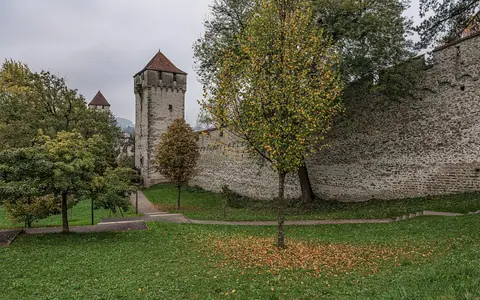
Museggmauer, the Nine Towers and the 1535 Zytturm Clock
Lucerne, Switzerland
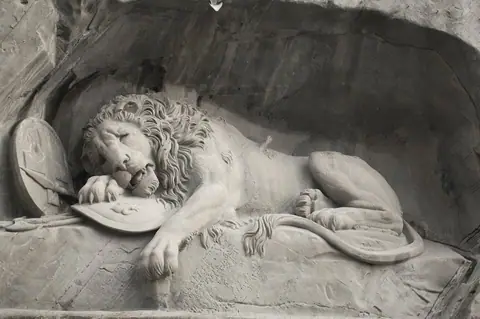
Lion Monument, Glacier Garden and Bourbaki Panorama at Löwenplatz
Lucerne, Switzerland
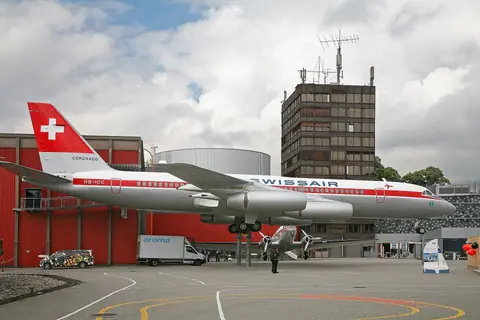
Swiss Museum of Transport (Verkehrshaus), Planetarium and Hans Erni Museum
Lucerne, Switzerland
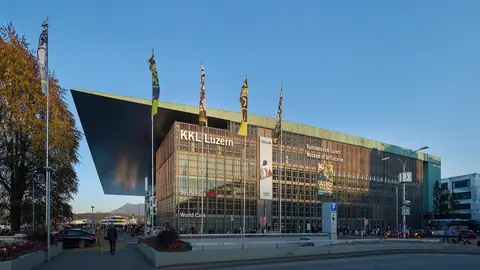
KKL Lucerne (Culture and Congress Centre) and the Twin-Towered Hofkirche
Lucerne, Switzerland
