


























Swiss Museum of Transport (Verkehrshaus), Planetarium and Hans Erni Museum
Explore Switzerland's most visited museum on the Lido shore of Lake Lucerne, housing 3,000 rail, road, water, and aerospace exhibits across a 22,500-square-metre campus.
Occupying a 22,500-square-metre lakeshore campus beside the Lido beach on the northern arm of Lake Lucerne, the Swiss Museum of Transport (Verkehrshaus der Schweiz) is the most visited museum in Switzerland. After an association was founded in Zurich in 1942 by SBB, PTT, private railways, and transport companies to create a national railway museum, and no suitable plot could be found in Zurich, the city of Lucerne offered the Lido site. Construction began in 1957 to plans by architect Otto Dreyer, and the museum opened on 1 July 1959 under founding director Alfred Waldis, displaying over 3,000 objects on site from a collection of roughly 13,000 catalogued items (plus 25,000 in its Rain depot).
Unlike traditional indoor galleries where exhibits sit behind glass ropes, the Verkehrshaus is organised as an open-air courtyard surrounded by thematic exhibition halls where visitors can climb into locomotive cabs, board historic airliners, test flight simulators, and walk beneath full-size ships and cableway gondolas. Its lakeshore position makes it easy to pair a morning or afternoon here with a boat ride across the bay or a walk along Haldenstrasse.
Rail Transport Hall and the 32-Metre Gotthard Model
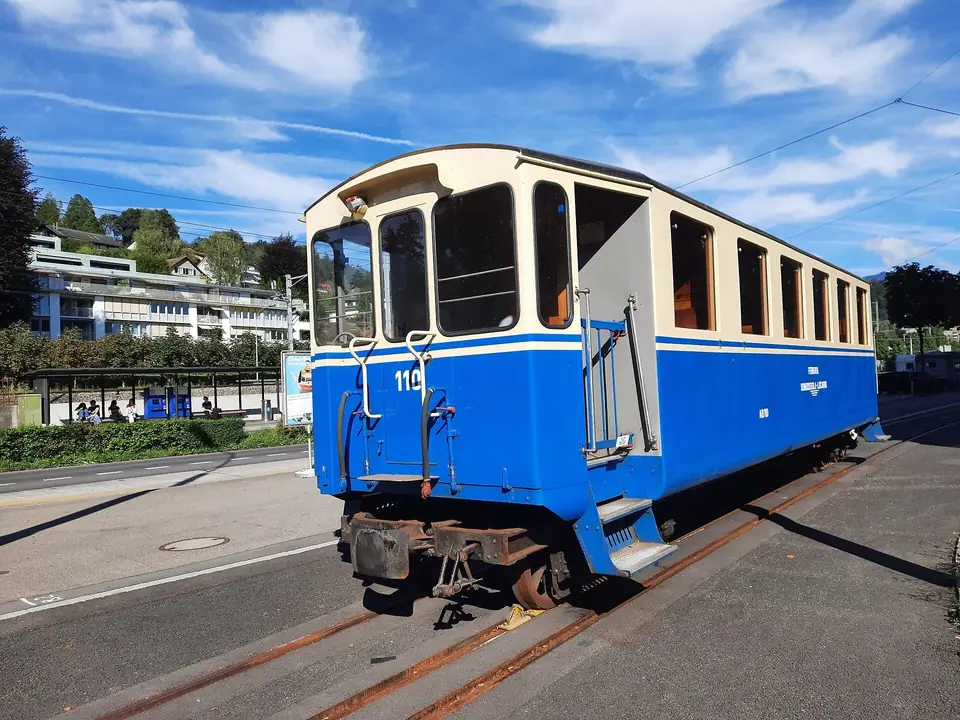
Expanded with Uli Huber's 1982 Rail Hall, the railway collection traces Switzerland's conquest of the Alps through full-size rolling stock: the SBB C 5/6 No. 2965 "Elefant" steam locomotive, the 1888 Vevey to Montreux to Chillon electric tram from Switzerland's first electrified railway line, the 1921 Rhaetian Railway Ge 6/6 No. 402 "Krokodil" electric locomotive, and both the 1889 Bhm 1/2 No. 9 steam railcar and the 1937 Bhe 1/2 No. 21 electric railcar of the Pilatus Railway. In autumn 2024, the famous Gotthard Railway model returned to the hall after more than 20,000 hours of volunteer work since 2020 extended the layout to 32 metres and added the Gotthard Base Tunnel.
Standing alongside these historic mountain railcars gives you a close look at the rack-and-pinion mechanisms engineered by Niklaus Riggenbach and Eduard Locher in the nineteenth century. Before or after riding the real cogwheel trains up Rigi or Pilatus, you can examine the exposed underside gears, horizontal grip wheels, and slanted boiler designs that kept steam locomotives level on extreme alpine gradients, as well as rotary snowploughs, historic dining carriages, and a tunnel-boring machine cutterhead.
Road Transport Hall and Gigon/Guyer Architecture
When Zurich architects Annette Gigon and Mike Guyer redesigned the museum's street-facing perimeter between 2008 and 2009, they gave the campus two unmistakable contemporary facades. The 2008 FutureCom entrance building and the 2009 Road Transport Hall are clad externally in hundreds of original Swiss road signs, destination boards, and reflective traffic markers. Inside the Road Hall, automated storage racks rise several storeys high like a giant vertical garage displaying vintage Swiss automobiles from Saurer, Berna, and Monteverdi alongside yellow Alpine postal coaches, motorcycles, bicycles, and interactive road-safety and crash-test laboratories where mechanical sleds demonstrate seatbelt and airbag physics.
Navigation, Cableways and the 1848 Steamer Rigi
Designed by architect Hans U. Gübelin and opened in 1985, the Navigation, Cableways and Tourism Hall celebrates the engineering that opened the Swiss lakes and high valleys to travellers. Set into the outdoor courtyard garden is the preserved 1848 London-built iron steamer Rigi, the oldest surviving Lake Lucerne steamer and an early masterpiece of inland marine engineering where visitors can step aboard the timber deck. Inside the hall, exhibits trace the evolution of Swiss aerial cableways, funiculars, alpine tunnels, and steamship boilers, complemented by a large walk-on floor orthophoto map of Switzerland where visitors wear felt slippers to locate peaks, valleys, and lakes from an aerial perspective, plus the Nautirama multimedia boat simulator.
Aviation Hall and the 2023 House of Energy
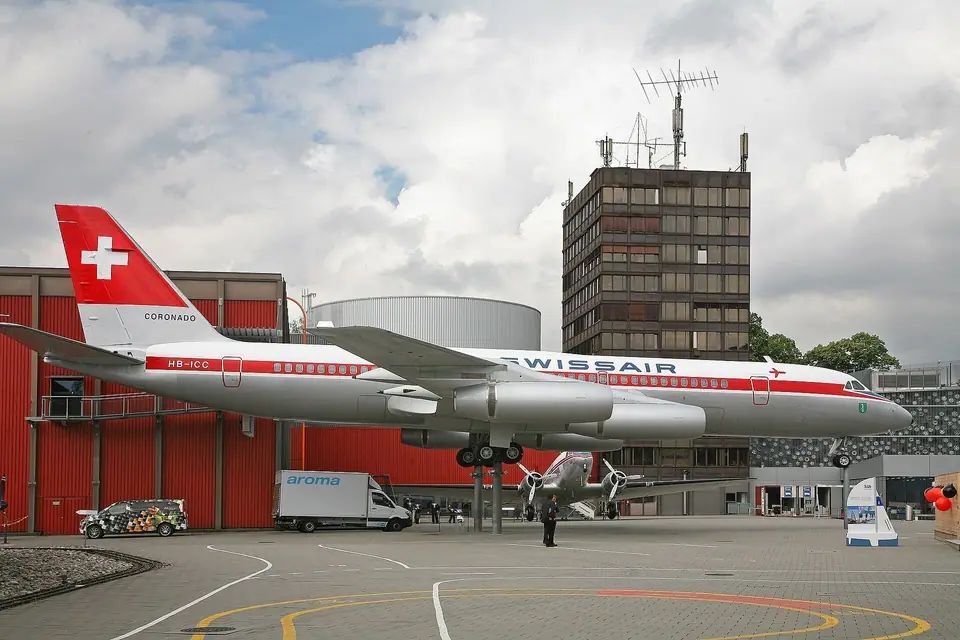
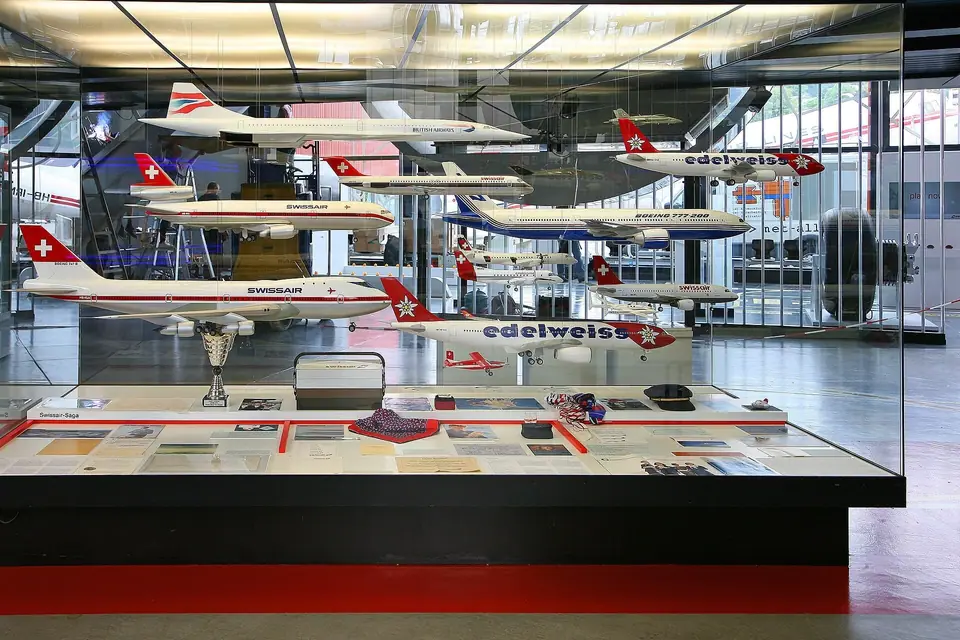
- Aviation and Space Hall (1972): Also designed by Hans U. Gübelin, exhibiting over 30 historic aircraft suspended at multiple heights indoors and parked in the outdoor arena, including the four-engine Swissair Convair 990 Coronado jetliner, early alpine biplanes, gliders, mountain rescue helicopters from Rega, and space exploration hardware including Swiss-built satellite fairings, the Euler space telescope model, and lunar solar wind experiments.
- House of Energy (2023): Built on the footprint of Otto Dreyer's original 1959 rail hall, focusing on renewable electricity generation, Swiss hydro-power dams, grid technology, and climate-neutral mobility through hands-on stations.
- Media World and Red Cross Exhibits: Interactive studios inside the campus explore television broadcast history, virtual reality, and Swiss humanitarian logistics across mountain and international missions.
Planetarium, Filmtheatre and the Hans Erni Museum
Within the same compound stand the 1969 domed Planetarium (designed by Hans U. Gübelin for immersive astronomy and night-sky projections), the giant-screen Filmtheatre screening daily nature, alpine, and science documentaries, the interactive Swiss Chocolate Adventure attraction explaining cocoa transport and Swiss chocolate manufacturing, and the hexagonal 1979 Hans Erni Museum dedicated to the Lucerne painter, graphic artist, and sculptor. Inside the Hans Erni Museum, three floors of paintings, ceramics, and book illustrations surround his monumental auditorium mural Panta Rhei, which portrays the history of European thought, science, and engineering.
Reaching Luzern Verkehrshaus by Train, Bus and Boat
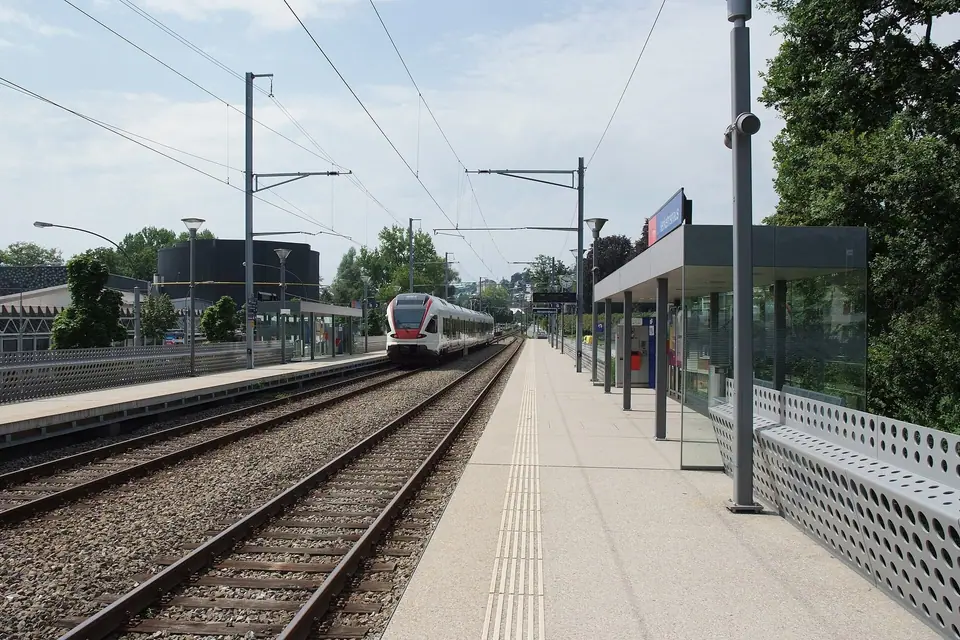
You can reach the museum in less than ten minutes from Bahnhof Luzern via VBL electric trolleybus lines 6, 8, or 24, by SBB train to the dedicated Luzern Verkehrshaus station opened in 2007 directly outside the entrance, or by SGV boat to the Verkehrshaus-Lido landing stage. On sunny days, walking back to the Altstadt along the lakeside Lido footpath, Haldenstrasse, and Nationalquai takes about half an hour past the Hofkirche, chestnut trees, and shaded bathing lawns. Allow at least half a day on campus if you plan to combine the transport halls with a planetarium show or the Hans Erni gallery. Families with children also appreciate the central courtyard pool with pedal boats, miniature construction excavators, and outdoor garden railway, while lakeside cafes on site make it easy to pause for lunch between halls. Separate admission tickets or combined day passes are available at the FutureCom entrance desk for the museum halls, Planetarium, Filmtheatre, and Swiss Chocolate Adventure, and holders of the Swiss Travel Pass receive a reduction on standard museum entry while lockers inside the entrance hall store daypacks and coats.
Traveller tips
Real advice from people who have been to Swiss Museum of Transport (Verkehrshaus), Planetarium and Hans Erni Museum. Every tip is read by our team before it goes live.
No tips yet. Been here? Yours could be the first.
Thank you! Your tip will appear here after a quick review.
More in Lucerne
Continue exploring Lucerne with related neighbourhood, food, and planning guides

What to Eat in Lucerne: Chügelipastete, Birnenweggen and Lake Fish
Lucerne, Switzerland
How to Get to Lucerne: Bahnhof Luzern, SBB Trains and Public Transport
Lucerne, Switzerland
Where to Stay in Lucerne: Altstadt, Left Bank, Lakefront and Hillsides
Lucerne, Switzerland

Best Time to Visit Lucerne: MeteoSwiss Climate, Fasnacht and Festivals
Lucerne, Switzerland
