


























Lake Lucerne (Vierwaldstättersee): Paddle Steamers and Promenades
Cruise the 114-square-kilometre fjord-like arms of Lake Lucerne aboard one of five historic SGV paddle steamers and walk the Schweizerhofquai and Nationalquai promenades.
Known in German as the Vierwaldstättersee ("Lake of the Four Forested Cantons") after the three original confederate cantons of Uri, Schwyz, and Unterwalden (now Obwalden and Nidwalden) together with the canton of Lucerne, Lake Lucerne covers 114 square kilometres at an elevation of 434 metres and reaches a maximum depth of 214 metres with a water volume of 11.8 cubic kilometres. Carved by the Reuss Glacier at the end of the last Ice Age, its four branching, fjord-like basins wind for 38 kilometres from the shallow Lucerne Bay past the Weggis, Vitznau, and Gersau basins into the steep limestone walls of the Urnersee toward Flüelen, giving the lake 144 kilometres of shoreline.
Because steep headlands and mountain ridges divide the water into distinct climatic and visual chambers, sailing from Bahnhofquai out into the main lake reveals a constantly changing panorama. Within half an hour of leaving the urban quays, the boat rounds the Meggenhorn promontory into the wide Cross Funnel (Kreuztrichter), where four lake arms radiate toward Küssnacht, Alpnachstad, Lucerne, and Vitznau beneath the peaks of Mount Pilatus, Mount Rigi, and the Stanserhorn.
From the 1836 Steamboat Pioneers to the Five SGV Paddle Steamers
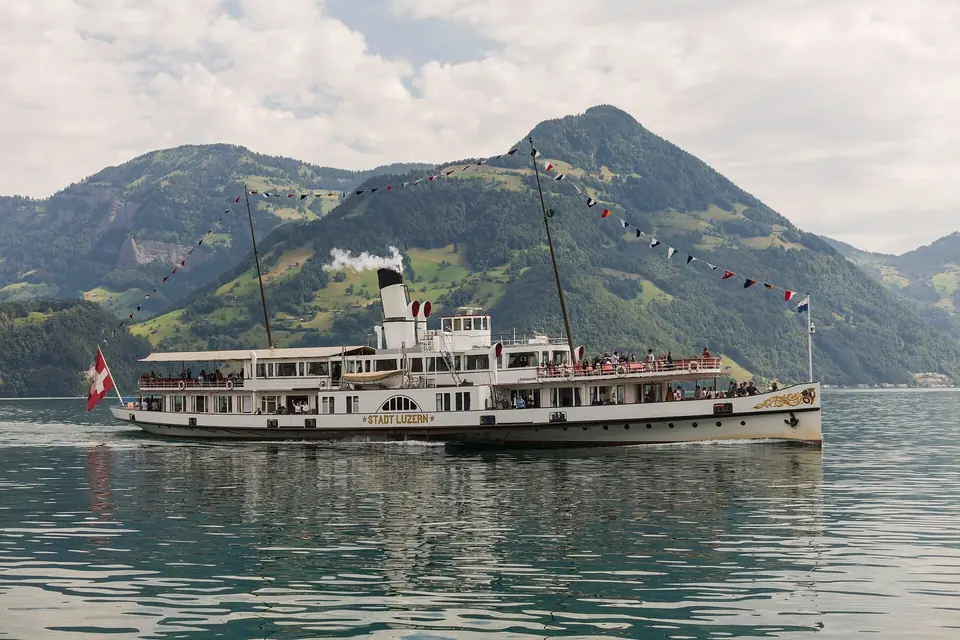
For centuries after the first Gotthard Pass track opened in 1230 and the new mail coach road reached Flüelen in 1830, boats provided the only practical link between the Gotthard route and northern Switzerland. On 17 December 1835, the Grand Council of Lucerne approved a joint-stock steamboat company founded on 1 January 1836 by Casimir Friedrich Knörr and Joseph Martin Ronca, who ordered the first paddle steamer Stadt Luzern from Escher Wyss in Zurich and launched its maiden voyage on 24 September 1837. After Karl Emanuel Müller founded a rival post steamship company in 1846 ordering the London-built steamers Waldstätter (1847) and Rigi (1848, now preserved in the Swiss Museum of Transport), the competing operators merged in 1870 into the company known since 1960 as the Lake Lucerne Navigation Company (Schifffahrtsgesellschaft des Vierwaldstättersees, or SGV, restructured in 2018 under SGV Holding AG with Shiptec AG and Tavolago AG).
Today SGV is Switzerland's largest inland shipping company, operating 14 to 16 modern motor vessels alongside five historic Belle Époque saloon paddle steamers that form the soul of lake travel in Central Switzerland:
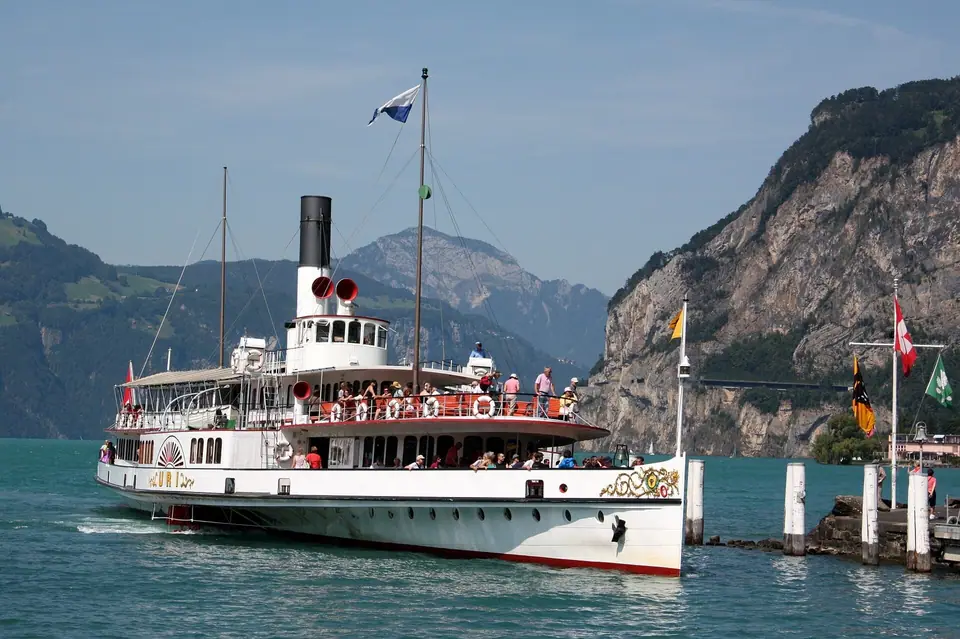
- DS Uri: Built by Sulzer in Winterthur as the senior active paddle steamer in the fleet, featuring a classic white hull and an ornate Neo-Baroque upper-deck saloon with carved woodwork and brass lamps.
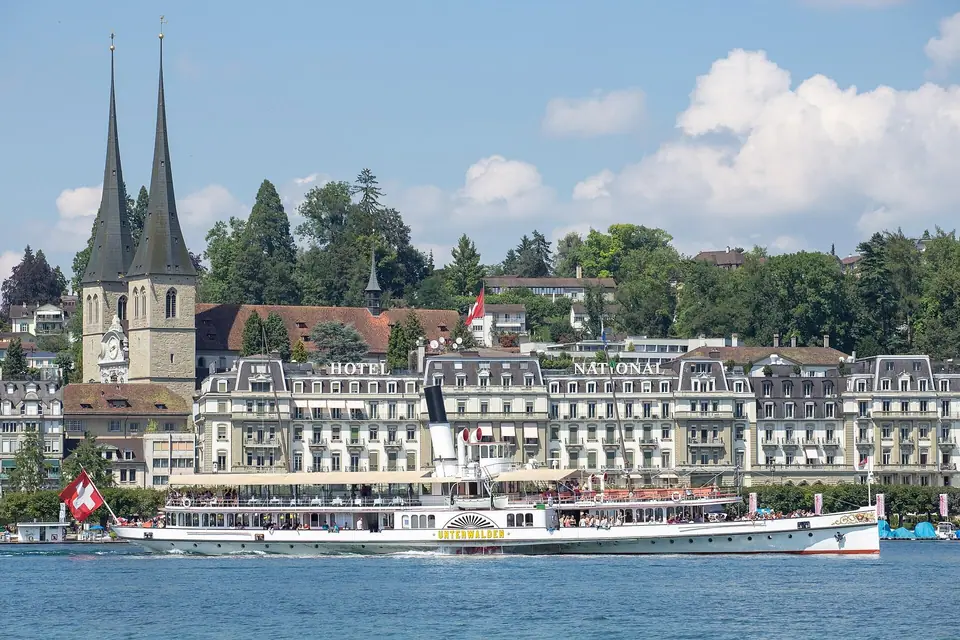
- DS Unterwalden: Constructed by Escher Wyss in Zurich and restored to its turn-of-the-century silhouette with a gilded bowsprit and Rococo-style dining saloon.
- DS Schiller: Named after Friedrich Schiller, author of the dramatic play William Tell, and celebrated for its clean Art Nouveau (Jugendstil) cherrywood and brass interior.
- DS Gallia: Built by Escher Wyss as a rapid side-wheel paddle steamer on European inland lakes, still powering express runs down the length of the lake.
- DS Stadt Luzern: Ordered from the Sachsenberg shipyard in Rosslau as the flagship of the fleet, featuring spacious Art Deco saloons across two decks and carrying ceremonial state guests.
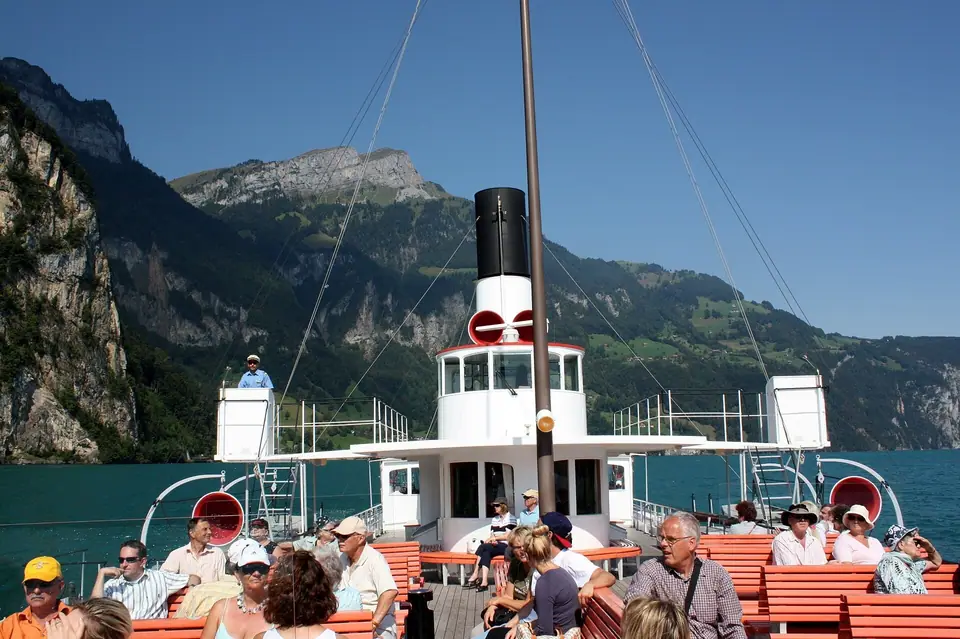
On every paddle steamer, passengers can stand by the open midship gallery to watch the gleaming red diagonal steam cylinders, crossheads, and eccentric rods driving the feathered side paddle wheels in near silence, while upper-deck dining saloons serve regional dishes and lake whitefish.
32 Lakeside Piers and the Gotthard Panorama Express
Departing from the covered piers at Bahnhofquai directly opposite Bahnhof Luzern and Jean Nouvel's KKL, SGV vessels serve 32 landing stages around the lake. Cross-quay interchanges link boats directly with the Pilatus rack railway at Alpnachstad, the Vitznau to Rigi railway at Vitznau, the Weggis aerial cableway, the Kehrsiten-Bürgenstock funicular, and the Treib to Seelisberg funicular near the historic Rütli meadow where the 1291 confederate oath is commemorated alongside the Schiller Stone and Tell's Chapel along the Urnersee. At Flüelen, steamers connect cross-quay with SBB panoramic trains heading south through the historic Gotthard tunnel to Bellinzona and Lugano on the Gotthard Panorama Express.
Choosing a Round Cruise on the Vierwaldstättersee
If you want a shorter excursion without disembarking for a mountain climb, a brief Lucerne Bay cruise loops past the Meggenhorn castle headland and the Bürgenstock cliffs, while a two-hour lunchtime or afternoon steamer cruise sails out across the Cross Funnel to Vitznau and Weggis before returning to Bahnhofquai. For the full alpine fjord experience, sail the entire 38-kilometre route from Lucerne to Flüelen across the Urnersee, where sheer rock walls rise straight out of the water and southerly Föhn winds funnel down from the Gotthard valley, then return to Lucerne by SBB train in under an hour. Because historic paddle steamers and modern motor vessels share the timetable, check the printed or online SGV schedule where steam departures are marked with a steamer symbol. Both second-class (lower deck) and upper-deck tickets are available, and standard Swiss rail passes cover regular scheduled sailings.
Walking Schweizerhofquai, Nationalquai and the Lido
In central Lucerne, a level lakeside promenade stretches along the northern shore of the bay from Schwanenplatz along chestnut-shaded Schweizerhofquai and Nationalquai past grand nineteenth-century Belle Époque hotels (described in our where to stay in Lucerne guide) and the historic timber lakeside bathhouse (Seebad Luzern) toward the sandy Lido beach and the Verkehrshaus. Across the southern shore of the bay, a quieter green path winds from behind the KKL through Inseli Park, the Ufschötti lawn beach, and the Tribschen peninsula, where composer Richard Wagner lived in the lakeside villa that now houses the Richard Wagner Museum, offering open views back toward the Hofkirche towers, the Musegg ramparts, and the alpine skyline. Benches, pedal-boat rental kiosks, and shaded music pavilions line the northern walk, making it a favourite evening stroll for locals and visitors alike as the late afternoon light catches the snowfields of the Uri Alps across the water. From either shore, you can also watch swans, coots, and crested grebes gathering where the lake funnels into the Reuss under the Seebrücke, or pause at a waterside kiosk for coffee while the paddle steamers sound their deep steam whistles before departing Bahnhofquai.
Traveller tips
Real advice from people who have been to Lake Lucerne (Vierwaldstättersee): Paddle Steamers and Promenades. Every tip is read by our team before it goes live.
No tips yet. Been here? Yours could be the first.
Thank you! Your tip will appear here after a quick review.
More in Lucerne
Continue exploring Lucerne with related neighbourhood, food, and planning guides
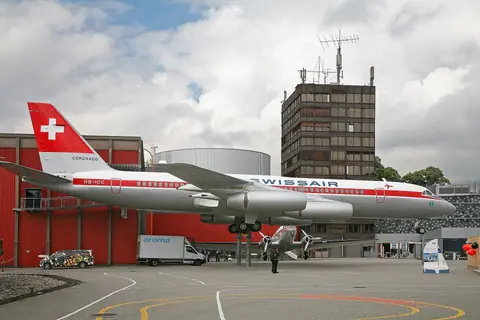
Swiss Museum of Transport (Verkehrshaus), Planetarium and Hans Erni Museum
Lucerne, Switzerland
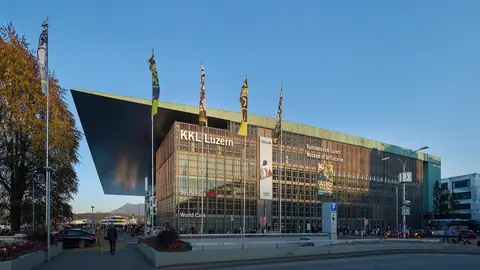
KKL Lucerne (Culture and Congress Centre) and the Twin-Towered Hofkirche
Lucerne, Switzerland
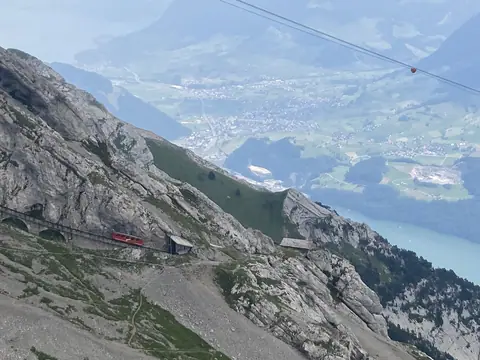
Mount Pilatus, Mount Rigi and Stanserhorn: Lucerne's Three Classic Peaks
Lucerne, Switzerland

What to Eat in Lucerne: Chügelipastete, Birnenweggen and Lake Fish
Lucerne, Switzerland
