


























Things to Do in Lucerne: Medieval Bridges, Lake Steamers and Museums
From crossing the Kapellbrücke and Spreuerbrücke to climbing the Museggmauer towers and visiting the Verkehrshaus, here are the essential experiences in Lucerne.
Lucerne concentrates medieval fortifications, nineteenth-century monuments, and contemporary architecture within an easily walkable basin between the Reuss River and the northern bay of Lake Lucerne. Because the main rail terminal, steamer piers, and Old Town footbridges sit side by side, you can combine riverside walks with major museums and alpine viewpoints without losing time in transit. Visitors stopping for a single afternoon between trains or following a 3-day Lucerne itinerary will find that the city rewards slow exploration on foot paired with trips across the water. Every landmark in the central valley links naturally to the next along traffic-free cobbles, shaded quays, or boat routes.
To make the most of the layout, group your sightseeing by shore and elevation: start along the Reuss bridges and right-bank squares in the morning, continue to the Löwenplatz monuments or the Lido museum campus around midday, and reserve clear hours for a steamer cruise or mountain railway ascent. Even on overcast days, the covered bridges, churches, and lakeside exhibition halls provide plenty of indoor shelter.
Walk Both Covered Bridges and the Reuss Needle Dam
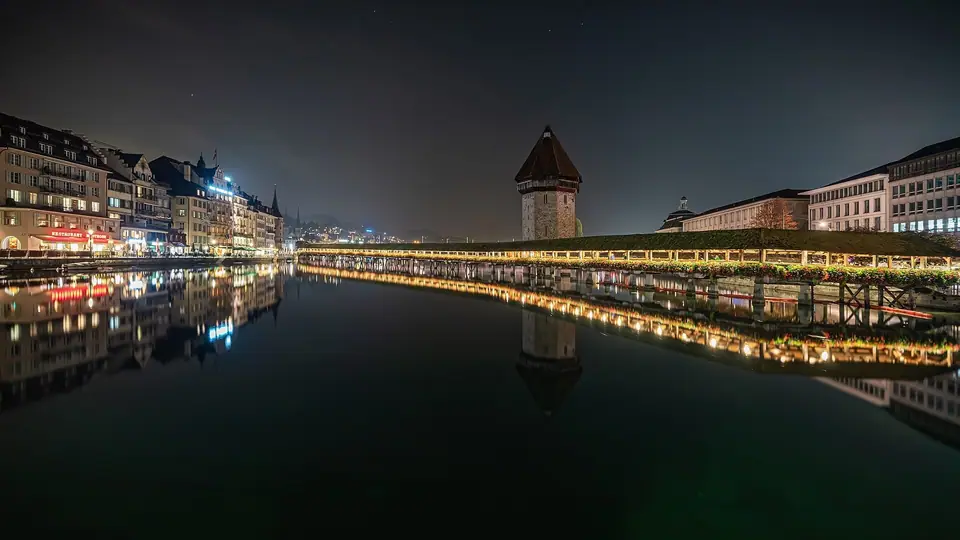
Start at the Kapellbrücke, built in the fourteenth century around 1332 to 1365 as a 204.70-metre diagonally routed wooden footbridge past the 34-metre octagonal Wasserturm. After admiring the seventeenth-century triangular gable paintings inside, follow the riverside quays downstream to the 1408 Spreuerbrücke, where 45 surviving panels painted between 1626 and 1632 under Kaspar Meglinger depict a Baroque Totentanz (Dance of Death). Immediately adjacent stands the hand-operated Nadelwehr (needle dam), constructed between 1859 and 1860 with vertical wooden spruce timbers called Nadeln that regulate the water level of Lake Lucerne at 434 metres and feed the Mühlenplatz hydroelectric plant.
Pausing on the timber walkways lets you observe how the river current accelerates as it leaves the calm lake bay and passes the historic mill race at Mühlenplatz. Along both banks, arcaded footpaths and stone embankments offer clear angles of the octagonal water tower, nesting alpine swifts in warmer months, and the row of patrician buildings lining the water. Crossing back and forth via the Rathaussteg pedestrian bridge also gives you an immediate sense of how the medieval merchant quarters connected with the left-bank monasteries, grain markets, and guild houses.
Climb the Museggmauer and Explore the Old Town
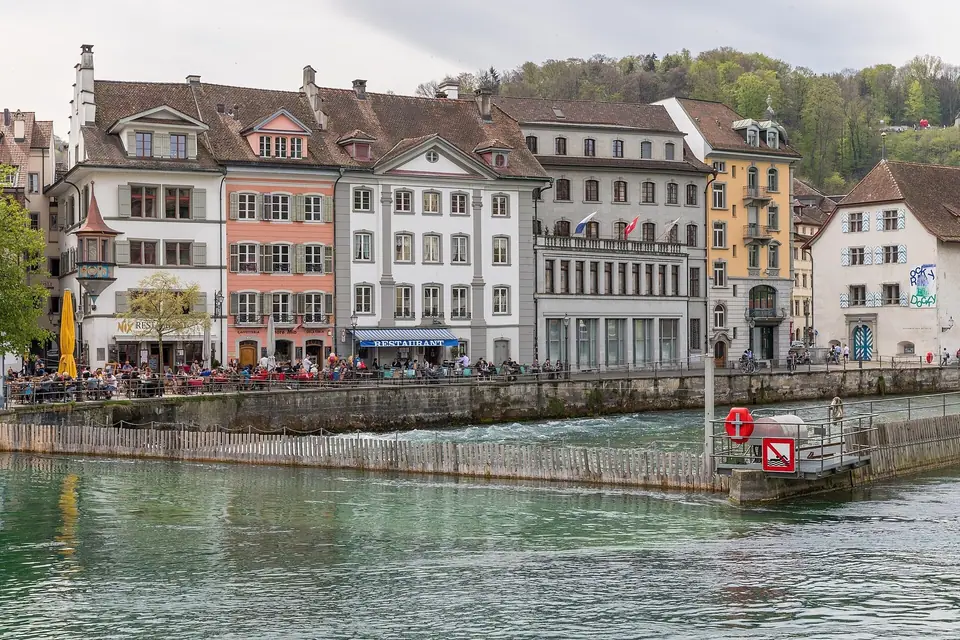
Between the Reuss and the Musegg ridge, the pedestrian Altstadt opens onto four historic plazas: Kapellplatz with its 1581 Fritschibrunnen, Kornmarkt with Anton Isenmann's 1602 to 1606 Renaissance Rathaus, Weinmarkt, and Hirschenplatz. Above the rooftops stretches the 870-metre Museggmauer with nine towers built from around 1370 into the fifteenth century. Climb the Zytturm to inspect Hans Luter's 1535 turret clock, which strikes the hour one minute before every other public clock in the city, and step across the Reuss into the 1666 to 1677 Baroque Jesuitenkirche.
Take time to look closely at the painted guild facades on Weinmarkt and Hirschenplatz, where ornate murals and wrought-iron tavern brackets recall the trades that governed medieval Lucerne. Behind the Musegg ramparts, quiet garden paths and elevated viewpoints look back over the red-tiled roofs toward the twin onion domes of the Jesuit Church and the limestone cliffs of Pilatus. Inside the Jesuit Church, the bright white-and-pink Wessobrunn stucco and expansive ceiling frescoes provide a striking contrast to the austere stone fortifications on the hill above, while the nearby Franciscan church preserves carved choir stalls and painted banners from medieval confederate battles.
Visit the Löwenplatz Ensemble and the Lakeside Museums
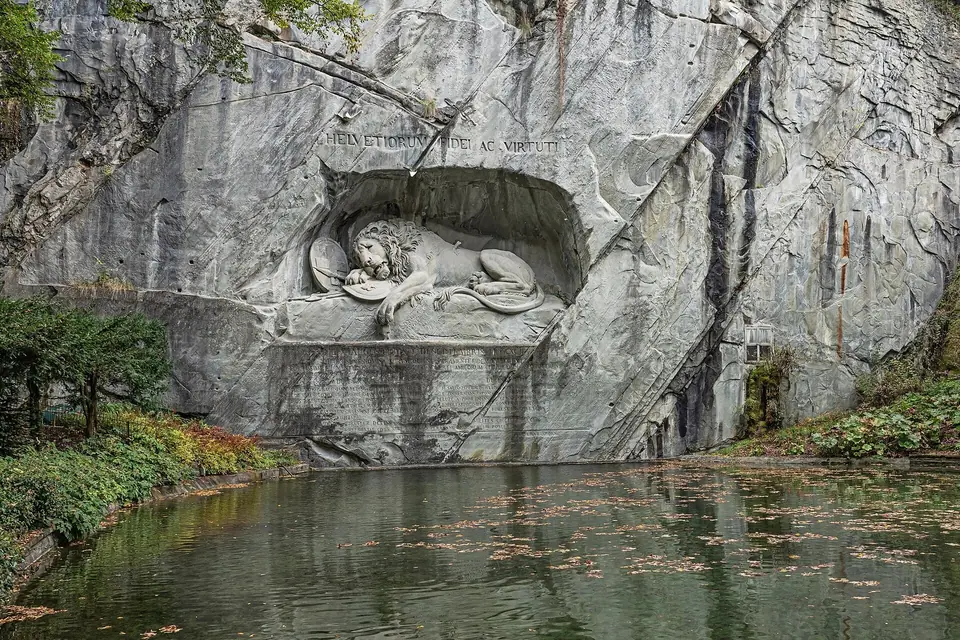
- Lion Monument (Löwendenkmal): Designed by Bertel Thorvaldsen and carved in 1820 to 1821 by Lukas Ahorn into a former sandstone quarry to honour the Swiss Guards killed at the Tuileries in 1792. The quiet reflecting pond and shaded cliff face make this an atmospheric stop in the early morning.
- Glacier Garden (Gletschergarten): Directly beside the Lion, displaying 20,000-year-old glacial potholes discovered on 2 November 1872, Franz Ludwig Pfyffer's 1762 to 1786 relief map of Central Switzerland, the 1896 Alhambra mirror maze, and the 2022 sandstone Felsenwelt rock walk leading up to the wooden Sommerau lookout tower.
- Bourbaki Panorama: Located on Löwenplatz inside an 1889 sixteen-sided rotunda housing Edouard Castres's 112-metre-long circular canvas of 1881, complete with a three-dimensional faux-terrain foreground depicting the internment of the French Eastern Army in neutral Switzerland.
- Swiss Museum of Transport (Verkehrshaus): Switzerland's most visited museum on the 22,500-square-metre Lido shore campus, opened on 1 July 1959 with historic locomotives, aircraft, cable cars, a planetarium, the giant-screen Filmtheatre, and the Hans Erni Museum.
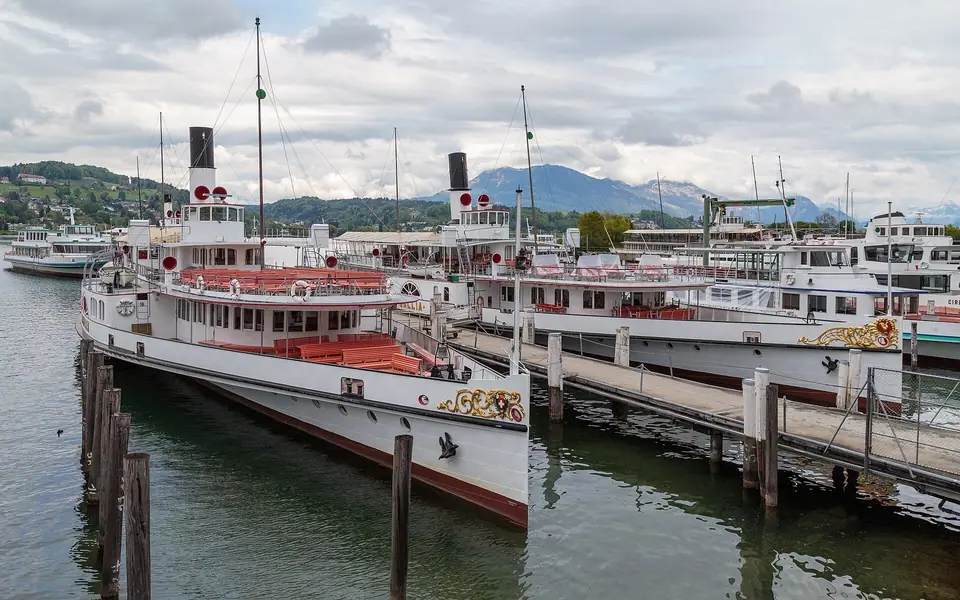
- Lake Lucerne Paddle Steamers: Board one of the five Belle Époque paddle steamers operated by the SGV from Bahnhofquai toward Vitznau, Alpnachstad, or Flüelen, or stroll the chestnut-shaded promenades of Schweizerhofquai and Nationalquai past the historic timber Seebad bathing house.
Experience KKL Architecture and the Twin-Towered Hofkirche
On the southern edge of the lake outlet, Jean Nouvel's KKL Lucerne extends its cantilevered roof out toward the bay while channelling lake water between its three internal building wings. Even outside concert hours, you can walk across Europaplatz beneath the overhanging canopy, visit the upper-level Museum of Art Lucerne (Kunstmuseum Luzern), or book an architectural tour of Russell Johnson's shoebox concert hall. Directly across the bay at the end of Nationalquai, climb the stone steps to the Hofkirche St. Leodegar to see its two 69-metre twelfth-century Gothic-Romanesque towers, carved Renaissance choir stalls, wrought-iron rood screen, and serene Italianate churchyard arcades where patrician families of Lucerne are buried.
Ride Rack Railways to Alpine Summits and Taste Guild Cuisine
No visit to Lucerne is complete without ascending at least one of the surrounding peaks on a day trip to Mount Pilatus, Mount Rigi, or the Stanserhorn. Sail by steamer to Alpnachstad for Eduard Locher's 48%-gradient cogwheel railway up Pilatus, cruise to Vitznau for Niklaus Riggenbach's 1871 mountain railway up Rigi, or ride the Zentralbahn to Stans for the 1893 funicular and open-top double-decker CabriO cableway up the Stanserhorn. Each mountain offers signposted ridge walks and panoramic terraces overlooking the branching arms of the Vierwaldstättersee. Back in town, round off your day by sampling Luzerner Chügelipastete, pan-fried lake whitefish, and spiced Birnenweggen in a historic riverside tavern along Kornmarkt or Rathausquai.
Traveller tips
Real advice from people who have been to Things to Do in Lucerne: Medieval Bridges, Lake Steamers and Museums. Every tip is read by our team before it goes live.
No tips yet. Been here? Yours could be the first.
Thank you! Your tip will appear here after a quick review.
More in Lucerne
Continue exploring Lucerne with related neighbourhood, food, and planning guides
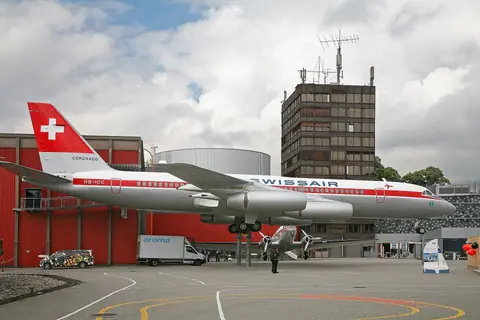
Swiss Museum of Transport (Verkehrshaus), Planetarium and Hans Erni Museum
Lucerne, Switzerland
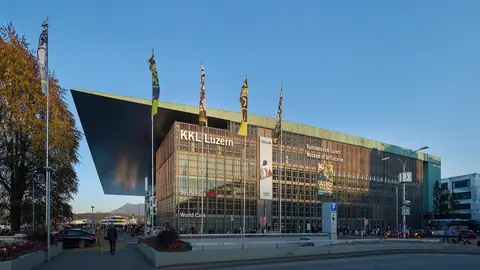
KKL Lucerne (Culture and Congress Centre) and the Twin-Towered Hofkirche
Lucerne, Switzerland
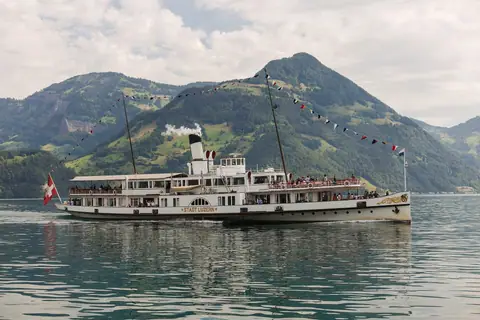
Lake Lucerne (Vierwaldstättersee): Paddle Steamers and Promenades
Lucerne, Switzerland
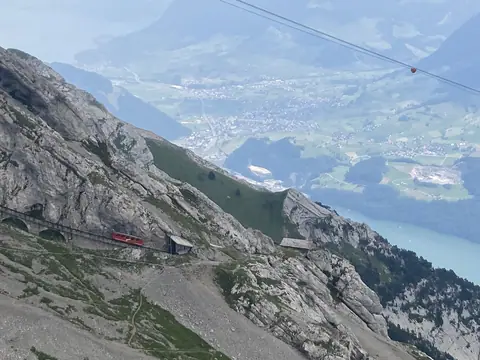
Mount Pilatus, Mount Rigi and Stanserhorn: Lucerne's Three Classic Peaks
Lucerne, Switzerland
