


























Mount Pilatus, Mount Rigi and Stanserhorn: Lucerne's Three Classic Peaks
Compare Lucerne's three signature mountain excursions: the 48% cogwheel railway up Mount Pilatus, Europe's oldest mountain railway up Rigi, and the Stanserhorn CabriO.
Three famous summits rise directly around the arms of Lake Lucerne, each linked to the city by pioneering nineteenth-century rack or funicular railways combined with modern aerial cableways. You can complete any of the three as a half-day or full-day round trip from Bahnhof Luzern, or include two of them across our 3-day Lucerne itinerary.
Although all three peaks look out over the Vierwaldstättersee and the snow-covered Bernese and Uri Alps, each mountain has a distinct geological character and engineering history: Pilatus is a jagged limestone crag conquered by a 48%-gradient horizontal cogwheel system; Rigi is a grassy Nagelfluh conglomerate ridge served by the first mountain rack railway in Europe; and the Stanserhorn pairs an 1893 wooden funicular carriage with an open-top double-decker aerial cableway.
Mount Pilatus (2,128.5 m) and Eduard Locher's 48% Rack Railway
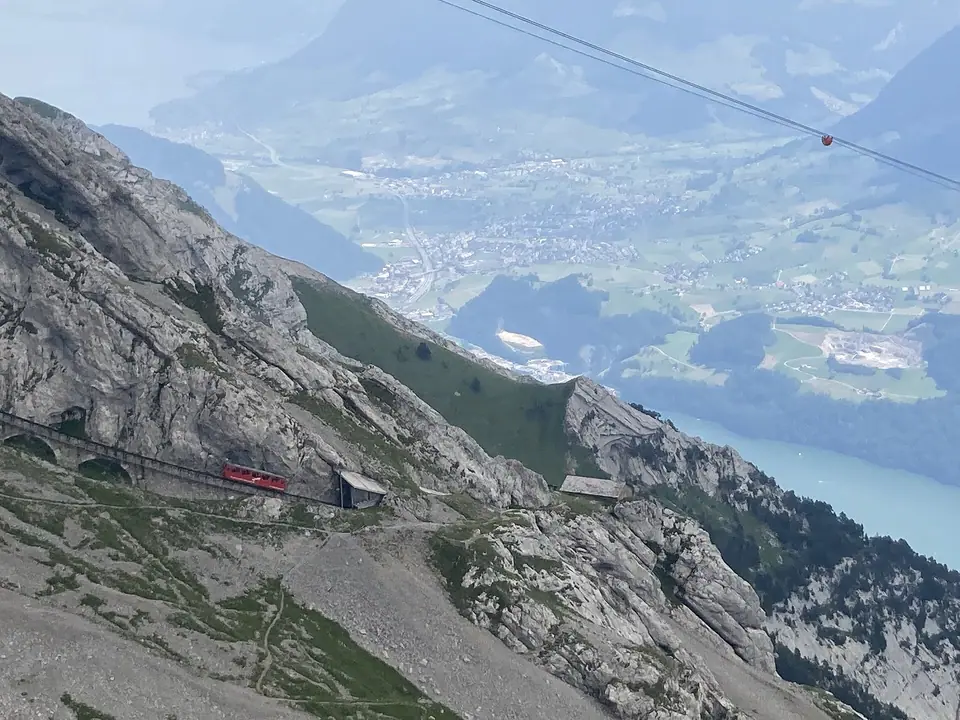
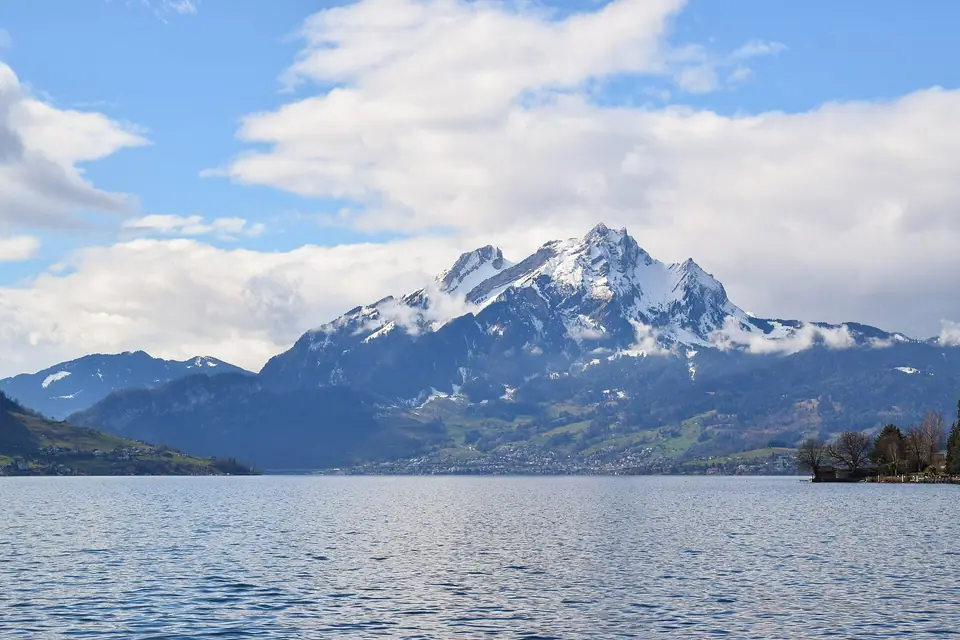
Dominating Lucerne's southern horizon on the border of Obwalden, Nidwalden, and Lucerne, the rugged Pilatus massif reaches 2,128.5 metres at its Tomlishorn summit (and 2,118.7 metres at the Esel peak beside the 2,070-metre Pilatus Kulm terminus). Historic ascents include Duke Christoph of Württemberg in 1518, Zurich naturalist Conrad Gessner in 1555, and Queen Victoria on horseback from Alpnach on 31 August 1868. On the southern flank from Alpnachstad (440 metres), Zürich engineer Eduard Locher solved the extreme gradient by inventing a horizontal double-pinion cogwheel rail system with stabilizing running rings underneath so the gears could never climb out of the central toothed rack, even in fierce mountain crosswinds.
Built across 4.618 kilometres of 800-millimetre-gauge track over a continuous masonry substructure through seven tunnels without a single bridge, the Pilatus Railway opened with steam traction on 4 June 1889 and was electrified at 1,550 volts DC on 15 May 1937 (two of its historic railcars are preserved at the Swiss Museum of Transport). Climbing 1,629 vertical metres at an average gradient of 35% and a maximum gradient of 48% across the sheer MattAlp rock wall, it remains the steepest rack railway in the world and introduced eight new panoramic Bhe 4/4 railcars in 2023 with diagonal track-transfer tables instead of conventional points.
The Pilatus Golden Round Trip via Kriens and Fräkmüntegg
While the Alpnachstad cogwheel line operates from May to November (see our best time to visit Lucerne guide for seasonal windows), year-round access runs up the northern side from Kriens via the Panorama Gondola over Krienseregg to Fräkmüntegg and the upper aerial cableway known as the "Dragon Ride" (opened in 1956 and rebuilt in 1983 and 2015) to the 1890 Hotel Pilatus-Kulm and 1960 Hotel Bellevue. In summer, the classic "Golden Round Trip" lets travellers sail from Lucerne to Alpnachstad on an SGV boat, climb the 48% cogwheel railway to Pilatus Kulm, walk the rock-cut Dragon Path (Drachenweg) through cliffside galleries or climb the stepped path to the Esel viewpoint and Tomlishorn trail where wild alpine ibex graze on the limestone ledges, and descend by aerial cableway and gondola to Kriens for VBL trolleybus line 1 back to Bahnhofplatz.
Mount Rigi (1,797.5 m) and Europe's First Mountain Railway
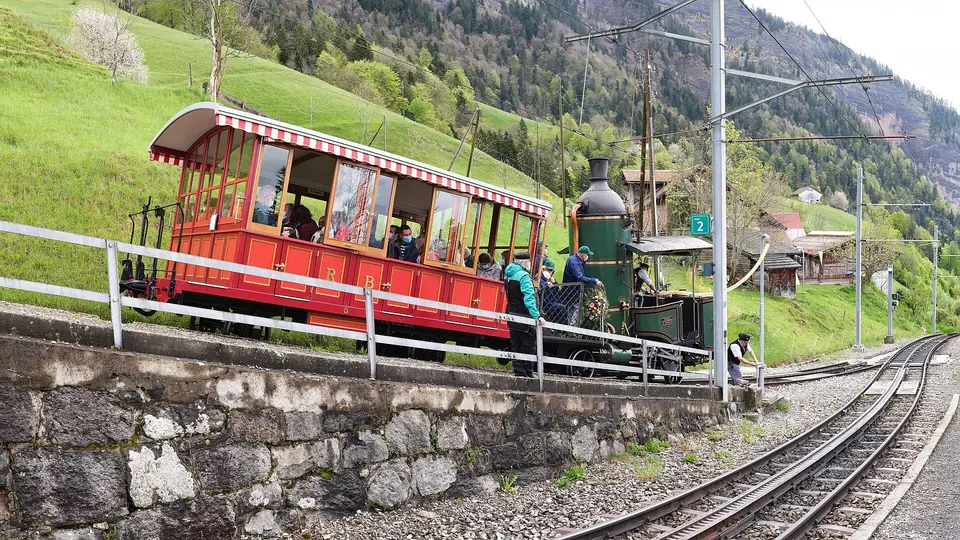
Rising between Lake Lucerne, Lake Zug, and Lake Lauerz in the Schwyz Alps, Mount Rigi ("Queen of the Mountains", Königin der Berge) culminates at Rigi Kulm at 1,797.5 metres. On 21 May 1871, Swiss engineer Niklaus Riggenbach opened the standard-gauge (1,435 mm) Vitznau to Rigi Railway from the lakeside steamer pier at Vitznau, the first mountain rack railway in Europe, followed on 4 June 1875 by the Arth to Rigi Railway climbing the northern flank from Arth-Goldau. In 1992 both lines merged into Rigi Bahnen AG, which also operates the 1968 Weggis to Rigi Kaltbad aerial cableway.
Walking Trails and Mario Botta's Spa on Mount Rigi
Because both the Vitznau and Arth-Goldau cogwheel lines operate every day of the year, Rigi is Lucerne's most reliable winter and shoulder-season viewpoint whenever low stratus fog fills the plateau below. From the Rigi Kulm summit tower, a gentle panoramic walking trail descends past alpine dairy pastures via Rigi Staffel to the car-free village of Rigi Kaltbad (1,433 metres), where Swiss architect Mario Botta designed the stone-and-crystal Mineralbad & Spa with indoor and outdoor thermal pools overlooking the Alps. From Rigi Kaltbad, you can glide down by aerial cableway to Weggis or ride the rack train down to Vitznau to meet an afternoon SGV steamer.
The Stanserhorn (1,898 m) and the Open-Top CabriO
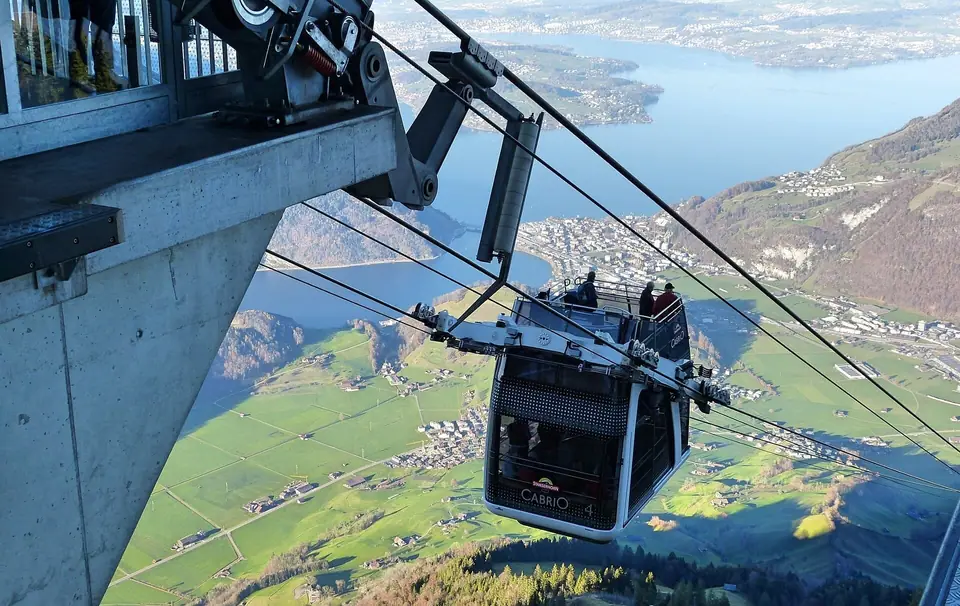
South of Stans in Nidwalden (450 metres, reached in twenty minutes from Lucerne by Zentralbahn train), the 1,898-metre Stanserhorn pairs the surviving lower section of the 1893 Stanserhornbahn wooden funicular (engineered by Niklaus Riggenbach and Wilhelm Bucher from Stans up to Kälti at 714 metres) with the world's first open-top double-decker aerial cableway, the Garaventa CabriO opened in 2012. Carrying 60 passengers (including 30 up a spiral staircase on its unroofed upper deck with the support cables running beside rather than above the cabin), the CabriO rises to the 1,850-metre summit station, the 2001 revolving Rondorama restaurant, a marmot enclosure, and a thirty-minute circular ridge trail staffed by volunteer Stanserhorn rangers.
How to Choose Between Pilatus, Rigi and the Stanserhorn
- Choose Mount Pilatus for dramatic limestone cliffs, the 48%-gradient cogwheel railway from Alpnachstad, high-altitude ibex sightings, and the combined boat-rail-cableway Golden Round Trip.
- Choose Mount Rigi for year-round cogwheel trains, easy ridge hikes across green pastures, historic steamer links at Vitznau, and Mario Botta's thermal bath at Rigi Kaltbad.
- Choose the Stanserhorn (open April to November) for the combination of an 1893 open-window wooden funicular and the rooftop deck of the CabriO cableway, plus traditional Älplermagronen served in the revolving summit restaurant. Before setting out on any peak excursion, check live summit webcams at Bahnhof Luzern so you can time your ascent for clear skies above the valley clouds, and pack a windproof layer, sunglasses, and sturdy walking shoes even on warm summer days because temperatures at 2,000 metres sit well below the lakeside quays. Holders of the Swiss Travel Pass or regional Tell-Pass enjoy major reductions or full coverage across these mountain lines, and tickets can be validated directly at the valley stations or onboard the connecting boats without advance seat reservations on regular runs.
Traveller tips
Real advice from people who have been to Mount Pilatus, Mount Rigi and Stanserhorn: Lucerne's Three Classic Peaks. Every tip is read by our team before it goes live.
No tips yet. Been here? Yours could be the first.
Thank you! Your tip will appear here after a quick review.
More in Lucerne
Continue exploring Lucerne with related neighbourhood, food, and planning guides
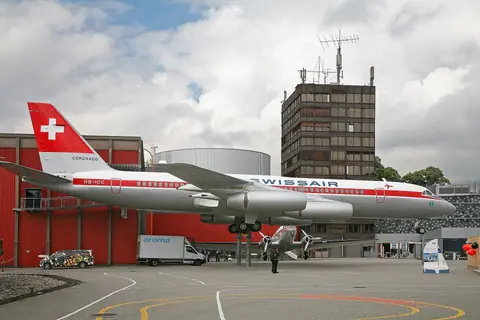
Swiss Museum of Transport (Verkehrshaus), Planetarium and Hans Erni Museum
Lucerne, Switzerland
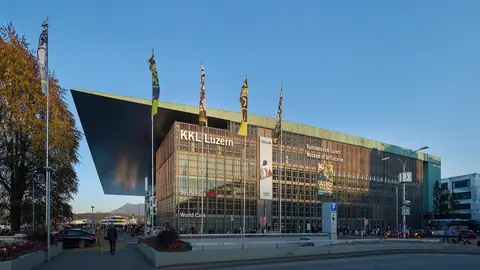
KKL Lucerne (Culture and Congress Centre) and the Twin-Towered Hofkirche
Lucerne, Switzerland
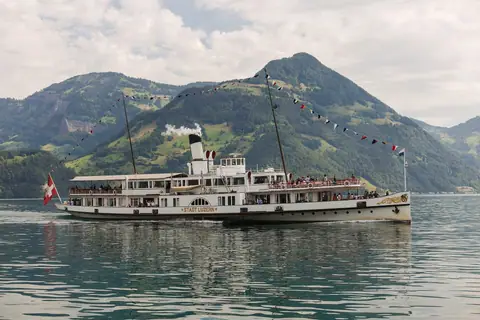
Lake Lucerne (Vierwaldstättersee): Paddle Steamers and Promenades
Lucerne, Switzerland

What to Eat in Lucerne: Chügelipastete, Birnenweggen and Lake Fish
Lucerne, Switzerland
