


























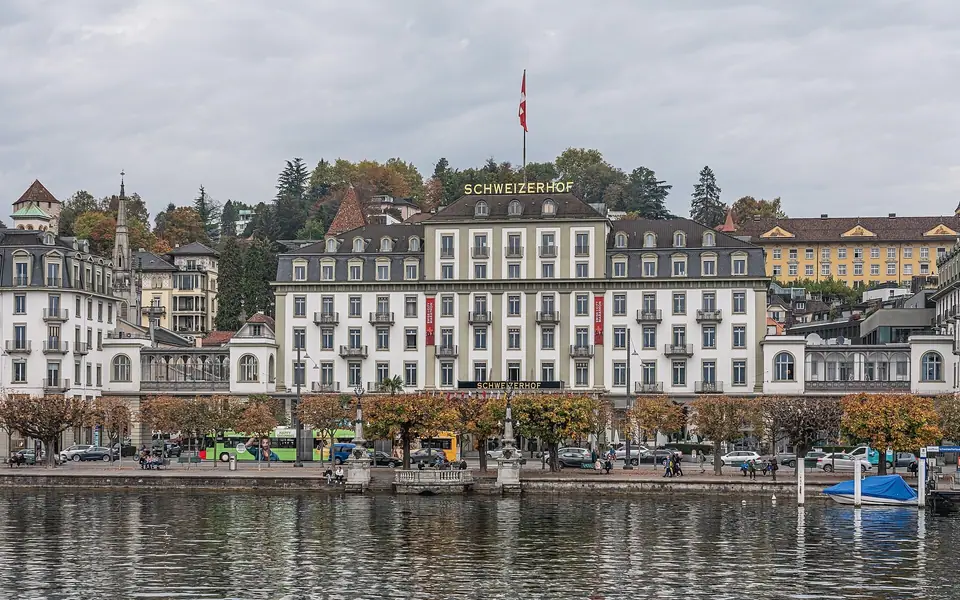
Where to Stay in Lucerne: Altstadt, Left Bank, Lakefront and Hillsides
Compare Lucerne's four best neighbourhoods for overnight stays: the pedestrian right-bank Altstadt, the convenient Left Bank and Hirschmatt, the grand Lakefront, and the hills.
Because central Lucerne is divided by the Reuss River and curved around the north-western bay of Lake Lucerne, with city neighbourhoods 01 to 10 occupying the right shore and neighbourhoods 11 to 19 occupying the left shore of the Lucerne Bay, choosing where to stay comes down to whether you prefer waking up on car-free medieval cobbles, stepping straight off the platform at Bahnhof Luzern, looking out over the bay toward the Alps from a historic Belle Époque palace, or sleeping on a forested ridge above the rooftops.
Because the municipal core is compact, any hotel in the Altstadt, Kleinstadt, Neustadt, or along the northern lakefront places you within a ten- to fifteen-minute walk of the Kapellbrücke, the steamer piers, and the main rail station. Every registered overnight guest in the city also receives the complimentary Lucerne Visitor Card for local VBL trolleybus and zone 10 rail travel, plus free public Wi-Fi hotspots across the town squares and lakefront promenades.
Right-Bank Altstadt (Old Town)
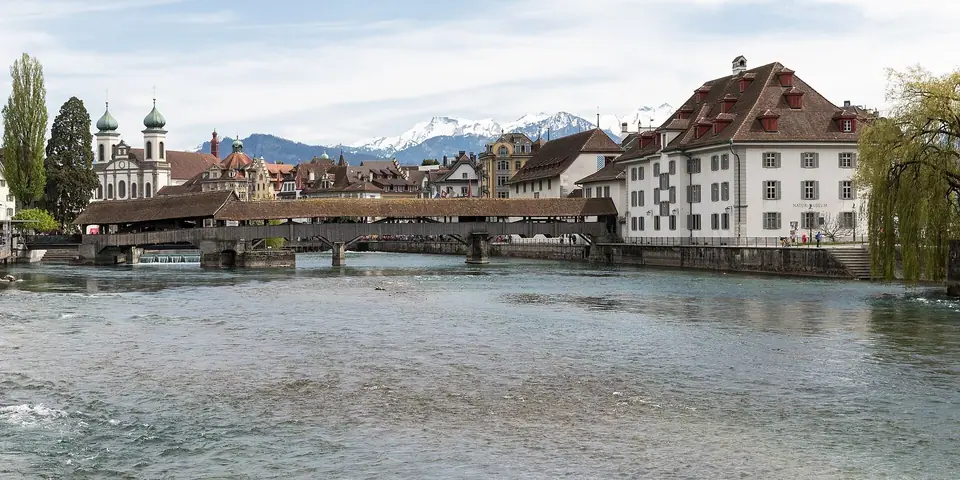
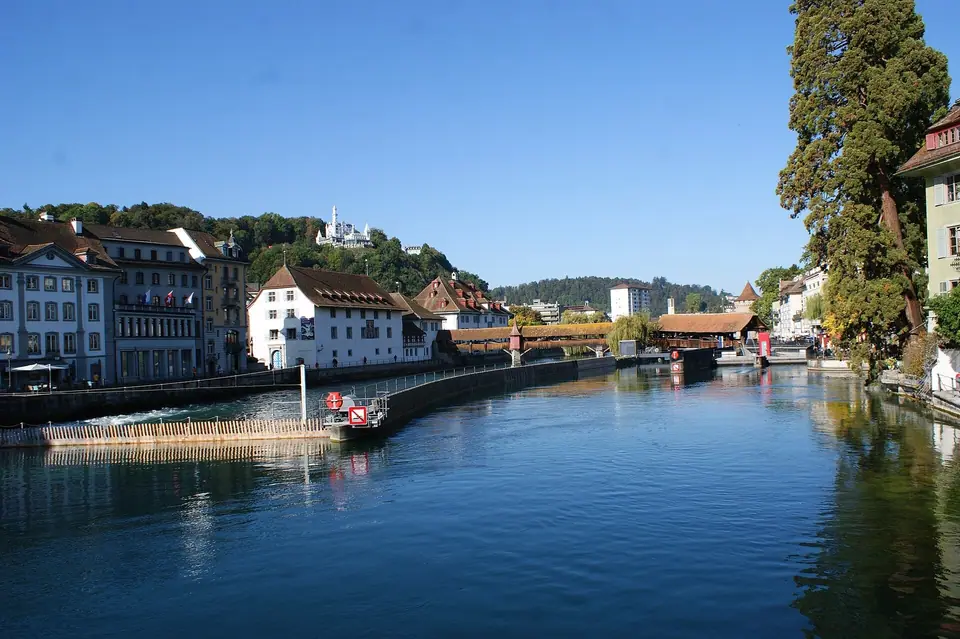
Stretching from Rathausquai and Schwanenplatz up to the foot of the 870-metre Museggmauer, the right-bank Altstadt puts you on pedestrian squares such as Weinmarkt, Hirschenplatz, Kornmarkt, and Kapellplatz and directly overlooking the Kapellbrücke and Spreuerbrücke. Many hotels occupy converted guild houses and medieval townhouses with frescoed facades and river balconies above the Reuss. Taxis drop off at the edges of the pedestrian zone, and every square, bridge, and museum in the historic core lies within a ten-minute walk.
Staying inside the Old Town is particularly rewarding in the early morning and late evening, when day-trippers have departed and the primary sound along Rathausquai and Mühlenplatz is the rush of the Reuss over the Nadelwehr weir and the chime of the Zytturm clock. Keep in mind that historic guild buildings may have stepped entries or cobbled approaches, so travellers with heavy wheeled suitcases often prefer properties along the level riverside quays or near Schwanenplatz.
Left Bank (Kleinstadt, Bahnhof and Hirschmatt-Neustadt)
Across the Reuss on the southern bank, the medieval Kleinstadt ("Lesser Town") around the 1666 to 1677 Jesuitenkirche, the Franziskanerkirche, the Luzerner Theater, and Kasernenplatz together with the adjacent nineteenth-century grid of the Hirschmatt-Neustadt district around Bahnhof Luzern, Zentralstrasse, Pilatusstrasse, and Bundesplatz offer the easiest logistics for rail travellers. Staying within a five-minute walk of the main station, Jean Nouvel's KKL, and the Bahnhofquai steamer piers makes morning departures to Pilatus, Rigi, or the Stanserhorn and onward SBB journeys to Zurich or Geneva completely effortless.
Beyond its station proximity, the Hirschmatt-Neustadt quarter around Helvetiaplatz (with its weekly neighbourhood market and relaxed cafes) and the Bruggacher-Bruch quarter offer contemporary boutique hotels, bakeries, and neighbourhood restaurants at slightly gentler nightly rates than the direct lakefront, while still keeping the wooden bridges within a ten-minute walk. This left-bank grid is flat, leafy, and well served by late-evening dining and VBL bus lines.
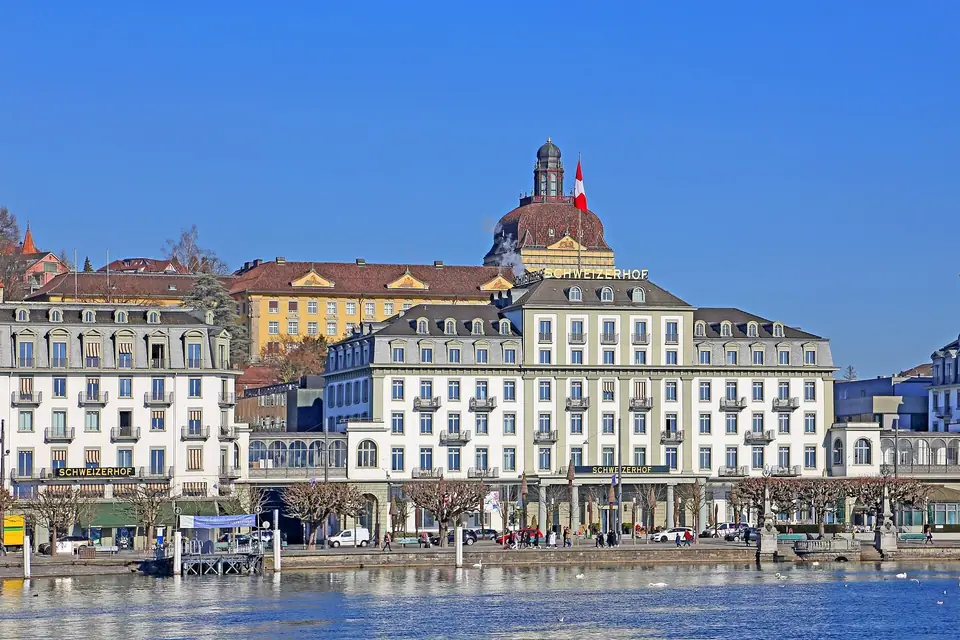
Schweizerhofquai, Nationalquai and Haldenstrasse
After the medieval Hofbrücke was demolished in the nineteenth century and the right-bank lakeshore was filled in, Schweizerhofquai and Nationalquai beneath the twin 69-metre towers of the Hofkirche St. Leodegar became the showcase boulevard of Swiss grand hotel architecture from 1840 onward, led by the historic Hotel Schweizerhof (where Leo Tolstoy set his 1857 story Lucerne and Richard Wagner stayed before moving to Tribschen) and the Hotel National (where César Ritz and Auguste Escoffier worked together in the late nineteenth century). South-facing lakefront rooms look out across the double row of chestnut trees and the steamer bay toward Mount Pilatus and the Bürgenstock peninsula, while Haldenstrasse continues east along the water toward the Lido beach and the Swiss Museum of Transport.
Löwenplatz and the Musegg Quarter
Immediately north-east of the Old Town between the Hofkirche and Löwenplatz, mid-scale hotels and traditional city inns sit steps from the Lion Monument, the Glacier Garden, and the Bourbaki Panorama. This area provides quick bus links back to Bahnhofplatz along Zürichstrasse while keeping you within a five-minute walk of both the lake promenade and the eastern towers of the Museggmauer, making it a practical compromise between Old Town atmosphere and modern street access.
Gütsch Hill, Montana Ridge and the Bürgenstock Exclave
Rising between the western hill of Gütsch and the north-eastern hill of Dietschiberg (with the Sonnenberg reaching 800 metres in the core territory), Lucerne's hillsides host landmark viewpoint hotels. On the wooded western ridge above Baselstrasse and the Spreuerbrücke stands the turreted nineteenth-century Château Gütsch (where Queen Victoria stayed in 1868), reached in two minutes from the valley floor by the twin inclined cabins of the Gütschbahn funicular. Above Nationalquai on the Adligenswilerstrasse slope, the Art Deco Hotel Montana is linked directly to the Haldenstrasse lakeshore promenade by a dedicated public funicular railway. Across the lake, Lucerne's forested Bürgenstock municipal exclave rises to 1,127.8 metres above the water, accessible by SGV catamaran from Bahnhofquai and the historic Kehrsiten-Bürgenstock funicular.
How to Match Your Base to Your Trip Style
- Newcomers and history lovers: Choose a converted guild house in the right-bank Altstadt or the left-bank Kleinstadt facing the covered bridges and cobbled plazas, where traditional taverns serving Luzerner Chügelipastete sit right downstairs.
- Rail-pass travellers and concertgoers: Stay on the Left Bank in Hirschmatt-Neustadt within steps of Bahnhof Luzern, the KKL, and the Bahnhofquai steamer piers, where level pavements make rolling luggage between train platforms and hotel lobbies completely straightforward.
- Families and museum visitors: Consider the eastern lakefront along Haldenstrasse or near Löwenplatz for easy access to the Lido beach, the Glacier Garden, and the Swiss Museum of Transport, as well as lakeside playgrounds and shaded picnic lawns.
- Lakefront views and special occasions: Book a south-facing balcony room along Schweizerhofquai, Nationalquai, Haldenstrasse, or on the Gütsch and Bürgenstock ridges, and reserve several months ahead if your dates coincide with the August to September Lucerne Festival, the December Christmas markets on Franziskanerplatz, or February's Luzerner Fasnacht. You can also request your digital Lucerne Visitor Card by email from your accommodation before arrival so that your transfer from Bahnhof Luzern on VBL trolleybuses is covered as soon as you step off the train onto Bahnhofplatz, and hotel reception desks can hold your bags on departure day while you take a final lake cruise.
Traveller tips
Real advice from people who have been to Where to Stay in Lucerne: Altstadt, Left Bank, Lakefront and Hillsides. Every tip is read by our team before it goes live.
No tips yet. Been here? Yours could be the first.
Thank you! Your tip will appear here after a quick review.
More in Lucerne
Continue exploring Lucerne with related neighbourhood, food, and planning guides
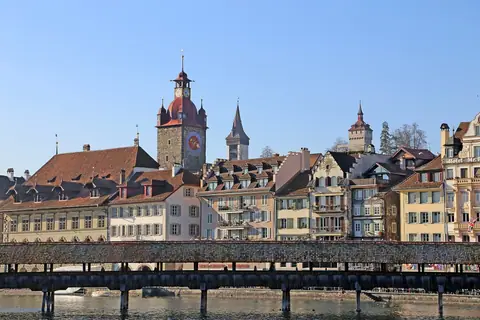
Lucerne Altstadt, Weinmarkt, Kornmarkt and the Jesuit Church
Lucerne, Switzerland
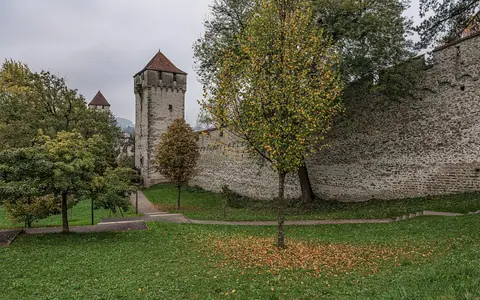
Museggmauer, the Nine Towers and the 1535 Zytturm Clock
Lucerne, Switzerland
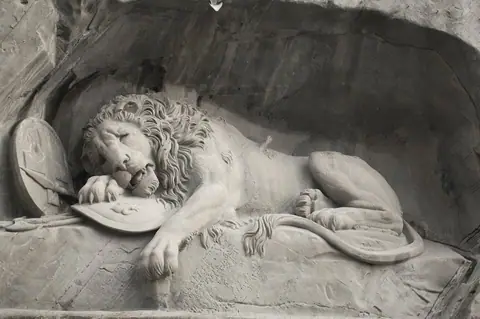
Lion Monument, Glacier Garden and Bourbaki Panorama at Löwenplatz
Lucerne, Switzerland
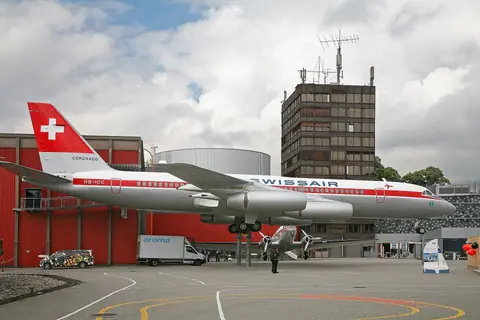
Swiss Museum of Transport (Verkehrshaus), Planetarium and Hans Erni Museum
Lucerne, Switzerland
