


























How to Get to Lucerne: Bahnhof Luzern, SBB Trains and Public Transport
Arrive in Lucerne via Zurich Airport and Santiago Calatrava's Bahnhof Luzern, and navigate the city with VBL trolleybuses, Zentralbahn trains, and SGV ships.
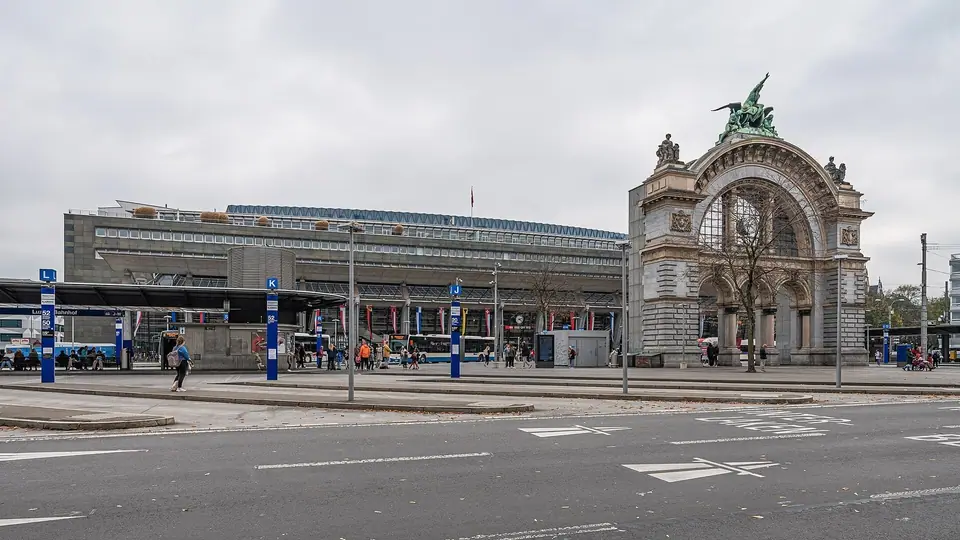
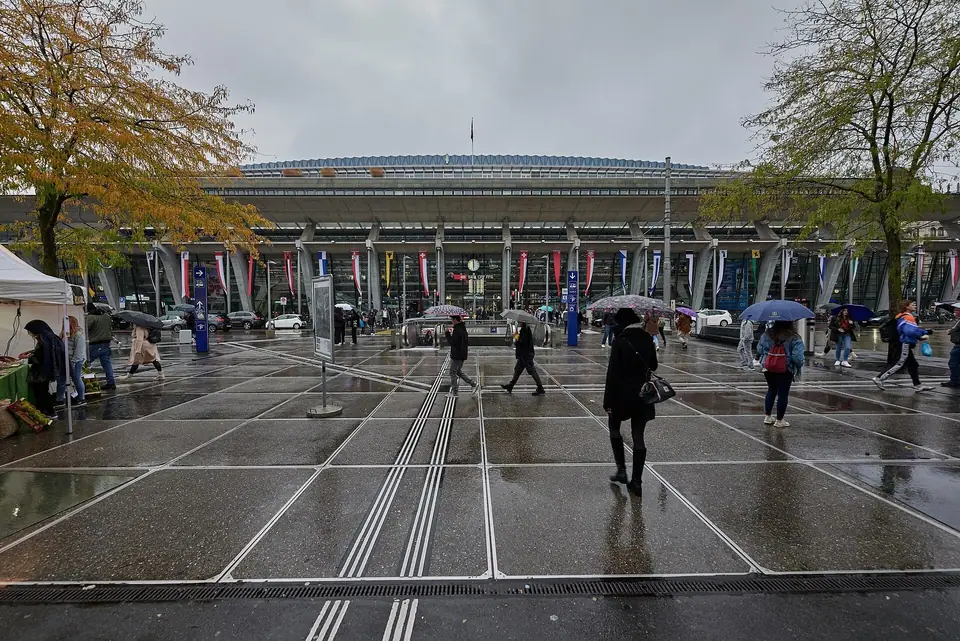
Serving 103,500 rail passengers every day as the third-busiest railway station in Switzerland, Bahnhof Luzern sits directly on the southern shore of the lake bay in the Neustadt between the KKL and Pilatusstrasse. Within a single waterfront square on Bahnhofplatz, standard-gauge Swiss Federal Railways (SBB) main lines connect directly with metre-gauge Zentralbahn alpine trains, urban VBL trolleybuses, and the lakeside piers of the SGV passenger fleet.
Because this integrated transport hub sits right at the lake outlet, arriving passengers step from their train platform into the open air and see the Kapellbrücke, the Old Town rooftops, and the steamer landing stages immediately ahead. Travellers arriving from an international airport or linking Central Switzerland with the Bernese Oberland or Ticino will find that every transfer happens on the level without long underground corridors.
Three Generations of Bahnhof Luzern (1859, 1896 and 1991)
After the Schweizerische Centralbahn (SCB) reached Emmenbrücke from Basel and Olten in 1856 and the city council approved the lakeshore Fröscheburg site on 30 June 1857 (in exchange for SCB funding toward the Reuss needle dam), Lucerne's first single-storey wooden station designed by Ludwig Maring opened on 1 June 1859. Following direct rail links to Zurich via Zug in 1864, to Bern via Langnau in 1875, and the metre-gauge Brünig railway in 1889, a grand stone terminal with a high cupola designed by Hans Wilhelm Auer opened in 1896 turned ninety degrees toward the lake.
On the morning of 5 February 1971, a fire broke out in the staff quarters as a blowtorch was used to thaw frozen water pipes, collapsing the cupola within an hour and destroying the 1896 station except for its freestanding sandstone portal arch on Bahnhofplatz topped by sculptor Richard Kissling's allegorical group Zeitgeist. Following a 1980 architectural competition, the third and current station opened on 5 February 1991, exactly twenty years after the blaze, planned by architects Hans-Peter Ammann and Peter Baumann with a soaring glass-and-concrete entrance hall designed by their former collaborator Santiago Calatrava.
Direct Rail Links from Zurich Airport, Basel, Bern and Geneva
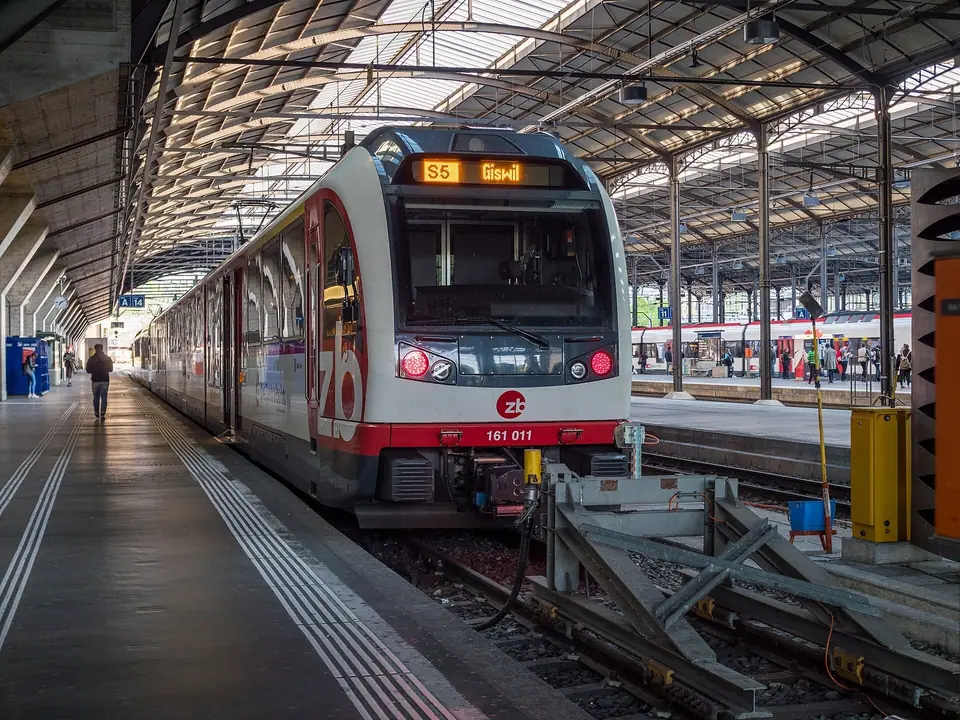
Today the terminal operates seven island platforms with fourteen dead-end tracks numbered 2 to 15. Standard-gauge SBB InterCity and InterRegio trains link Lucerne directly with Zurich Hauptbahnhof in roughly 45 minutes and with Zurich Airport (Flughafen Zürich) in about an hour, with two departures every hour throughout the day (one direct InterRegio and one connection via Zurich HB). Direct standard-gauge services also run north-west to Basel SBB via Sursee and Olten, west to Bern and Geneva Airport, and south via Arth-Goldau where travellers connect onto high-speed Gotthard Base Tunnel trains toward Bellinzona, Lugano, and Milan.
Because Bahnhof Luzern is a terminal head-house station (Kopfbahnhof), all fourteen tracks end at a single wide cross-platform concourse at ground level. You can walk from an arriving SBB InterCity train on the western tracks to a departing regional train or out to the bus and boat terminals in less than two minutes without climbing stairs.
Metre-Gauge Zentralbahn Lines to Interlaken and Engelberg
On the eastern side of the platform hall (tracks 12 to 15), approached since late 2012 through the underground double-track Kriens Mattenhof tunnel, the metre-gauge Zentralbahn operates both commuter S-Bahn trains and scenic alpine routes. Hourly Luzern-Interlaken Express panoramic trains climb over the cogwheel-assisted Brünig Pass past Lungern, Meiringen, and Lake Brienz to Interlaken Ost as part of the GoldenPass route, while hourly Luzern-Engelberg Express trains run via Stans (for the Stanserhorn) up into the high valley of Engelberg and also stop at Alpnachstad for the Mount Pilatus cogwheel railway.
VBL Trolleybuses and the Lucerne Visitor Card
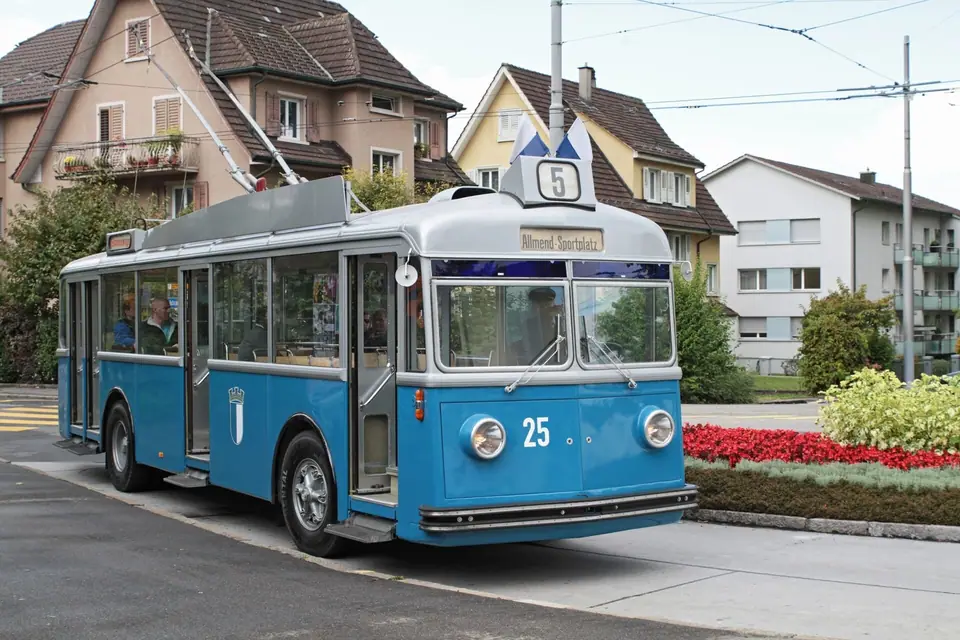
Outside the concourse beneath the translucent canopy of Bahnhofplatz, local electric trolleybuses and buses operated by Verkehrsbetriebe Luzern (VBL) serve every municipal neighbourhood. Key routes for visitors include trolleybus line 1 to Kriens (Zentrum Pilatus) for the Pilatus Panorama Gondola, and trolleybus lines 6, 8, and 24 along Haldenstrasse to the Swiss Museum of Transport and Lido beach. Guests staying overnight at hotels, hostels, or campsites listed in our where to stay in Lucerne guide receive the digital or printed Lucerne Visitor Card, which covers local buses and second-class trains within tariff zone 10 across the city (excluding boat trips and mountain railways).
Swiss Travel System Passes and the Tell-Pass
If you plan multiple lake cruises and summit excursions across our 3-day Lucerne itinerary, compare two main rail passes before buying individual point-to-point tickets. The national Swiss Travel Pass covers SBB trains, Zentralbahn routes, VBL city buses, SGV Lake Lucerne steamers, and full ascents up Mount Rigi and the Stanserhorn (plus a half-price reduction on Mount Pilatus and free entry to the Glacier Garden and Bourbaki Panorama). Alternatively, the regional Tell-Pass for Central Switzerland covers all trains, buses, SGV boats, and full ascents of Pilatus, Rigi, and the Stanserhorn within the Lake Lucerne region.
Cross-Quay Steamer Transfers and Walking the Historic Core
Directly across Bahnhofplatz from the 1896 portal arch sit the covered Bahnhofquai piers of the SGV fleet, allowing you to step off a train and onto a paddle steamer bound for Vitznau, Weggis, Bürgenstock, or Flüelen in less than three minutes. Within central Lucerne itself, you rarely need motorised transport at all: crossing the Seebrücke or the Kapellbrücke into the pedestrian Altstadt takes five minutes on foot, and left-luggage lockers and staffed baggage counters in the underground RailCity concourse let day-trippers explore hands-free between trains. If you arrive by car on the A2 motorway between Basel and the Gotthard, use one of the underground station or KKL car parks and explore the centre entirely on foot, as the Old Town squares are closed to private vehicles and parking along the lakeshore is strictly time-limited. Beneath Bahnhofplatz, the pedestrian shopping arcade stays open from early morning until late evening on weekdays and weekends alike, housing supermarkets, bakeries, pharmacies, currency exchange counters, SBB travel centres, and the official tourist information desk where staff can check live mountain weather webcams, issue regional passes, and print walking trail maps for every season, while step-free ramps and lifts connect every level of the terminal with the waterfront quays and bus bays.
Traveller tips
Real advice from people who have been to How to Get to Lucerne: Bahnhof Luzern, SBB Trains and Public Transport. Every tip is read by our team before it goes live.
No tips yet. Been here? Yours could be the first.
Thank you! Your tip will appear here after a quick review.
More in Lucerne
Continue exploring Lucerne with related neighbourhood, food, and planning guides
Best Time to Visit Lucerne: MeteoSwiss Climate, Fasnacht and Festivals
Lucerne, Switzerland
3 Days in Lucerne: Covered Bridges, Löwenplatz, Lake Steamers and Alpine Peaks
Lucerne, Switzerland
Lucerne: Reuss Bridges, Lake Bay and Alpine Gateways
Lucerne, Switzerland
Things to Do in Lucerne: Medieval Bridges, Lake Steamers and Museums
Lucerne, Switzerland
