


























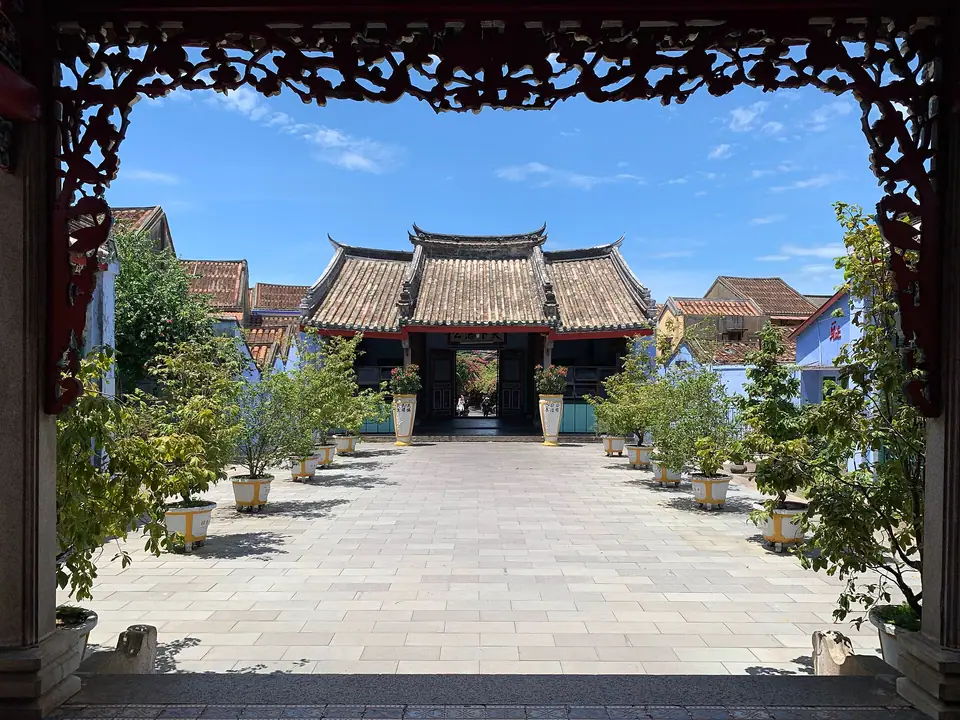
Photo: Chainwit · CC BY 4.0
Hoi An Chinese Assembly Halls: Fujian, Cantonese, Hainan & Teochew
Explore the five historic Chinese congregational halls along Tran Phu Street: the Fujian Hall, Cantonese Hall, Chaozhou Hall, Hainan Hall, and Trung Hoa Hall.
Overseas Chinese merchants prospered here between the seventeenth and eighteenth centuries. They established self-governing trade streets along present-day Tran Phu and Nguyen Duy Hieu streets in Hoi An Ancient Town. Merchants arrived from Fujian, Guangdong, Chaozhou, and Hainan island. They spoke distinct dialects and revered different regional protectors of the sea. Consequently, each provincial guild pooled commercial levies to construct its own monumental congregational assembly hall (Hội Quán). Part trade chamber and part temple, these five halls and historic shrines form an architectural walk along the ancient streets. Use this guide to choose which halls to enter with your 5-coupon Heritage Ticket, and pair your walk with our Japanese Bridge and merchant houses guide.
| Assembly Hall / Temple | Address on Tran Phu | Founding Guild & Era | Primary Deity & Architectural Highlight |
|---|---|---|---|
| Fujian Assembly Hall (Phúc Kiến) | 46 Tran Phu Street | Fujian (Hokkien), c. 1697 / rebuilt 1757 | Sea goddess Thien Hau (Mazu); pink Tam Quan triple gate & spiral incense |
| Cantonese Assembly Hall (Quảng Đông) | 176 Tran Phu Street | Guangdong (Canton), built 1885 | General Quan Cong & Mazu; ceramic dragon fountain shipped from China |
| All-Community Hall & Ba Mu Gate | 64 Tran Phu / Hai Ba Trung | All five Chinese congregations, 1741 | Thien Hau & restored three-tiered Chùa Bà Mụ Gate reflection pool |
| Teochew Assembly Hall (Triều Châu) | 157 Nguyen Duy Hieu (East) | Chaozhou (Teochew), built 1845 | Wave-taming deity Phuc Ba (Ma Yuan); embossed porcelain mosaic reliefs |
| Hainan Assembly Hall (Hải Nam) | Tran Phu Street | Hainan Island guild, built in 1875 to honour | 108 righteous Hainanese merchant brothers; gilded altar screens |
Fujian Assembly Hall (Hội Quán Phúc Kiến, 46 Tran Phu): Pink Gates and Sea Goddess Mazu
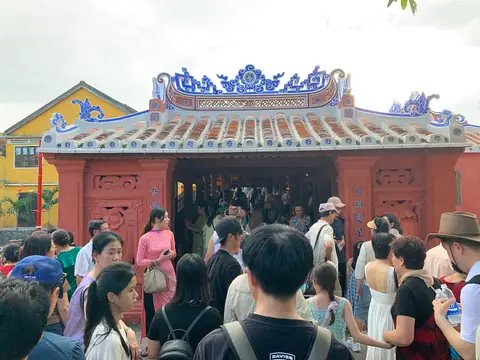
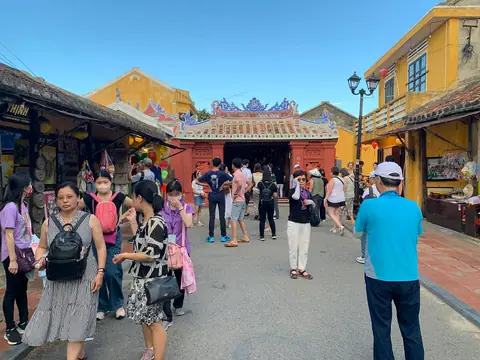
Traders from Fujian formed an active merchant guild in Hoi An, making their sanctuary at 46 Tran Phu Street the grandest in town. The Fujian Assembly Hall is the largest and most famous among the five Chinese assembly halls in Hoi An Ancient Town. The Fujian guild established the site in 1697. Initially constructed completely of wood, the hall was rebuilt with brick walls and a tile roof beginning in 1757. Its layout follows the classic Chinese calligraphic character for three, extending from Tran Phu to Phan Chu Trinh Street. Visitors walk through an ornamental triple-arched outer gate restored in 1975 with porcelain carvings and yin-yang tiles. The central door of the gate is kept closed on normal days and opens only for major holidays. Beyond lie a middle garden courtyard with a dragon fountain, east and west blocks, a deep main worship hall, and a rear sanctuary.
Present one Heritage Ticket coupon at the gate and step inside beneath fragrant conical spiral incense coils. Suspended from the ceiling rafters, each coil burns continuously for about thirty days above red prayer tags bearing donors' wishes. At the centre of the main altar sits the sea goddess Thien Hau. Two guardians flank her altar: Thien Ly Nhan and Thuan Phong Nhi. Thien Ly Nhan can see distant ships, and Thuan Phong Nhi can hear sounds across thousands of miles. On the left of the main hall, caretakers exhibit a model of an 1875 merchant boat in distress at sea.
Continue behind the main altar into the peaceful rear sanctuary. The rear of the main hall honours six Ming Dynasty loyalist generals who fled to Hoi An after their movement failed. Across the room sits a shrine where visitors pray for family blessings. On February 17, 1990, the Fujian Assembly Hall was officially listed as a national historical and cultural relic.
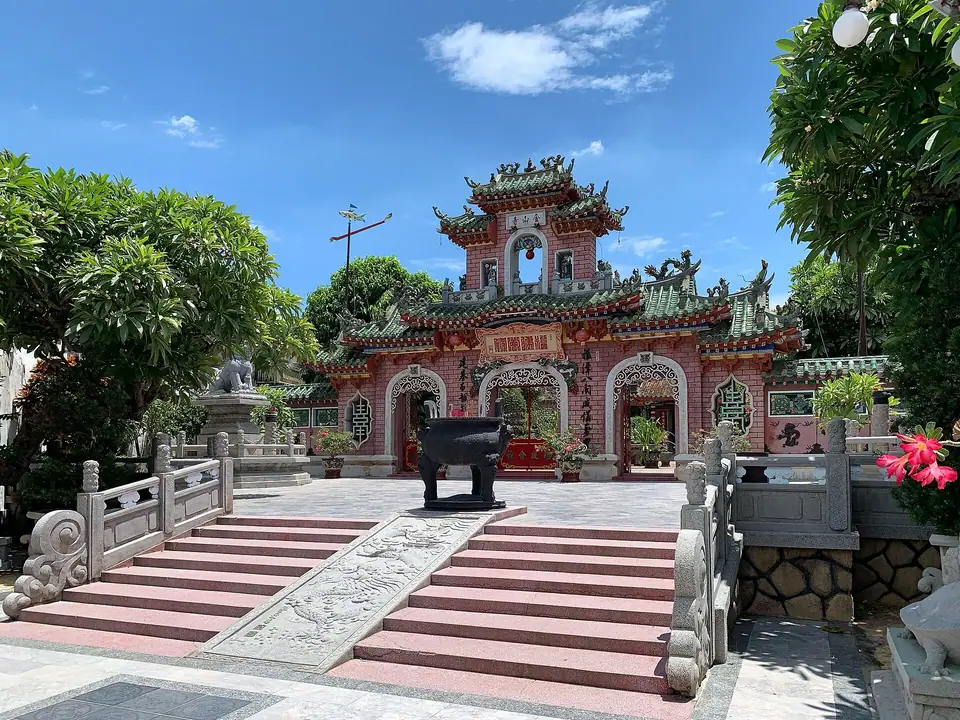
Cantonese Assembly Hall (Hội Quán Quảng Đông, 176 Tran Phu): Stone Shipped from Guangdong
Near the Japanese Covered Bridge at 176 Tran Phu, merchants from Canton erected the colourful Cantonese Assembly Hall in 1885. What makes this building remarkable is its prefabricated construction history. Craftworkers made the separate components in China. They transferred the finished parts to Hoi An and joined them together on site.
Originally built to revere Mazu and Confucius, the Cantonese Assembly Hall was rededicated in 1911 to worship Quan Cong and deceased ancestors. The complex is laid out in an enclosed design matching the Chinese character for national on high, wide ground. The courtyard holds an ornate fountain with a dragon made of pottery. Antiquities inside the hall include four large horizontal paintings, a pair of Chinese porcelain pedestals, and a bronze urn measuring up to 1.6 metres tall. In the first lunar month of every year, the hall hosts the Nguyen Tieu festival. On the 24th day of the sixth lunar month, a major Quan Cong festival honours the general.
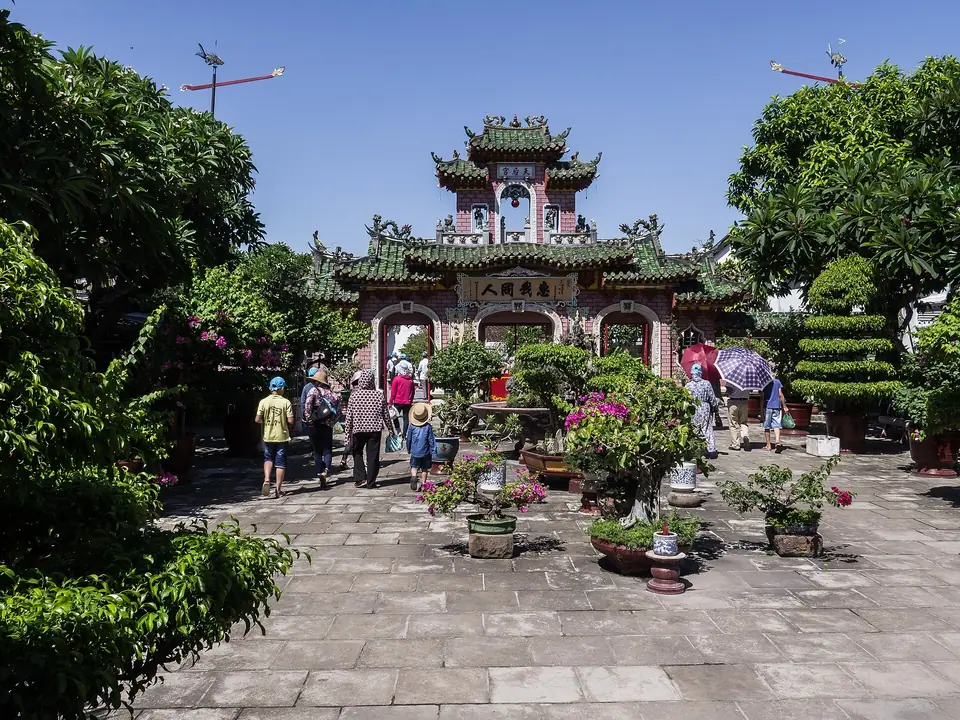
Chinese All-Community Hall (64 Tran Phu) and the Iconic Chùa Bà Mụ Gate
Founded in 1741, the Trung Hoa Assembly Hall at 64 Tran Phu sits directly to the right of the Phuc Kien Pagoda. Five regional groups contributed to its construction: Fujian, Chaozhou, Guangzhou, Hainan, and Hakka. Unlike single-region halls, it served as a communal meeting venue for all Chinese people regardless of their home province. Admission to the Trung Hoa Assembly Hall is free. The complete text of Sun Yat-sen's Testament is displayed on a wall in the backyard of the house.
South on Hai Ba Trung Street stands a photogenic free sight: the restored Tam Quan Gate of Ba Mu Temple (Cổng Chùa Bà Mụ). Its triple-tiered brick arches are framed by trees and a reflection pool. It requires no ticket coupon to view from outside.
Teochew Assembly Hall (157 Nguyen Duy Hieu) and Hainan Assembly Hall
Beyond the central blocks of Tran Phu, the eastern extension of the town holds two guild temples that receive fewer tour groups:
- Teochew Assembly Hall (Hội Quán Triều Châu, 157 Nguyen Duy Hieu). Situated approximately 750 metres along Tran Phu Street from the Japanese Covered Bridge, this hall was built in 1845 by overseas Chinese from Chaozhou. The main hall is dedicated to General Phuc Ba, a deity revered for controlling waters, winds, and large waves. The setting follows the noi cong ngoai quoc architectural style, with an inner structure shaped like the character cong and an outer layout shaped like quoc. Descendants gather annually from the 1st to the 16th day of the first lunar month to worship their ancestors.
- Hainan Assembly Hall (Hội Quán Hải Nam). Constructed in 1875 by overseas Chinese from Hainan, admission to this hall is free. The sanctuary commemorates 108 Chinese merchants who were killed after Nguyen Dynasty military officials mistook their boat for a pirate ship and fired a cannon. King Tu Duc allowed the construction of the temple after thoroughly investigating the matter.
Quan Cong Temple (Chua Ong) and Respectful Visiting Etiquette
Finish your walk near the market at Quan Cong Temple (Chùa Ông) on Tran Phu Street. The complex honours General Quan Cong with statues and ceremonial offerings. Visitors to Hoi An's temples and assembly halls must dress modestly, avoiding short skirts or cut-out dresses. Wear attire from our packing guide to cover shoulders and knees. Guests should enter through side gates rather than the central entrance, which in Vietnamese tradition is designated for deities and royalty.
Step over wooden thresholds, and pause afterward for rooftop coffee or local noodles. Walking slowly along the shaded side corridors reveals historic stone stelae recording community donations. Visiting early in the day lets you admire the courtyards before afternoon tour groups gather.
Where it is
- 1Hoi An Chinese Assembly Halls
- Da Nang International Airport (DAD) · about 23 km from here in a straight line
- Directions in Google Maps
Stations and taxi ranks: OpenStreetMap. Airports: OurAirports. Distances are in a straight line.
Traveller tips
Real advice from people who have been to Hoi An. Every tip is read by our team before it goes live.
No tips yet. Been here? Yours could be the first.
Thank you! Your tip will appear here after a quick review.
More in Hoi An
Continue exploring Hoi An with related neighbourhood, food, and planning guides
Hoi An Coffee Culture: Specialty Roasters, Rooftop Cafes & Tea Houses
Hoi An, Vietnam
What to Eat in Hoi An: Cao Lau Noodles, Banh Mi, White Rose & Food Guide
Hoi An, Vietnam
Hoi An: UNESCO Ancient Town Ticket, Pedestrian Hours & Layout
Hoi An, Vietnam
Best Things to Do in Hoi An: Bridges, Assembly Halls, Villages & Beaches
Hoi An, Vietnam
