


























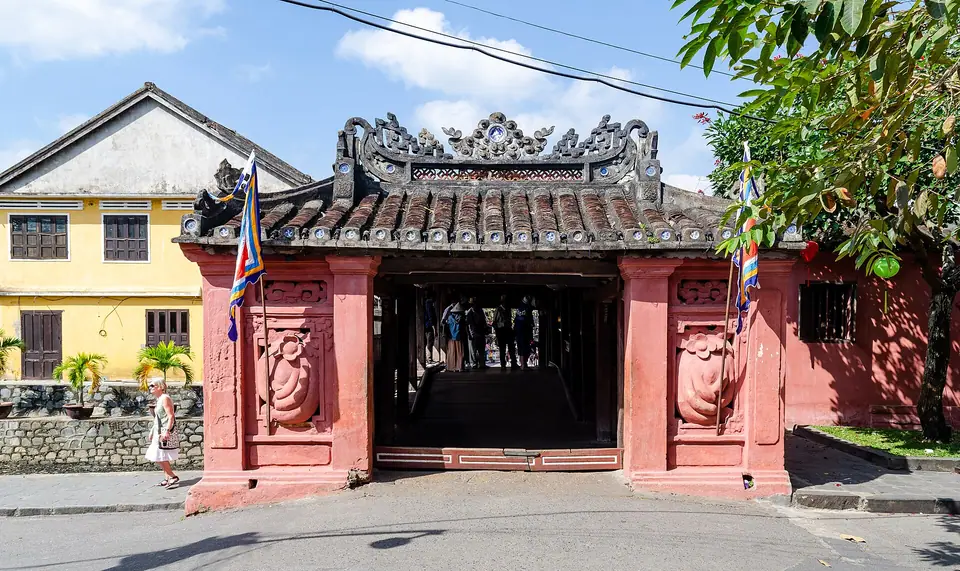
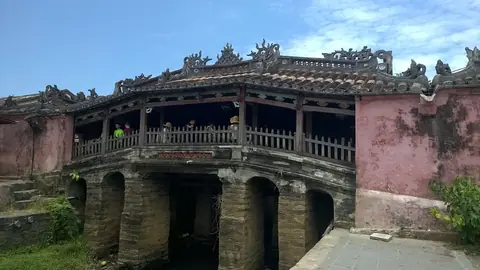
Photo: Steffen Schmitz (more photos) · CC BY-SA 4.0
Where to Stay in Hoi An: Ancient Town, Rice Paddies & An Bang Beach
Compare five stay zones: the Ancient Town Perimeter and An Hoi Islet for lantern walks, or Cam Chau and Cam Thanh for paddy villas. We also cover An Bang Beach, Cam Nam Island, and Cua Dai.
Choosing where to stay in Hoi An is one of the most enjoyable decisions of any Vietnam itinerary. The municipality spans a flat corridor between the Thu Bon River and the sea. That compact footprint holds distinct micro-environments: lantern-lit streets, quiet river islands, green rice paddies, nipa-palm estuaries, and sandy beaches. Complimentary hotel bicycles, Grab cars, and green electric shuttles connect town to coast, so you never feel isolated in any zone. Matching your base to our weather calendar and 4-day itinerary makes a big difference. Read our comprehensive zone-by-zone breakdown below before completing your room reservation.
| Stay Zone | Distance to Japanese Bridge | Atmosphere & Terrain | Best Suited For |
|---|---|---|---|
| 1. Ancient Town Perimeter & An Hoi | Walking distance to historic centre | Lantern streets, river quays, historic courtyards | Short stays, photographers, food lovers |
| 2. Cam Chau & Cam Thanh Paddies | Northeast and east towards rural communes | Flooded rice fields, herb gardens, nipa coconut creeks | Couples, cyclists, families wanting garden pools halfway to beach |
| 3. An Bang & Hidden Beach | Northeast on coast | Sandy fishing-village lanes, seafood shacks, coastal surf | Summer beach travellers, longer stays |
| 4. Cam Nam Island & Riverfront | South across bridge | Quiet residential river island, cornfields, wooden stilt cafes | Slow-paced travellers, homestay guests, riverside sunset seekers |
| 5. Cua Dai Beach & Estuary | About 4 kilometres northeast | Wide palm-lined resort grounds, pier access for Cham Islands | Full-service resort guests, families with young children |
Ancient Town Perimeter and An Hoi Islet: Walk Everywhere at Dawn and Dusk
Strict UNESCO preservation rules bar large modern hotels with swimming pools inside the historic timber shophouses of Tran Phu and Nguyen Thai Hoc streets. Instead, the smartest central base is the immediate perimeter ring just outside the pedestrian barriers. Look along Phan Chu Trinh, Hai Ba Trung, Ly Thuong Kiet, and La Hoi streets on An Hoi Islet. Staying within this perimeter ring lets you step out early in the morning. You can reach the Japanese Covered Bridge, the Chinese Assembly Halls, and Tran Phu's rooftop coffee roasters on foot.
If you choose An Hoi Islet directly across the pedestrian footbridge from Bach Dang Quay, examine the exact street location carefully. The western tip of An Hoi around Nguyen Hoang Street hosts the lively evening Night Market and bars. Conversely, the eastern half of the islet and the northern perimeter around Ly Thuong Kiet remain peaceful at night. Central hotels are ideal if you plan multiple fittings at Hoi An's custom tailors or visit during the cooler winter months.
Cam Chau and Cam Thanh Rice Paddies: The Halfway Sweet Spot
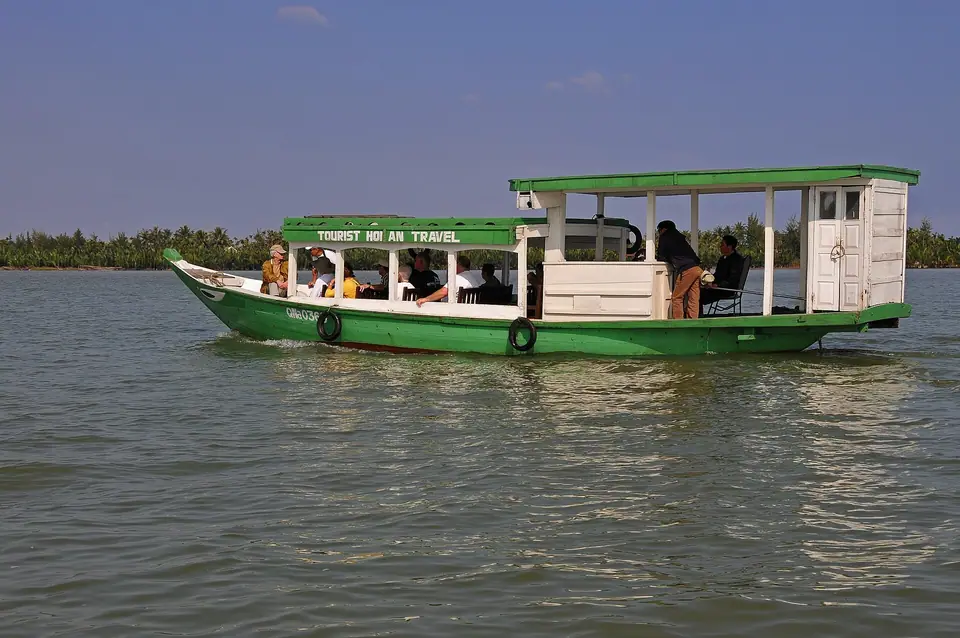
Ask regular return visitors where they prefer to sleep in Hoi An, and most point to the green agricultural belt of Cam Chau and Cam Thanh. Located east and northeast of the Ancient Town, this zone spans Nguyen Duy Hieu, Cua Dai Road, and Tra Que Village. It sits between the UNESCO monuments and An Bang Beach.
Because land plots here are far more spacious than in the old quarter, family-run homestays and boutique eco-villas wrap around swimming pools and frangipani gardens. Many balconies look straight across working rice paddies. You wake up to white egrets and farmers tending morning fields. Flat concrete dykes let you pedal into the Ancient Town or out to the beach easily. Further southeast, Cam Thanh transitions into riverside coconut waterways, home to quiet river lodges.
An Bang Beach and Hidden Beach: Coastal Living
Between May and September, warm sunny weather settles over the area and the sea stays calm. During those months, consider basing yourself northeast at An Bang Beach. Behind the sand dunes, narrow sandy lanes shaded by trees hold whitewashed beach bungalows, surf shacks, bakeries, and open-air seafood restaurants.
Staying at An Bang lets you swim at sunrise as traditional round basket boats return with the morning catch. Spend midday under a palm umbrella, then ride a bicycle or Grab car into the Ancient Town for dinner. For quieter sand, look further down the shore toward Hidden Beach and Tan Thanh village, which hosts a weekend market.
Cam Nam Island: Authentic River Village Calm
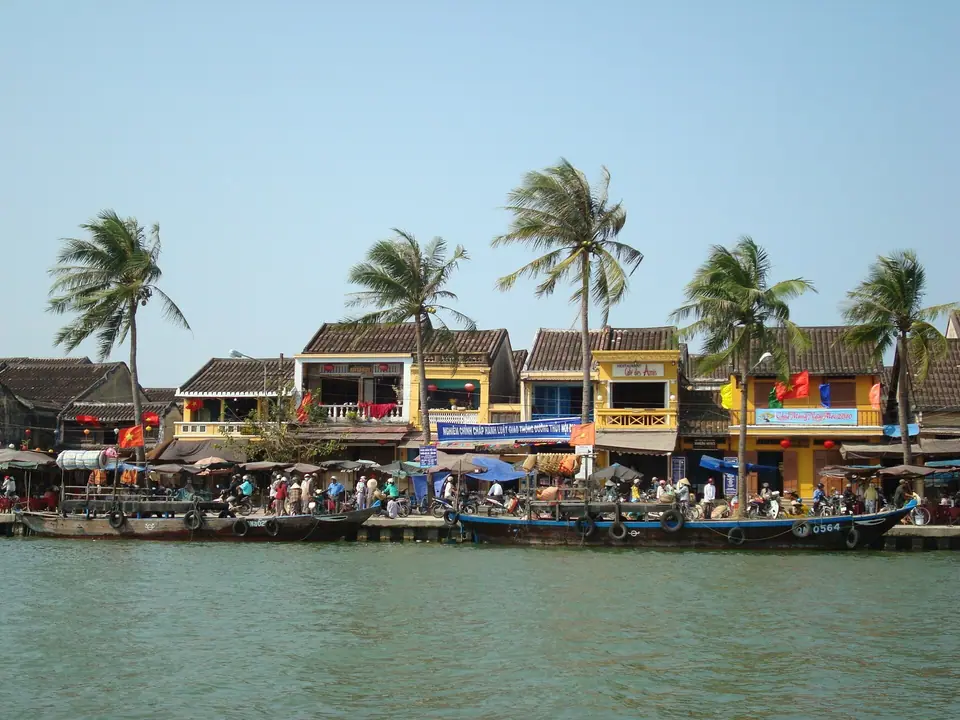
Directly east of An Hoi Islet across the short Cam Nam Bridge lies Cam Nam Island. This slender alluvial island in the Thu Bon River is famous across Quang Nam for its tiny river clams, sweet cornfields, and riverside boatyards. Tour coaches never enter Cam Nam's narrow lanes, preserving a quiet village pace within a short walk of the Central Market.
Small riverfront guesthouses and boutique hotels line the northern shore of Cam Nam along Nguyen Tri Phuong Street. Their verandas offer unobstructed sunset views looking back toward the mustard-yellow roofs of Bach Dang Quay. Along the island's tip, casual outdoor garden tables serve Hoi An's signature local snacks. Try the crispy rice crackers with stir-fried baby clams and sweet corn pudding detailed in our Hoi An food guide.
Cua Dai Beach and Thu Bon Estuary Resorts
Located in Cam An Ward, about 4 kilometres northeast of Hoi An Town opposite the Cham Islands, Cua Dai is the main full-service resort strip. Cua Dai Beach extends over 3 kilometres in length and reaches up to 300 metres in width. Safe swimming is generally confined to the months of April through October. Quang Nam authorities have completed extensive coastal engineering here in recent years. As a result, wide sections of palm-fringed beach have returned in front of garden resorts along Au Co and Cua Dai roads. This corridor is a convenient base for catching boats towards the offshore islands.
Flood-Elevation Tips for Autumn Bookings
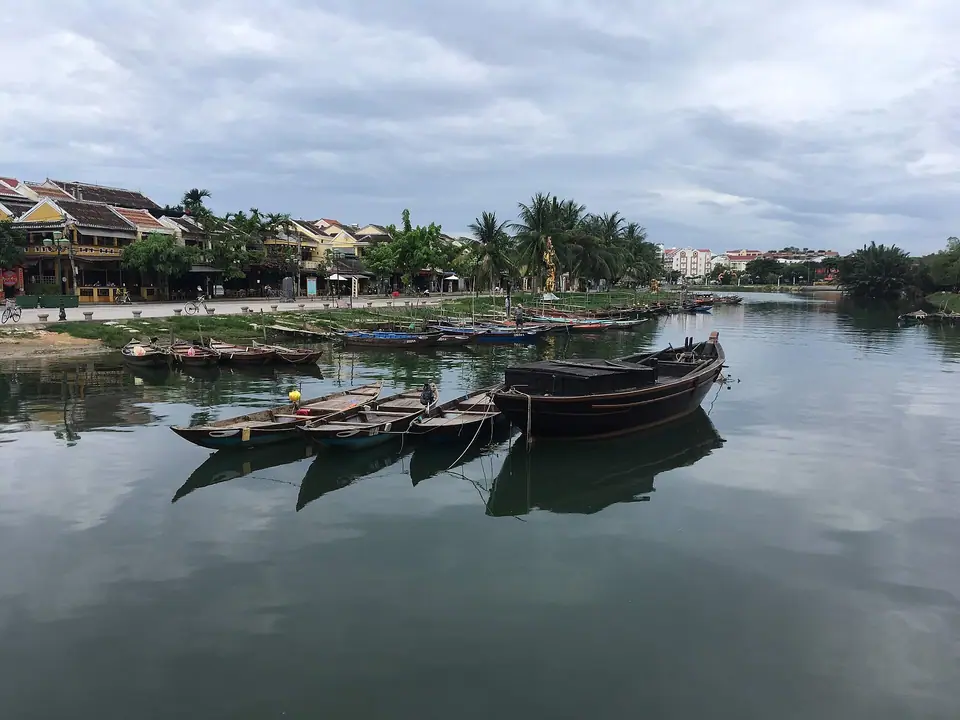
If your visit falls during the peak autumn rainy months, factor micro-elevation into your hotel choice. As noted in our weather guide, upstream autumn rains occasionally push the Hoai River onto Bach Dang Street and An Hoi Islet. During those autumn weeks, book along the higher northern perimeter (Ly Thuong Kiet, Phan Chu Trinh, or Hai Ba Trung) or in Cam Chau. Those streets stay dry for Da Nang Airport transfers and sit minutes from tailor studios and heritage museums. Before confirming any booking, check whether your property provides complimentary town bicycles with working bells, front baskets, and sturdy locks. Guests sensitive to early morning rooster calls or evening street music should request courtyard-facing rooms on upper floors rather than street-front balconies. Many family-run villas arrange early breakfast trays for sunrise excursions to My Son Sanctuary. Reception staff also store luggage securely before flights from Da Nang. Splitting a longer stay between a central heritage lane and a beachfront resort works well. You enjoy easy access to both evening lantern walks and morning ocean swims. Solo travellers and remote workers appreciate boutique homestays in Cam Pho and Tan An, where quiet garden patios sit close to specialty coffee roasters. Families travelling with children often prefer ground-floor pool villas in Cam Chau, where shaded lawns and calm country lanes surround the rooms. Confirming air conditioning and mosquito nets before arrival guarantees restful sleep in every season. Asking your hosts about quiet neighbourhood noodle stalls reveals morning breakfast spots right outside your garden gate. Checking whether your guesthouse provides sturdy bicycle locks and rain ponchos makes daily countryside excursions much simpler. Stepping onto a quiet garden veranda at dawn lets you enjoy the morning breeze before sightseeing begins.
Where it is
- 1Hoi An
- Da Nang International Airport (DAD) · about 24 km from Hoi An in a straight line
- Directions in Google Maps
Stations and taxi ranks: OpenStreetMap. Airports: OurAirports. Distances are in a straight line.
Traveller tips
Real advice from people who have been to Hoi An. Every tip is read by our team before it goes live.
No tips yet. Been here? Yours could be the first.
Thank you! Your tip will appear here after a quick review.
More in Hoi An
Continue exploring Hoi An with related neighbourhood, food, and planning guides
Cham Islands (Cu Lao Cham) Day Trip: Biosphere Reserve & Snorkelling
Hoi An, Vietnam

Thanh Ha Pottery Village, Kim Bong Carpentry & Hoi An Lantern Making
Hoi An, Vietnam

Hoi An Museums Guide: Trade Ceramics, Sa Huynh Culture, Folklore & Réhahn
Hoi An, Vietnam
Marble Mountains, Lady Buddha & Hai Van Pass Day Trip from Hoi An
Hoi An, Vietnam
