


























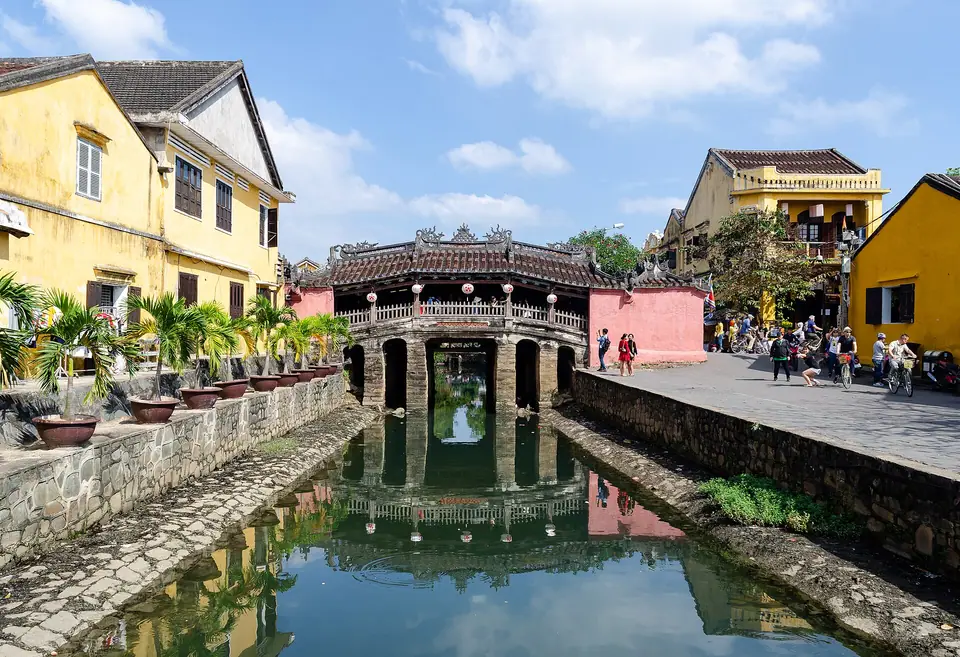
Photo: Steffen Schmitz (more photos) · CC BY-SA 4.0
Best Things to Do in Hoi An: Bridges, Assembly Halls, Villages & Beaches
Explore the historic Japanese Covered Bridge, Chinese assembly halls, sandy beaches, and local villages across Hoi An Ancient Town.
Few historic towns in Southeast Asia pack as much variety into a short bicycle radius as Hoi An Ancient Town. Better still, two additional UNESCO sites sit within a one-hour journey of the town centre. Within a single day, you can inspect seventeenth-century ironwood merchant joinery in the morning and pedal through organic herb gardens before lunch. In the afternoon, you can swim in the warm East Sea off An Bang Beach before floating a paper candle beside silk lanterns at dusk. Below, we cover the essential Hoi An experiences and show how to group them with our 4-day itinerary and travel guide.
Early mornings provide calm streets, while late afternoons offer cooler temperatures for exploring heritage sites across town. Planning excursions around cooler daylight hours helps travellers navigate ancient streetscapes comfortably throughout their stay. Taking time to absorb quiet side alleys adds further depth to your holiday.
Cross the Historic Japanese Covered Bridge and Tour Old Merchant Houses
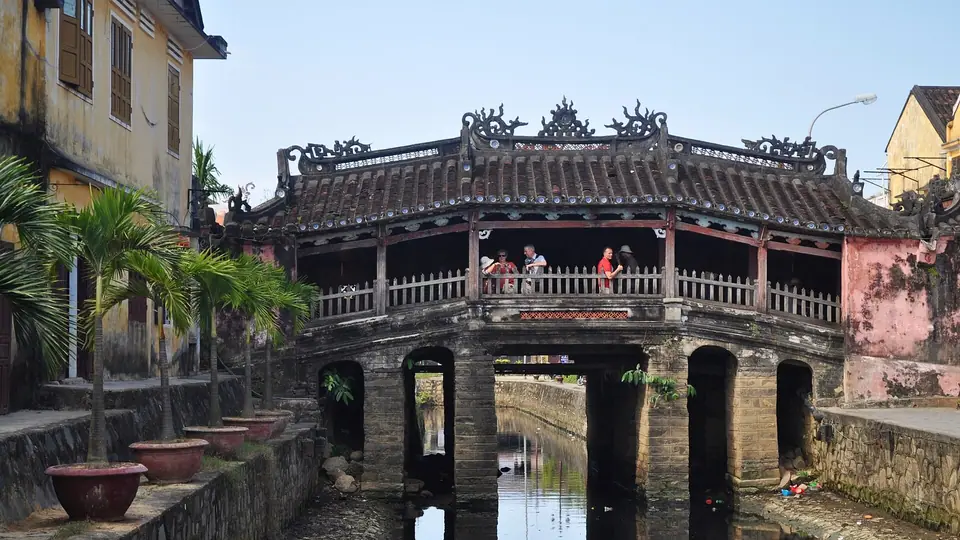
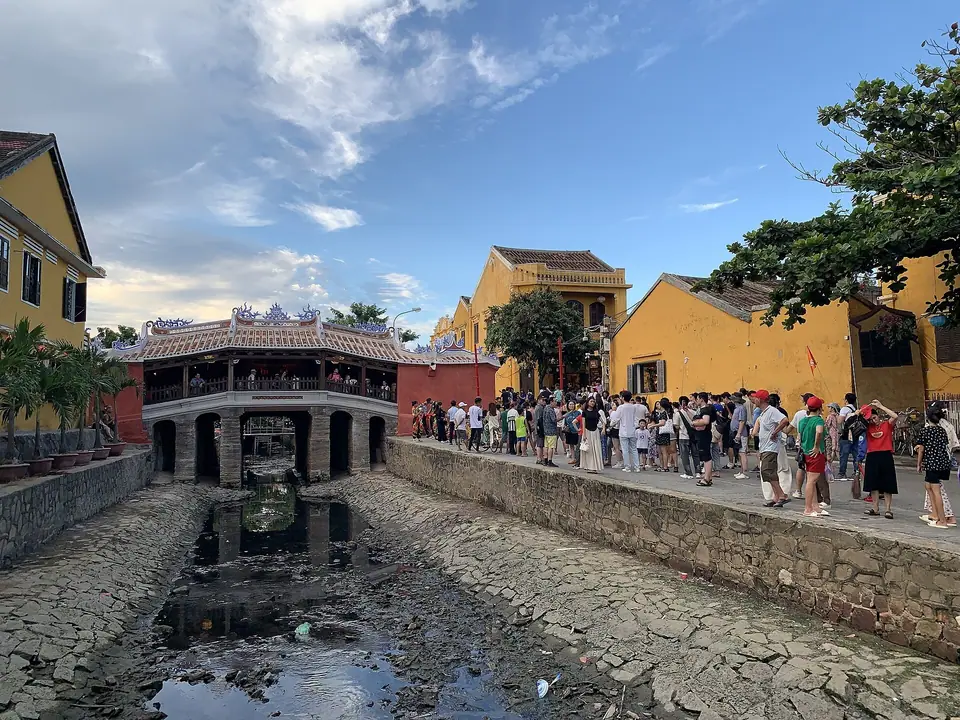
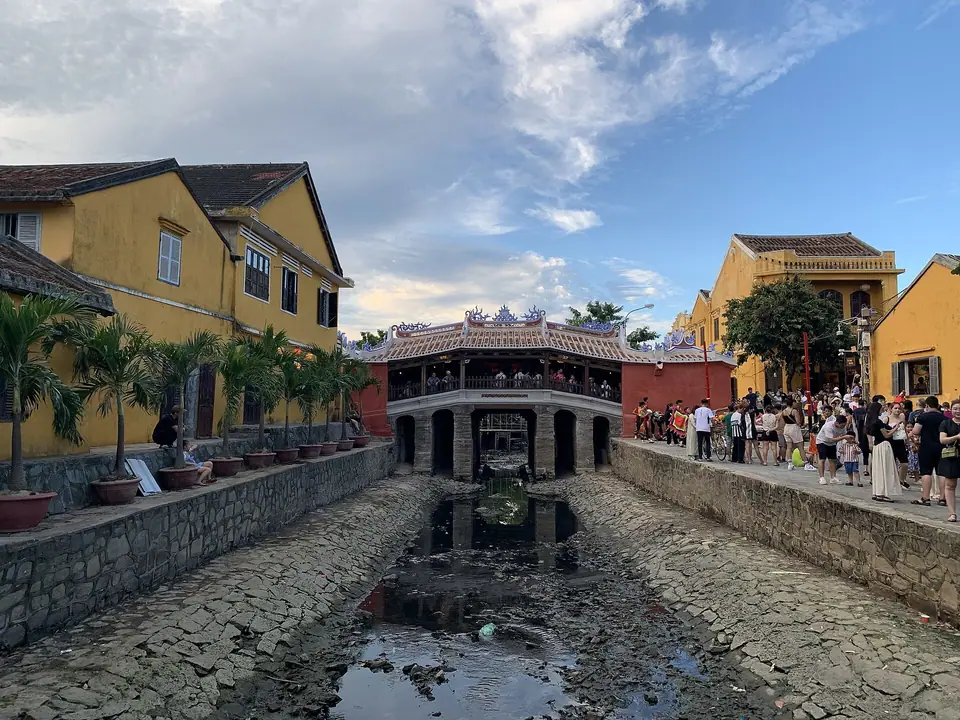
The Japanese Covered Bridge (Chùa Cầu or Lai Viễn Kiều, "Bridge of Friends from Afar") anchors the western end of Tran Phu Street. It has served as the civic emblem of Hoi An since builders erected it in the early seventeenth century. Careful conservation restored its ironwood beams, curved tiled roof, and stone piers. Today the timber bridge links the historic Japanese settlement on the west with the Chinese quarter on the east. Pause at either threshold to inspect the carved wooden guardian statues. A sculpture of a dog sits at one end, while a monkey rests at the other. Inside the walkway stands a temple honouring northern weather deity Tran Vo Bac De.
Steps away on Nguyen Thai Hoc and Nguyen Thi Minh Khai stand preserved merchant homes, detailed in our merchant houses guide. Along Nguyen Thai Hoc, generations of the Le family have occupied historic timber dwellings such as Tan Ky Old House. Built of timber and stone, the house displays traditional craftsmanship. Painted lines on its courtyard pillar record historical river floods, and visitors can also explore other grand residences nearby.
Nearby, Minh Huong Communal House sits at 14 Tran Phu Street as another testament to local architectural heritage. These timber complexes demonstrate how master carpenters combined residential spaces with open interior courtyards.
Step Inside the Fujian and Cantonese Chinese Assembly Halls (Hội Quán)
Overseas Chinese merchants settled along Tran Phu Street, and provincial guilds built congregational halls between the seventeenth and eighteenth centuries. Each complex functioned as a trade chamber and temple. Two halls lead our Chinese Assembly Halls walking route:
- Fujian Assembly Hall (Hội Quán Phúc Kiến). Founded by Hokkien traders, this hall features ornate details and leafy courtyards leading to a main temple dedicated to Thien Hau, goddess of the sea.
- Cantonese Assembly Hall (Hội Quán Quảng Đông). Guangdong merchants built this hall near the Japanese bridge using wood and stone. Its altar honours warrior general Quan Cong as well as Thien Hau.
- Trieu Chau Assembly Hall (Hội Quán Triều Châu). Overseas Chinese immigrants from Trieu Chau constructed this complex in 1845. The hall honours General Phuc Ba, a deity believed to calm the seas, and remains dedicated to the God of Wind and Big Waves.
These assembly halls showcase complex timber carvings, porcelain relief work, and decorative ceramic panels. Incense coils often hang from high courtyard rafters, perfuming the stone pavilions below.
Cycle to Tra Que Vegetable Village and Paddle Cam Thanh Coconut Palms
Lying around 2.5 kilometres north of central Hoi An, flat concrete footpaths wind between flooded rice paddies where water buffalo graze beside white egrets. This rural corridor leads onto Tra Que Vegetable Village (Làng Rau Trà Quế), which was established in the sixteenth century. Ringed by waterways, the sandy soil produces aromatic basil, perilla (tía tô), mint, and Vietnamese coriander (rau răm). Village farmers avoid chemical fertilizers, instead gathering river vegetation and watering vegetable beds with cans carried on traditional shoulder poles.
East of town, the Thu Bon River meets coastal tides at the Bay Mau Coconut Forest. This brackish wetland spans groves of dense nipa palms. Local rowers steer visitors through the shaded tidal creeks inside circular woven bamboo basket boats, sometimes demonstrating spinning displays along the water.
Swim at An Bang Beach and Snorkel the Cham Islands Biosphere Reserve
Five kilometres from Hoi An Ancient Town, Hai Ba Trung Street reaches the coast covered in our Hoi An beaches guide. An Bang Beach preserves a relaxed fishing-village charm with morning basket boats, sandy lanes, and beachfront seafood shacks. Down the coast, Hidden Beach and Cua Dai offer quiet stretches of sand facing offshore waters. Cua Dai Beach extends over 3 kilometres in length and sits approximately 4 kilometres northeast of Hoi An Town. Travellers can also board speedboats at Cua Dai Pier for trips to the Cu Lao Cham UNESCO Biosphere Reserve. The archipelago features granite islands and coral reefs.
Coastal breezes keep temperatures pleasant along the shoreline during early morning walks and late afternoon swims. Travellers seeking ocean horizons can unwind on loungers under palm thatch umbrellas.
Watch Sunrise Over the Champa Brick Towers of My Son Sanctuary
Located inland beneath Cat's Tooth Mountain, My Son Sanctuary showcases ancient religious architecture. Between early centuries, builders of the Champa Empire erected red-brick Hindu temple-towers dedicated to deities. Cham masons bonded the kilned bricks without visible mortar joints. Arriving at the gate in the morning lets visitors watch the mist drift across the valley ruins before tour groups arrive.
The forested valley shelters clusters of weathered sanctuaries constructed over several centuries of royal patronage. Stone bas-reliefs display celestial dancers, sacred animals, and detailed inscriptions celebrating historic dynasties.
Discover Historic Folk Culture and Local Museums
Hoi An contains several dedicated exhibition spaces that explain its past as an international maritime port. Located at 33 Nguyen Thai Hoc Street, the Hoi An Museum of Folk Culture is the largest two-storey wooden house in the ancient town. It measures 57 metres long and 9 metres wide, preserving historic craft displays, agricultural tools, and local festival artefacts. The Hoi An Museum sits within a former pagoda at 10B Tran Hung Dao Street. Note that the building closes on the 10th and 25th of each month.
Cultural traditions also thrive outside museum galleries across central Vietnam. The art of Bài Chòi was inscribed on UNESCO's Representative List of the Intangible Cultural Heritage of Humanity in 2017. It takes two primary forms: stage performances and card games played in bamboo huts during the Lunar New Year. Watching folk artists perform music and poetry provides an engaging introduction to regional storytelling.
Commission Tailored Garments, Taste Regional Food, and Float River Lanterns
Complete your itinerary with traditional craft and culinary experiences that characterise local life:
- Bespoke Tailoring and Craft Heritage. Visit a tailor from our custom tailors and shoemakers guide early in your trip. Pair fittings with visits to local artisan spots via our craft villages guide and Hoi An museums guide.
- Quang Nam Flavours and Rooftop Cafes. Sample local noodles, dumplings, and savoury treats through our food guide. Afterwards, relax at an establishment featured in our coffee and tea houses guide.
- Evening River Lanterns and Waterways. Stroll toward An Hoi Islet to watch boats glide along the water during the monthly Full Moon Lantern Festival. Exploring heritage interiors during cooler hours makes sightseeing comfortable throughout your trip.
Travellers should remember that the tropical storm season in Vietnam spans from May to November. Planning your daily activities with local weather conditions in mind guarantees a smooth holiday.
Where it is
- 1Hoi An
- Da Nang International Airport (DAD) · about 24 km from Hoi An in a straight line
- Directions in Google Maps
Stations and taxi ranks: OpenStreetMap. Airports: OurAirports. Distances are in a straight line.
Traveller tips
Real advice from people who have been to Hoi An. Every tip is read by our team before it goes live.
No tips yet. Been here? Yours could be the first.
Thank you! Your tip will appear here after a quick review.
More in Hoi An
Continue exploring Hoi An with related neighbourhood, food, and planning guides
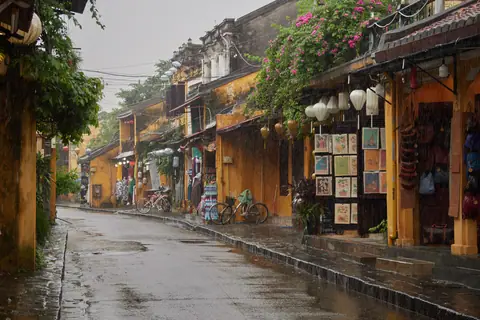
What to Wear in Hoi An: Temple Dress Codes, Slip-On Shoes & Linen Packing
Hoi An, Vietnam
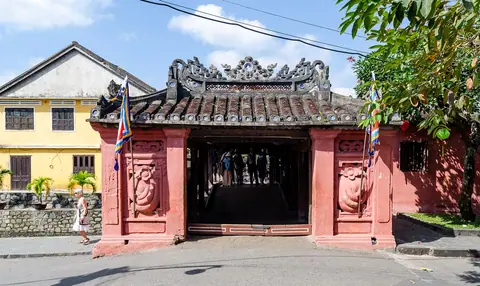
Where to Stay in Hoi An: Ancient Town, Rice Paddies & An Bang Beach
Hoi An, Vietnam
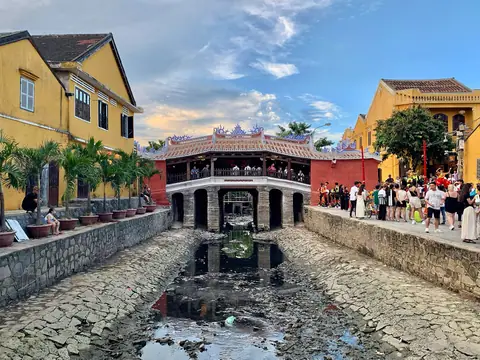
Hoi An 4-Day Itinerary: Ancient Town, Rice Paddies, My Son & Cham Islands
Hoi An, Vietnam
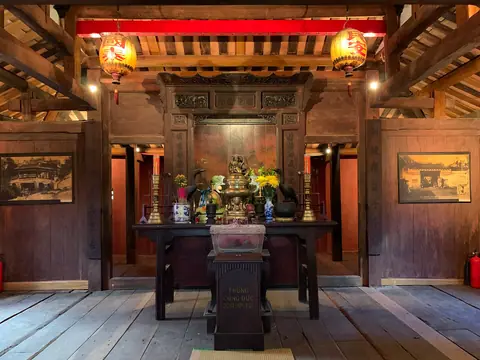
Japanese Covered Bridge & Hoi An Merchant Houses: Tan Ky & Phung Hung
Hoi An, Vietnam
