


























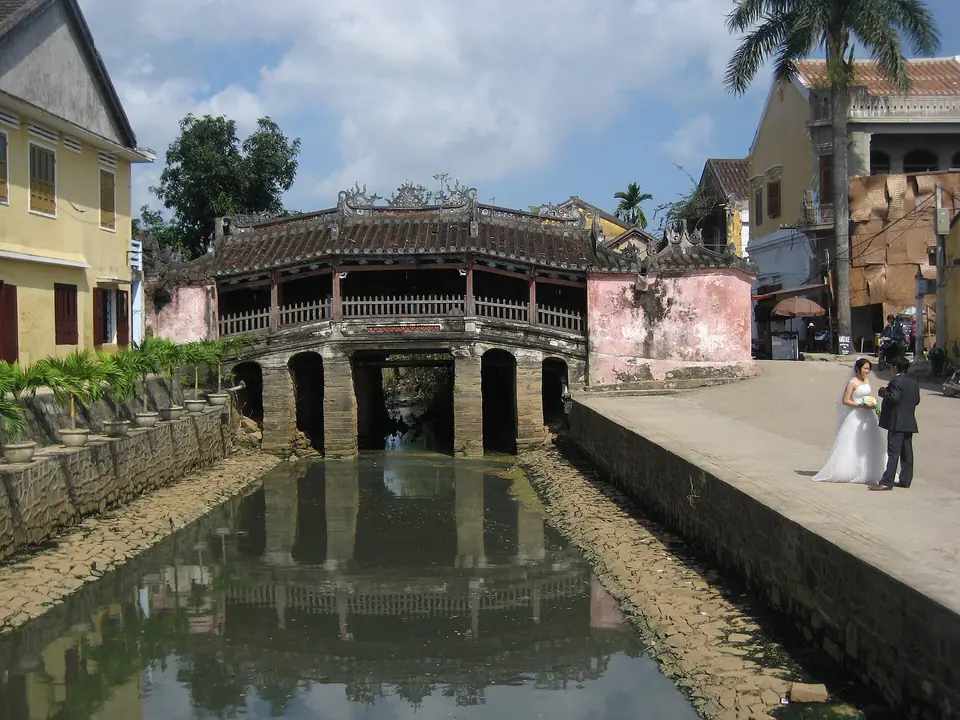
Photo: Arian Zwegers · CC BY 2.0
Tra Que Vegetable Village, Cam Thanh Coconut Palms & Hoi An Cycling Guide
Pedal into the countryside to explore sixteenth-century Tra Que Vegetable Village, where farmers fertilise organic herbs with riverweed. Cycle narrow Cam Chau rice-paddy dykes past water buffalo and paddle round bamboo basket boats in Cam Thanh.
Cross the northern perimeter of Hoi An Ancient Town on a bicycle. Within five minutes, the mustard-yellow shophouses give way to an emerald rural basin of flooded rice paddies, lotus ponds, and tidal river channels. Named a UN Tourism Best Tourism Village in 2024, Tra Que Vegetable Village (Làng Rau Trà Quế) lies in Cam Ha commune. It sits roughly 2.5 kilometres north of central Hoi An Ancient Town. Approximately five kilometres east lies the brackish Bay Mau Water-Coconut Forest in Cam Thanh. The alluvial plain between the Thu Bon River and An Bang Beach is flat and crisscrossed by motor-free concrete dykes. Consequently, a half-day bicycle loop linking these two ecosystems is an exceptional outdoor excursion in Vietnam. Pair this countryside route with our 4-day Hoi An itinerary and where to stay guide.
| Rural Stop | Distance from Ancient Town | Signature Ecosystem & Craft | Ideal Visiting Window |
|---|---|---|---|
| Cam Chau Rice Paddies | Northeast of Ancient Town | Flooded rice terraces, water buffalo, white egrets, narrow dykes | Early morning sunrise or late afternoon sunset |
| Tra Que Vegetable Village | 2.5 km north (in Cam Ha commune) | Organic herbs fertilised with riverweed from Co-Co River | Morning during daily field watering |
| Cam Thanh Water-Coconut Forest | 5 km east at lower Thu Bon River | 57.68 hectares of brackish nipa palms & bamboo basket boats | Early morning or late afternoon (avoid midday tour groups) |
| De Vong River & Co-Co Lagoon | Northeast toward coast | Riverweed raking boats, bamboo fish traps, coastal estuary birdlife | Early morning before riding onward to An Bang Beach |
Sixteenth-Century Heritage and Organic Riverweed Farming in Tra Que Vegetable Village
Settlers founded this community in the sixteenth century on an alluvial sandbank. The village originally bore the name Nhự Quế because its fresh garden herbs gave off a warm cinnamon aroma (quế). In the eighteenth century, the Nguyen Lords tasted the fragrant greens and renamed the village Trà Quế, blending tea (trà) with spicy cinnamon. Historical records show the land was chosen as settlements by the communities of Sa Huynh, Cham Pa, and Dai Viet. In 2016, Quang Nam province recognised it as a traditional occupation village. In 2022, the Ministry of Culture, Sports and Tourism designated Tra Que farming as a National Intangible Cultural Heritage.
What makes Tra Que herbs taste noticeably more pungent and tender than ordinary market greens is an established ecological method. Village rules prohibit chemical fertilisers. Instead, locals gather riverweed from the nearby Co-Co River to nourish their plots with organic fertiliser. Farmers layer this organic mulch into the sandy soil. They rake the beds by hand and water the rows using twin woven-bamboo cans (đôi gánh) balanced across their shoulders. Sights included on the entry ticket comprise The Five Elements Shrine and The Land Genie Shrine. Visitors also see the Tomb of Nguyen Van Dien and the historic stone well.
Walk or pedal quietly along the stone paths during the morning watering hours. You will smell red-stemmed basil (húng quế), sawtooth coriander (ngò gai), purple perilla (tía tô), fish mint (diếp cá), and Vietnamese mint (rau răm). Those greens give Hoi An's cao lầu noodles and bánh xèo pancakes their unmistakable freshness.
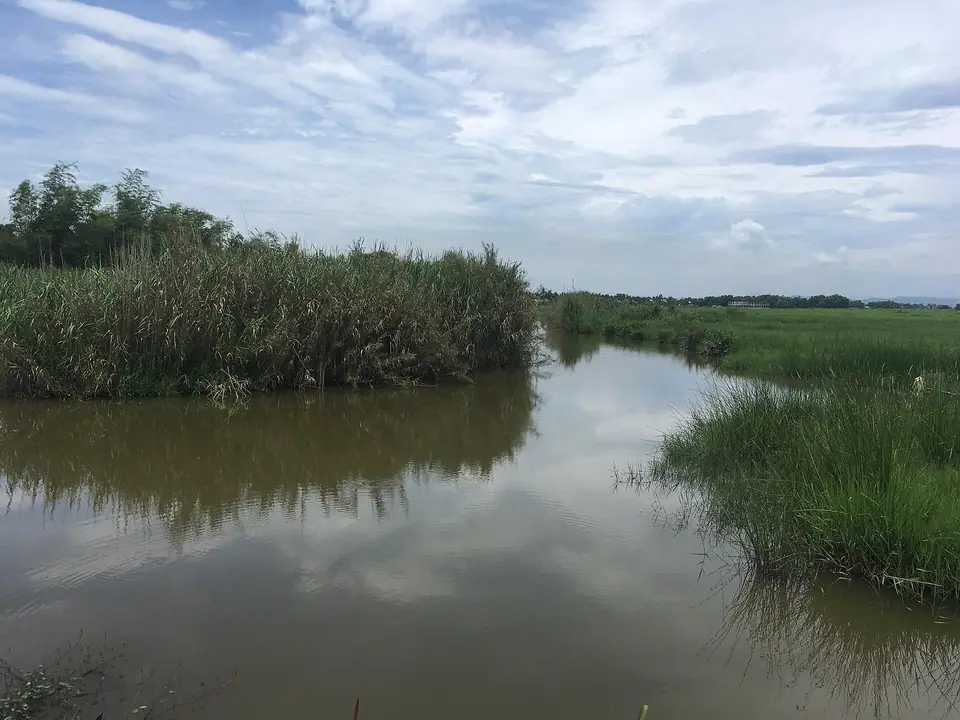
Cycling the Concrete Rice-Paddy Dykes of Cam Chau
To avoid road traffic, turn off Hai Ba Trung Street north of the Ancient Town onto the concrete agricultural paths of Cam Chau Ward. Here, three annual rice crops transform the landscape across the calendar described in our Hoi An seasonal guide. You see flooded paddies reflecting morning clouds in January and June, emerald carpets of young stalks in February and March, and golden grain harvested in May.
Along these quiet dykes, you share the path mainly with local farmers in conical nón lá hats and flocks of white egrets. Domesticated grey water buffalo (trâu) wallow in irrigation canals or graze peacefully on grassy bunds. Ride slowly, ring your bell gently before passing walkers, and pause at a paddy-side garden cafe for iced coconut coffee.
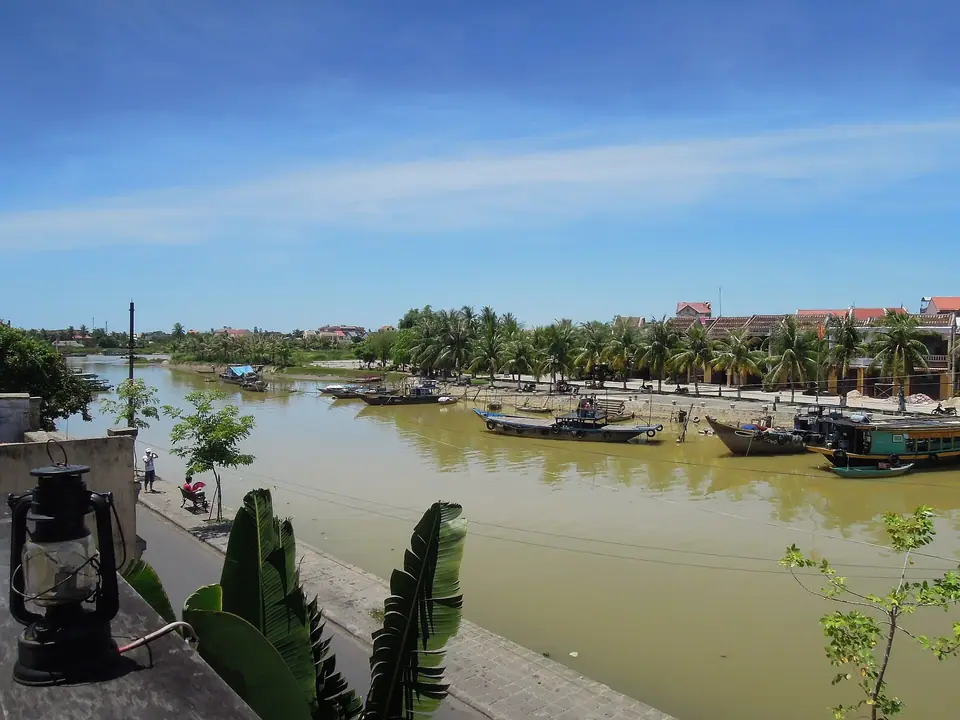
Paddling Round Bamboo Basket Boats in Cam Thanh's Bay Mau Coconut Forest
From Tra Que and Cam Chau, a flat pedal southeast along country lanes brings you to Cam Thanh Commune. Here the fresh waters of the Thu Bon River meet the coastal tides of the sea. The Cam Thanh Nipa Palm Site covers an area of 57.68 hectares approximately five kilometres east of Hoi An ancient town. In 2009, UNESCO recognised the wetland ecosystem of Cam Thanh along the lower Thu Bon River. It forms part of the Cu Lao Cham - Hoi An World Biosphere Reserve. During wartime, the sheltered waterways served as a revolutionary base and shelter for local forces and residents. Today, the reserve protects vital coastal habitats for crabs, fish, and wetland birds.
The traditional craft vessel of Cam Thanh is the thuyền thúng, a circular woven bamboo basket boat. Local fishermen paddle these round un-keeled dinghies with remarkable balance, weaving each hull from split bamboo strips. Artisans seal the seams with natural tree resin and dry the hull in the sun until it is watertight. In Cam Thanh, visitors can also see sustainable craftwork at Taboo Bamboo Workshop. There, artisan Vo Tan shapes bamboo into lamps, household objects, and animal sculptures.
To enjoy the quietest experience in Cam Thanh, follow one golden rule: choose a small community eco-dock and go in the early morning or late afternoon. Avoid the busy midday main parking plaza where tour groups gather. Ask your rower in advance for a quiet canal route ("đi kênh nhỏ yên tĩnh"). Rowers use a figure-eight oar motion to glide through shaded nipa tunnels, folding palm-leaf creations and demonstrating traditional methods for catching crabs.
Joining a Farm-to-Table Cooking Class and Herbal Foot Soak in Tra Que
Several family-owned garden kitchens right inside Tra Que Vegetable Village offer morning or afternoon farm-to-table cooking workshops. To begin, you walk the organic herb rows with a farmer and learn how to hoe, rake, and water a bed with bamboo shoulder cans. Afterward, you soak your feet in a warm wooden tub infused with crushed Tra Que lemongrass, ginger, and lime leaves. You then grind fresh rice milk on a stone mill to sizzle crispy yellow bánh xèo pancakes. Guests also roll fresh tam hữu (tying prawn, pork belly, and herbs with a spring-onion stem) and pound green papaya salad.
Self-Guided Half-Day Bicycle Loop From Town to Tra Que, Cam Thanh, and An Bang
You can link all three landscapes into a seamless flat bicycle loop over a leisurely morning or afternoon. Leave the Ancient Town in early morning and pedal through Cam Chau to reach Tra Que Village during morning field watering. Afterward, ride east to a quiet creek dock in Cam Thanh for a relaxing nipa-palm basket-boat paddle through the green waterways. Pedal north to An Bang Beach, located five kilometres from the Ancient Town, for a swim before riding back to town. Wear the sun hat and strapped sandals from our packing guide. Before pedalling out of town, test both handbrakes, check tyre pressure, and drop a bottle of water into the front wicker basket. Yielding politely to farmers carrying shoulder poles along narrow earthen dykes keeps village lanes friendly and safe for everyone. Along the raised paths between Tra Que and Cam Thanh, egrets wade through flooded rice plots and fishermen cast nets into tidal creeks. Pausing under a shady tree to sip cold water or fresh sugarcane juice rewards an unhurried morning in the countryside. Always lock your bicycle frame at the marked village racks before walking into the herb rows.
Where it is
- 1Tra Que Vegetable Village, Cam Thanh Coconut Palms & Hoi An Cycling
- Da Nang International Airport (DAD) · about 22 km from here in a straight line
- Directions in Google Maps
Stations and taxi ranks: OpenStreetMap. Airports: OurAirports. Distances are in a straight line.
Traveller tips
Real advice from people who have been to Hoi An. Every tip is read by our team before it goes live.
No tips yet. Been here? Yours could be the first.
Thank you! Your tip will appear here after a quick review.
More in Hoi An
Continue exploring Hoi An with related neighbourhood, food, and planning guides

Hoi An Custom Tailors & Shoemakers Guide: 3-Fitting Timeline & Silk Fabrics
Hoi An, Vietnam
Hoi An Beaches Guide: An Bang Beach, Hidden Beach & Cua Dai Coastline
Hoi An, Vietnam
My Son Sanctuary Day Trip from Hoi An: Champa Hindu Temples at Sunrise
Hoi An, Vietnam
Cham Islands (Cu Lao Cham) Day Trip: Biosphere Reserve & Snorkelling
Hoi An, Vietnam
