


























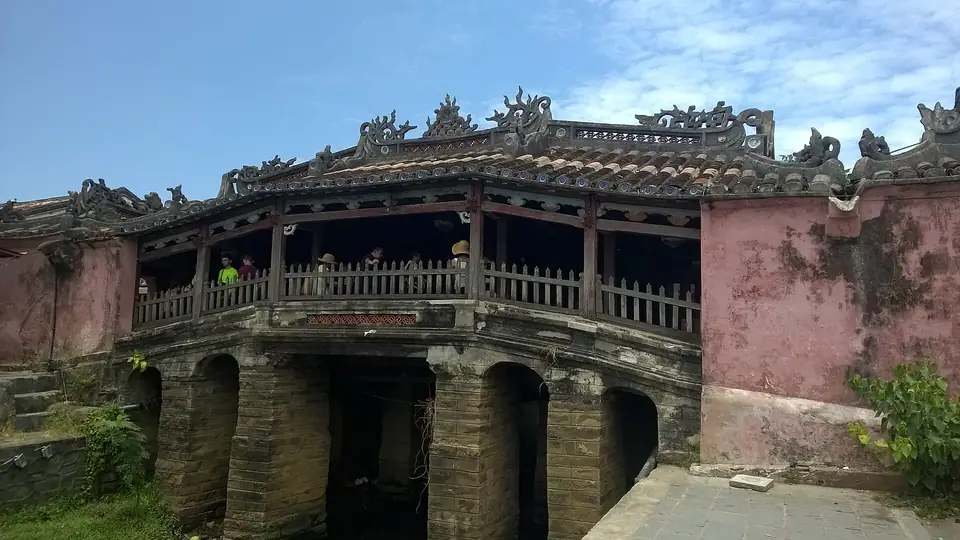
Photo: Vuong Tri Binh · CC BY-SA 4.0
Thanh Ha Pottery Village, Kim Bong Carpentry & Hoi An Lantern Making
Visit the traditional craft villages that built Hoi An Ancient Town: historic Thanh Ha Pottery Village and Terracotta Park along the Thu Bon River. Ferry across to Kim Bong Carpentry Village and join a collapsible bamboo-and-silk lantern class.
Every roof tile, carved beam, and silk lantern in Hoi An Ancient Town came from the craft villages along the Thu Bon River. During the sixteenth and seventeenth centuries, international trade boomed at the port of Faifo. The Nguyen Lords invited master potters, shipwrights, cabinetmakers, and silk weavers from northern Vietnam to settle along the river islands directly upstream from the merchant quarter. These villages still supply the bricks, tiles, and carved timber used to restore Hoi An's UNESCO monuments today. Cycle or ferry to Thanh Ha Pottery Village and Kim Bong Carpentry Village in fifteen minutes, then fold a silk lantern in town. Pair this craft circuit with Day 3 of our 4-day Hoi An itinerary and our Ancient Town merchant houses guide.
| Craft Village / Workshop | Location & Distance | Centuries-Old Specialty | How to Reach It |
|---|---|---|---|
| Thanh Ha Pottery Village & Terracotta Park | 3 km west along Thu Bon River (Duy Tan Street) | Foot-driven clay wheels, yin-yang roof tiles & wood-fired kilns | 12-minute flat bicycle ride west or river boat from Bach Dang |
| Kim Bong Carpentry Village | Cam Kim Island (directly south across Thu Bon River) | Ironwood merchant house beams, wooden riverboats & relief carving | Bicycle across Cam Kim Bridge or 10-minute wooden ferry |
| Cui Lu Village (Làng Củi Lũ) | Adjacent to Thanh Ha on river road | Contemporary sculptures carved from Thu Bon flood driftwood | Stop en route by bicycle between Ancient Town and Thanh Ha |
| Bamboo & Silk Lantern Workshops | Cam Chau, Nguyen Duy Hieu & Ancient Town perimeter | Collapsible 12-rib bamboo frames stretched with Bao Loc brocade silk | 10-minute walk or pedal from the Japanese Covered Bridge |
Historic Thanh Ha Pottery Village (Làng Gốm Thanh Hà)
Pedal three kilometres west from the Japanese Covered Bridge along Duy Tan Street following the northern bank of the Thu Bon River. Stacked pyramids of unglazed red clay pots announce your arrival in Thanh Ha Pottery Village. Potters from Thanh Hoa and Hai Duong founded the village in the early sixteenth century. Its kilns fired the floor bricks and yin-yang roof tiles (ngói âm dương) covering every shophouse and Chinese Assembly Hall in the old quarter. Master potters also supplied glazed architectural tiles for the Imperial Citadel of Hue.
What makes Thanh Ha ceramics distinct is the local alluvial brown clay dredged from the bed of the Thu Bon River. Rich in iron oxide and remarkably elastic, this clay requires no chemical glaze. Artisans fire the vessels inside traditional wood-burning brick kilns. Depending on how the kiln master regulates oxygen and firewood smoke, the clay turns warm terracotta red, pinkish-buff, or smoky charcoal black.
Walk through the narrow brick lanes of the village, where your village entrance ticket includes a miniature ceramic zodiac whistle called a con thổi. Inside open-air family yards, elderly husband-and-wife teams work in tandem. One partner sits on a low wooden stool kicking a heavy foot-driven wooden potter's wheel into motion with rhythmic heel thrusts. The other shapes water jars, incense burners, and cooking pots by hand, then invites visitors to throw their own clay bowl.
Thanh Ha Terracotta Park Museum (Công Viên Đất Nung Thanh Hà)
At the eastern entrance to Thanh Ha Village stands a striking work of contemporary brick architecture: the Thanh Ha Terracotta Park. Designed by architect Nguyen Van Nguyen overlooking the river, the complex uses tens of thousands of interlocking red bricks. Its silhouette draws inspiration from both traditional pottery kilns and the ancient Hindu towers of My Son Sanctuary. Two spiral cylindrical brick buildings represent the two directions of a potter's wheel:
- The Inverted Kiln Building (Lò Úp). Representing the earth and traditional wood-fired hearth, this dome preserves centuries-old Thanh Ha artefacts, kiln tools, and historical records of Vietnam's maritime ceramic routes.
- The Upright Kiln Building (Lò Ngửa) & Miniature World Courtyard. Opening upward toward the sky, the second gallery displays contemporary Vietnamese ceramic art. Outside, the garden courtyard displays scale terracotta replicas of Vietnamese and world landmarks, all hand-sculpted by local Thanh Ha artisans.
Kim Bong Carpentry Village on Cam Kim Island (Làng Mộc Kim Bồng)
Directly across the Thu Bon River south of the Ancient Town lies Cam Kim Island. You can reach the island by wooden ferry from Bach Dang Quay or by cycling over the Cam Kim Bridge from Cam Nam Island. Sixteenth-century woodworkers from the Red River Delta founded Kim Bong Carpentry Village, a craft guild recognised as National Intangible Cultural Heritage.
Historically, Kim Bong craftsmen divided into several specialized fields. Architectural carpenters framed the nail-free ironwood trusses and carved the crab-shell ceilings of Tan Ky and Phung Hung Old Houses. Wooden shipwrights built the stout ocean-going fishing boats and merchant junks of Faifo with painted eyes on their prows, while fine relief carvers sculpted religious statues. Pedal through the quiet island lanes to hear the rhythmic tap of mallets and chisels inside open-sided family workshops. Master carvers transform blocks of jackfruit wood, ironwood, and bamboo roots into intricate phoenixes, dragons, and river gods.
Hands-On Bamboo and Silk Lantern-Making Workshops
No craft symbolizes Hoi An more vividly than the traditional bamboo-and-silk folding lantern (đèn lồng Hội An). Local craftspeople recognise master artisan Huynh Van Ba as the creator of the folding design widely used today. Instead of buying a market souvenir, join a hands-on lantern-making workshop in Cam Chau or near the Ancient Town:
- Curing the Mature Bamboo Ribs. Artisans boil aged bamboo to deter termites before drying it. Next, they shave the bamboo thin before constructing the frame so it bends without snapping.
- Applying the Bao Loc Silk Cover. You choose patterns of woven Vietnamese brocade or raw silk and brush glue onto the bamboo ribs. Your instructor shows you how to stretch the silk taut across each segment, trim the seams, and attach the tassel.
Combining Thanh Ha, Cui Lu Driftwood Village, and Kim Bong in One Afternoon
You can link these craft traditions into a relaxed afternoon loop. Start by cycling west along the Thu Bon River road and pause at Cui Lu Driftwood Village (Làng Củi Lũ). Here local sculptors transform floodwood washed down from the Truong Son mountains during the October monsoon into contemporary art. Next, spend time throwing clay at Thanh Ha Pottery Village and Terracotta Park. From the Thanh Ha dock, catch a wooden boat downstream across the river to Kim Bong Carpentry Village on Cam Kim Island. Pedal back across the bridge into town for dinner from our Hoi An food guide and evening lantern views on our Hoai River boat route. Wrapping small terracotta figurines in bubble wrap or clothing inside your hand luggage keeps delicate clay souvenirs safe during your flight home. Artisans in both river villages welcome curious questions and gladly explain their craft. Arriving on a morning river boat keeps your workshop visits cool and unhurried before the afternoon heat settles over the delta. Wrapping small terracotta figurines in bubble wrap or spare clothing protects delicate clay edges inside your carry-on bag. Watching master carvers sharpen their hand chisels reveals the patience behind every traditional timber beam in town. Taking the morning passenger ferry across the river channel offers breezy views of wooden fishing hulls along the docks. Chatting with local workshop families gives you a deeper appreciation for the craft skills passed down along the riverbanks.
Where it is
- 1Thanh Ha Pottery Village, Kim Bong Carpentry & Hoi An Lantern Making
- Da Nang International Airport (DAD) · about 21 km from here in a straight line
- Directions in Google Maps
Stations and taxi ranks: OpenStreetMap. Airports: OurAirports. Distances are in a straight line.
Traveller tips
Real advice from people who have been to Hoi An. Every tip is read by our team before it goes live.
No tips yet. Been here? Yours could be the first.
Thank you! Your tip will appear here after a quick review.
More in Hoi An
Continue exploring Hoi An with related neighbourhood, food, and planning guides
Hoi An Lantern Festival: Full Moon Nights, River Boats & Night Market
Hoi An, Vietnam

Hoi An Custom Tailors & Shoemakers Guide: 3-Fitting Timeline & Silk Fabrics
Hoi An, Vietnam
Tra Que Vegetable Village, Cam Thanh Coconut Palms & Hoi An Cycling Guide
Hoi An, Vietnam
Hoi An Beaches Guide: An Bang Beach, Hidden Beach & Cua Dai Coastline
Hoi An, Vietnam
