Cotoletta and Ossobuco
A guide to two defining Milanese main courses.
Alongside saffron risotto, two meat dishes define traditional Milanese cooking: cotoletta alla Milanese, the breaded veal chop fried in butter, and ossobuco, the slow-braised veal shank. Both are rich, generous and rooted in the cooler, butter-loving cuisine of Lombardy. They appear on the menus of the city's classic trattorias, and we think they are best enjoyed at a relaxed lunch or a long dinner, when there is time to savour them.
Cotoletta alla Milanese
The true cotoletta is a thick veal chop, cut from the loin with the rib bone still attached, dipped in beaten egg, coated in breadcrumbs and fried slowly in clarified butter until golden. It should be crisp outside, tender and pink inside, and is usually served with just a wedge of lemon. Its shape, with the bone like a handle, is distinctive. In 2008 the city gave cotoletta its De.Co. status, recognising it as a local tradition.
The elephant's ear
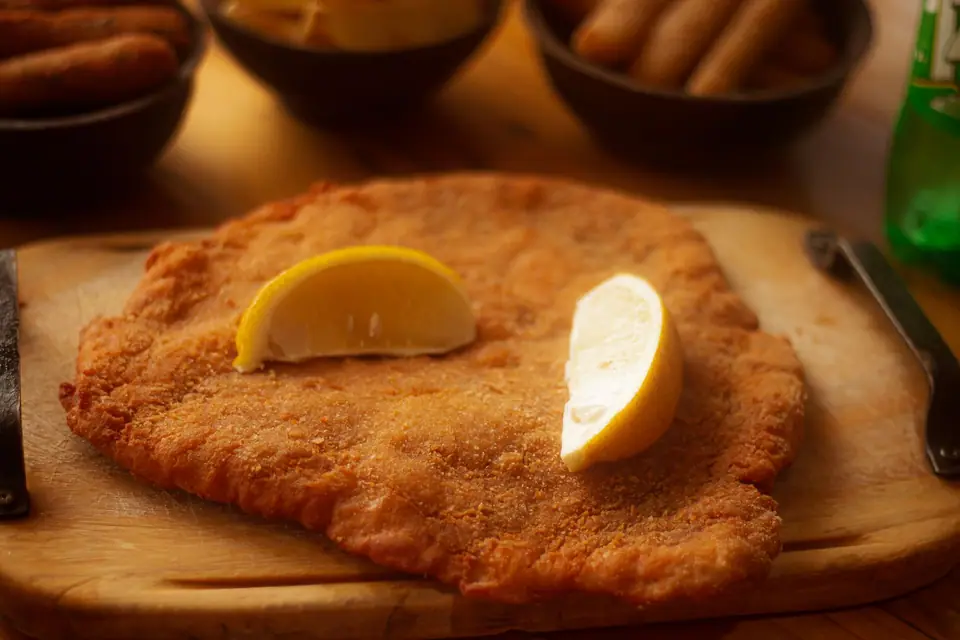
Many restaurants also serve a different version, the orecchia d'elefante, or elephant's ear, in which the veal is pounded very thin into a large, flat cutlet that covers the plate. It is often topped with chopped tomato and rocket in summer. Purists insist that only the thick, bone-in chop is a real cotoletta, and the debate is part of Milanese food culture. We enjoy both versions, and a restaurant's menu usually says which it serves.
Cotoletta and Vienna
Milan and Vienna have long argued about which city invented breaded veal. The Austrian Wiener Schnitzel, made from a thin escalope, is similar to the elephant's ear. A popular story says that the Austrian Marshal Radetzky brought the recipe from Milan to Vienna in the nineteenth century, while Milanese documents record breaded meat on banquet menus as early as the twelfth century. Each city claims the dish, and the question remains a friendly rivalry.
Ossobuco and its slow cooking
Ossobuco means bone with a hole, and the name describes the cut: a thick cross-section of veal shank with the marrow in the centre of the bone. The meat is browned, then braised slowly in white wine and broth with onion, carrot and celery until it is soft enough to cut with a spoon. The traditional version, in bianco, uses no tomato. Before serving, it is sprinkled with gremolata, a fresh mixture of chopped lemon zest, garlic and parsley that lifts the richness of the sauce.
The marrow
The marrow is considered the best part. Diners scoop it out of the bone with a small spoon or the tip of a knife and spread it on the meat or the risotto. Some restaurants provide a special narrow spoon for the purpose, and finishing the marrow is seen as a sign of appreciation for the dish. In winter, the same trattorias often add cassoeula, a hearty stew of pork and Savoy cabbage, to complete the trio of cold-weather Milanese classics.
The risotto pairing
Ossobuco is traditionally served with risotto alla Milanese, the saffron rice soaking up the sauce, and it is one of the few Italian dishes in which rice and meat share a plate as a single course. Our risotto guide explains the rice. Together they make a substantial meal, so we usually skip a starter or share one.
Our view
We look for both dishes in traditional trattorias, where they are made with care, often in historic dining rooms with wood panelling and old photographs. The cotoletta is a classic for lunch, and the ossobuco suits a cold evening. Many trattorias serve them in the Porta Romana and Brera areas. For a wider introduction to the city's dishes, see our Milanese food guide, and for a lighter start to the evening, our aperitivo guide suggests where to have a drink first.
Traveller tips
Real advice from people who have been to Cotoletta and Ossobuco. Every tip is read by our team before it goes live.
No tips yet. Been here? Yours could be the first.
Thank you! Your tip will appear here after a quick review.
More in Milano
Continue exploring Milano with related neighbourhood, food, and planning guides