Panettone in Milan
A seasonal food guide to Milan’s most famous sweet bread.
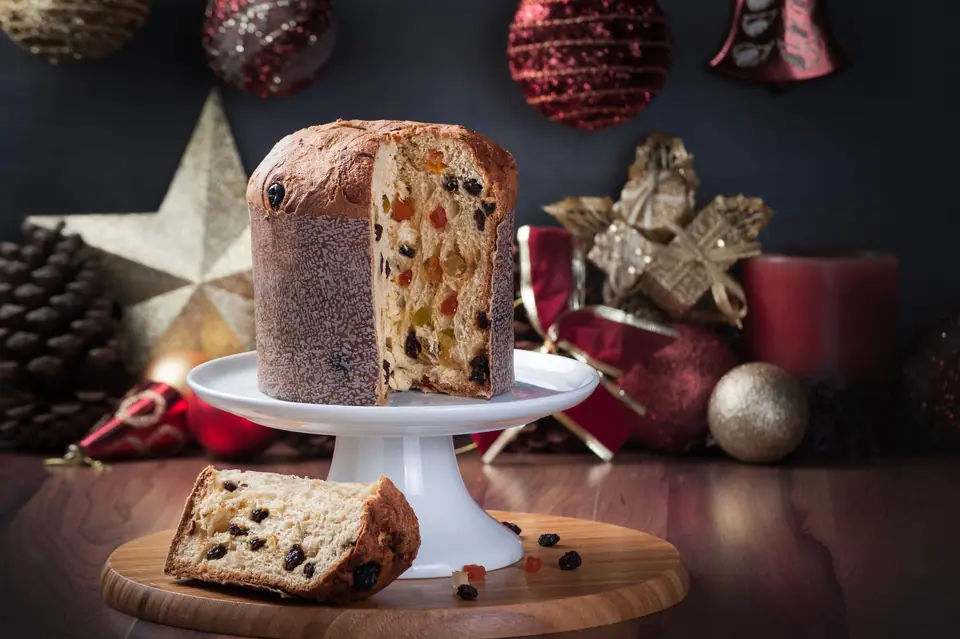
Panettone is Milan's great gift to Italian baking: a tall, domed sweet bread, light and airy inside, studded with candied orange and citron peel and raisins. It is eaten across Italy at Christmas, but it was born in Milan, and the city's pastry shops still bake some of the finest versions. For the Milanese, the arrival of panettone in bakery windows in November signals the start of the festive season.
The legends
Several stories explain the origin of panettone. The most famous takes place at the court of Ludovico Sforza in the fifteenth century. On Christmas Eve, the cook burned the dessert, and a kitchen boy named Toni offered a sweet bread he had made with leftover dough, butter, sugar, eggs and dried fruit. The duke loved it, and it became known as pan de Toni, Toni's bread. Another story tells of a young nobleman who worked as a baker to win the heart of a baker's daughter. Historians prefer a simpler explanation: rich festive breads were made in Milan for centuries, and the word means big bread.
How it is made
A traditional panettone takes several days to make. It begins with lievito madre, a natural sourdough starter kept alive for years, sometimes decades. The dough is built up in several stages, with long rises between them, as butter, egg yolks, sugar and fruit are added. After baking, the panettoni are hung upside down on long skewers to cool, so that the soft crumb does not collapse. The result is a bread with long, irregular strands and a rich, buttery aroma.
From bakery to industry
In the early twentieth century, two Milanese bakers, Angelo Motta and Gioacchino Alemagna, turned panettone into an industrial product. Motta gave it its tall shape by wrapping the dough in paper collars, and their brands made panettone affordable across Italy and abroad. Today, alongside the industrial versions sold in supermarkets, artisan bakers have revived the craft, and many compete in annual panettone competitions.
Look for the crumb
When buying a loaf, we consider its aroma, softness and the balance of fruit rather than judging it by height alone. A fine artisan panettone has a golden, slightly uneven top, a soft crumb with long strands and fruit evenly distributed through it. It should smell of butter, vanilla and citrus. Many pastry shops let you taste a slice before buying.
Panettone through the year
Panettone is mainly a Christmas tradition, eaten after lunch on Christmas Day and into the New Year. The Milanese keep a slice to eat on 3 February, the feast of Saint Blaise, to protect the throat during the winter. At Easter, the colomba, a dove-shaped cake made with similar dough and topped with almonds and sugar, takes its place. Today, many bakeries sell panettone all year, including versions with chocolate, pistachio or other fillings.
Buying and carrying
Panettone keeps well in its paper case and box for several weeks, which makes it a practical gift to take home. We choose a size that fits our luggage and keep it in hand luggage to avoid crushing. Department stores, delicatessens and historic pasticcerie in the centre sell beautifully wrapped versions; our Milan shopping guide lists some of the main shopping areas.
Our view
A slice of artisan panettone with a coffee in a historic pastry shop is one of Milan's simple pleasures, especially in December. We look for bakeries with a small, carefully made range rather than mountains of boxes. For a complete picture of Milanese food, see our Milanese food guide, and to combine a bakery stop with markets and local produce, our markets and vintage guide suggests a route. After a meal of saffron risotto, a slice makes a fitting Milanese finish.
Traveller tips
Real advice from people who have been to Panettone in Milan. Every tip is read by our team before it goes live.
No tips yet. Been here? Yours could be the first.
Thank you! Your tip will appear here after a quick review.
More in Milano
Continue exploring Milano with related neighbourhood, food, and planning guides