Risotto alla Milanese
A close look at Milan’s saffron risotto and how to enjoy it.
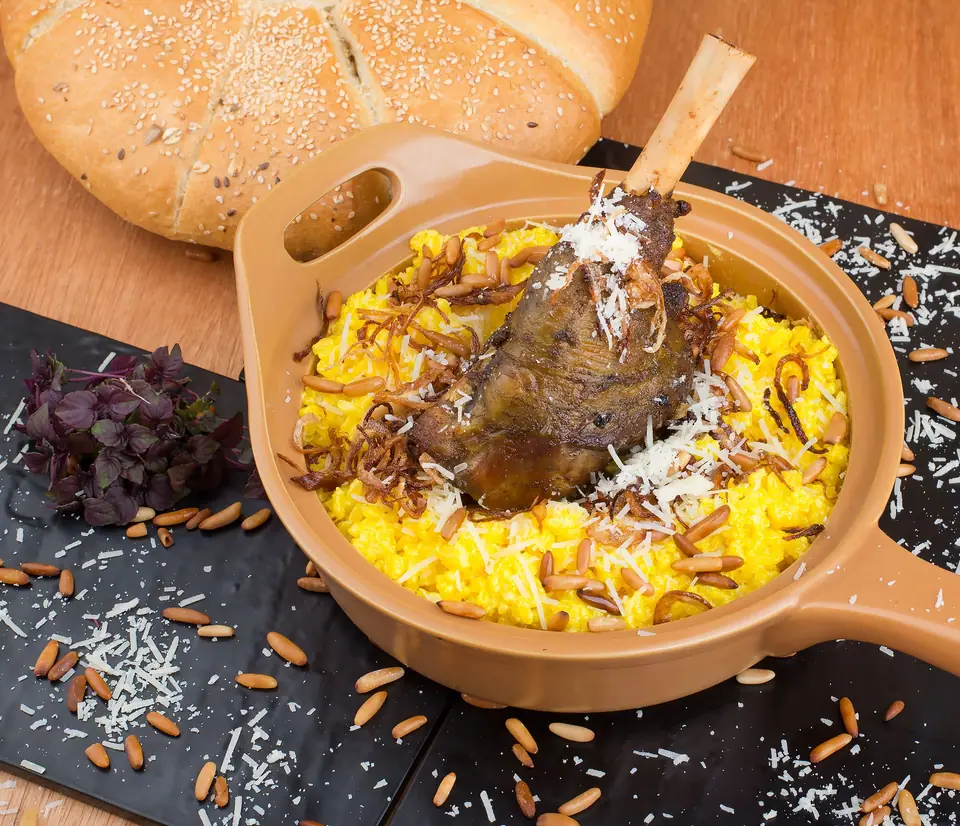
Risotto alla Milanese is the city's signature dish, a creamy rice coloured gold with saffron and enriched with butter and Parmesan. It is simple in its ingredients but demanding in its technique, and a well-made plate is one of the great pleasures of eating in Milan. In 2007 the city gave it the De.Co. status, a municipal designation that protects traditional local recipes. We order it at least once on every visit, and often more.
The legend of the saffron
Milanese tradition tells a story about the dish's origin. In 1574, a young apprentice working on the stained-glass windows of the Duomo was nicknamed Zafferano, saffron, because he added the spice to his pigments to make the colours brighter. At his master's daughter's wedding, the story goes, he added saffron to the rice as a joke, and the golden dish was such a success that it became a tradition. Historians doubt the details, but the link between saffron, gold and celebration fits Milan's love of display.
Rice from the Po valley
Milan lies close to some of the most important rice-growing areas in Europe, in the provinces of Pavia, Novara and Vercelli. Rice arrived in Lombardy in the fifteenth century, and the flooded paddy fields south of the city became part of the landscape. For risotto, cooks use short-grain varieties such as Carnaroli or Vialone Nano, which release starch slowly and keep their shape while becoming creamy.
How it is made
The rice is first toasted in butter, sometimes with onion and beef marrow, then cooked slowly with hot broth added a ladle at a time. Saffron, dissolved in a little broth, goes in towards the end. Finally, the risotto is taken off the heat and stirred vigorously with cold butter and grated Parmesan, a step called mantecatura, which gives it its glossy, creamy texture. The finished dish should flow gently across the plate, all'onda, like a wave, rather than standing in a stiff mound.
Texture matters
A well-made risotto arrives warm and loose, with grains that are tender but still have a slight bite. If it is very stiff or the rice has lost its shape, it may have been held too long. Because risotto is cooked to order, it takes time, and many restaurants note a waiting time on the menu. We take that as a positive sign. Saffron itself should be present but not overpowering, giving a warm, slightly floral flavour rather than a bitter edge.
With ossobuco and al salto
Risotto alla Milanese is traditionally served on its own as a first course, but it also accompanies ossobuco, the braised veal shank, as a single dish; our cotoletta and ossobuco guide explains the pairing. Leftover risotto becomes risotto al salto, pressed into a thin disc and fried in butter until crisp and golden on both sides, a dish that many Milanese prefer to the original.
A modern classic
In 1981, the chef Gualtiero Marchesi, the founder of modern Italian cuisine, served a saffron risotto topped with a single square of gold leaf, a tribute to the dish and to Milan. It became one of the most famous plates in Italian cooking and showed how a traditional recipe could inspire new ideas.
Our view
We look for risotto in traditional trattorias, where it is made with care, and avoid places that serve it in a hurry. A plate of risotto makes a satisfying lunch on a cold day, and the dish pairs naturally with a glass of Lombard red wine. For the wider picture, see our Milanese food guide, and for something sweet afterwards, our panettone guide introduces the city's famous bread. To bring the flavours home, delicatessens sell Carnaroli rice and saffron, described in our shopping guide.
Traveller tips
Real advice from people who have been to Risotto alla Milanese. Every tip is read by our team before it goes live.
No tips yet. Been here? Yours could be the first.
Thank you! Your tip will appear here after a quick review.
More in Milano
Continue exploring Milano with related neighbourhood, food, and planning guides