Porta Venezia
A neighbourhood walk through Porta Venezia’s architecture and daily life.
Porta Venezia is the district that grows outward from one of Milan's old city gates, on the road that once led towards Venice. It mixes some of the city's finest Liberty architecture, the Italian version of Art Nouveau, with leafy public gardens, a long shopping avenue and one of Milan's most varied food scenes. It is less monumental than the centre and more relaxed, and we often recommend it as a base for visitors who want a neighbourhood with character and easy metro links.
The gate and the gardens
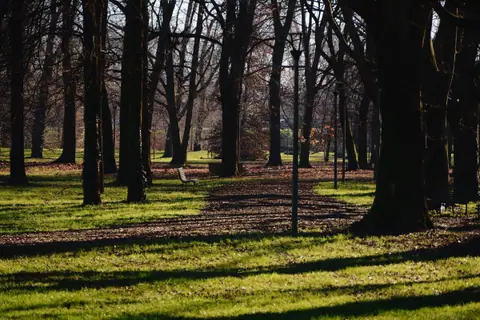
The gate itself is a pair of neoclassical tollhouses built in 1828, decorated with statues and reliefs, standing on either side of Corso Venezia where the Spanish walls once ran. Beside them stretch the Giardini Pubblici Indro Montanelli, laid out by Giuseppe Piermarini in the 1780s as the first public garden in the city. Ponds, old trees and winding paths make them a favourite with families. Inside the gardens stand the Natural History Museum, in a large neo-Romanesque building, and the Hoepli Planetarium, opened in 1930.
Villa Reale and modern art
Facing the gardens across Via Palestro, the Villa Reale was built in the 1790s for a noble family and later became the residence of Napoleon's viceroy and of the Austrian rulers. It now houses the Galleria d'Arte Moderna, with nineteenth-century Italian painting and sculpture, including works by Canova, Hayez and the Divisionists, and fine French paintings from the Grassi collection. Its English-style garden behind the villa is one of the most romantic small green spaces in Milan.
Liberty architecture
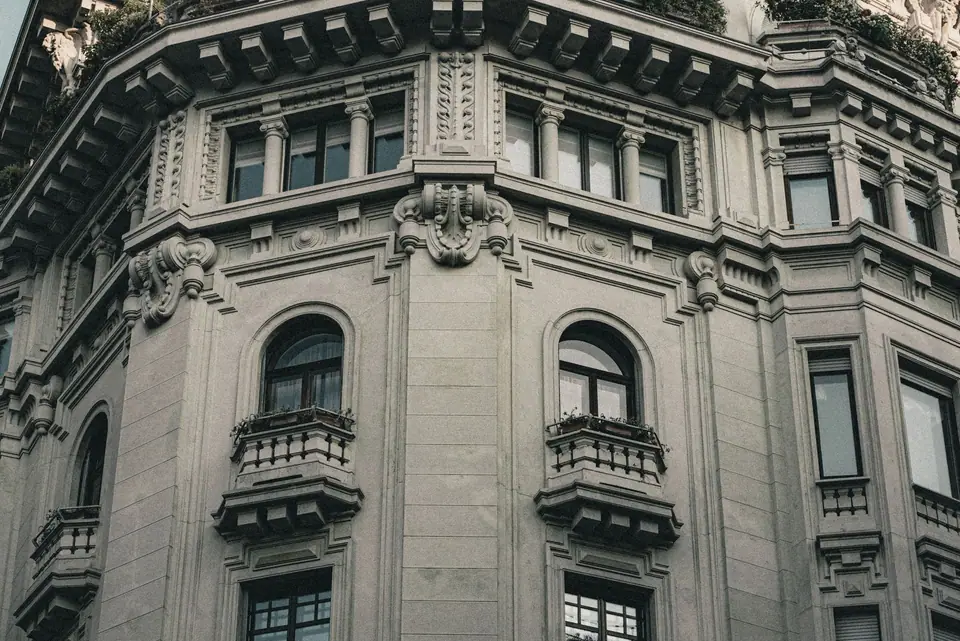
The streets around Via Malpighi and Via Frisi are where Porta Venezia's architecture shines. Casa Galimberti, built in 1905, is covered with painted ceramic tiles of figures and flowers, and its neighbour Casa Guazzoni has wrought-iron balconies with cherubs. Further south, Palazzo Castiglioni on Corso Venezia, completed in 1904, was so daring for its time that its original figures of nudes were moved after complaints. We follow a slow loop through these streets, looking up at the doorways, balconies and decorated façades.
Villa Necchi Campiglio and the flamingos
A short walk from Corso Venezia, Villa Necchi Campiglio is a 1930s house designed by Piero Portaluppi for an industrial family, with a garden, a swimming pool and interiors full of Art Deco details. It now belongs to Italy's National Trust and is open for guided visits. Nearby, on Via Cappuccini, the garden of Villa Invernizzi is home to a group of pink flamingos that can be seen through the railings, one of the city's more unexpected sights.
Corso Buenos Aires and the food scene
To the northeast of the gate, Corso Buenos Aires is one of the longest shopping streets in Europe, lined with high-street brands and smaller shops; our Milan shopping guide covers it in detail. The streets around Via Lecco and Lazzaretto are known for lively bars and a wide range of restaurants, including the Eritrean and Ethiopian kitchens that reflect a long-established community. In the evening the area fills for aperitivo, and the atmosphere is friendly and informal. The neighbourhood is also known for its welcoming, inclusive nightlife, with bars spilling onto the pavements on warm evenings.
Our view
Porta Venezia rewards a half-day that mixes gardens, architecture and food. We start at the gate, walk through the gardens to the Villa Reale, loop through the Liberty streets and finish with dinner nearby. Metro M1 stops at Porta Venezia and Palestro, and the Passante railway also has a station here. From the district, it is a short walk to the fashion district along Via Montenapoleone, and a few stops north to NoLo. Our parks and gardens guide compares the Montanelli gardens with Milan's other green spaces.
Traveller tips
Real advice from people who have been to Porta Venezia. Every tip is read by our team before it goes live.
No tips yet. Been here? Yours could be the first.
Thank you! Your tip will appear here after a quick review.
More in Milano
Continue exploring Milano with related neighbourhood, food, and planning guides